
V Type Cement Tanker Trailer
Panda Mech manufactures V Type cement tanker trailers for cement, fly ash, lime and compatible mineral powders. Common Panda references include about 40 ton / 30 CBM, 50 ton / 40 CBM and a verified 60 ton / 50 m³ / 4-axle V-Type model. We match the final tank, axles and pneumatic unloading system to your route and receiving silo.
*Actual unloading performance depends on cargo condition, air source, pipeline layout, silo height, receiver backpressure and filter capacity.
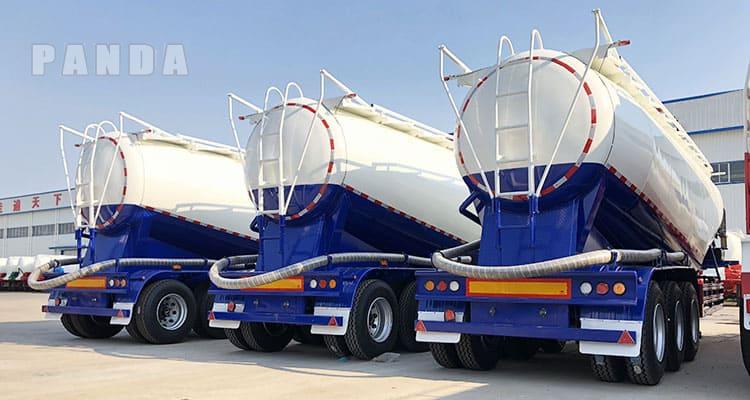
Choose the Capacity First, Then We Match the Tank and Axles
Use these Panda Mech cement-tanker references as a starting point. We then confirm the tank size, empty trailer weight, axle loads and unloading system in your quotation and drawing.
A common Panda Mech reference for medium-capacity cement transport. We check whether this V-type setup fits your cargo density, route and legal load target.
Good starting point for: medium-capacity cement transport where route limits support the payload.A key Panda Mech cement-transport capacity. We match the V-type tank, axle setup and unloading system to your destination and route.
Good starting point for: cement plants and transport fleets that need a higher-payload commercial setup.A verified Panda Mech V-type reference for heavy-duty bulk cement transport. Its current cement unloading baseline is above 1.5 t/min under matched operating conditions.
Good starting point for: heavy-duty projects where route and local load rules support the configuration.We select the axle setup after checking the empty trailer weight, payload, tractor load, road conditions, local limits and local parts support.
What this means: axle count is chosen for the real job, not from tonnage alone.Where We Recommend a V Type Cement Trailer
A V-Type tanker works well when its V-shaped bottom fits your required capacity, trailer length and unloading route. We check the cargo, road limits and silo setup before we issue the final specification.
We recommend V-Type when…
- You haul cement, fly ash, lime or compatible industrial dry powder.
- You want the V-shaped bottom to help powder move toward the discharge outlet by gravity.
- You need the payload, tank volume and axle setup matched to your real transport route.
- Your tanker must unload into a silo over a known pipe distance and silo height.
- You want fleet-standardized axles, tires, brakes, valves and service parts.
We recommend another tanker configuration when…
- The cargo is flour, starch or another food powder that needs stricter hygiene control. We use our food-powder tanker family for these jobs.
- Your loading or unloading point needs another hopper, compartment or discharge layout.
- Road, dimension or terminal limits make another tank shape more practical.
- The unloading distance, silo height or air resistance inside the receiving silo needs a different unloading setup.
- Your site needs a different hopper or unloading layout.
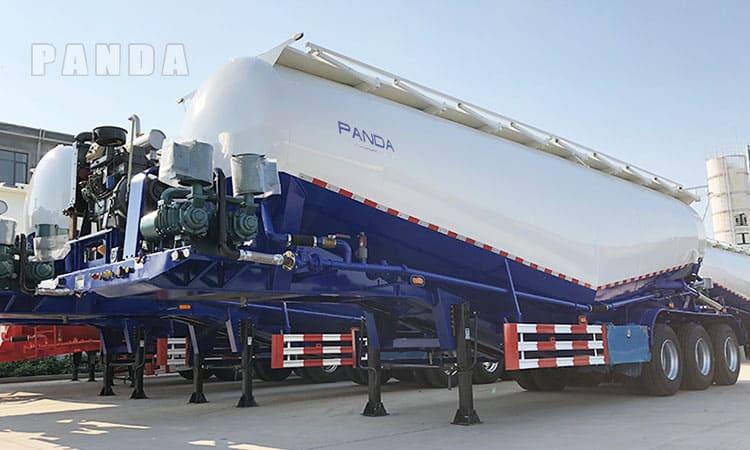
Why the V-Shaped Bottom Helps Powder Flow
The V-shaped bottom helps dry powder fall toward the discharge outlet. During unloading, compressed air loosens the settled powder. Engineers call this aeration. The powder can then move through the discharge pipe into the receiving silo.
The lower tank geometry supports a direct flow path toward the discharge zone.
The air must reach the powder evenly. Seals, valves and the internal aeration parts all affect unloading.
Pipe size, bends, distance, silo height and filter capacity all affect unloading time. Poor venting creates backpressure, which means the silo resists the incoming conveying air.
What this means in practice: when the V-shaped tank and pneumatic system are matched correctly, powder can move more consistently toward the outlet. This can help reduce material left in the tank and reduce cleanup work after unloading.
V Type Cement Tanker Specifications
The table separates Panda Mech’s current public V-Shape family references from the values we still confirm for your exact trailer. This gives you useful numbers without treating one configuration as universal.
| Item | Panda Mech V-Type Reference | What We Confirm for Your Project |
|---|---|---|
| Tank type | V-type pneumatic dry-bulk tank | Cargo type, tank geometry and unloading layout. |
| Cargo | Cement, fly ash, lime and compatible industrial mineral powders | Bulk density, moisture and flow behavior before sizing the tank. |
| Payload | Current public V-Shape reference: about 30–85 ton. Panda planning references also include about 40 ton / 30 CBM and 50 ton / 40 CBM. | Legal road payload after empty trailer weight, tractor load, GVW and axle limits are checked. |
| Tank volume | Current public V-Shape reference: about 30–70 m³ | Final volume from cargo bulk density and target payload. |
| Published V-Shape dimensions | 8500–14500 × 2500 × 3500–4000 mm on the current Panda V-Shape family reference | Final length, height and legal road envelope for the selected capacity and axle setup. |
| Axles | 2 / 3 / 4 axle project configurations are available; the current public V-Shape reference highlights a 3-axle setup. | Axle count, rating, brand/standard and legal load distribution for your route. |
| Tank material | High-strength steel | Exact tank-shell material, grade and thickness in the approved quotation/drawing. |
| Suspension | Mechanical suspension or air suspension | Road condition, local service support and fleet standard. |
| Tires | Current public V-Shape reference lists 12R22.5 as a common setup. | Tire size, quantity and local replacement availability. |
| Air source | Diesel-driven compressor is available; current public V-Shape reference lists 12 m³/min compressor airflow. | Diesel engine, PTO or external-air setup according to your operating model and unloading site. |
| Pneumatic equipment | Compressor, aeration system, valves, discharge pipe and hose are matched as one system. | Pipe size, line distance, bends, silo height, filter capacity and backpressure. |
| Discharge valve | Panda V-type technical reference lists a 4-inch disc valve. | Valve and pipeline arrangement in the approved specification. |
| Cement unloading rate | Current Panda baseline: >1.5 t/min | Expected site result after cargo, pipe layout and receiving silo are reviewed. |
| Optional equipment | Spare parts, component standardization and project-specific inspection/documentation can be quoted. | Which options improve local serviceability without adding unnecessary cost. |
Public family references are useful starting points. The quotation and approved drawing remain the final source for the exact trailer you order.
4-Axle 60 Ton / 50 m³ V-Type Cement Tanker
Our current 4-axle 60-ton / 50 m³ cement tanker is a verified Panda Mech V-type configuration. It shows one heavy-duty combination of tank capacity, four axles and pneumatic unloading.
We Match the Compressor, Air System, Pipe and Silo Together
We treat the compressor, aeration system, discharge valves, pipe and receiving silo as one unloading system. A larger compressor alone does not guarantee faster unloading.
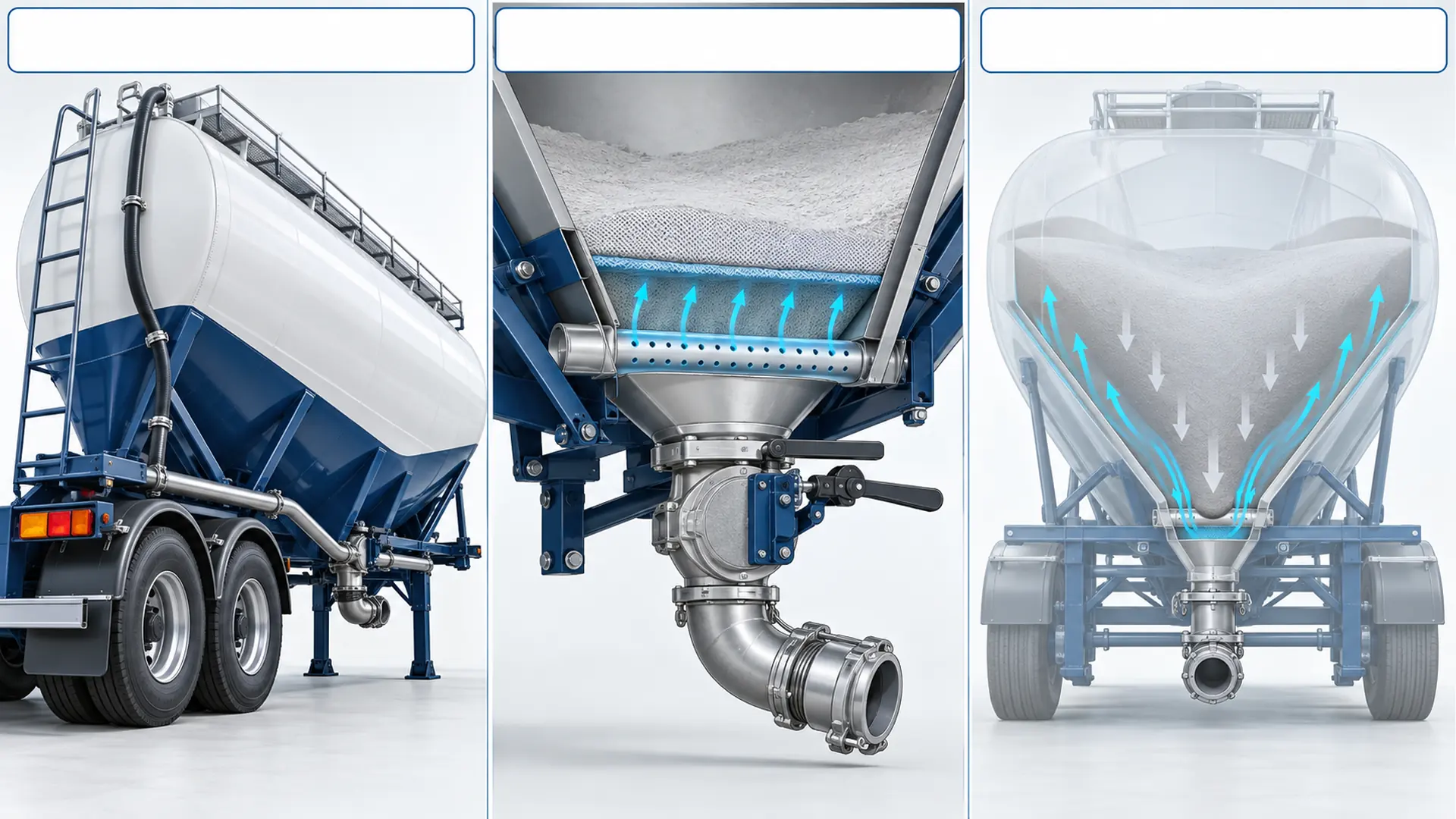
Illustrative structure overview; not a model-specific engineering drawing.
V Type vs W Type Cement Tanker: Which Layout Should You Buy?
We choose the tank shape around capacity, trailer size, powder flow and the unloading site. V-Type is our first choice when its V-shaped bottom fits the job. W or multi-lower-point layouts are alternatives when the project needs another lower tank arrangement.
| What to Compare | V Type | W / Multi-Lower-Point Layout |
|---|---|---|
| Structure | V-shaped lower geometry guiding material toward the low discharge zone. | Uses another lower-hopper / multiple-lower-point geometry. |
| How powder moves | Direct gravity-assisted path toward the V low point, then pneumatic transfer. | Material flow is distributed through a different lower-section arrangement. |
| Best fit | Our first choice when the V-shaped bottom fits the required capacity, route and unloading air path. | We engineer it when capacity, packaging or terminal requirements justify another geometry. |
| What you need to check | Payload, tank volume, axle/GVW limits, tractor fit, pipeline and silo conditions. | The same transport details, plus why your site needs another hopper or lower tank layout. |
| When we recommend it | Choose it when the tank shape, legal load and unloading system all fit your job. | Choose it when another lower tank layout better fits your capacity or site requirements. |
Choose 2, 3 or 4 Axles Around Payload, Route and Local Load Limits
2 Axle — Compact / Lower-Payload Projects
We consider two axles when the required payload, empty trailer weight, axle loads and local road rules allow a compact setup.
3 Axle — Mainstream Commercial Route
Three axles are a common starting point for many cement transport fleets. We confirm the final legal payload from the trailer’s empty weight, tractor load, road condition and destination rules.
4 Axle — Heavy / Load-Distribution Projects
Four axles can help spread a heavier trailer load across more axles. But an extra axle does not automatically make a higher payload legal.
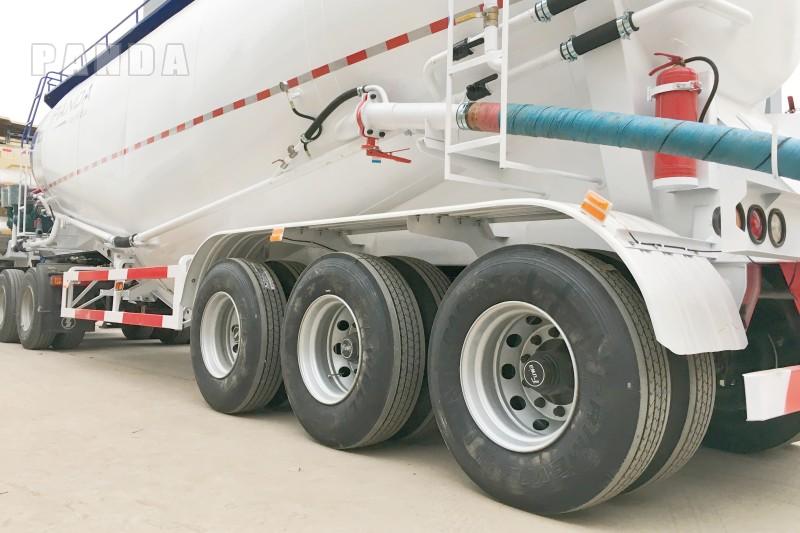
Send these details before we confirm the axle setup
- Destination country and operating route.
- Target cargo payload and expected empty trailer weight.
- Local gross vehicle weight (GVW) and axle-load limits if available.
- Road quality and operating environment.
- Tractor model and fifth-wheel height.
- Preferred axle, brake, suspension and tire standards.
- Fleet spare-parts availability in the destination market.
Axle Configuration Review for an Ethiopia Cement Transport Project
A cement-bulker customer initially asked for a tandem-axle trailer. Panda Mech checked the transport plan and local weight limits. We then recommended a three-axle setup instead.
Panda Mech 3-axle cement tanker reference image. The Ethiopia project details shown here are based on the recorded configuration review.
200+ Quality-Control Checks Across Panda Mech Production
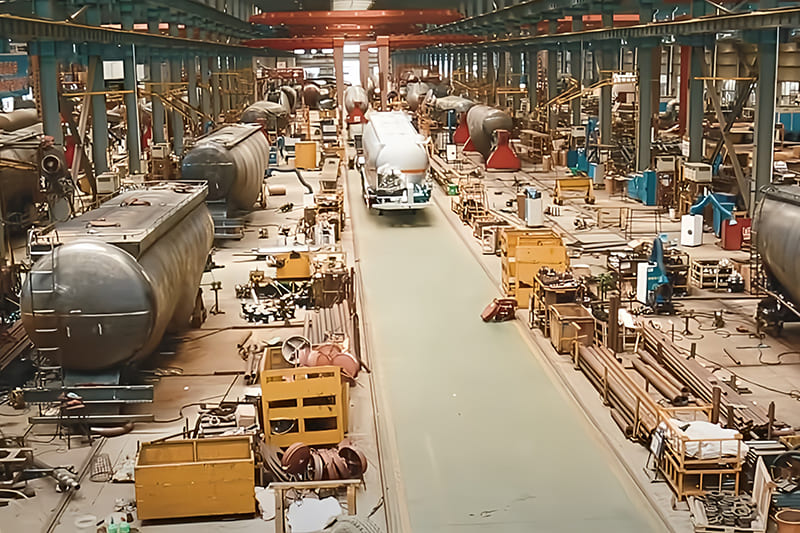
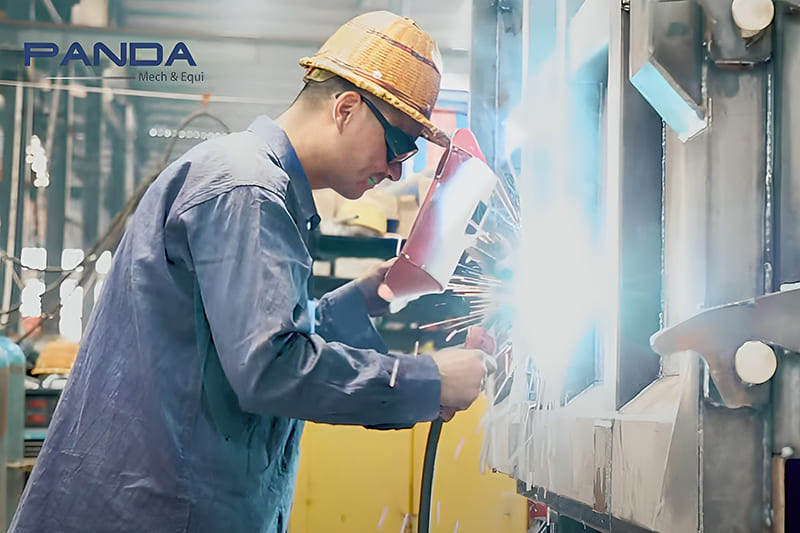
We build the tank, compressed-air unloading system and axle package as one trailer. Our inspections cover materials, welding, tank sealing, pipes, valves, running gear, final dimensions and the completed trailer before shipment.
Material & Configuration Check
We check the confirmed material, main components and project specification before production moves forward.
Welding, Tank & System Check
We inspect welding, tank sealing, pipes, valves and running gear while the trailer is being built.
Final Trailer Inspection
We check dimensions, pneumatic function, running gear and the final configuration against the order before shipment.
What we inspect before shipment
We check the tank and welds, air tightness, pipe sealing, valve operation, unloading equipment, running gear, final dimensions and the confirmed trailer setup.
Plan the V-Type Tanker for Easier Local Maintenance
For a fleet, total operating cost depends on more than the tank shell. We can standardize common service parts and identify the wear items that affect unloading and vehicle uptime.
Pneumatic wear parts
Confirm seals, gaskets, discharge-valve wear parts, hoses, pressure gauges and compressor/engine service items before shipment.
Running-gear standardization
For a fleet, using the same axle, tire, brake and suspension parts can make local stocking and maintenance easier.
Slow-unloading diagnosis
Before changing the tanker setup, we first check cargo moisture or caking, the air source, aeration, valve opening, pipe restrictions, silo backpressure, air leaks and maintenance condition.
Spare parts worth confirming before shipment
For fleet or remote-site projects, it is often easier to order common wear parts with the trailer instead of waiting for an emergency shipment later.
V Type Cement Tanker Price: What Determines Your Quotation?
The price of a Panda Mech V Type Cement Tanker mainly depends on payload, tank volume, axle setup, tank structure, unloading system, component choices and destination requirements. Send us your target payload and destination. We will quote the trailer setup that fits the job.
Tank & structure
Payload, volume, tank shell requirement, structural material, reinforcement and project-specific dimensions.
Running gear
Axle count/standard, suspension, brake package, tires, rims, kingpin and landing gear.
Unloading air system
Diesel engine, power take-off (PTO) or external air, plus the compressor, aeration parts, valves, pipe and discharge hose.
Destination requirements
Road condition, legal load limits, tractor connection, documents and any destination-specific setup.
Fleet quantity
Quantity, component standardization, spare-parts package and project-specific inspection requirements.
Shipping
Port, transport protection and sea freight are destination-dependent and confirmed separately from production.
| Commercial Item | Panda Mech Baseline |
|---|---|
| Payment | Generally 30% deposit + 70% balance before shipment. |
| Production | Typically 7–25 days depending on configuration, quantity and production schedule. |
| Shipping / transit | Destination- and sailing-dependent; confirmed separately from production time. |
| Order quantity | Single-unit, fleet and project quantities can be quoted. Final commercial terms are confirmed for the actual order. |
| Inquiry response target | Within 1 hour. |
Send These Details and We Can Start Your V-Type Quote
You do not need a complete technical specification. Send us what you already know. We will tell you which missing details can change the trailer setup.
Start with four details
Send us four things: cargo, target payload, destination country and silo height / discharge distance. That is enough for our team to start the V-type selection.
For flour, starch or other food powders, tell us the cargo clearly so we use the dedicated food-powder tanker setup.
Common V Type Cement Tanker Questions Before Ordering
What is a V Type Cement Tanker?
A V Type Cement Tanker is a dry-bulk semi-trailer with a V-shaped lower tank. It uses compressed air for unloading, which is why it is called a pneumatic tanker. Panda Mech matches the payload, tank volume, axles and unloading system to your route and receiving silo.
Why are cement tanker trailers V-shaped?
The V-shaped bottom helps dry powder move toward the low discharge area by gravity. Compressed air then loosens the powder and moves it through the discharge pipe. When the tank shape and pneumatic system are matched correctly, this can help reduce material left inside the tank and reduce cleanup after unloading.
Does a bigger compressor always unload cement faster?
No. A larger compressor can provide more air, but unloading speed also depends on pipe size, bends, cargo condition, silo height, filter capacity and backpressure. Panda Mech matches the compressor to the complete unloading system instead of choosing it from airflow alone.
What capacities can Panda Mech configure?
V-Type describes the tank shape, not one fixed tonnage. Panda Mech references include about 40 ton / 30 CBM and about 50 ton / 40 CBM. We also have a verified 60 ton / 50 m³ / 4-axle V-type reference. We confirm the final capacity from cargo density, empty trailer weight and road limits.
How fast can a Panda Mech V Type cement bulker unload?
Our current cement-tanker unloading baseline is >1.5 t/min when the complete system is matched correctly. Actual time can change with wet or caked cargo, pipe length and bends, silo height, backpressure, filter capacity and maintenance condition.
Should I choose 2, 3 or 4 axles?
We choose the axle setup from payload, empty trailer weight, local GVW and axle limits, road condition, tractor load and local parts support. Three axles are common for many cement transport jobs. Four axles can suit heavier projects or a different load-distribution need.
What is the difference between V Type and W Type cement tankers?
V Type uses a V-shaped lower tank that guides powder toward the low discharge area. W or multi-lower-point designs use another lower hopper arrangement. We recommend V-Type when it fits the required capacity, route and unloading system. We use another layout when the project needs it.
What determines V Type cement tanker price?
Price mainly depends on payload, tank volume, axle setup, tank structure, unloading equipment, component choices, quantity and destination requirements. Send us the cargo, target payload and destination for a quotation.
Can a V Type powder tanker carry flour or starch?
For flour, starch and other food powders that need stricter hygiene control, we use our dedicated food-powder tanker family. This lets us address material choice, cleaning and contamination control correctly.
How long does production take and what are the payment terms?
Production is typically 7–25 days depending on configuration, quantity and schedule. The general payment baseline is 30% deposit and 70% balance before shipment. Sea transit is destination-dependent and separate from production time.
Tell Panda Mech What You Haul, How Much You Need and Where You Unload It
We will use those details to recommend the V-type tank capacity, axle setup and compressed-air unloading system for your project.