
Higher Transport Capacity
The 60-ton payload class and 50 m³ tank support high-volume cement transport. This setup works best when your route and tractor can handle the required total weight.
Panda Mech manufactures this 3 axle 60 ton cement tanker with a 50 m³ (50 cubic meter) tank for bulk cement transport. Its confirmed cement unloading rate is more than 1.5 tonnes per minute (>1.5 t/min). We match the axles and suspension to your route and tractor. We also size the compressed-air unloading system, or pneumatic system, for your silo and unloading target.
Choose this model when you need more payload than a typical 50-ton cement trailer. The 3-axle layout also uses fewer axle and tire parts than the 4-axle version.
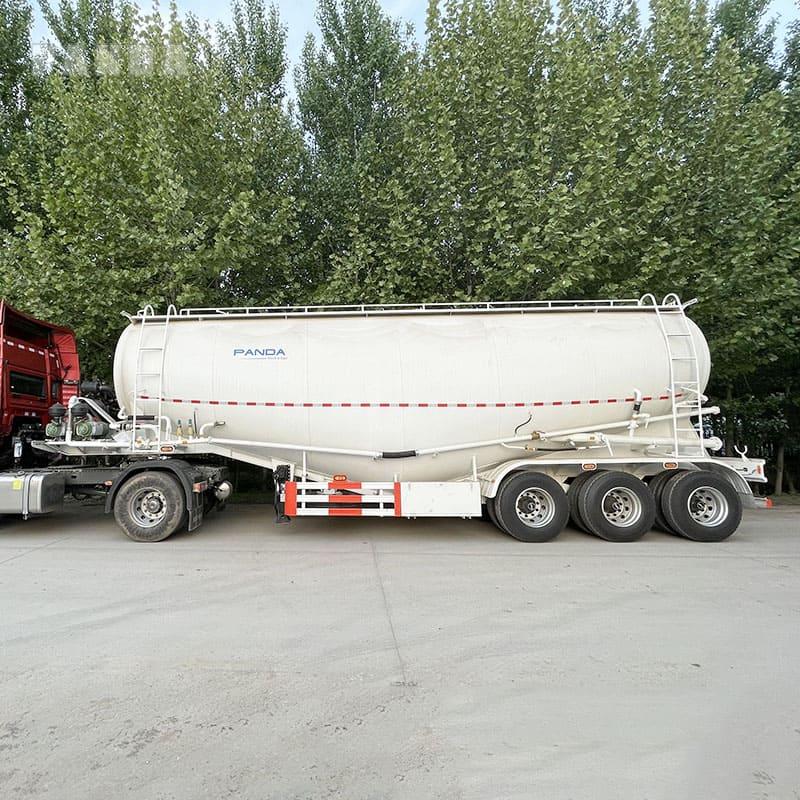
These are the main specifications for the Panda Mech 60 ton / 50 m³ cement tanker. We choose project-specific parts around your roads, tractor, local service needs and unloading target.
| Item | 60 Ton Cement Tanker | How Panda Mech configures it |
|---|---|---|
| Payload class | 60 t | We check the final legal payload against tare, tractor weight, local GVW and axle-load limits. |
| Tank volume | 50 m³ | We match the tank volume to cargo bulk density and your operating plan. |
| Axle configuration | 3 axles | We choose the axle, suspension and brake setup for your payload target, road conditions and local rules. |
| Cement unloading | >1.5 t/min | We size the compressor, air pipes and discharge line for your discharge distance, silo height and unloading target. |
| Primary cargo | Bulk cement | Fly ash, lime and other compatible industrial dry powders can also be evaluated. |
| Tank / structure | High-strength steel configurations available | We confirm the final steel grade and structural details in your quotation and approved drawing. |
| Suspension | Mechanical or air suspension available | We choose it based on road conditions, fleet standard, ease of maintenance and local rules. |
| Kingpin | JOST 2-inch or 3.5-inch options | We match the kingpin to your tractor’s fifth-wheel connection. |
| Discharge valve | 4-inch disc-valve configuration available | We match the valve to the discharge hose and silo connection. |
| Diesel engine / compressor | Dedicated engine + compressor package available | We select the package from your target unloading time, pipe length, silo conditions and service needs. |
| Final dimensions / tare | Issued with the approved project drawing | Before production, we provide the final general arrangement (GA) drawing with the confirmed dimensions and project specification. |
Component brands and exact dimensions can change with the project. We list the final choices in your quotation and approved drawing.
Choose the trailer by your payload target, legal axle limits, tractor and route. A bigger number is not always the better choice.
| Configuration | Choose it when | What to check first | Next step |
|---|---|---|---|
| 50 Ton Cement Trailer | You do not need the 60-ton payload class, or your route is better suited to a lower payload target. | Legal payload, tank volume, tractor and route limits. | Compare it with the 60T model before you freeze the specification. |
| 3 Axle 60 Ton / 50 m³ | You need the 60-ton payload class and a 3-axle layout fits your route and fleet. | GVW, legal axle loads, final tare, tractor and silo conditions. | This page covers the exact 3-axle 60T configuration. |
| 4 Axle 60 Ton / 50 m³ | You need the 60-ton payload class but want the load spread across one more axle. | Route rules, axle-load distribution, tractor fit and maintenance cost. | Ask us to compare 3 and 4 axles for the same job. |
Simple rule: send us your destination country, tractor model and planned payload. We will compare the suitable Panda Mech configurations before quotation.
The 60-ton payload class and 50 m³ tank support high-volume cement transport. This setup works best when your route and tractor can handle the required total weight.
Our confirmed cement unloading rate is above 1.5 t/min. We size the compressor, air pipes and discharge line to work together.
A 3-axle layout uses fewer axle and tire parts than a 4-axle setup. That can make routine inspection and spare-parts planning simpler.
We use your cargo, tractor, roads, local weight limits and silo conditions to choose the final axle, suspension and unloading setup.
Both layouts can be used for 60-ton-class projects. Choose between them by checking how the weight is shared across the axles, plus your roads, tractor, fleet standard and local rules.
| What to compare | 3 Axle 60 Ton / 50 m³ | 4 Axle 60 Ton / 50 m³ |
|---|---|---|
| Axles and suspension | Three-axle layout with fewer axle, tire and suspension service points. | Four-axle layout with an additional axle and tire set. |
| How weight is shared | Choose 3 axles when this layout meets your route and legal axle-load limits. | Choose 4 axles when you need to spread the load across an extra axle. |
| Road / fleet fit | A practical choice if your fleet already uses 3-axle semi-trailers. | A practical choice when your fleet, route or project rules favor four axles. |
| Maintenance | Lower running-gear component count. | More tires and axle components to inspect and maintain. |
| What we check | Send us your tractor, route and destination country. We check whether the 3-axle layout fits the job. | We check the same project data and recommend 4 axles when the extra axle gives a clear operating benefit. |
The compressor, air pipes and discharge line work together. We size them as one pneumatic unloading system.
During unloading, compressed air loosens and suspends the cement powder. Engineers call this fluidization. The air then moves the cement through the discharge line into the silo.
Actual unloading time can change with cement condition, compressor output, hose length and vertical lift. Pipe bends, air leaks, silo backpressure and filter condition also matter.
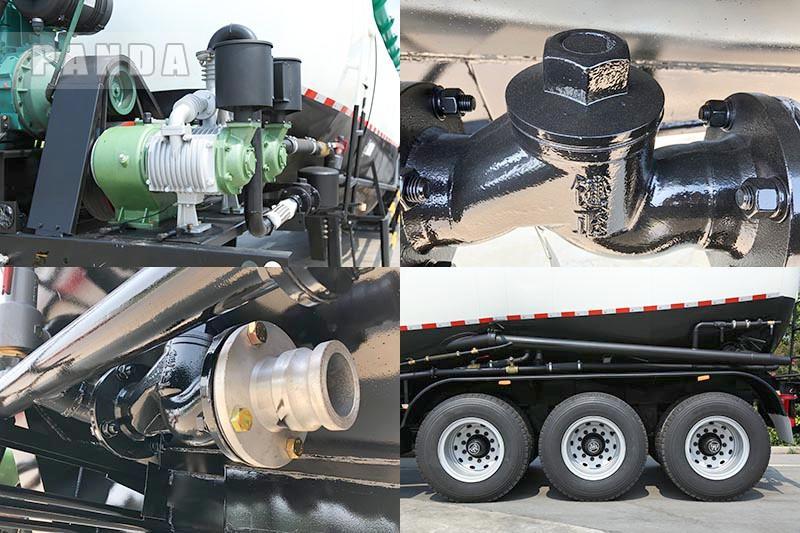
Bulk cement transport is the main application for this 60 ton pneumatic tanker. The 50 m³ tank and pneumatic discharge system are configured around cement handling and unloading.
We can also check fly ash, lime powder, limestone powder, gypsum and other compatible non-food dry powders. We look at bulk density, abrasion, moisture and how easily the powder moves with compressed air.
Flour, starch and other hygiene-sensitive powders require a food-powder tanker configuration with separate material, cleaning and contamination-control requirements.
Actual Panda Mech 3 axle 60 ton cement tanker views from the current product line.
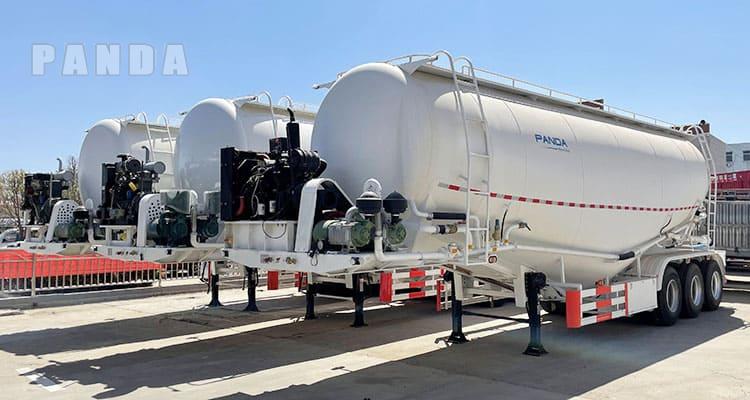
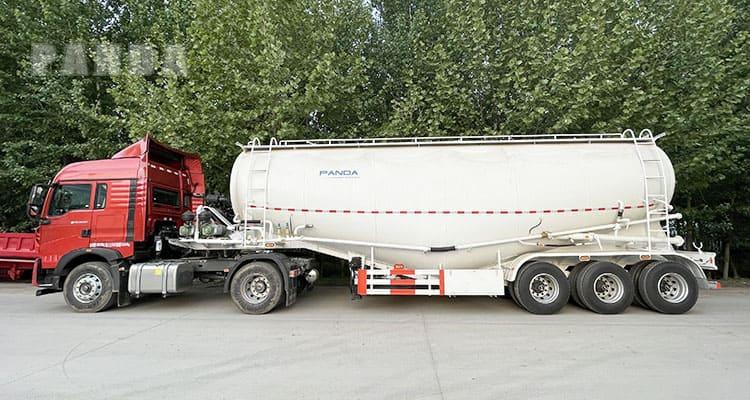
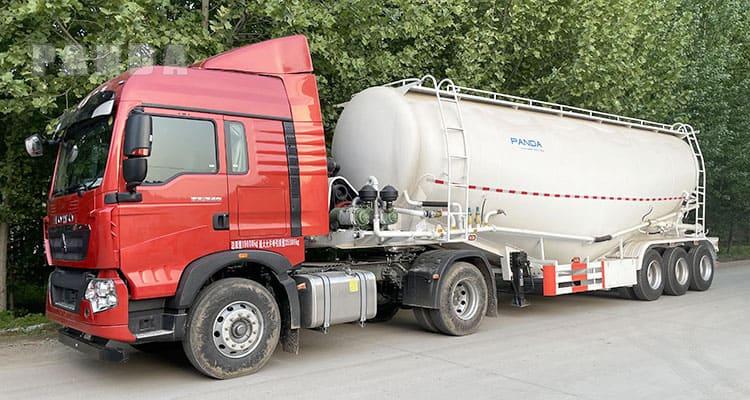
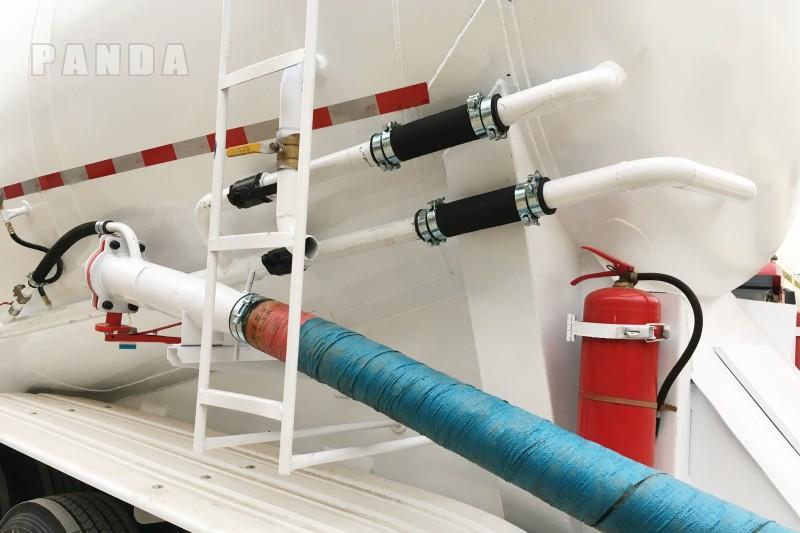
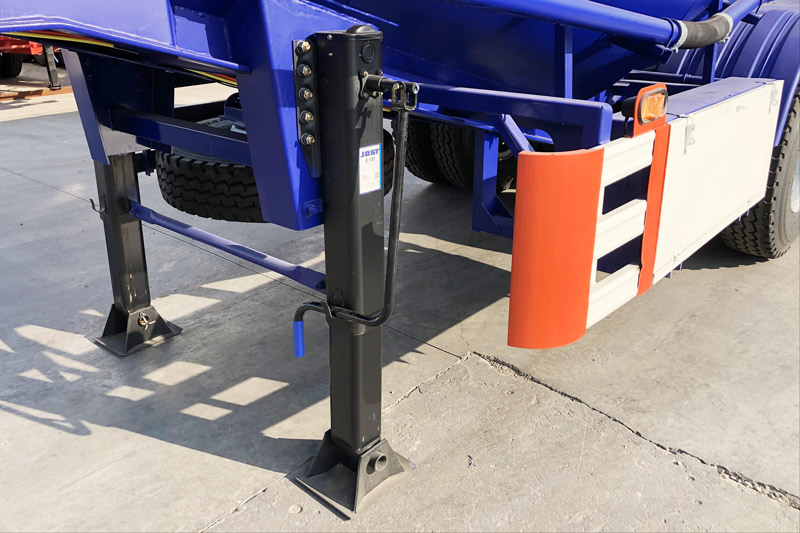
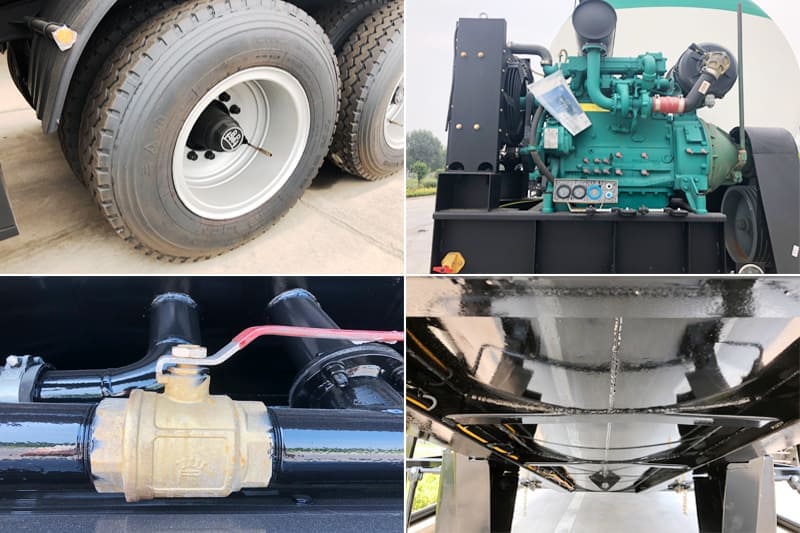
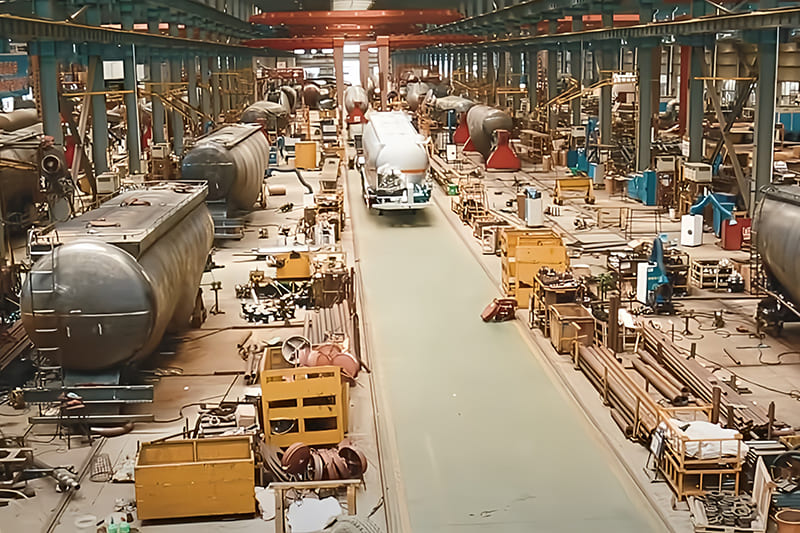
Panda Mech has 20+ years of industry experience and our own manufacturing facility. We specialize in pneumatic dry-bulk tank trailers. Our company-level manufacturing process uses 200+ quality-control checks.
For your order, we build against the approved specification. We check the tank, running gear, pneumatic system and tractor interface during production and before shipment.
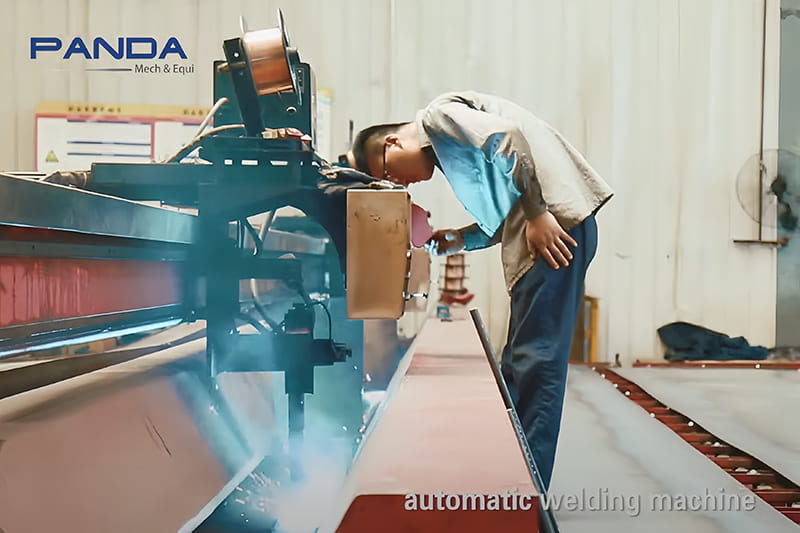
Tank and structural weld quality directly affects strength, sealing and long-term service life.
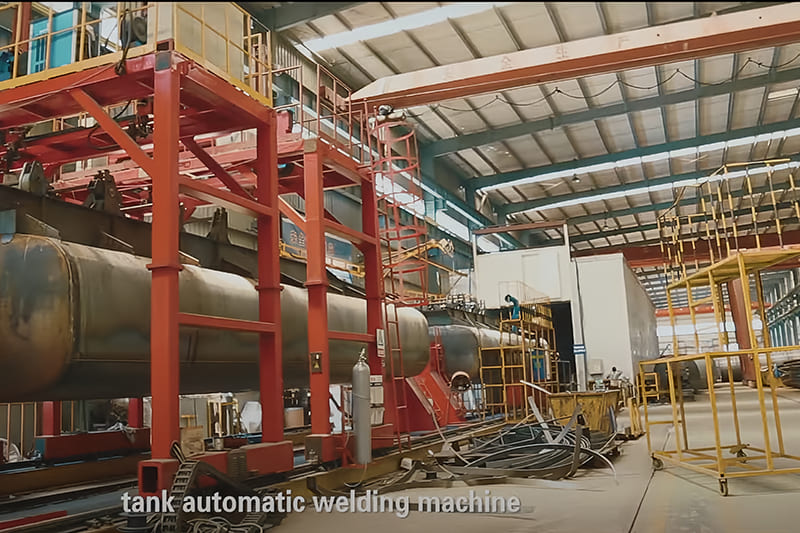
Dedicated tanker-production equipment helps us keep fabrication and build details consistent from unit to unit.
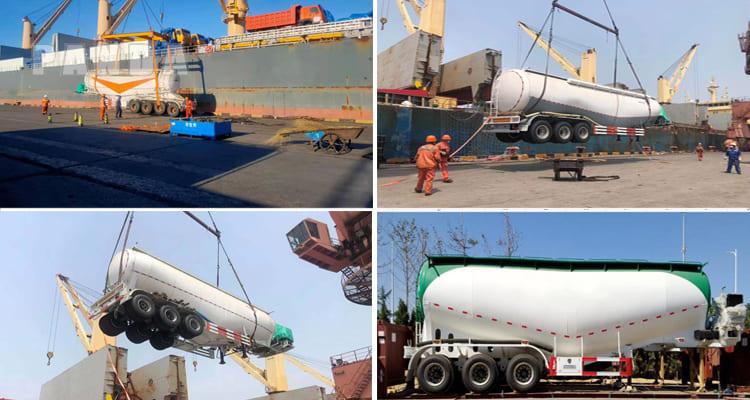
We inspect the finished unit and prepare exposed systems and surfaces for international transport.
We compare the build with the approved order specification before production moves forward. This helps prevent the wrong tank, axle, suspension or pneumatic package from entering the build.
We inspect tank fabrication and key weld areas. These checks matter because tank strength and sealing depend on consistent fabrication.
We check the tank, pneumatic pipes, valves and connections for air leakage. Air loss can reduce unloading efficiency and increase compressor running time.
We check the engine, compressor, air lines and discharge system as a working package. The goal is to make sure the components work together before delivery.
We inspect axle, suspension, brake and related installation against the agreed setup. These parts affect load carrying, maintenance and road use.
We verify the finished configuration, visible finish and shipping preparation before dispatch. Final project details are matched to the approved quotation and drawing.
The final price changes with the tank and chassis setup, axles, suspension, tires, brakes, valves, piping, compressor package and corrosion protection.
Your destination country, order quantity, documents, shipping protection and freight plan all affect the total delivered cost.
Payment is generally 30% deposit and 70% before shipment. Production usually takes 7–25 days, depending on the final setup and production schedule. Shipping time depends on the destination.
We confirm the project specification and provide the approved general arrangement (GA) drawing with the final dimensions and agreed configuration.
We complete final configuration checks and shipping preparation. Sea transit time is separate from production time and depends on the destination.
Start with your country, cargo, target capacity, quantity and tractor model. We can complete the remaining engineering details with you.
Send us the basic project information below, and we can prepare a clear quotation. If you do not have every technical detail yet, send what you know. Our team can help complete the specification.
Road conditions · local GVW and axle-load limits · fifth wheel / kingpin data · silo height · horizontal discharge distance · target unloading time · suspension / axle / tire preferences · destination port
Our 3 axle 60 ton cement tanker uses a 50 m³ tank and a 60-ton payload-class setup. In simple terms, the model is designed around a 60-ton cargo target. The legal road payload still depends on tare, tractor weight, local GVW and axle-load limits.
The confirmed cement unloading rate for this model is above 1.5 t/min. Actual cycle time depends on cargo condition, compressor output, hose length, vertical lift, bends, air leakage and receiving-silo backpressure.
We recommend the 3- or 4-axle configuration from your axle-load distribution, tractor, route, road conditions, fleet standard and local rules. Send us your project data and we will compare both layouts.
Yes. We can also check compatible non-food dry powders such as fly ash and lime. We look at bulk density, abrasion, moisture and how easily the powder moves with compressed air before finalizing the setup.
For flour, starch and other hygiene-sensitive food powders, we recommend a dedicated food-powder tanker configuration with separate material, cleaning and contamination-control requirements.
Production is typically 7–25 days depending on the final configuration, order quantity and production schedule. Sea transit is separate and depends on the destination and vessel schedule.
We confirm the agreed configuration in the quotation and approved general arrangement (GA) drawing. Project-specific items can include final dimensions, tare, component choices and the tractor interface.
Start with your destination country, cargo, required payload or volume, quantity and tractor model. If available, also send road conditions, local axle/GVW limits, silo height, discharge distance and target unloading time.
Send us your country, cargo, tractor model, quantity and unloading requirements. Our engineering team will recommend the 3-axle or 4-axle setup, size the compressed-air unloading system and prepare your quotation.