
Start with the 30-ton / 25 m³ / 2-axle model, then check cargo density and legal road weight.
See 30 Ton Model →Panda Mech · Pneumatic Bulk Tankers
Cement Trailer For Sale
Panda Mech builds pneumatic (compressed-air unloading) cement tanker trailers for bulk cement, fly ash, lime and other compatible dry powders. You can start with a 30, 40, 50 or 60 ton model, with 2, 3 or 4 axles depending on the model. Or send us your cargo, destination and target payload, and we can help check which setup fits your roads and unloading site.
30–60 TonMain payload range
2 / 3 / 4 AxlesModel-dependent options
PneumaticCompressed-air unloading
Project-MatchedRoad + silo review
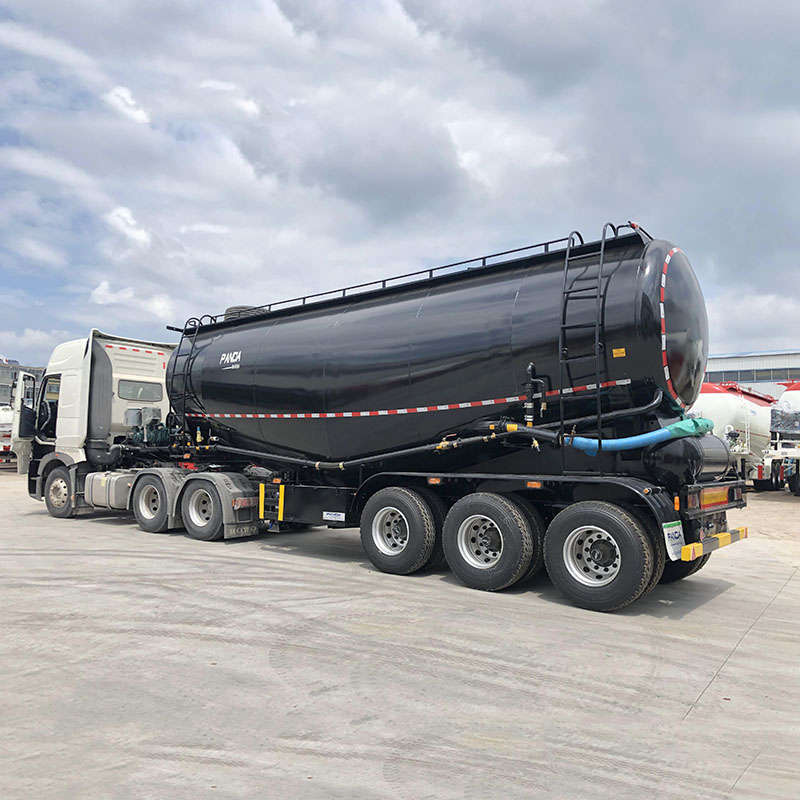
Choose the setup that fits your job—not just the tonnage label.We review your cargo, payload, tractor, road limits and receiving silo before production.
Choose by What Matters Most
Find a Good Starting Cement Trailer Setup
You do not need to know every technical detail before contacting us. Start with the limit that matters most for your job, then confirm the final specification before production.
Start with the 40-ton / 30 m³ / 3-axle model for a mid-range transport setup.
See 40 Ton Model →Start with the 50-ton / 40 m³ / 3-axle model. Check legal payload, tractor and unloading conditions.
See 50 Ton Model →Start with the 60-ton / 50 m³ range where tractor, road and local weight rules allow it.
See 60 Ton Model →Compare the 3-axle family first. It covers several Panda Mech cement tanker sizes on this page.
Compare 3 Axle Models →Compare the 4-axle setup when local axle loading is a major limit. More axles also add tires and maintenance points.
See 4 Axle Model →Check the material and structure instead of assuming a lighter trailer always means more legal payload.
See Aluminum Option →The unloading system may matter more than nominal tonnage. Send the hose length and silo height for review.
Check Unloading System →Available Cement Tankers
Cement Trailers Available for Sale
Start with the payload and axle setup you need. Your final legal payload also depends on the empty trailer weight (tare), tractor, local weight limits and the approved drawing.
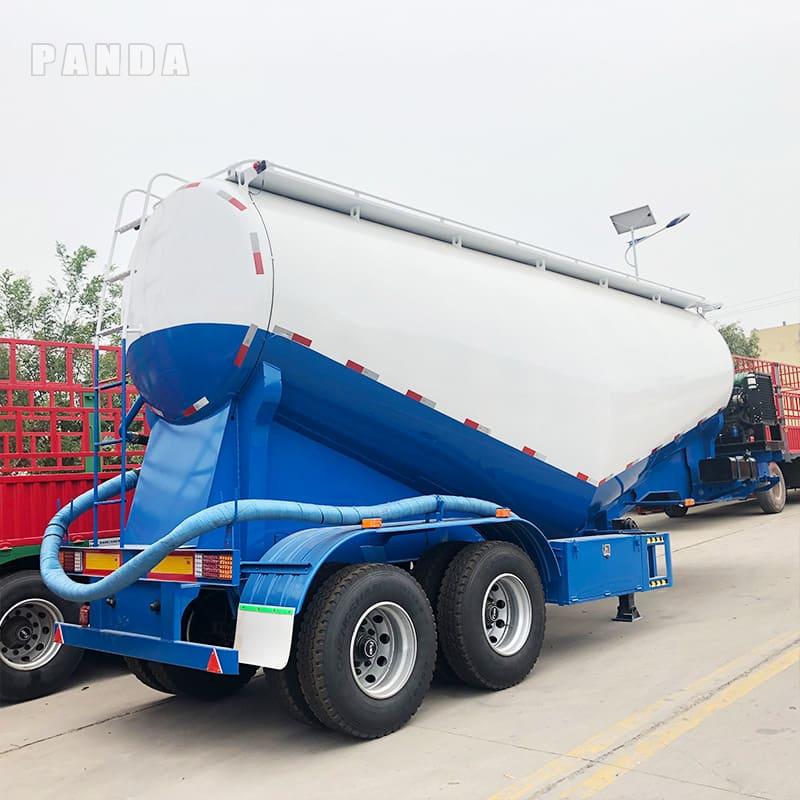
Smaller Payload Option30 Ton Cement Trailer
A 25 m³, 2-axle starting setup for routes or fleets that need a smaller trailer class.
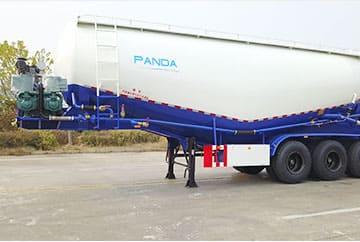
Mid-Range Option40 Ton Cement Trailer
A 30 m³, 3-axle starting setup for mid-range bulk cement and compatible dry-powder transport.
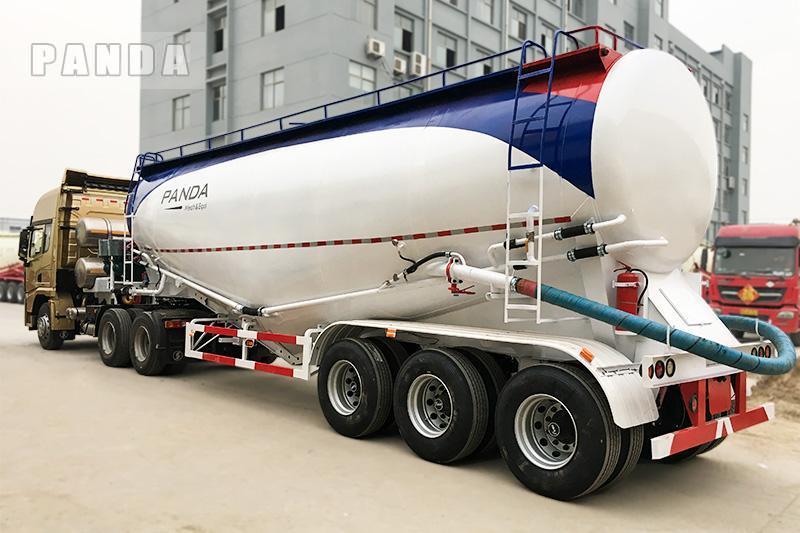
Priority 50 Ton Model50 Ton Cement Trailer
Panda Mech's priority starting model has a 40 m³ tank, 3 axles and a 10,500 mm overall length. Final legal payload still depends on trailer tare and local weight limits.
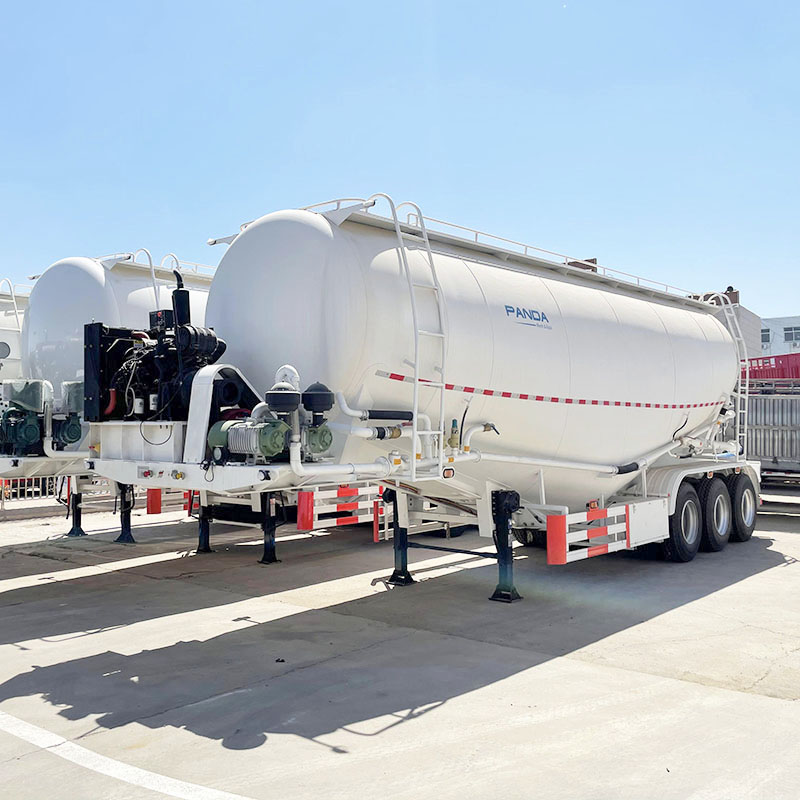
Higher-Capacity Option60 Ton Cement Trailer
A 50 m³, 3-axle starting setup for higher-volume transport. Use it only where the tractor, route and local weight rules allow the larger trailer.
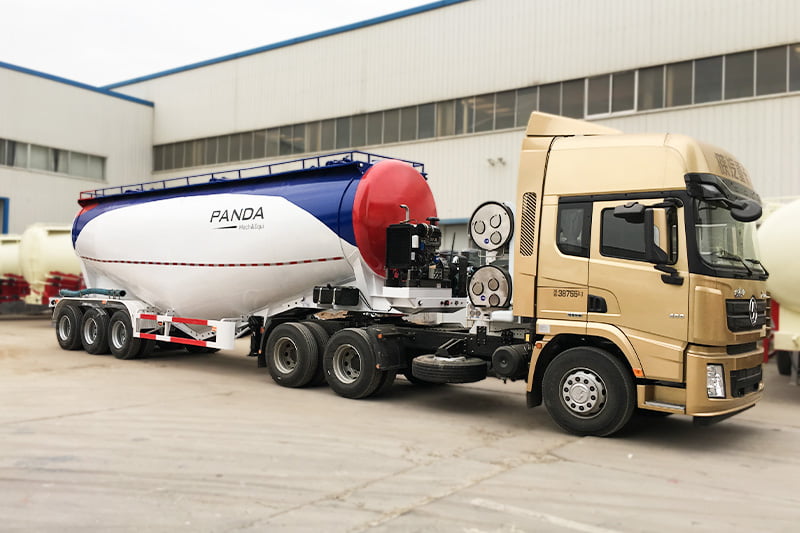
Common Fleet Setup3 Axle Cement Tanker
This 3-axle product family covers 40–60 ton models. It is a useful starting point when your fleet already uses a common 3-axle setup.
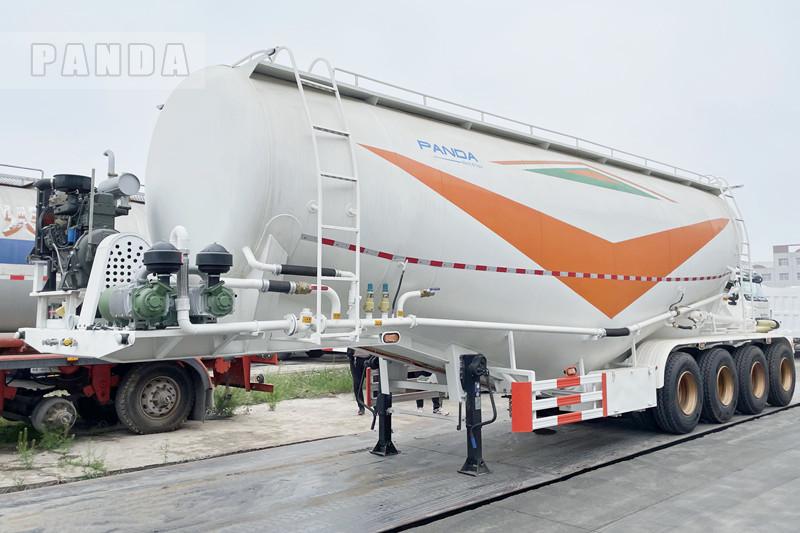
4-Axle Load-Distribution Setup4 Axle Cement Tanker
A 60-ton / 50 m³ 4-axle starting setup. The extra axle positions can help when axle-load distribution is an important project limit.
Quick Comparison
Compare Cement Trailer Models and Axle Setups
Use this table to narrow your options. Before you order, confirm the final drawing, trailer tare and legal payload.
| Model / Setup | Good Starting Point For | Typical Setup | Main Advantage | Check Before Buying |
|---|---|---|---|---|
| 30 Ton | Smaller transport requirement | 25 m³ · 2 axle | Smaller vehicle class | Gross vehicle weight (GVW), route and cargo density |
| 40 Ton | Mid-range fleet operation | 30 m³ · 3 axle | Balanced size and axle setup | Tare, axle load and volume |
| 50 Ton | Cement plants / transport fleets | 40 m³ · 3 axle | High-volume option | Legal payload by destination |
| 60 Ton | Higher-capacity transport | 50 m³ · 3 axle | More cargo volume per trip | Tractor, road and legal weight |
| 3 Axle | Common fleet setup | 40–60 ton model family | Fewer axle, brake and tire parts than 4 axle | Per-axle limit |
| 4 Axle | Load-distribution projects | 60 ton / 50 m³ setup | More axle positions for load distribution | Cost, tires, maintenance and local law |
30 Ton25 m³ · 2 axleStart with: smaller transport requirementConfirm: Gross vehicle weight (GVW), route and cargo density
40 Ton30 m³ · 3 axleStart with: mid-range fleet operationConfirm: tare, axle load and volume
50 Ton40 m³ · 3 axleStart with: cement plants / transport fleetsConfirm: legal payload by destination
60 Ton50 m³ · 3 axleStart with: higher-capacity transportConfirm: tractor, road and legal weight
3 Axle40–60 ton model familyFewer axle, brake and tire parts than 4 axleConfirm: per-axle limit
4 Axle60 ton / 50 m³ setupMore axle positions for load distributionConfirm: cost, tires, maintenance and local law
Published Model Baselines
Start With the Specifications We Can Show Clearly
The models below use the tank volume and axle information already shown on Panda Mech product pages. Use these as a starting point. The final legal payload and order specification still depend on your country, tractor, cargo and approved drawing.
30 Ton ModelTank: 25 m³Axles: 2Use: smaller transport requirement
40 Ton ModelTank: 30 m³Axles: 3Use: mid-range fleet operation
50 Ton ModelTank: 40 m³Axles: 3Published length: 10,500 mm
60 Ton ModelTank: 50 m³Axles: 3Use: higher-capacity transport
| Specification | What We Can Confirm in the Quote | Why It Matters |
|---|---|---|
| Tank material & thickness | Material grade, shell thickness, head thickness and approved drawing | Affects tare, fabrication, strength and price |
| Trailer tare | Empty trailer weight for the final setup | Needed to calculate legal cargo payload |
| Axles & suspension | Brand/model, rated capacity, suspension type and tire size | Affects axle load, service parts and local road use |
| Compressor system | Compressor model, drive method, airflow and service requirements | Directly affects pneumatic unloading performance |
| Pressure specification | Working pressure, test pressure and agreed test method | Defines the pressure conditions used for the ordered tank |
| Valves & discharge pipe | Valve package, discharge pipe size and hose connection | Restriction or leakage can slow unloading |
| Brake package | Brake setup and anti-lock/electronic braking needs where required | Must match axles and destination requirements |
| Coupling & landing gear | Kingpin, landing gear and tractor fifth-wheel match | Prevents tractor/trailer fit problems |
Better quote comparison: ask every supplier to state these items in writing. A “50 ton cement trailer” label is not enough if the tank, tare, compressor, axle, brake or discharge specifications are unclear.
Selection by Real Use
Which Cement Trailer Fits Your Operation?
Do not start by choosing the largest tanker. First find the limit that matters most for your route, payload or unloading site.
Start with the 3-axle product family and confirm local per-axle limits, tractor compatibility and payload target.
Review 3 Axle Models →Start with Panda Mech's 50-ton / 40 m³ / 3-axle current model, then verify legal payload for the destination market.
Review 50 Ton Model →Compare 3-axle and 4-axle layouts instead of selecting axle count from tonnage alone.
Review 4 Axle Option →If the silo is high or the hose is long, unloading can become the main issue. Check airflow, pipe resistance and receiving-silo conditions.
Review Unloading System →Check the tank material and structure separately. A lighter trailer does not automatically mean you can legally carry more cargo.
Review Aluminum Cement Trailer →Send the material, its bulk density if known (weight per unit volume), destination country and target payload. That is enough for us to start checking suitable setups.
Help Me Choose →Capacity Selection
Choose Cement Trailer Capacity by Payload, Bulk Density and Road Limits
Tank volume and payload are not the same thing. If you treat them as the same, you can choose the wrong trailer.
40 m³≠40 tons
Volume and payload are different engineering limits.
1. Tank VolumeMeasured in m³. It determines the available cargo space.
2. Working Bulk DensityThe same tank volume can carry different mass for different powders and conditions.
3. Legal PayloadYour legal payload depends on GVW, tractor weight, trailer tare, axle limits and local road rules.
Theoretical Cargo Mass
Usable tank volume × working bulk densityThis only shows possible cargo mass. It does not tell you the legal payload by itself.Legal Payload Limit
Permitted combination weight − tractor tare − trailer tareThe result must still meet local axle-load and road rules.Example: for a 40 m³ tanker, first use the actual bulk density to estimate cargo mass. Then check whether that load is legal after trailer tare, GVW and axle limits are applied.
Axle Selection
3 Axle vs 4 Axle Cement Trailer
The right axle count depends on payload, local axle rules, route conditions, maintenance and your fleet. Do not choose it from the tonnage label alone.
3 Axle Cement Trailer
- Best starting pointA common fleet setup across current Panda Mech cement tanker models.
- Axles & tiresFewer axle and tire components than a comparable 4-axle layout.
- MaintenanceFewer axle, tire and brake parts to inspect and service.
- What to checkConfirm per-axle load and legal GVW in the target market.
- Start here3 Axle Cement Tanker →
4 Axle Cement Trailer
- Best starting pointProjects that need the load spread across more axle positions.
- Axles & tiresMore axles, tires and related parts.
- MaintenanceMore axle, tire and brake parts to maintain.
- What to checkCompare the legal/load benefit with the extra cost and maintenance.
- Start here4 Axle Cement Tanker →
| What to Compare | 3 Axle | 4 Axle |
|---|---|---|
| Axle / tire / brake count | Fewer axle/tire/brake components | More axle/tire/brake components |
| Maintenance points | Fewer | More |
| Load distribution | Fewer axle positions | More axle positions |
| Typical starting use | Common fleet setups | Projects that need more load spread across axles |
| Must confirm | GVW + per-axle limit + tractor | GVW + per-axle limit + added cost/maintenance |
Do not select axle count from target tonnage alone. Send the destination country and road/load requirements before the axle and suspension setup is locked.
Price & Cost
Bulk Cement Trailer Price: What Changes the Cost?
Two trailers can both be called a “50 ton cement trailer” but use very different tanks, axles, compressors, brakes and discharge systems.
Tank VolumeMore structure and material can change fabrication cost.
Axle CountAxles, tires, brakes and suspension all change cost.
Component BrandsAxle, suspension and service-parts choices affect the quoted price.
Compressor SystemDrive method and air-system setup affect equipment and installation cost.
Tank / Structure MaterialMaterial choice changes trailer weight, fabrication and price.
Brake PackageDestination requirements can change braking components.
Valves & PipingThe product and air paths are part of the usable tanker.
Destination RequirementsLocal axle, road, lighting and compliance requirements can change the build.
Compare quotations line by line—not just by total price.
A low quote can leave out a compressor, different axles, a simpler brake package, accessories or inspection work. Use the same specification for every supplier before you decide which price is actually lower.
TankVolume, material, shell/head thickness, tare
Running GearAxles, suspension, tires, landing gear, kingpin
Pneumatic SystemCompressor, drive, aeration, valves, pipe and hose
BrakesBrake package, ABS/EBS requirement, electrical items
InspectionDrawing check, leakage/pressure checks, functional records
Commercial ScopeWarranty, spare parts, shipping, documents and payment terms
Pneumatic Performance
A Cement Trailer Is Only Useful If It Can Unload Reliably
A cement trailer unloads powder with compressed air. The result depends on the whole air and material path, not only on compressor size.
CompressorCreates airflow
PressureBuilds operating condition
AerationLoosens powder bed
Fluidized CementPowder loosened by air moves toward the outlet
Product ValveControls discharge
Pipe / HoseAdds resistance
SiloReceiving system
Compressor AirflowSets how much air is available to move the powder. Confirm the compressor model, drive and output for the project.
AerationHelps compacted powder loosen and move toward the outlet.
Pipe / HoseSmaller pipe, more bends and a longer hose make the powder harder to move.
Silo ConditionsA higher silo, blocked filter or higher back pressure can slow unloading.
To compare unloading time: check the cargo, tank volume, compressor setup, hose length, silo height, discharge pipe size, measured unloading time and material left in the tank. A time figure without its test conditions is not useful.
| Performance Record Item | What the Record Should State |
|---|---|
| Trailer / tank | Model, tank volume and loaded cargo mass |
| Cargo | Material and working bulk condition/density if known |
| Compressor | Model, drive method and airflow/output used for the test |
| Discharge line | Pipe size, horizontal hose length and main bends |
| Receiving silo | Vertical conveying height and known back-pressure/filter conditions |
| Measured result | Total unloading time and material remaining after unloading |
Why this is better than a single “tons per minute” claim
A discharge-rate number is only useful when you know the test conditions. Use the same cargo, hose route and silo conditions when comparing two systems.
What Is Inside the Trailer?
The Parts Inside the Trailer Can Change Cost, Service and Unloading
Two cement tankers can look almost the same from outside. The important differences are often in the tank structure, axles, air system and service parts.
Tank Body
Tank material, how the tank is built, and its shape affect tare weight, strength and how powder moves to the outlet.
Air Compressor
The compressor supplies the air used to build tank pressure and move powder through the discharge line. It must match the tank, pipework and receiving silo.
Axles & Suspension
These parts affect road legality, maintenance and how well the trailer fits your fleet.
Valves & Piping
Control the air and product paths. Restriction or leakage directly affects unloading.
Braking System
The brake system must match the axle setup and local road requirements.
Landing Gear & Coupling
The kingpin, landing gear and coupling height must match your tractor before production starts.
Choose parts you can service—not just a famous brand name.
If your fleet already stocks a certain axle, brake or suspension family, tell us. A part that is easy to service locally can be more useful than a premium brand that is difficult to support in your market. The final quote should state the agreed brand or model instead of using vague wording such as “famous brand.”
What Can Go Wrong?
How We Reduce Common Cement Trailer Buying Risks
Saying “we can customize everything” is not enough. We first check the limits that matter, confirm the final specification, and use the approved order details for the final checks.
Wrong payload
We check your cargo, bulk density, trailer tare and local weight limits before the final setup.
Wrong axle layout
We review your country, road conditions, GVW and axle rules before the axle setup is approved.
Slow unloading
We review the compressor, aeration, pipework and receiving silo as one unloading system.
Air leakage
The inspection should cover the tank, welds, valves, manholes and air connections—not just the paint and appearance.
Spec mismatch
We confirm the final specification and engineering drawing before production starts.
Hard-to-service parts
We check axle, suspension, tires, brakes and air-system parts against your fleet and service needs.
Final Inspection
What Should Be Checked Before Your Cement Trailer Ships?
Your approved drawing and order details should define what is checked before shipment. Test methods and pass/fail limits should match the actual trailer you ordered.
| Inspection Area | What to Check | Record to Keep |
|---|---|---|
| Material & structure | Material, key dimensions and fabrication match the approved drawing | Material and dimension records where applicable |
| Tank & welds | Visible weld quality, tank integrity and inspection points listed in the order | Quality-control (QC) record / inspection photos |
| Pressure / leakage | Tank, manholes, valves, air lines and pneumatic connections | Confirmed for the project pressure or leakage test record |
| Pneumatic system | Compressor operation, aeration path, valves and discharge circuit | Functional check record |
| Axles & suspension | Axles, suspension, tires, kingpin, landing gear and fasteners | Axle and suspension inspection record |
| Brake & electrical | Brake package, lighting and destination-required equipment | Functional check |
| Final order check | Accessories, dimensions, labels and ordered setup | Final inspection / packing record |
Test pressure, hold time, non-destructive testing (NDT), residual material and unloading time all depend on the model and test conditions. Confirm those details in the order or inspection record.
Approved DrawingUse the final drawing as the reference for dimensions and ordered configuration.
Inspection RecordKeep the agreed QC or functional-check record for the actual trailer.
Photos / VideoUse serial-number or order-specific photos/video where available to connect the record to the finished trailer.
Do not rely on a generic “passed QC” statement.
Before shipment, make sure the checks that matter to your order are written into the specification or inspection plan. This makes it easier to compare the finished trailer with what you approved.
Factory Photos
See How Your Cement Trailer Is Built
These factory photos show real production steps and trailer parts. They are more useful than a general “high quality” claim.
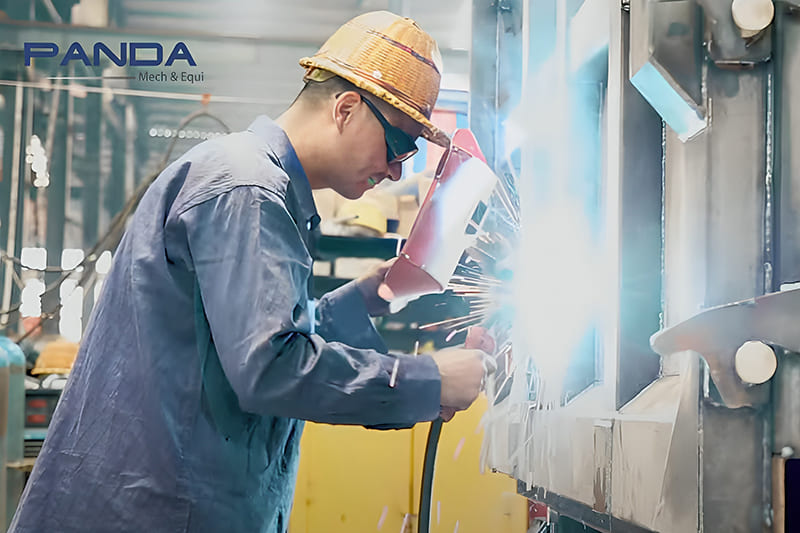
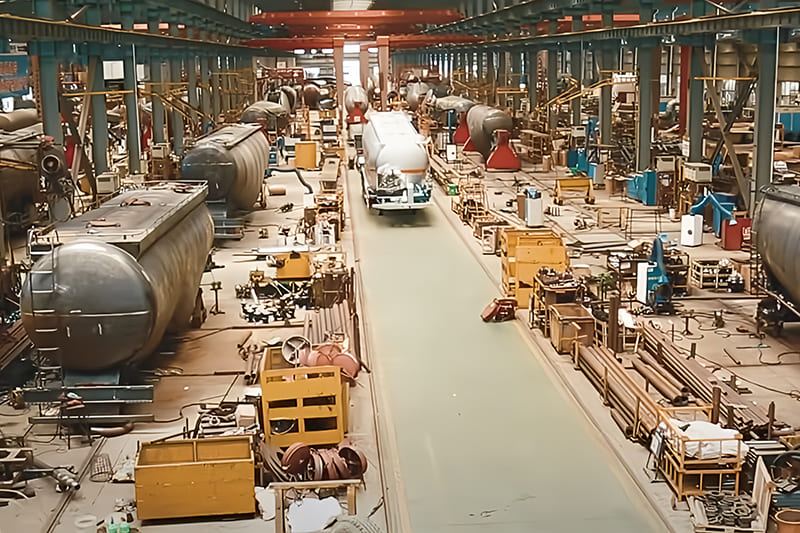
Cement Tanker Production LineReal tank fabrication and production inside the Panda Mech factory.
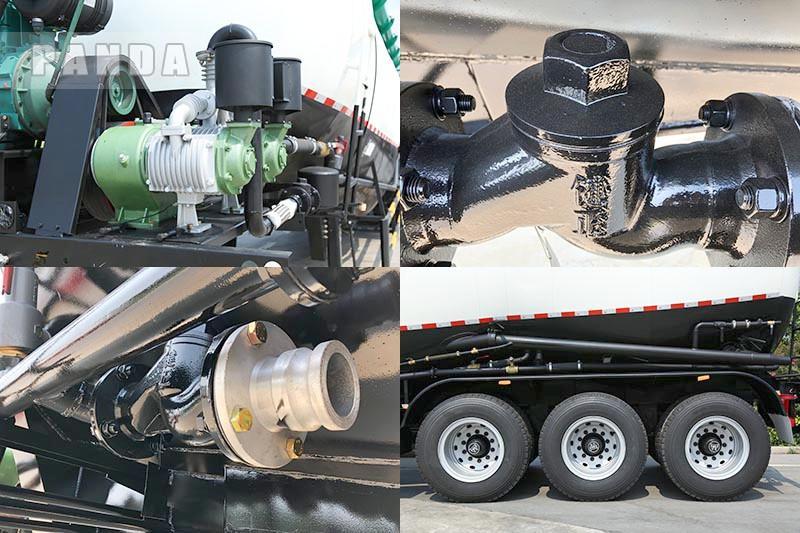
Pneumatic ComponentsThe compressor, valves, axles and other parts must work as one trailer.
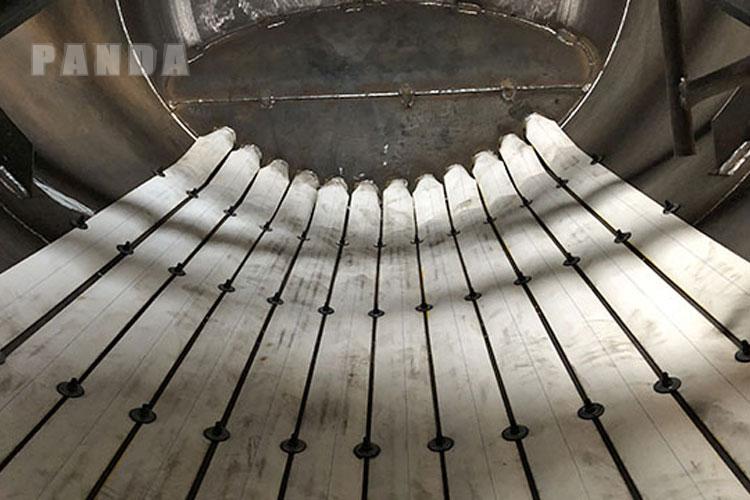
Internal AerationThe unloading system starts inside the tank.
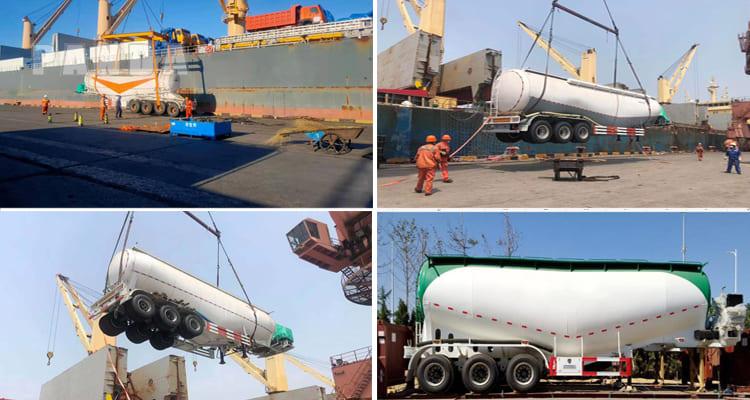
Finished TrailerProduction connects to export preparation and delivery.
Project Setup Examples
See How Your Project Conditions Change the Starting Setup
These are configuration examples based on the Panda Mech models shown on this page. They are not fixed rules. Your final trailer should be matched to the cargo, legal road limits, tractor and unloading site.
Starting use: smaller transport requirement. Main checks: route, legal GVW, cargo density and tractor match.
Starting use: mid-range fleet operation. Main checks: tare, per-axle load, volume and pneumatic duty.
Starting use: Panda Mech priority high-volume model. Main checks: legal payload, tractor, silo height and discharge route.
Starting use: projects that need more axle positions to spread the load. Main checks: legal load benefit, extra tires, maintenance and cost.
Before you choose: send us your destination, cargo, tractor, route limits, silo height and discharge distance. We can use these details to check which starting setup fits your project.
| Project Input | What It Can Change | Why We Ask |
|---|---|---|
| Destination country | Axle setup, brakes, lighting and legal weight | Road rules differ by market |
| Cargo & bulk density | Tank volume and usable payload | The same m³ does not equal the same tons for every powder |
| Tractor | Kingpin, fifth-wheel height and legal combination weight | The trailer must fit the tractor and road limits |
| Hose length | Air resistance and unloading time | Longer discharge lines are harder to convey through |
| Silo height | Required pneumatic duty | Higher vertical conveying increases system resistance |
Commercial Terms
Confirm These Commercial Terms Before You Place the Order
Before you order a cement trailer, confirm what happens after the technical specification is approved. Check these items in the actual Panda Mech quote instead of relying on general website promises.
Production Lead Time
Confirm the production window and the date from which it starts.
Warranty
Confirm the warranty period, covered parts, exclusions and claim process in the quote.
Spare Parts
Confirm included spares, recommended service parts and future supply route.
Inspection
Confirm factory inspection, customer inspection or third-party inspection options.
Payment Terms
Confirm the deposit, balance payment points and the documents linked to each payment.
Shipping Method
Confirm export preparation, shipping route, destination and the plan for your order quantity.
Technical Documents
Confirm the drawing, technical specification, operating information and ordered parts list.
After-Sales Support
Confirm who will handle technical questions, parts identification and service follow-up.
What a useful Panda Mech quotation should make clear
The quote should identify the model/setup, major ordered components, commercial scope and the information still waiting for final confirmation. If something important is not yet fixed, it is better to mark it clearly than to hide it behind a generic specification.
Buying & Delivery
From Cement Trailer Specification to Delivery
A clear order process helps prevent specification changes after production has started.
01Send RequirementsCargo, country, payload and tractor
02Engineering ReviewRoad, axle and unloading duty
03Confirm SpecificationParts, dimensions and drawing
04ProductionTank, chassis and system assembly
05InspectionFunctional and quality checks
06Export PreparationProtection and shipment preparation
07ShippingDelivery route confirmed for order
Request for Quotation (RFQ)
Get the Right Cement Trailer Price for Your Setup
Start with the four required details below. Add the other information if you know it. This helps us quote the actual setup you need instead of guessing from the words “cement trailer.”
Required 01MaterialCement, fly ash, lime or other compatible powder
Required 02Target PayloadRequired tons per trip
Required 03Destination CountryNeeded for road / axle review
Required 04QuantitySingle unit or fleet quantity
Helpful 05Bulk DensityWorking density if known
Helpful 06TractorModel and connection information if known
Helpful 07Axle RestrictionsKnown GVW or per-axle limits
Helpful 08Discharge DistanceHorizontal hose / pipe length
Helpful 09Silo HeightVertical conveying height and receiving conditions
Helpful 10Preferred ComponentsAxle, suspension, compressor or brake preferences
Helpful 11Delivery PortDestination port if already selected
Helpful 12Required Delivery DateTarget project timing if fixed
FAQ
Buying a Bulk Cement Trailer: Common Questions
How much does a bulk cement trailer cost?
The price depends on tank volume, target payload, axle and suspension setup, compressor system, tank material, brakes, valves, piping and local requirements. See the cement tanker price guide.
What size cement tanker trailer do I need?
Start with material, working bulk density, required legal payload and destination road limits. Tank volume in m³ is not the same as payload in tons. See the capacity guide.
Should I choose a 3 axle or 4 axle cement trailer?
Choose the axle count from local axle limits, required payload, axle, tire and brake cost, maintenance and route conditions. Do not choose from tonnage alone.
What materials can a cement trailer transport?
Panda Mech cement and pneumatic tankers can carry bulk cement and compatible dry powders such as fly ash, lime and some mineral powders. Confirm the exact material with us before production.
How does a bulk cement tanker unload?
The tanker uses compressed air to build tank pressure and loosen the powder. The material then moves through the product valve and discharge line to the receiving silo. See how a cement tanker works.
Can Panda Mech match the trailer to my country's road limits?
We can review your destination, payload, tractor and road/axle requirements before the final setup is approved. Final legal use still depends on local rules and the approved project specification.
What information do you need to quote a cement trailer?
Start with material, target payload, destination country and quantity. If known, also send bulk density, tractor, axle restrictions, discharge distance, silo height, preferred components, delivery port and required delivery date.
How is the cement trailer shipped?
Shipping depends on the destination, quantity and trailer setup. Send us the destination and quantity so we can check the suitable shipping route and export preparation.
How long does it take to unload a cement trailer?
Unloading time depends on the cargo, compressor setup, aeration, discharge pipe, hose length, silo height and receiving conditions. Compare time claims only when the test conditions are stated.
What should be confirmed before production starts?
Before production starts, confirm the final drawing, tank volume, target payload, axles and suspension. Also confirm the pneumatic system, brake package, local requirements and agreed inspection checks.
What should I compare between two cement trailer quotations?
Compare the same tank volume, tank material, axle and suspension setup, compressor and brakes. Also compare valves, piping, accessories, inspection checks and commercial terms—not only tonnage and total price.
Can I confirm the actual component brands before production?
Yes. If axle, suspension, compressor, brake or other component brands matter to your fleet, include them in the approved specification or quotation before production starts.
What test or inspection records should I ask for?
Start with the approved drawing and final inspection record. For pressure, leakage, unloading or other performance checks, make sure the test method and conditions are written clearly so the result can be understood later.