
Flour Tanker for Bulk Wheat Flour & Food Powder Transport
Panda Mech manufactures pneumatic flour tanker trailers for bulk wheat flour and compatible food powders. Our current range is about 20–40 tons and 30–60 m³. We can supply aluminum or stainless-steel tank options and match the unloading system to your route and receiving silo.
Send us the cargo, bulk density, target payload, destination country, silo height and unloading distance. We use this information to recommend the right tanker before we quote.
Choose a flour tanker when you need sealed bulk transport and pneumatic silo unloading
Tank volume is only one part of the choice. We also check your cargo, bulk density, target payload, cleaning method, route, tractor and receiving silo. This helps us match the trailer to the way you will actually use it.
A flour tanker is a good fit when…
- You transport wheat flour or another compatible food powder in bulk.
- You unload pneumatically into a mill, bakery, plant or storage silo.
- You need aluminum or stainless-steel tank material options.
- You need the trailer configured around route limits, tractor fit and silo conditions.
- You value cleaning, sealing, moisture control and cross-contamination management.
Tell us before we quote if…
- You need specific food-contact documents or a named material grade.
- You plan to carry different food powders or allergen-sensitive products.
- You have a strict unloading-time target, a tall silo or a long discharge line.
- Your country has special axle, brake, size or road-weight rules.
- Your cargo is cement, fly ash, lime or mineral powder. In that case, use our industrial pneumatic tanker range instead.
See the real Panda Mech flour tanker before you compare specs
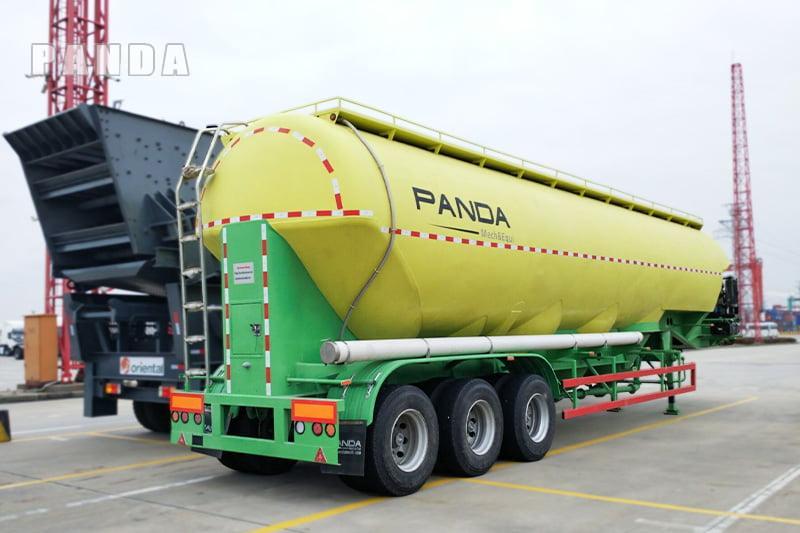
These are real Panda Mech flour tanker photos. You can check the tank shape, axles, ladder and discharge area. Before production, we can provide the drawing for your selected trailer.


Flour tanker specs: 20–40 tons, 30–60 m³, with a typical 30-ton model
The table below shows the current Panda Mech flour tanker range. Some values are fixed only after we know your cargo, route and local road rules. Payload, tank volume and axle rating are different things, so we check them separately.
| Item | Available range | What it means for your order |
|---|---|---|
| Primary cargo | Wheat flour / wheat powder | Tell us the exact food powder so we can check flow, cleaning and cross-contamination needs. |
| Payload | Approx. 20–40 tons family range | 30 tons is the typical model. Your legal payload also depends on trailer tare, axle setup and local road limits. |
| Volume | 30–60 m³ family range | We choose tank volume from bulk density, target payload and route limits. |
| Overall dimensions | 8,500–10,800 × 2,500 × 3,300–3,800 mm | These are family-range dimensions. Your final drawing shows the exact size. |
| Tare | Approx. 6–8 tons | Tare changes with tank material, volume, chassis and fitted equipment. |
| Axle configuration | 2–4 axles available by project | We match the axle layout to payload, route, tractor and local road rules. |
| Tank material options | Food-grade aluminum / stainless steel | We confirm the exact alloy or stainless grade and required documents in the order. |
| Suspension | Mechanical or air suspension | Choose mechanical or air suspension based on road conditions, fleet needs and daily use. |
| Brake component | WABCO emergency valve listed | We confirm the final brake setup for your destination market. |
| Independent air package | Weichai / Deutz diesel engine optional | Use this when you need an independent air source for unloading. |
| Manholes | 2–4 sets, 500 mm | The final number depends on tank volume and layout. |
| Discharge valve | 4-inch disc valve | We match the discharge pipe and hose to the receiving system. |
| Working / test pressure | Confirmed for your order | We confirm working pressure and test pressure separately in your technical sheet. They are not the same value. |
| Typical unloading guidance | Approx. 30–60 minutes for a full load under suitable conditions | Unloading time changes with flour condition, airflow, discharge distance, silo height, filter capacity and backpressure. |
How Panda Mech sizes a flour tanker
We do not choose a flour tanker from tonnage alone. First, we check your flour bulk density and target payload. Then we choose the tank volume you need. After that, we check trailer tare, axles, tractor fit and local road limits. Finally, we match the unloading system to your receiving silo.
Is the 30-ton flour tanker the right size for your operation?
Thirty tons is our typical flour tanker size, but it does not always need the same tank volume. We first look at flour density and target payload. Then we check trailer tare, axle layout and local road limits before choosing the volume.
Tell us the flour type, bulk density, moisture sensitivity and whether the trailer will carry one product or several.
Set the payload you want to carry. Do not confuse payload with gross vehicle weight (GVW) or axle rating.
Choose the tank volume that fits the flour density and target payload.
Check tare, axles, tractor fit, dimensions and local road limits before production.
What we need first
Send us the bulk density and target payload first. We use those two numbers to check whether the 30-ton model fits and which tank volume makes sense.
How to compare flour tanker specifications
Two flour tankers can have the same axle count or tank volume and still be very different in daily use. Compare the full transport system, not one number.
| What to compare | What to check | Why it matters |
|---|---|---|
| Payload | Legal usable payload | Axle rating is not the same as legal cargo payload. |
| Tank volume | m³ plus flour bulk density | A bigger tank does not always mean you can legally carry more flour. |
| Tare | Complete trailer weight | Lower tare can leave more legal weight available for cargo. |
| Axles | Layout plus local axle-load rules | “3 axle” by itself does not tell you the legal payload. |
| Tank material | Aluminum vs stainless steel | Material changes tare, cleaning needs and price. |
| Air system | Air system matched to the line and silo | A larger blower or compressor alone does not guarantee faster unloading. |
| Silo connection | Height, pipe, filter and backpressure | The receiving system can become the unloading bottleneck. |
Aluminum or stainless steel: which tank material fits your operation?
Panda Mech offers food-grade aluminum and stainless-steel tank options. We confirm the exact alloy or stainless grade in your order documents. A material name by itself does not prove a specific food-contact certification.
Choose aluminum when lower tare and more usable payload matter most
Aluminum is often the better choice when trailer weight affects how much flour you can legally carry. It also has good corrosion resistance. We still check your cleaning method and cargo before final selection.
- Useful when lower trailer weight can help legal payload.
- Confirm the exact alloy and material documents before production.
- Confirm compatibility with the planned cleaning method.
Choose stainless steel when repeated cleaning and sanitation matter more
Stainless steel is often the better choice when the tanker needs repeated cleaning, strong corrosion resistance or frequent product changes. The trade-off is usually more tare weight than aluminum.
- Useful for more demanding or frequent cleaning.
- Confirm exact stainless grade and required documents.
- If you use wet cleaning, define how the tank will be dried before the next load.
From bulk loading to sealed transport and silo unloading
The trailer needs to work from loading all the way to silo unloading. We match the loading points, sealed tank, air system and discharge connection to your normal operating process.
Flour is loaded through the top openings. After loading, the openings are closed and sealed for transport.
The closed tank, covers, seals and pipes help keep out moisture and reduce open exposure.
Compressed air loosens the flour so it can move through the discharge pipe. This process is called fluidization.
The flour moves through the discharge line into the silo. Silo filters and backpressure can make unloading faster or slower.
We match the unloading air system to your flour, discharge line and silo
A bigger blower or compressor does not automatically mean faster unloading. The air source, tank fluidization, discharge valve, hose, silo inlet and silo filter all work together. We check the whole system.
What we set up on the trailer
- Optional independent engine-driven air package when needed.
- Air distribution and flour fluidization setup.
- Discharge valve and pipeline layout.
- Hose size and receiving-silo connection.
- Working pressure and test pressure listed separately in your technical sheet.
What we need from your silo site
- Silo height and inlet position.
- Horizontal discharge distance.
- Pipe / hose diameter and number of bends.
- Receiver filter capacity.
- Known backpressure or other flow restrictions.
- Target unloading time.
How we keep flour sealed during transport
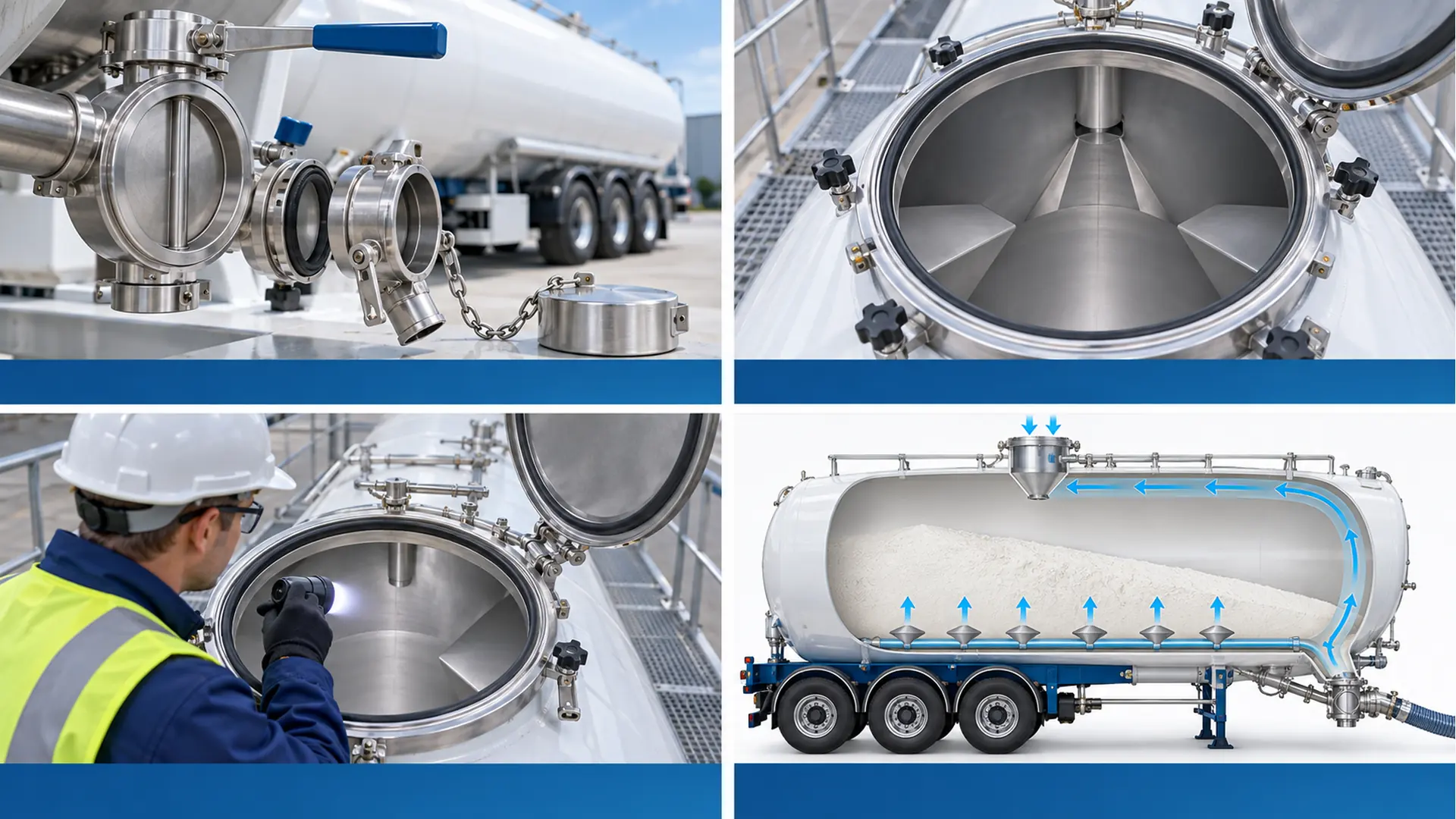
Flour must stay dry and protected during transport. The main places to check are the manholes, seals, valves, pipe joints and discharge connections.
Manhole seals
Manhole covers and seals help keep rain, dust and moisture outside the tank. Worn or damaged seals should be replaced before loading.
Valves & pipe joints
Valves, pipe joints and hose connections are common places for air or product leakage. We check these connections during assembly and final inspection.
Moisture control
The tank should stay closed and dry during transport. After wet cleaning, it must be fully dried before the next flour load.
Final sealing check
Before release, we check tank openings, covers, valves, pipe connections and the pneumatic system for the selected trailer.
We match the flour tanker to your tractor, roads and destination market
The same flour tanker setup does not fit every country. Send us your tractor model, route conditions and destination market. We check these before fixing the axle, suspension and trailer setup.
Destination country
We use your destination and route to check trailer size, operating weight and items that need local confirmation.
Tractor interface
Send the tractor model or interface data. We check fifth-wheel height, brakes, electrical connections and coupling needs.
Axle layout
We choose the axle setup from payload, trailer tare, route and local road-weight rules—not axle count alone.
Road condition
Road quality, turning space and daily distance can change the suspension and running gear we recommend.
Fleet standardization
For fleet orders, we can keep suspension, valves, hoses and common service parts consistent across units.
Receiving silo
The silo affects unloading. We check its height, filter, pipe layout and backpressure with the trailer.
For food powder, tell us how you plan to clean the tanker
Cleaning needs depend on what you carry. Tank material alone does not make the transport process hygienic. Previous cargo, next cargo, seals, moisture and drying method all matter.
Dedicated flour service
This is the simplest setup when the trailer carries the same flour again and again. It reduces product changes and cross-contamination risk.
Multiple food powders
Tell us every product you plan to carry. We check flow behavior, odor, cleaning and cross-contamination before confirming one tanker for several powders.
Wet cleaning
If you use wet cleaning, tell us before production. We check material compatibility and drying needs. We do not claim clean-in-place (CIP) or steam-in-place (SIP) capability unless it is specifically designed and documented for your order.
Flour dust and pressure safety
Do not allow flour dust to build up around manholes, discharge pipes or work areas. Before cleaning or servicing the tanker, stop the unloading system and release pressure safely.
If your project has a specific hazardous-area or dust-safety standard, send the required standard before quotation. We can check the required trailer setup and documents without assuming a certification that has not been confirmed.
Wheat flour is the main cargo. Tell us before using the tanker for other food powders
This tanker is mainly for wheat flour. If you want to carry another food powder, send us the cargo name first. We check how it flows, how it must be cleaned and whether cross-contamination is a concern.
| Cargo | Fit | What we check |
|---|---|---|
| Wheat flour / wheat powder | Primary application | Density, moisture, cleaning method and receiving-silo interface. |
| Starch | Check with us first | Flow, previous cargo, cleaning and unloading conditions. |
| Corn / rice flour | Check with us first | Bulk density, flow, cleaning and silo fit. |
| Semolina / similar food powders | Check with us first | Particle behavior, cleaning method and unloading needs. |
| Cement / fly ash / lime | Use our industrial pneumatic tanker | These are mineral powders, so use the industrial pneumatic tanker range instead. |
See the real Panda Mech flour tanker in video
The video shows the real trailer layout. For your order, use the final drawing to confirm the exact size, running gear and equipment.
Panda Mech builds and checks pneumatic tankers in our own factory
For a flour tanker, the build details matter more than marketing words. We check welds, tank and pipe sealing, valves, manholes, running gear and pneumatic function before release.
Factory production
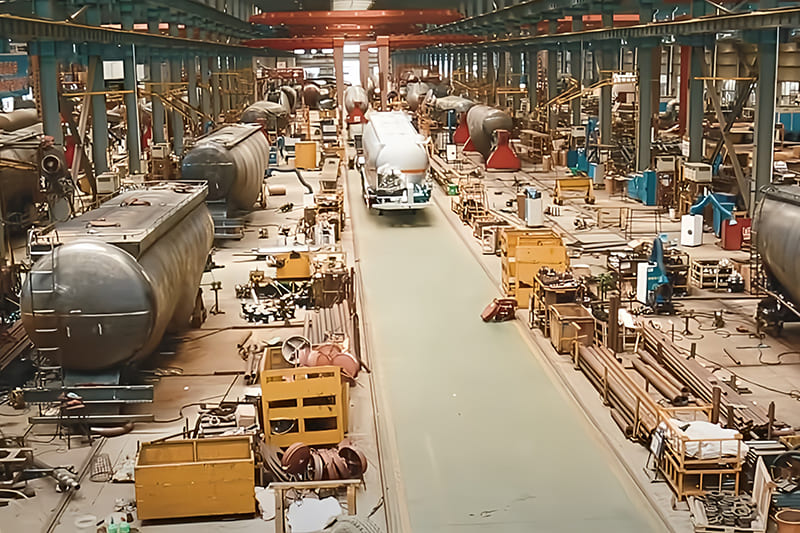
Real Panda Mech tanker workshop. This is factory evidence, not an exact flour tanker model photo.
Welding control
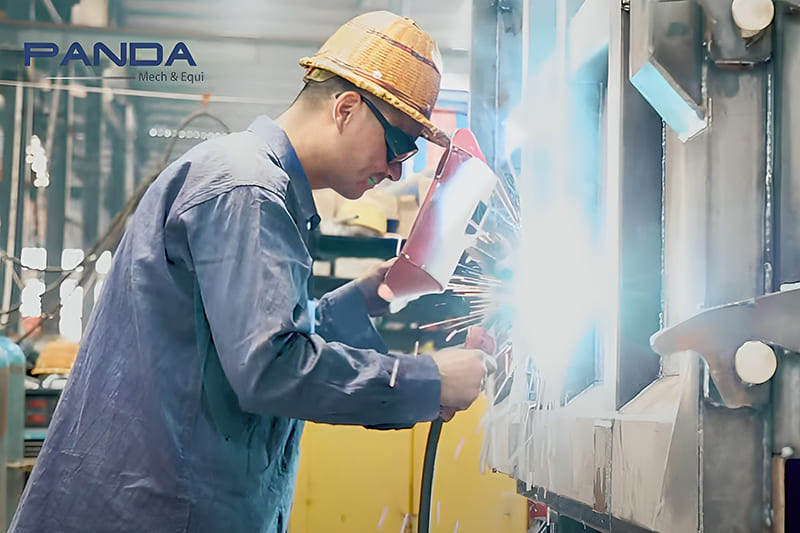
We check weld quality and consistency before final assembly.
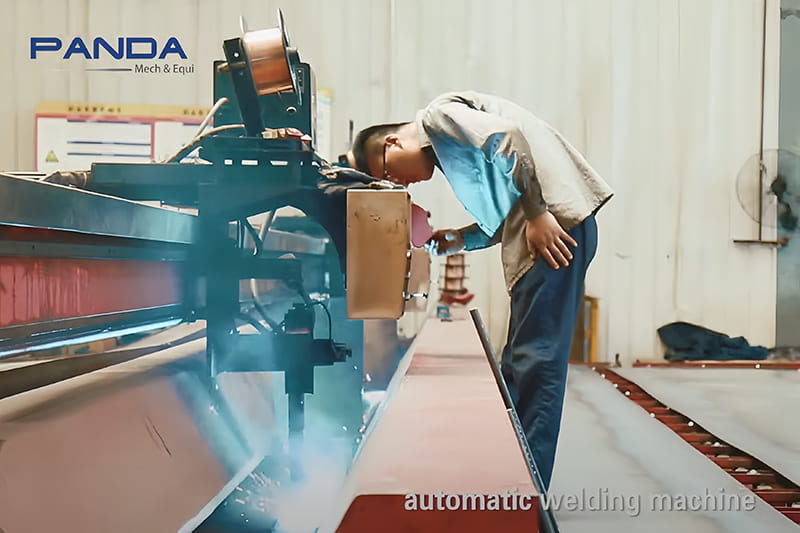
Repeatable fabrication
Production tooling and controlled welding help us keep fabrication consistent.
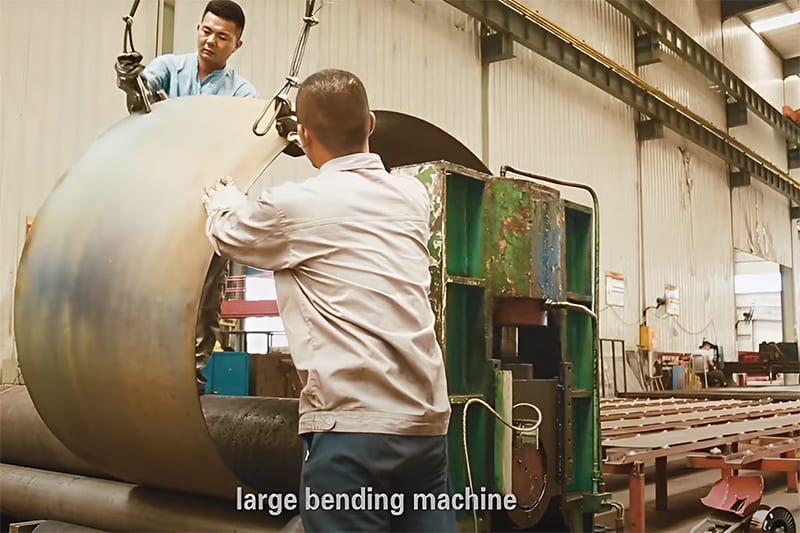
Tank forming
We check the tank shell before fitting the pneumatic system and running gear.
Plan maintenance before the flour tanker starts daily work
Daily use wears seals, valves, hoses, the air system and running gear. A simple maintenance plan helps keep the tanker clean and reduces downtime.
What to check regularly
- Manhole, valve and seal condition.
- Discharge hose and coupling integrity.
- Pipeline cleanliness and moisture ingress.
- Engine / air-package service status when fitted.
- Brake, tire, suspension and electrical condition.
Useful spare parts to plan for
- Specified food-compatible seals and gaskets.
- Valves, hoses and couplings.
- Pressure gauges and approved safety-related service parts.
- Engine / air-package service parts when fitted.
- Brake and electrical consumables.
Before servicing any pressure-system part, fully depressurize the system and follow the approved inspection procedure.
What determines flour tanker price?
Flour tanker price mainly changes with tank material, tank volume, axle and suspension setup, unloading air package, hygiene needs, order quantity and destination. We quote the trailer around the way you will use it.
For the same target payload, aluminum and stainless-steel setups can have different tare and equipment costs. Compare the full specification, not price alone.
Tank, volume & payload
Tank material, volume, trailer tare and target payload all affect the build and price.
Axles, suspension & air system
Axles, suspension, tractor fit and an optional independent air package can change both the setup and price.
Documents, quantity & shipping
Material documents, hygiene needs, fittings, order quantity and shipping plan can change the final quote.
Send 5 basic details and we can start your flour tanker quote
You do not need a full technical sheet before contacting us. Send the five basic details first. We can then ask for the extra information needed to finalize the trailer.
- Exact cargo
- Target payload or volume
- Destination country
- Quantity
- Email / WhatsApp contact
For a more accurate trailer setup
- Bulk density
- Tank material preference
- Required food-contact documents
- Cleaning method
- Previous / next cargo
- Allergen limits
- Silo height
- Horizontal discharge distance
- Pipe / hose diameter
- Receiver filter / backpressure
- Target unloading time
- Tractor / axle / suspension needs
Common flour tanker questions
What is a flour tanker?
A flour tanker is a sealed trailer for carrying wheat flour and compatible food powders in bulk. Compressed air loosens the flour and pushes it through a discharge line into a storage silo. This avoids bag handling during bulk delivery.
How much can a Panda Mech flour tanker carry?
The current Panda Mech range is about 20–40 tons, with 30 tons as the typical model. Your legal payload also depends on flour density, tank volume, trailer tare, axle setup and local road limits.
What volume is available for the flour tanker trailer?
The current tank-volume range is 30–60 m³. We choose the volume from your target payload and actual bulk density. Tons and cubic meters are not the same thing.
Is a flour tanker the same as a cement tanker?
No. A flour tanker is set up for food-powder transport, with different needs for tank material, cleaning, sealing and cross-contamination control. Cement, fly ash, lime and mineral powders use our industrial pneumatic tanker range.
Is a flour tanker trailer the same as a flour truck?
Not always. A flour tanker trailer is a semi-trailer pulled by a tractor and used for bulk pneumatic unloading into a silo. “Flour truck” can also mean a rigid truck or a vehicle carrying bagged flour.
Is the Panda Mech flour tanker food-grade?
Panda Mech offers food-grade aluminum and stainless-steel tank options. We confirm the exact alloy or stainless grade and any required food-contact documents in the order. The material name alone does not prove a specific regulatory certification.
How long does pneumatic flour unloading take?
Typical full-load unloading is about 30–60 minutes under suitable conditions. Actual time changes with the air system, flour condition, discharge distance, pipe bends, silo height, backpressure and silo-filter capacity.
What should I provide before requesting a flour tanker quotation?
For a fast quote, send the cargo, target payload or volume, destination country and quantity. For the final setup, we also need bulk density, tank material, cleaning method, silo height, discharge distance, pipe size, filter or backpressure, target unloading time and tractor details.
How do you choose the right flour tanker size?
We start with the cargo bulk density and your target payload. These two values help us choose the tank volume. We then check trailer tare, axle layout, tractor fit and local road limits before we confirm the final size.
What can slow down flour tanker unloading?
Long discharge lines, many pipe bends, a tall silo, high backpressure, limited filter capacity, air leaks or poor flour flow can all slow unloading. This is why we ask for receiving-site details before we recommend the air system.
Send us your cargo, payload, route and silo details
We use your flour density, target payload, destination, cleaning needs and silo conditions to recommend the tank volume, material, axles and pneumatic unloading setup.