
What Are You Carrying?
- Working bulk density
- Moisture and how tightly the powder packs
- How the powder flows during loading and unloading
- One material or multiple powders
Panda Mech Cement Tanker Engineering
Tank volume is not the same as usable payload. We size a cement tanker from your target payload and material bulk density. We also check local weight and axle limits before choosing the final size.

For smaller jobs, start around the 30-ton class. For regular fleet work, compare 40 and 50 tons first. For higher-volume routes, check whether a 60-ton setup is legal in your market. We then match the tank volume and axle setup to your material and route.
| Payload | Typical Tank Volume | Typical Axle Setup | Best For | When It Makes Sense |
|---|---|---|---|---|
| 30 Ton | ≈ 25 m³ | 2–3 axle | Smaller loads, tight sites and routes with lower weight limits | Choose this size when easy access and maneuverability matter more than maximum payload. |
| 40 Ton | 30–35 m³ | Usually 3 axle | Medium-volume cement transport and regular fleet work | A practical middle option when you need more payload but do not need a larger 50–60 ton tanker. |
| 50 Ton Common Fleet Reference |
≈ 40 m³ | 3 axles commonly used | Cement plants, transport fleets and frequent bulk cement deliveries | Start here for frequent cement deliveries when local weight and axle rules allow the setup. |
| 60 Ton | ≈ 50 m³ | 3–4 axles | Higher-volume routes where higher vehicle weight is allowed | We check GVW, axle loads and route limits before we recommend this larger size. |
Payload tells you how many tons the tanker is designed to carry. Dimensions tell you how much road and site space the trailer needs. The values below are published Panda Mech references, not fixed dimensions for every order.
| Payload Class | Tank Volume | Published Reference Length | Width | Height | What This Means |
|---|---|---|---|---|---|
| 30 Ton | 25 m³ | 7,350 mm | 2,500 mm | 3,900 mm | Shorter reference setup for smaller loads and tighter sites. |
| 40 Ton | 35 m³ | 8,500 mm | 2,500 mm | 3,900 mm | Mid-size reference for regular fleet work. |
| 50 Ton | 40 m³ | 10,500 mm | 2,500 mm | 3,950 mm* | Common high-use reference. Exact height can change with the tank and chassis design. |
| 60 Ton | 50 m³ | 11,500 mm | 2,500 mm | 3,950 mm | Larger setup for routes and sites that can accept the size and weight. |
Reference data: Panda Mech’s Cement Bulker Specification & Weight page. Individual product pages may publish model-specific dimensions.
These two numbers describe different things. Cubic meters (m³) tell you the space inside the tank. Tons tell you the cargo weight. Bulk density connects the two.
m³ tells you how much space is available inside the tank.
Tons tell you how much material the trailer carries.
Bulk density tells us how much a set volume of powder weighs.
40 m³ × 1.20 t/m³ = 48 tons
The trailer may reach its legal weight or axle limit before the tank is full.
40 m³ × 0.80 t/m³ = 32 tons
The tank may fill before the trailer reaches its legal weight limit.
Capacity Calculator
You may know your target tons before you know the required tank volume. Tank volume is measured in cubic meters (m³ or CBM). Enter your target payload and working bulk density. The calculator estimates the volume, adds your chosen allowance and shows the closest Panda Mech size class.
Quick Tank Size Calculator
This tool gives you a first estimate. The default 1.20 t/m³ density and 5% extra allowance are example planning inputs, not universal cement-tanker standards. Use your actual material data when available. Before we quote, we also check GVW, axle loads, tare weight, tractor data and route limits.
We do not choose tank size from tons alone. We check three things together: your material, the trailer and the rules on your route.
A tanker can be below the total gross vehicle weight limit and still overload one axle group. That is why we check where the load sits, not only the total tons.
Part of the cargo weight transfers to the tractor through the kingpin.
The remaining load sits on the trailer axles. One axle group can be overloaded even when total vehicle weight looks acceptable.
We match tank shape, kingpin position, axle position and payload so the load is shared correctly for the planned setup.
The biggest tank is not always the right choice. We first find what really limits your operation: weight, volume, site access or unloading speed.
Use these four classes as a starting point. Before production, we confirm the final tank volume, axle setup and air-discharge system for your cargo and destination.
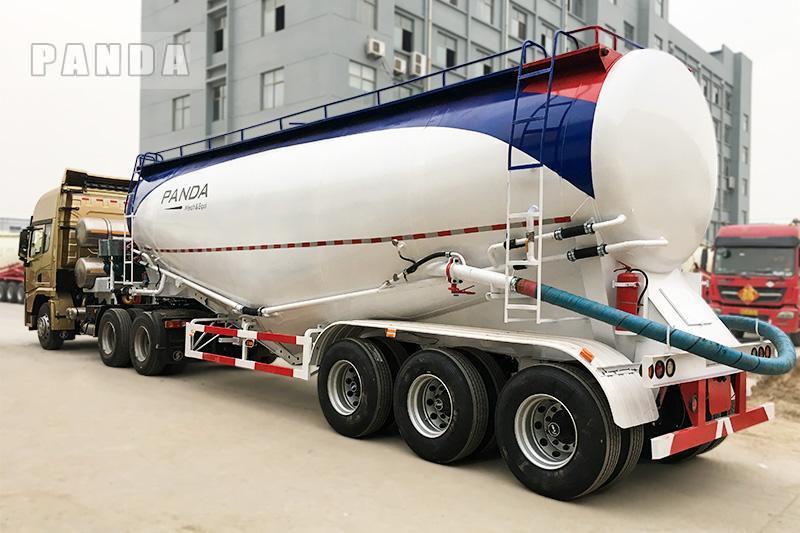

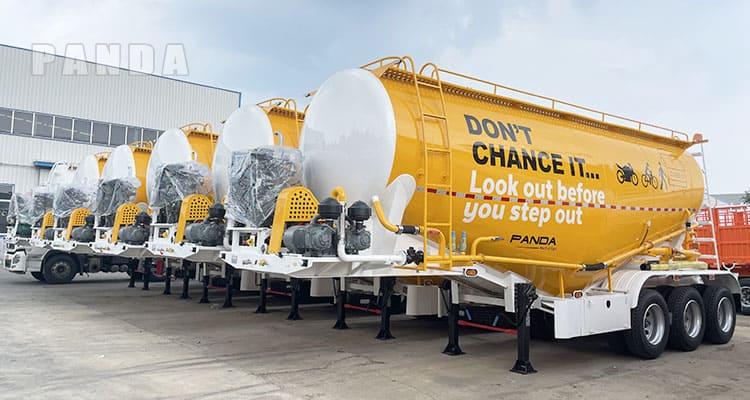
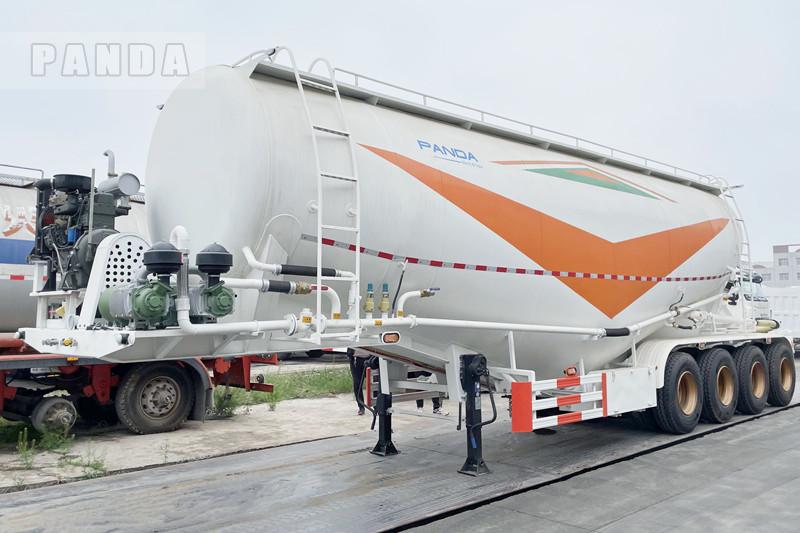
A larger cement tanker can carry more powder, but slow unloading can reduce trips per day. We check the air-discharge system together with tank capacity when fast turnaround matters.
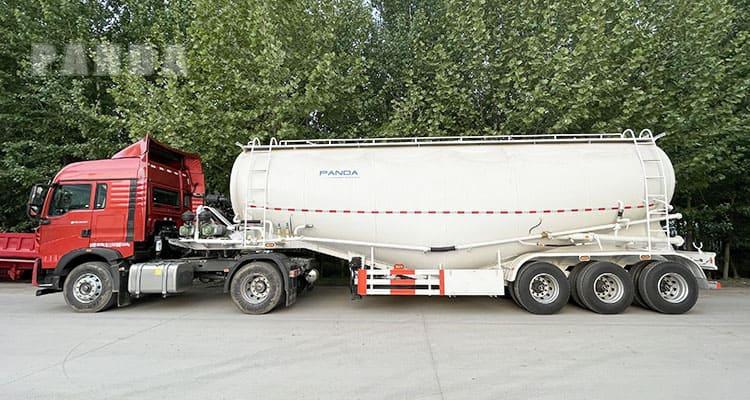
Air supply affects how quickly the pneumatic system can move powder out of the tank.
The internal air system helps the powder flow toward the discharge outlet instead of staying packed in the tank.
Pipe size and layout affect flow resistance and pressure loss during unloading.
Longer or higher discharge routes can make unloading harder and should be checked before final setup.
A bigger tanker only saves money if you can legally carry the load and still complete enough trips each day. We look at delivered tons per day, unloading time and operating cost — not just the tank size on the quote.
A larger legal payload can reduce how many trips you need to move the same amount of cement.
A large tanker can still lose time if the air-discharge system unloads slowly.
A heavier empty trailer uses part of the allowed vehicle weight. That can leave less legal capacity for cargo.
More axles and a larger trailer can increase tire, maintenance and fuel costs. The biggest model is not always the cheapest to operate.
Before Production
Before production starts, we turn your transport needs into a clear tanker specification. We confirm the payload, tank volume, axle setup and air-discharge requirements before we start fabrication.
We confirm the powder, its working bulk density and whether you plan to carry more than one material.
We confirm how many tons you want to carry on each trip.
We check the local vehicle-weight and axle limits that affect how much you can legally carry.
We match tank volume, axle setup and load distribution to your cargo and route.
We confirm the agreed drawing and specification before production starts.
We build and inspect the tank, chassis and air-discharge system against the approved specification.
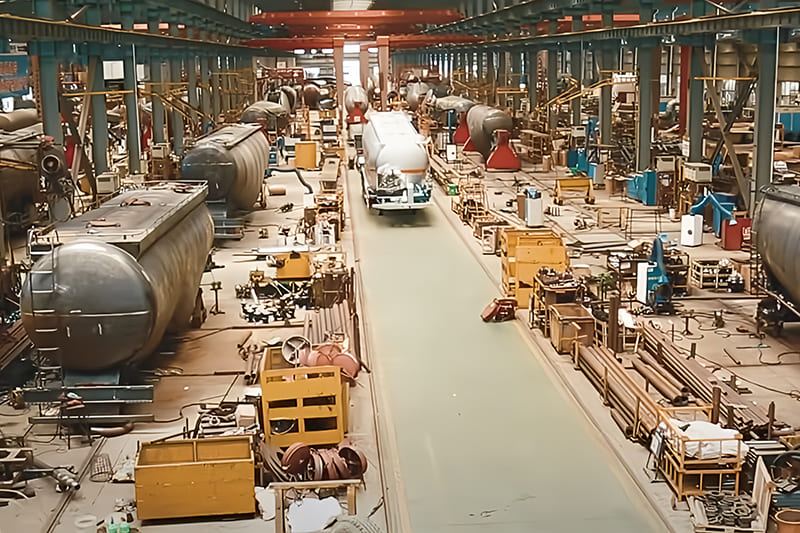
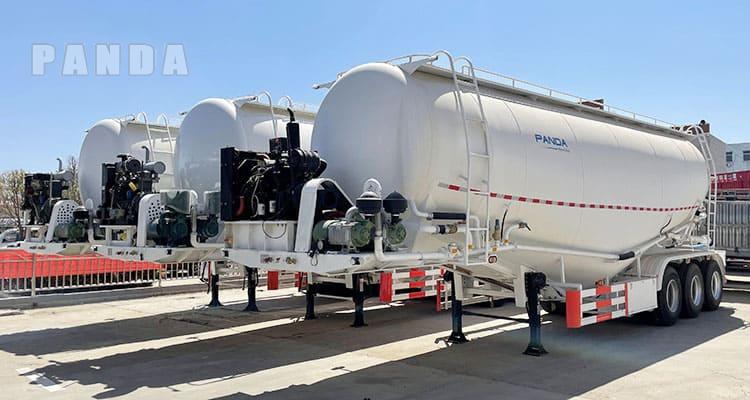
First-party evidence: see Panda Mech’s model pages for published specifications, design notes and model-specific production/testing details. Exact checks and components depend on the final tanker configuration.
Tank volume and cargo weight are not the same thing. You need the working bulk density to convert between them.
A heavier empty trailer can leave less legal weight available for your cargo.
The whole vehicle can be under the total weight limit while one axle group is still overloaded.
Extra tank volume can add cost and weight without increasing the cargo you can legally carry.
Direct Answers
For standard cement transport, 30, 40, 50 and 60-ton classes are common starting points in the Panda Mech range. The legal payload depends on empty trailer weight, tractor weight, axle loads and local GVW rules.
A 50-ton tanker does not equal one fixed m³ value because the answer depends on material density. In the Panda Mech range, about 40 m³ is a common reference for the 50-ton class. We then adjust the final volume for your cargo and route.
No. 40 m³ is volume and 40 tons is mass. Divide the target payload by the working bulk density to estimate the theoretical tank volume required.
Divide your target payload by the working bulk density to estimate the tank volume. Then add your volume allowance. Finally, check the result against tare weight, axle loads, GVW and local road limits.
At a working bulk density of 1.20 t/m³, 50 tons needs about 41.7 m³ by calculation. With a 5% volume allowance, that becomes about 43.8 m³. We then check whether a 40–45 m³ / 50-ton class fits your local weight and axle rules.
A 3-axle setup is common for 50-ton-class cement tankers. But axle count alone does not prove the payload is legal. We still check axle ratings, load distribution, tractor setup and local axle limits.
Tank volume is the physical space inside the tank. Usable payload is the cargo weight you can actually carry after checking bulk density, tare weight, GVW and axle limits. A larger m³ number does not automatically mean a larger legal payload.
No. A larger tanker only helps when the route allows the extra payload and the unloading cycle stays efficient. Compare legal payload, trips per day, unloading time, fuel, tires and axle-related costs.
Send us your country, material, target payload, bulk density if known and unloading conditions. We can then start matching the tank volume, axle setup and air-discharge system before quoting.
Engineering Recommendation
You do not need every technical detail before contacting us. Send the basic information below. We can use it to recommend a tank-volume range and axle setup for the quote.