
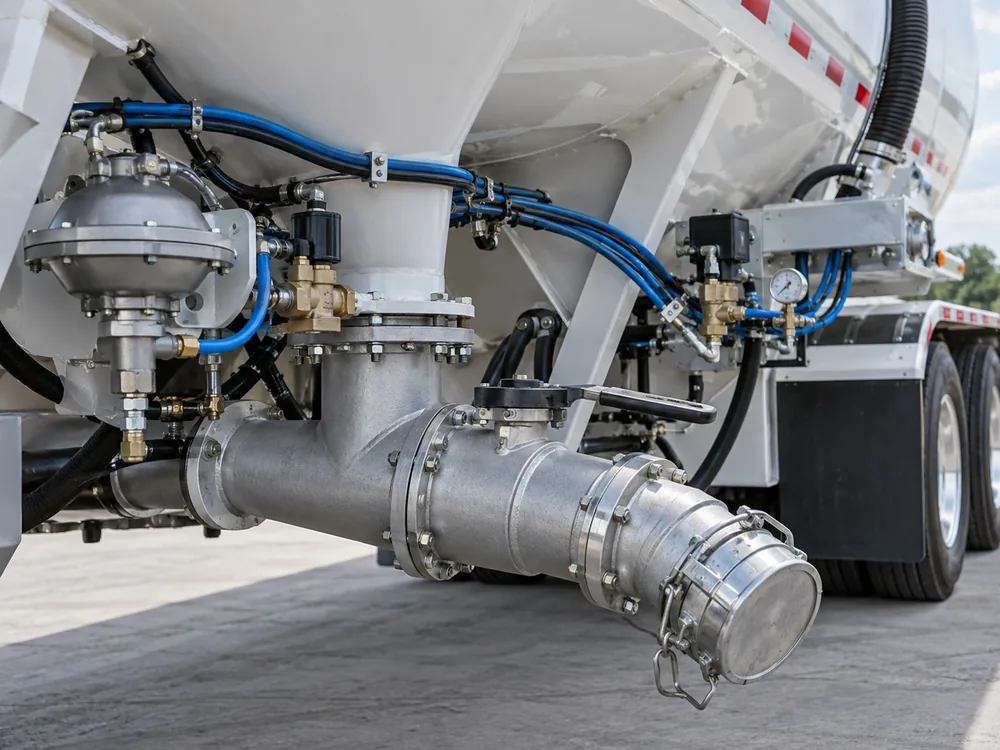
The compressor, air chambers, aeration fabric, discharge pipe, hose and silo connection must work together.
Panda Mech Cement Tanker Engineering
Cement Tanker Pneumatic Unloading System: Design & Troubleshooting
Panda Mech designs the compressor, air lines, aeration zones, discharge pipe and valves to work as one pneumatic unloading system. Aeration zones are the parts of the tank where compressed air enters the cement bed. We use your cargo, discharge distance, silo height and target unloading time to choose the final setup.
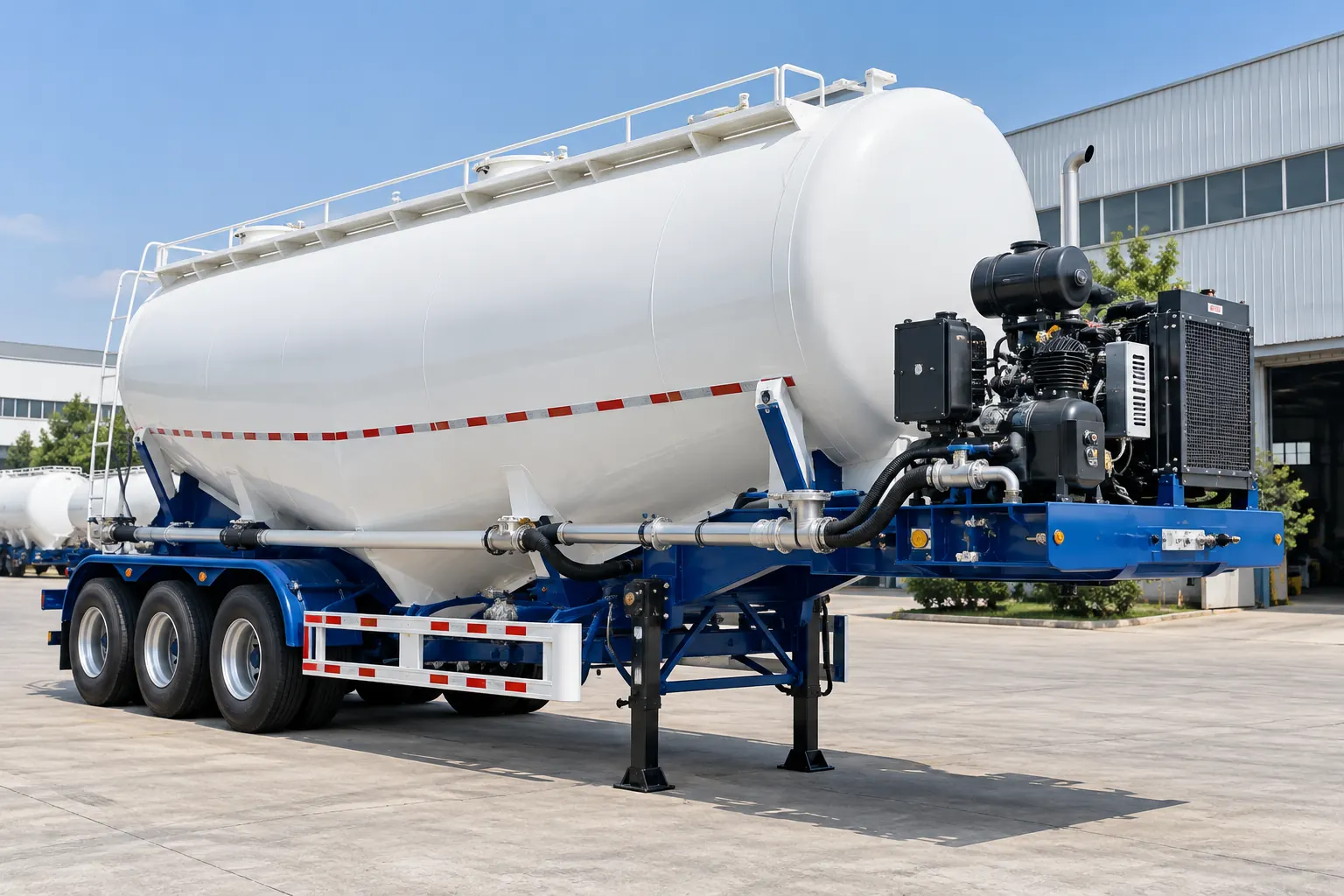
Quick answer: for Panda Mech cement tankers, our current cement-tanker family unloading-performance reference is >1.5 t/min. Actual site performance can change with cargo condition, airflow, hose length, silo height, pipe bends, air leaks and silo backpressure. Backpressure means pressure pushing back from the receiving silo. This is why we match the whole system instead of choosing the compressor alone.
Panda Mech reference: see our published cement-tanker unloading procedure and operating reference. Final performance still depends on the approved model and real unloading site.
>1.5 t/minPanda Mech cement-tanker family performance reference; actual site rate depends on operating conditions.
One matched systemCompressor, aeration, pipework, valves and receiving silo work together.
Your site data mattersWe check discharge distance, silo height and receiving conditions before we finalize the setup.
A Bigger Compressor Does Not Automatically Mean Faster Unloading
A good system must build steady airflow, loosen the cement evenly and move it through the discharge line. It must also work with the receiving silo. A restriction anywhere in this path can slow the whole unloading process.
Longer hose runs, higher silos, more bends and poor silo venting all make unloading harder.
If pressure is high but cement flow is weak, something may be restricting the system. The cement may also be getting too little or uneven air. Increasing compressor speed may not fix the real problem.
How the System Works
How Air and Cement Move Through the System
The unloading system has two connected paths. The air path builds pressure and puts air into the cement bed. The material path carries the loosened cement from the tank to the silo. Both paths must work correctly.
AIR PATH
Power SourceEngine / power take-off (PTO) / configured drive
CompressorCreates airflow
Air ManifoldDistributes compressed air
Air ChambersSends air to separate tank zones
Aeration LayerLoosens powder with air
Tank SpacePressure builds in the tank
MATERIAL PATH
Powder BedCement stored in tank
Fluidized ZoneAir helps the powder move
Tank OutletPowder moves toward the outlet
Product ValveControls discharge
Pipe / HoseCarries cement to the silo
Receiving SiloReceives cement and lets displaced air leave
On narrow screens, this system path reflows into fewer columns so each step stays readable.
What Happens Inside a Cement Tanker During Pneumatic Unloading?
Compressed air enters the tank through the aeration zones under the cement. The air loosens the powder so it can move toward the outlet. Engineers call this fluidization. Tank pressure then helps push the cement through the discharge line to the silo.
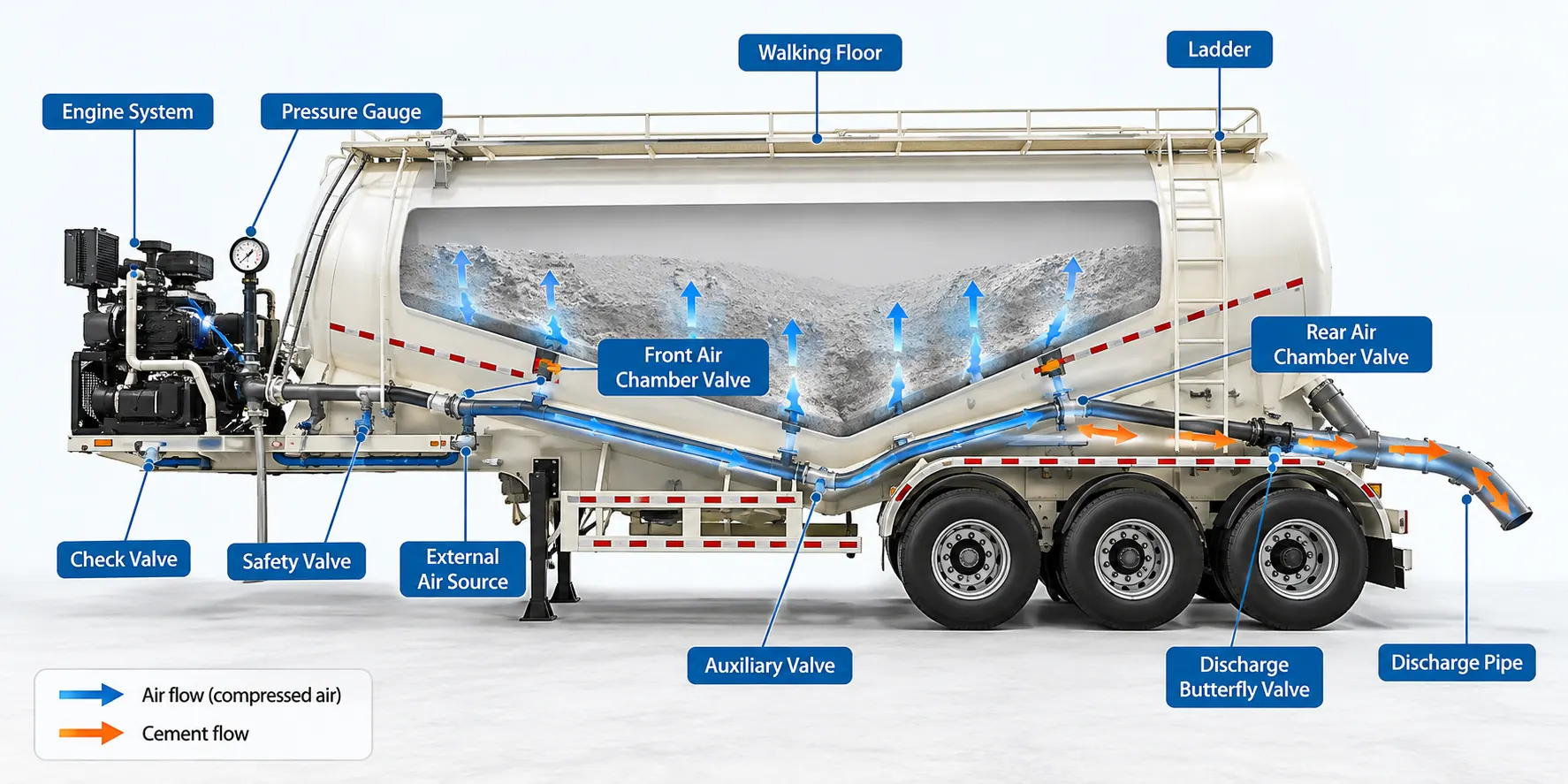
Simple system illustration: the exact number of air chambers, valves and pipes depends on the tanker design and the approved model setup.
How Panda Mech Matches the Pneumatic System to Your Unloading Site
We do not choose the pneumatic setup from tanker size alone. We first check how far the cement must travel and how high it must rise. We also check how the tractor drives the compressor and how the receiving silo handles air.
| Your Site Condition | What We Check | Why It Matters | What to Send Us |
|---|---|---|---|
| High receiving silo | Silo height, airflow, pipe resistance and compressor matching. | The higher the cement must travel, the harder the system has to work. | Height from the tanker outlet to the silo inlet. |
| Long horizontal discharge line | Pipe or hose diameter, total length, bends, boost air and compressor load. | Longer lines create more resistance and can slow the cement flow. | Total horizontal distance and hose/pipe diameter. |
| Multiple bends or restricted routing | Pipe route, number of bends and connection layout. | Every tight bend or narrow point adds resistance and can increase the risk of blockage. | Number of bends and connection layout. |
| Limited tractor PTO or incompatible drive | Available tractor drive and other air-source options. | The compressor drive must match your tractor. One drive setup does not fit every fleet. | Tractor model, power take-off (PTO) details and available power. |
| High silo backpressure | Silo venting, filter condition and inlet layout. | A blocked filter or poor venting can slow unloading even when the tanker is working correctly. | Silo filter / venting details where available. |
| Moist or difficult-flowing cargo | Cargo condition, aeration setup and operating procedure. | Moisture can make powder harder to fluidize. This can slow unloading and leave more material in the tank. | Cargo name, bulk density (weight per unit volume) and whether moisture is a concern. |
| Fleet needs repeatable turnaround | Common compressor, valves, hose connections, operating steps and service parts. | For a fleet, repeatable unloading and easy maintenance usually matter more than one peak performance number. | Trailer quantity, target unloading time and any fleet-standard requirements. |
What We Check in Each Part of the Pneumatic Unloading System
| Component | What It Does | What Can Go Wrong | What We Check |
|---|---|---|---|
| Air Compressor / Blower | Builds airflow and tank pressure so the powder can fluidize and move. | Slow pressure build, weak airflow, overheating or long unloading time. | Compressor model, airflow, drive method, running condition and service status. |
| Air Manifold / Distribution | Sends compressed air to the tank zones that need it. | Leaks or poor distribution can leave some tank areas short of air. | Pipe route, fittings, leaks, valve positions and air balance. |
| Air Chambers & Aeration System | Spreads air under the cement so the powder loosens and moves toward the outlet. | Poor aeration can leave residue or create high pressure with weak material flow. | Air-chamber sequence, aeration fabric condition, blockage and airflow balance. |
| Tank Outlet | Guides fluidized cement toward the product valve. | Material buildup or poor flow into the outlet can restrict discharge. | Outlet condition, geometry and visible blockage. |
| Product Valve | Controls when cement enters the discharge line. | A partly open, leaking or obstructed valve can limit flow. | Opening position, seal condition, movement and obstruction. |
| Secondary / Boost Air | Adds air when the approved procedure calls for line clearing or flow support. | Wrong timing can make flow unstable or fail to clear the line. | Valve timing and the approved operating sequence for the tanker. |
| Discharge Pipe & Hose | Carries cement from the tanker to the receiving silo. | Long runs, small passages, tight bends or damaged hose increase resistance. | Diameter, total length, bends, hose condition and silo height. |
| Pressure & Safety Devices | The pressure gauge shows tank pressure. The vent valve releases pressure in a controlled way. The safety relief valve protects against overpressure. | Bad readings, trapped pressure or an incorrectly serviced relief device can create unsafe conditions. | Gauge condition, vent operation and the approved safety-relief setting. The safety relief valve is not a normal operating control. |
Slow Unloading Can Come From the Tanker or the Silo
When unloading is slow, the problem may be on the tanker or at the receiving silo. We check both sides before changing compressor speed, pressure or hardware.
On the Tanker
- Compressor or blower output and drive
- Air lines and air-chamber balance
- Aeration fabric and internal air zones
- Discharge valve and boost-air sequence
- Pipe or hose diameter, condition and bends
At the Receiving Silo
- Silo inlet height
- Horizontal discharge distance
- Silo inlet restriction
- Filter condition and how much air it can handle
- Silo venting and backpressure
What this means:
A bigger compressor cannot fix a blocked silo filter, poor venting or a badly restricted discharge route. Check the receiving silo before we finalize the pneumatic setup.
Does Pneumatic Unloading Reduce Cement Dust?
Yes, a closed pneumatic discharge line helps reduce open cement handling and uncontrolled dust release. But the receiving silo must still handle the incoming conveying air correctly. A restricted filter or poor venting can raise backpressure, slow unloading and create dust problems around the silo side.
TankerCement and conveying air leave the tanker.
Closed discharge lineMoves material without open transfer between the tanker and silo.
Silo inletCement enters the receiving silo.
Filter + ventingThe receiving air needs a controlled way to leave.
What this means: do not evaluate dust control only from the tanker side. Silo filter condition and venting capacity also affect both unloading performance and site cleanliness.
What Should You Check Before Pneumatic Unloading?
A short check before unloading can prevent many avoidable problems. The aim is to confirm that the material path, air path, receiving silo and safety devices are ready before pressure builds.
Discharge hose and couplingLook for damage, loose connections or a poor seal that could leak air or cement.
Product valveConfirm the valve moves correctly and is in the approved starting position.
Air lines and fittingsVisible leaks reduce the airflow available for fluidization and conveying.
Pressure gaugeMake sure the gauge is in serviceable condition so the operator can trust the reading.
Compressor / blowerConfirm normal service condition before starting the unloading cycle.
Silo filterA restricted filter can increase receiving-silo backpressure.
Silo ventingThe conveying air entering the silo needs a safe and effective way to leave.
Safety relief deviceKeep it in the approved service condition. Do not use it as a normal operating control.
Do not change pressure or safety-valve settings simply because unloading is slow. Find the restriction or operating problem first, then follow the approved model instructions.
How Pneumatic Unloading Moves From Connection to Safe Depressurization
The exact valve order and pressure values must follow the approved instructions for your Panda Mech model. The steps below show the general flow. They do not replace the operating manual.
ConnectConnect the discharge hose to the approved silo connection and make sure it is sealed.
Prepare ValvesSet the air, vent, secondary-air and product valves to the approved starting positions.
Start Air SourceStart the air source and bring it to the required running condition.
Build PressureLet airflow and tank pressure stabilize as required by the model procedure.
Open DischargeOpen the product flow only when the required pressure and valve conditions are met.
Clean ZonesUse the approved front and rear air sequence to clear the remaining cement.
DepressurizeStop the air source and release all tank pressure. Disconnect the hose only after the tank is confirmed safe.
Safety note: working pressure, test pressure and the safety-relief setting are different values. Do not swap them or copy a pressure value from another tanker model.
Airflow vs Pressure: What Actually Moves the Cement?
Airflow and pressure do different jobs. Airflow supplies the air that loosens the cement and carries it through the discharge line. Pressure shows how much resistance the system is working against.
If pressure rises quickly but cement flow stays low, adding more pressure may not solve the problem. Check aeration, valve opening, hose or pipe restriction, bends and receiving-silo backpressure first.
Stable pressure + good cement flowThe system is moving material normally under the current site conditions.
High pressure + weak flowThe system may be meeting resistance. Check the material path, aeration and receiving silo.
Low pressure + weak flowThe air supply may be low or air may be escaping. Check compressor output, leaks and valve positions.
A High Pressure Reading Does Not Always Mean Fast Unloading
Do not judge unloading by the pressure gauge alone. Read pressure together with cement flow, valve position, aeration stage, pipe resistance and the condition of the receiving silo.
If pressure rises fast but cement flow stays weak, something may be restricting the system. Poor fluidization, a blocked line or silo backpressure can raise pressure without moving much cement.
Why Is a Cement Tanker Unloading Slowly?
Check the symptom before increasing compressor speed or pressure. The pattern often shows whether the problem is in the air system, the cement flow, the discharge line or the receiving silo.
| Symptom | Likely Cause Area | Check First | What It Means |
|---|---|---|---|
| Pressure will not build | Air leakage / low compressor output | Manholes, vent/relief devices, air lines, compressor output | Air is escaping too quickly, or the compressor is not supplying enough air to build the needed pressure. |
| Pressure rises too quickly but flow is weak | Restriction / poor fluidization / silo backpressure | Product valve, pipe, hose, aeration zones, silo filter and venting | Pressure is building, but the cement is not moving at the same rate. |
| Main discharge starts well then becomes slow | Aeration / material convergence | Front/rear chamber sequence and residual zones | The remaining cement may not be moving to the outlet well. |
| One end retains material | Zone-specific aeration problem | Air-chamber valves, fabric and internal air distribution | One part of the tank is not clearing properly. |
| Pressure fluctuates and material pulses | Air / material instability | Valve position, boost air, hose route and silo condition | Airflow or cement flow is unstable. |
| High residual material | Geometry / aeration / sequence / cargo condition | Dead zones, fabric, cargo moisture and front/rear cleanout | Main unloading can finish while some cement still remains in the tank. |
| Compressor runs hot | Air-source operating problem | Speed, filter, lubrication and prolonged restriction | The compressor may be running too hard or working against too much resistance. |
| Cement flow slows or stops after a long hose run or several bends | Pipeline resistance / partial blockage | Hose route, pipe diameter, bends, product valve, boost air and silo condition | The material path may be more restrictive than the current airflow can handle efficiently. |
How Cement Condition Changes Unloading Performance
The same tanker can unload differently when the material condition changes. We therefore ask about the cargo as well as the tanker and silo.
| Material Condition | What Can Happen | What We Check |
|---|---|---|
| Dry, free-flowing cement | Usually easier to aerate and move when the pneumatic system and receiving silo are correctly matched. | Normal airflow, discharge route and silo conditions. |
| Moist cement | Powder can become harder to fluidize and may leave more residue. | Cargo condition, aeration performance and residue after unloading. |
| Compacted cement | The powder may need more time to loosen before stable flow develops. | Aeration sequence, cargo condition and material movement toward the outlet. |
| Different bulk density | Payload, required tank volume and flow behavior may change. | Actual cargo data. Bulk density means the weight of the powder per unit of volume. |
Do not guess a universal moisture or density value. Send Panda Mech your actual material data when available. We use that information as an engineering input rather than treating all cement or powder as identical.
What Our Published Cement Unloading Procedure Shows
Our published cement-tanker procedure shows how front and rear air chambers, secondary air and pressure checks are used during unloading.
1. Connect and seal the discharge lineSet the front and rear air-chamber, pressure-release, secondary-air and product valves as required by the approved procedure.
2. Start engine / compressor smoothlyStart the configured air source and begin building tank pressure.
3. Clear the discharge lineThe published procedure references secondary-air use around 0.15 MPa.
4. Begin main dischargeThe published procedure references opening the discharge butterfly valve around 0.20 MPa.
5. Clean rear and front zonesUse the front and rear air chambers in sequence while watching pressure and cement flow.
6. Confirm residue and depressurizeStop the air source, fully release tank pressure and disconnect in the approved order.
Do not copy pressure values from another model: the approved tanker specification and operating instructions control the final pressure and valve logic.
Panda Mech Manufacturing and QC
How Panda Mech Checks the Unloading System Before Delivery
Stable unloading depends on the finished pneumatic system matching the approved specification. During manufacturing and final inspection, we check the air system, piping, valves, tank fabrication and configured air source before handover.
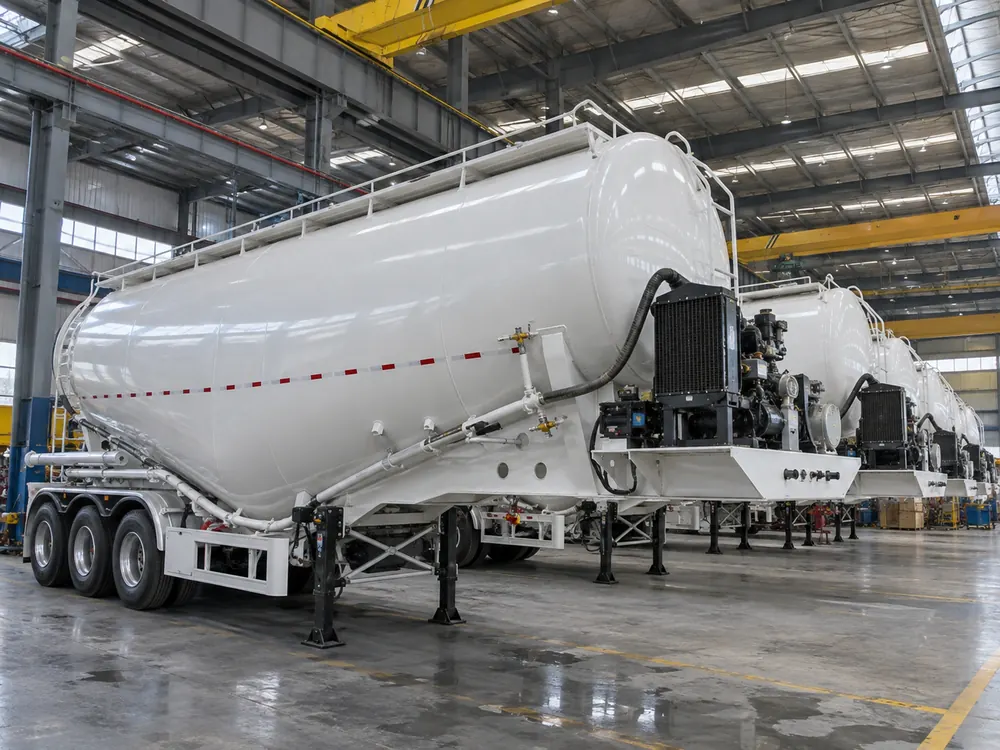
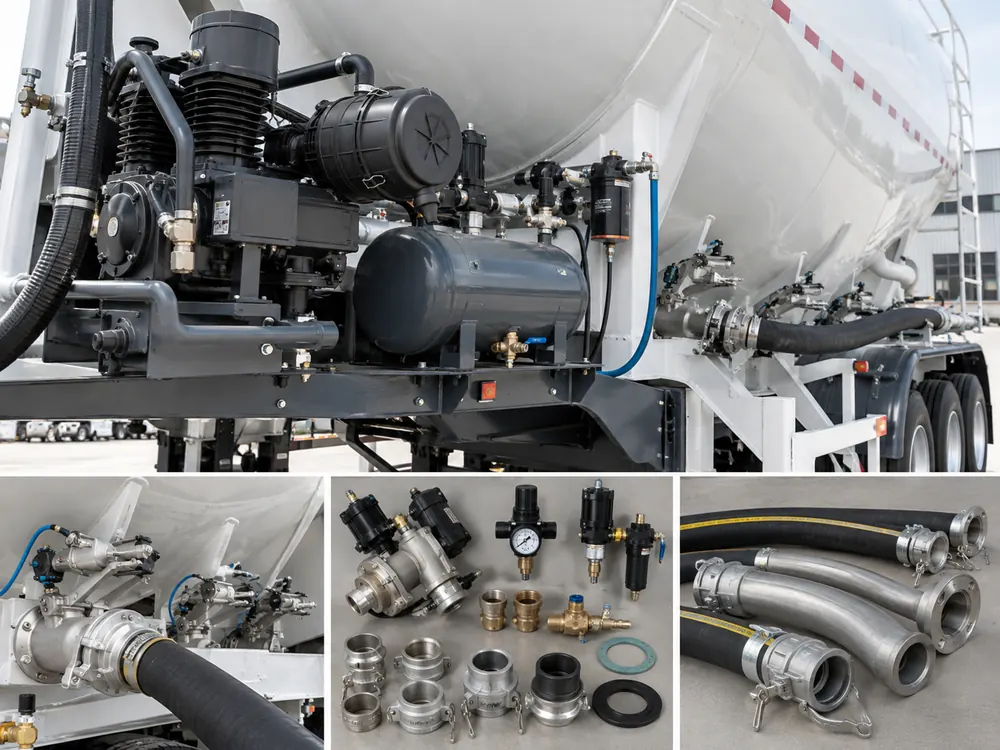
200+ QC checks/itemsCompany-level quality-control checks across the manufacturing process.
Air systemChecks piping installation, connections and visible air-leak risks.
Tank & weld inspectionChecks tank fabrication before final handover.
Valves & configured air sourceChecks installed valves and compressor function under the approved factory process.
Final specification reviewConfirms the finished tanker matches the approved configuration before delivery.
Send Us These Details Before We Finalize the Pneumatic Setup
Send what you know. You do not need every value before contacting Panda Mech. Start with the six items below; our engineering team will tell you what else is needed.
First review — send these first
CargoCement or other industrial powder; send bulk density when known.
Target payloadTell us the payload you need. We will confirm the tank volume separately.
Tractor / PTOConfirms how the compressor can be driven with your tractor.
Silo heightHeight from the tanker outlet to the receiving-silo inlet.
Horizontal distanceTotal hose or pipe distance, including the number of bends.
Target unloading timeUsed as a target. Final performance depends on the real site conditions.
Helpful if available
Destination countryHelps us review route, road and axle requirements. Local legal limits still need confirmation.
Project typeCement plant, transport fleet, engineering contractor or single-trailer purchase.
Tank volume if knownPayload and cubic-meter volume are different inputs; send both if you already know them.
QuantityHelps us plan fleet consistency, spare parts and production.
Road conditionHelps us choose running gear, suspension and chassis setup.
Silo filter / ventingHelps us check whether the receiving silo may create excessive backpressure.
Axle / suspension preferenceWe confirm this together with route, payload and local legal requirements.
Destination portNeeded to prepare the shipping part of the quotation.
Learn More About Operation, System Design and Cement Tanker Options
Common Questions Before You Order a Cement Tanker
How fast can a Panda Mech cement tanker unload?
Our current Panda Mech cement-tanker family unloading-performance reference is >1.5 t/min. Actual rate can change with cargo condition, compressor output, aeration, air leaks, pipe or hose size, discharge distance, silo height, bends and silo backpressure.
Does a larger compressor always unload cement faster?
No. The compressor must match the tank, aeration system, discharge line, cargo and receiving silo. If the real problem is a narrow hose, poor fluidization or silo backpressure, a bigger compressor will not remove that restriction.
Why can tank pressure be high while cement flow is slow?
High pressure can mean the system is meeting resistance. Check the product valve, hose or pipe, aeration zones, bends, silo filter and silo venting before assuming the compressor is too small.
Why does one end of the tanker retain more cement?
One tank area may not be getting enough air. A damaged or blocked aeration fabric, the wrong front/rear air sequence or difficult cargo can also leave more cement in one end.
What silo information should I send Panda Mech?
Send the silo inlet height, horizontal discharge distance, hose or pipe diameter, number of bends and connection layout. If you know the silo filter and venting details, send those too.
Are 0.15 MPa and 0.20 MPa the pressure settings for every Panda Mech tanker?
No. Those values come from one published Panda Mech operating procedure. The working pressure, test pressure, safety-relief setting and valve sequence must follow the approved specification and instructions for your actual tanker.
What should I send for a quotation?
Start with your destination country, project type, cargo, target payload and tank volume. Also send the quantity, road condition, tractor, silo height, discharge distance, target unloading time, axle or suspension preference and destination port. If you know the bulk density or local gross vehicle weight (GVW) and axle limits, send them too. You can still contact us if some details are missing.
What is the difference between airflow and pressure during unloading?
Airflow supplies the air that loosens and carries the cement. Pressure shows the resistance the system is working against. High pressure with weak cement flow can point to a restriction, poor aeration or receiving-silo backpressure.
Does pneumatic unloading eliminate cement dust?
A closed discharge line helps reduce open handling and uncontrolled dust release, but the receiving silo still needs effective filtration and venting. A restricted silo filter can increase backpressure and cause problems on the silo side.
Next Step
Match the Tanker to Your Real Unloading Site
We match the compressor drive, aeration layout, discharge pipe and valves to your cargo and receiving silo. This helps reduce the risk of slow unloading, too much residue and a setup that does not fit your site.
For the first review, send your cargo, payload, tractor, discharge distance, silo height and target unloading time. We will tell you what other information is needed.
Get a pneumatic setup matched to your site
Send us your operating conditions and project requirements. We will use them to prepare the right setup for quotation.
Send Your Unloading Conditions