
Aluminum Cement Trailer for Cement & Dry Bulk Powder
Panda Mech manufactures aluminum cement trailers for cement plants and dry bulk fleets. An aluminum tank can reduce empty trailer weight, also called tare. This can help you carry more legal payload on routes where weight limits matter. We match the tank, chassis, axles and air-powered unloading system to your cargo, route, tractor and receiving silo.
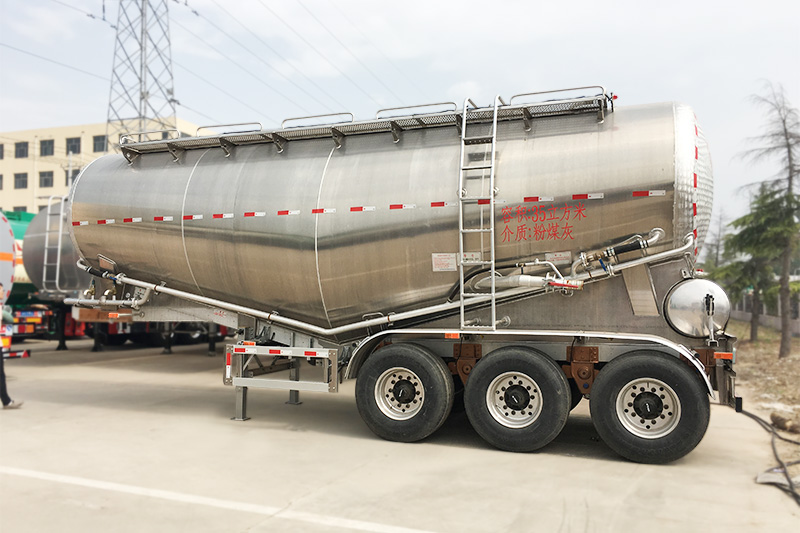
Aluminum Cement Trailer at a Glance
Here are the main facts for this Panda Mech aluminum cement trailer family. The final dimensions, payload, tank volume and axle count depend on your cargo and route. We also confirm the aluminum alloy and tank-shell thickness before we issue the final drawing.
| What You Need to Know | Panda Mech Answer |
|---|---|
| What is it? | An aluminum semi-trailer that uses compressed air to unload cement and other non-food dry powders. |
| Main cargos | Cement, fly ash, lime powder and selected mineral powders. We check the cargo before confirming the setup. |
| Tank shell | Aluminum tank shell. We confirm the exact alloy, thickness and welding method for your project. |
| Structural chassis | Carbon-steel chassis and supporting structure in our standard aluminum-cement setup. |
| Unloading | >1.5 t/min cement unloading baseline when the trailer, discharge line and receiving silo work well together. |
| Payload and volume | Calculated from cargo bulk density, empty trailer weight and legal gross vehicle weight (GVW) limits on your route. |
| Axles | Chosen from your route, legal axle limits, tractor and total weight requirements. |
| Production | Typically 7–25 days, depending on the trailer setup, order quantity and production schedule. |
Aluminum Cement Trailer Specifications & Configuration
One trailer setup does not fit every market. We start with your cargo, target payload and road limits. Then we choose the tank volume, axles and other key parts before we issue the final drawing.
| Specification | Panda Mech Configuration | Why It Matters |
|---|---|---|
| Product | Aluminum cement trailer / aluminum cement bulker / aluminum powder tanker | Uses compressed air to unload industrial non-food dry powder. |
| Tank shell | Aluminum configuration | We confirm the exact alloy, thickness and welding method on the final project drawing. |
| Chassis / structure | Carbon-steel structural/chassis configuration | Matched to total legal weight, axle loads, road condition and your tractor. |
| Payload | Matched to your project | Set from cargo density, empty trailer weight, legal GVW and route limits. |
| Tank volume | Matched to your project | Matched to the payload you need and the actual bulk density of your cargo. |
| Axle configuration | Chosen for your route | Based on GVW, legal axle limits, axle spacing, your tractor and your route. |
| Suspension / running gear | Matched to your road and fleet | Chosen for road conditions, maintenance needs and parts commonality across your fleet. |
| Pneumatic system | Compressor or air source, aeration system, pipes and valves matched to your unloading job | Matched to unloading distance, vertical lift, pipe bends and resistance at the receiving silo. |
| Cement unloading | >1.5 t/min baseline with a matched unloading system | Actual unloading speed depends on the full system from the trailer to the silo. |
| Dimensions | Confirmed on the final drawing | Set by tank volume, chassis layout and legal size limits. |
| Production | Typically 7–25 days | Depends on configuration, quantity and production schedule. |
See the Aluminum Cement Trailer in Detail
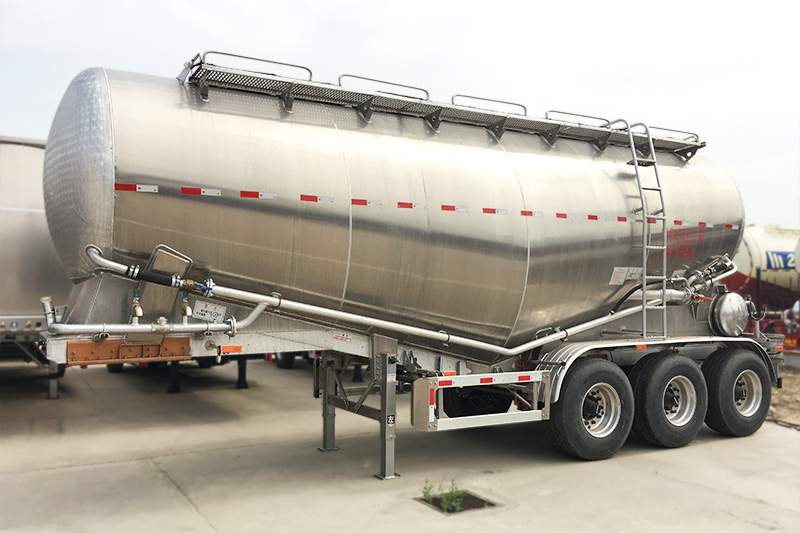
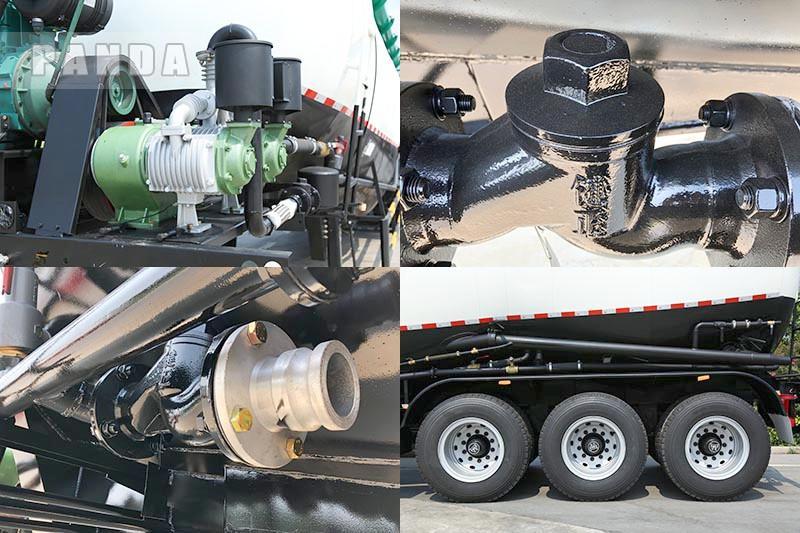
These images help you see the trailer beyond the specification table. The first two are real Panda Mech aluminum cement trailer images. The component images are Panda Mech cement-tanker family references used to explain the systems we check during configuration.
What Your Final Aluminum Cement Trailer Drawing Will Confirm
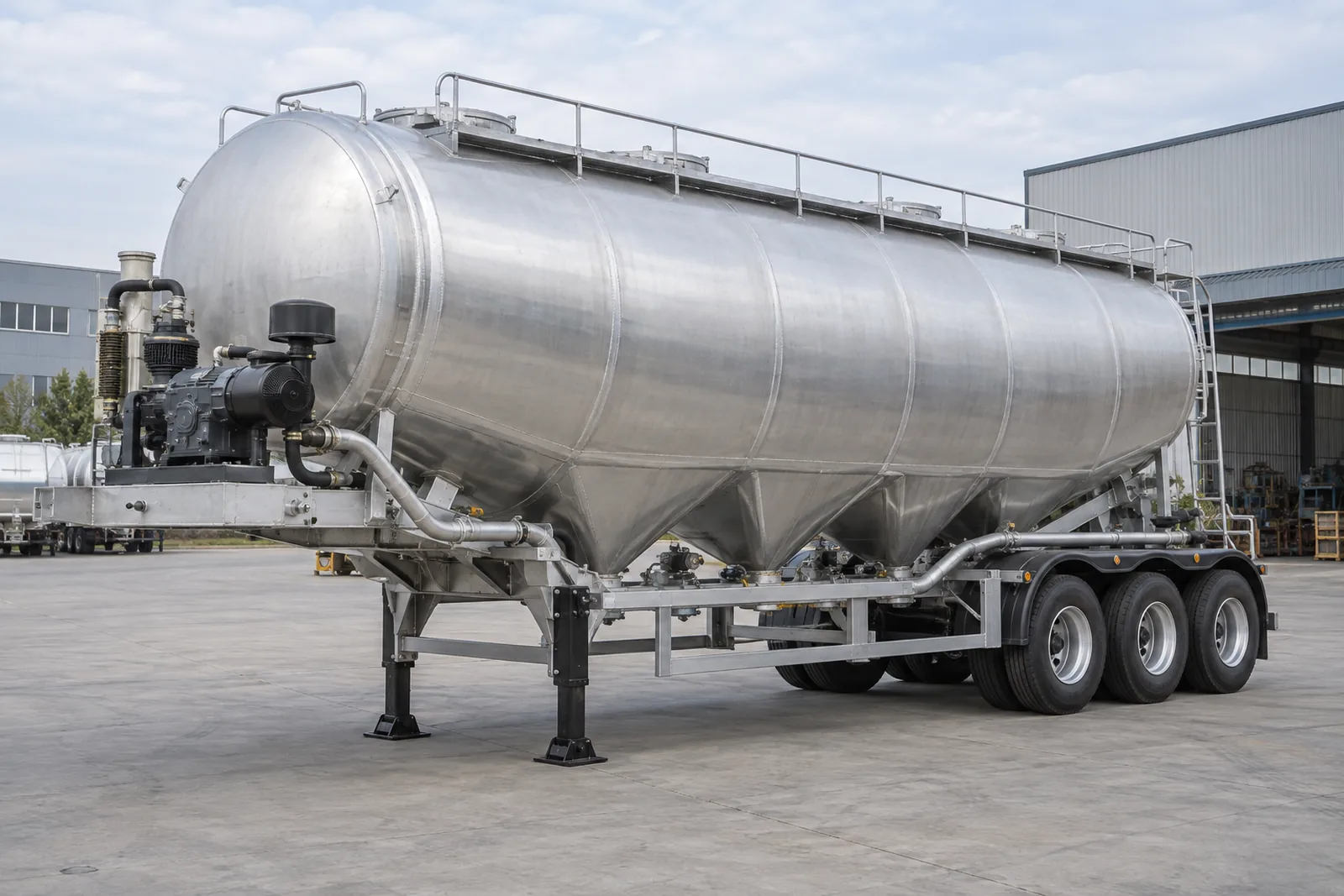
Your quotation should lead to a clear build specification. Before production, we confirm the main dimensions, weight targets, running gear and unloading layout for your project.
When We Recommend an Aluminum Cement Trailer
When legal payload is tight
We recommend aluminum when trailer weight is taking away from the cargo you can legally carry. We check your route GVW and axle limits first. This shows whether the lower tare will give you a real payload benefit.
Long-distance fleet work
For high-mileage fleets, the purchase price is only one part of the cost. We also look at payload per trip, fuel use, unloading time, maintenance, downtime and service life.
Humid or coastal service
An aluminum tank can help reduce corrosion concerns in humid or coastal service. We still check the cargo, chassis protection and local aluminum repair options before we confirm the setup.
Aluminum vs Steel Cement Trailer: Which Should You Choose?
We choose between aluminum and steel by looking at how the trailer will actually work. Aluminum can save tare weight, but it is not the right answer for every route. Steel may cost less at first, but the lowest purchase price does not always mean the lowest cost over the trailer life.
| Factor | Aluminum Cement Trailer | Steel Cement Trailer | Panda Mech Recommendation |
|---|---|---|---|
| Empty weight / legal payload | Designed to reduce empty trailer weight. | A conventional steel tank is usually heavier. | Choose aluminum when the lower empty weight lets you carry more legal cargo. |
| Purchase cost | Material and fabrication cost can be higher. | Often costs less at the time of purchase. | Compare cost per transported ton and how much the trailer will work each year, not only the purchase price. |
| Corrosion | Can reduce corrosion concerns in suitable service. | Needs the right coating and corrosion protection. | Check your climate, cargo and maintenance plan before choosing. |
| Local repair | You need access to aluminum inspection and repair. | Steel repair is often easier to find in many markets. | Check what repair support is available in your market before you choose. |
| Rough roads | The tank supports and chassis must be designed carefully for repeated rough-road loads. | A common choice for demanding service when the structure is designed correctly. | We choose the structure from your road condition, GVW and axle loads. |
| Long-haul fleet use | Can save money over time when payload and annual use are high. | Remains a practical choice for many fleets. | Compare annual mileage, payload per trip, maintenance and downtime before you decide. |
Axles, Suspension, Brakes & Pneumatic Configuration
The aluminum tank is only one part of the trailer. We also match the running gear and air-powered unloading system to your route, tractor, cargo and receiving silo.
Axles
We confirm axle number, load class and final layout from legal weight limits, route conditions and the tractor-trailer combination.
Suspension
We select the suspension setup for your road condition, fleet maintenance needs and final running-gear design.
Tires & Rims
Tire and rim setup is matched to the axles, operating load, road condition and parts availability for your fleet.
Brakes
The brake package is confirmed with the axle setup and destination-market requirements before the build is released.
Kingpin
We match the kingpin and connection geometry to your tractor and fifth-wheel setup.
Landing Gear
Landing gear is selected with the chassis and operating load so the trailer can be supported safely when uncoupled.
Compressor / Air Source
We match the air source to the powder, discharge distance, vertical lift, pipe layout and receiving silo.
Pipes & Valves
Pipe diameter, valves and layout are matched to unloading resistance and the way the trailer connects to your silo.
Final brands and exact component specifications are confirmed in the quotation and drawing. We do not treat one hardware package as correct for every market.
Built for Cement and Industrial Dry Bulk Powder
Panda Mech aluminum cement trailers carry industrial dry powders such as cement, fly ash and lime powder. We check the cargo first. Its bulk density, how easily it flows, how abrasive it is and how it reacts to moisture can change both tank size and unloading performance.
- Common cargo: cement
- Common cargo: fly ash
- Common cargo: lime powder
- Engineering review: limestone powder
- Engineering review: gypsum powder
- Engineering review: silica / mineral powder
Food powders require a different tanker decision path. Flour, starch and other food powders need separate hygiene, cleaning and food-contact material requirements.
How We Work Out the Right Payload and Tank Volume
We do not choose tank volume from a catalog number alone. We start with cargo bulk density, target payload and the trailer’s empty weight. Then we check legal GVW, axle limits and road conditions. These figures tell us what tank volume and axle layout make sense for your route.
How We Match the Aluminum Tank with the Carbon-Steel Chassis
We treat the aluminum tank and carbon-steel chassis as two separate parts of the design. The aluminum tank helps reduce weight. The chassis, supports, axles and suspension must still carry the load safely over your roads and work with your tractor.
- Tank alloy and shell thickness
- Tank head and cone shape
- Aeration bed (air pad system) and chamber
- Tank supports and subframe
- Chassis strength for repeated road loads
- Axle and suspension loads
- Pipe and valve layout
- Manhole and access layout
Send us your target payload, destination, legal GVW and axle limits, road condition and tractor details. We use this information to keep the trailer light without ignoring chassis strength and road durability.
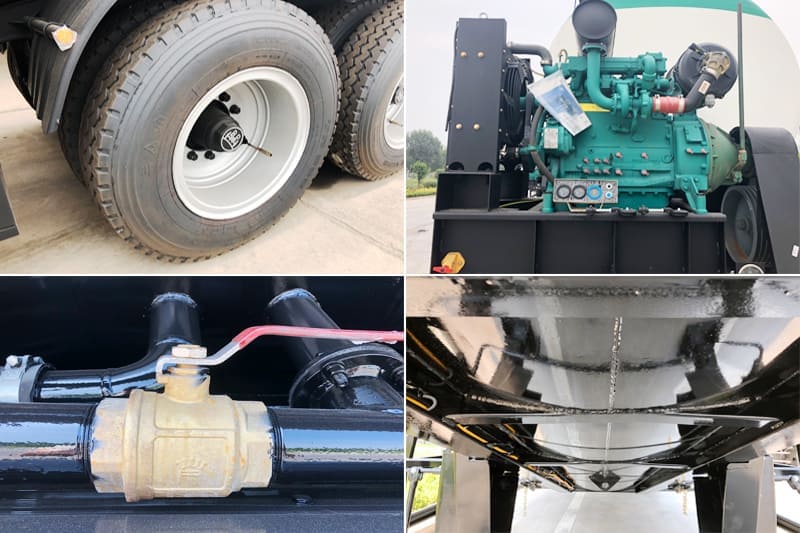
How We Match the Trailer to Your Discharge Line and Silo
Our current cement-tanker unloading baseline is above 1.5 t/min when the full system is matched correctly. The compressor is only one part of that system. We also check the trailer pipework, discharge line and receiving silo because each one can change real unloading speed.
Air supply and trailer pipework
We match the compressor or air source with the aeration system, pipe size and valves. We also check for air leakage so the powder can move steadily.
Discharge hose and pipe
We check horizontal distance, vertical lift, hose length, bends and pipe restrictions. A longer or more difficult route creates more resistance and can increase unloading time.
Receiving silo and filter
We also check the receiving silo. Backpressure means resistance inside the silo and its filter system. If the silo cannot release air fast enough, even a well-designed trailer can unload slowly.
See the Panda Mech cement tanker loading and unloading guide →
How to Maintain an Aluminum Cement Trailer
An aluminum tanker needs the same basic attention to structure, air leakage and running gear as any pneumatic tanker. The difference is that aluminum repair needs the right welding equipment and technicians.
Check the tank shell
Look for impact damage, unusual deformation or visible cracking around areas that see repeated loads.
Check aluminum welds
Pay close attention to welds around supports, fittings and areas exposed to repeated road vibration.
Check tank supports
Inspect the points that transfer tank load into the chassis. Movement, loose hardware or damage should be corrected early.
Check the air system
Inspect pipes, valves, seals, hoses and the aeration system for leakage, wear or blockage that can slow unloading.
Plan aluminum repair support
Make sure suitable aluminum welding and repair support is available in the area where the trailer will work.
What We Check Before We Issue the Final Drawing
| Your Situation | What We Check | What We Recommend |
|---|---|---|
| Strict road weight limits | Empty-weight target, legal GVW, axle limits, axle spacing and tractor | A payload and axle layout matched to your route. |
| Rough roads / repeated heavy loads | Chassis strength, tank supports, suspension, tires and local repair options | A chassis and running-gear setup built for tougher road use. |
| Long-haul fleet use | Annual mileage, payload per trip, shared spare parts and maintenance needs | A setup based on total cost of ownership (TCO) for repeat fleet use. |
| High silo / long discharge line | Vertical lift, distance, hose, bends, pipe size, silo backpressure and filters | A matched compressor, pipe and valve setup. |
| Coastal / humid environment | Tank exposure, chassis protection and maintenance plan | A material and protection setup matched to the climate and service conditions. |
| Fleet order | Tractor fleet, spare parts, tires, axles, valves and service procedures | A common build specification across the ordered units. |
How Panda Mech Builds and Checks Your Cement Tanker
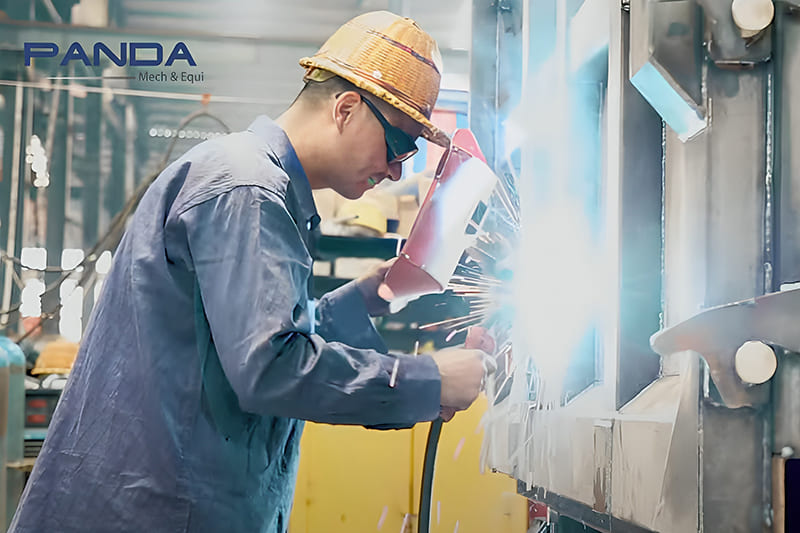
We build pneumatic tankers in our own factory and use 200+ quality-control checks/items across production. The checks cover the build from incoming materials to final shipment preparation, not one inspection at the end.
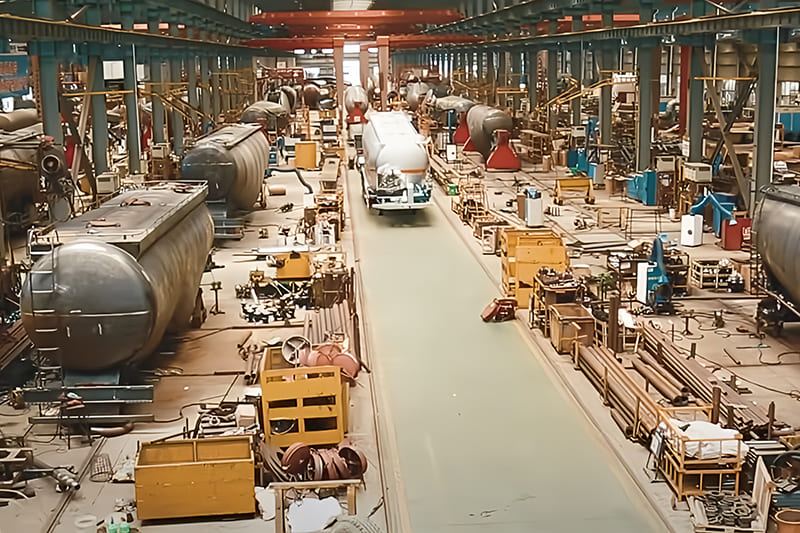
Material & Build Check
We compare the material and planned setup with the approved order specification before production moves forward.
Tank Forming & Geometry
Tank shape, major dimensions and fit-up are checked as the tank structure is formed and assembled.
Welding & Structural Joints
We check weld preparation, consistency and visible weld quality across the tank and structural connection areas.
Airtightness & Pipe Leakage
Tank sealing, pipes, valves and air-system connections are checked before the tanker is released.
Running Gear & Controls
Axles, suspension, brakes and electrical items are checked against the final trailer setup.
Final Inspection & Shipping
We review dimensions, accessories, appearance and shipment preparation before the finished unit leaves the factory.
Aluminum Cement Trailer Price: What Changes Your Quote?
Your price depends on the trailer setup you need. The main cost factors are the tank, payload and volume, axles and suspension, compressor system, brakes, route requirements, order quantity and shipping destination.
- Aluminum tank specification and fabrication scope
- Target payload and volume
- Axle / suspension / tire brands
- Brake and kingpin package
- Compressor / engine / pipeline
- Road and country requirements
- Order quantity and fleet standardization
- Shipping protection and destination
For fleet orders, compare more than the ex-factory price. Look at cost per transported ton, unloading time, downtime, spare-parts availability and service life.
Get Your Aluminum Cement Trailer Setup & Quote
Send us your cargo, target payload and destination. We can then recommend the tank, chassis, axles and pneumatic unloading setup for your route.
What to Send Us for an Accurate Quote
Production, Payment and Shipping
Production
Production is typically 7–25 days. The exact time depends on the trailer setup, order quantity and production schedule.
Payment
Payment is generally 30% deposit and 70% before shipment. Your signed quotation or contract will confirm the final payment terms.
Shipping
Shipping time depends on the destination, port and sailing schedule. We show production time and ocean transit separately in the quotation.
Aluminum Cement Trailer Questions
Why choose an aluminum cement trailer instead of a steel cement tanker?
Choose aluminum when lower empty weight can increase legal payload, support long-haul fleet efficiency or reduce corrosion concerns. We still check your route limits, road conditions, local repair support and unloading system before we confirm the material.
Is the chassis also aluminum?
No. We treat the tank and chassis as separate material choices. The tank shell is aluminum, while the standard structural/chassis side is carbon steel. We confirm the exact tank alloy and thickness on the final project drawing.
What materials can this aluminum powder tanker carry?
We commonly configure these trailers for cement, fly ash and lime powder. For limestone, gypsum, silica and other mineral powders, we first check density, flow, abrasion, moisture and unloading needs. Food powders need a separate food-powder tanker specification.
How fast can the aluminum cement tanker unload?
Our cement-tanker unloading baseline is above 1.5 t/min when the full system is matched correctly. Actual speed can change with hose length, vertical lift, bends, pipe size, cargo condition, silo backpressure and filter capacity.
What payload, volume and axle count should I choose?
Start with your cargo density and legal road limits. We then work out the target payload, tank volume, empty trailer weight, GVW and axle layout. This helps avoid choosing a tank size that cannot carry the payload legally on your route.
What information is needed for a quotation?
Start with your cargo, target payload and destination. If you have them, also send bulk density, GVW or axle limits, tractor model, road conditions, silo height, discharge distance, pipe size, compressor preference and order quantity.
What is the production time and payment term?
Production is typically 7–25 days, depending on the setup, quantity and schedule. Payment is generally 30% deposit and 70% before shipment. Ocean transit is quoted separately for your destination.
What parts of the trailer can be configured?
We configure the tank volume, chassis, axle layout, suspension, tires, brakes, tractor connection, compressor or air source, pipes and valves around your route and unloading conditions. Final component brands and exact specifications are confirmed in the quotation.
What should I check when maintaining an aluminum cement trailer?
Check the tank shell and weld areas for visible damage, inspect tank supports and running gear, and look for leakage or blockage in pipes, valves, hoses and the aeration system. Make sure suitable aluminum repair support is available where the trailer will operate.
Tell Us What You Need and We’ll Configure the Trailer
Start with your cargo, target payload and destination. If you also have tractor, route and silo details, send them too. We will use this information to prepare the tank, chassis, axle and pneumatic unloading setup for your quotation.