
Choose this 30T model when
You need about 30 tons of cement capacity in a 25 m³ tank, and your route allows a 2-axle semi-trailer.
Panda Mech manufactures this 25 m³, 2-axle 30 ton cement tanker trailer for cement, fly ash, lime powder and other compatible non-food powders. It uses a high-strength steel tank and a pneumatic unloading system rated above 1.5 t/min for cement.
Before production, our engineers check your tractor, road conditions and receiving silo. We then match the axles, suspension, tires, brakes and pneumatic unloading system to the job. You receive the final specification and engineering drawing for approval before we build the trailer.
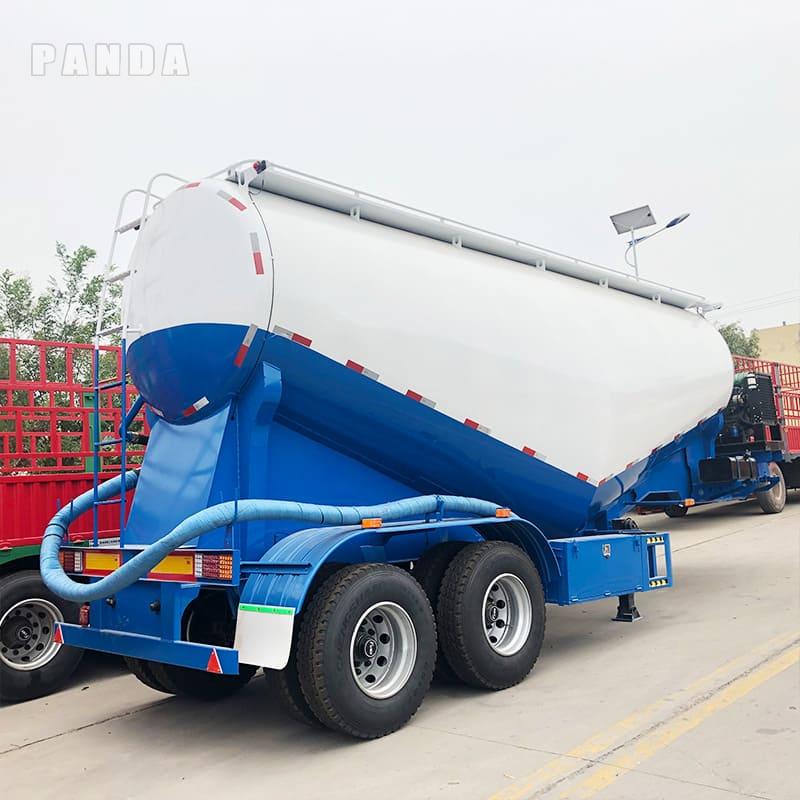
It is a 25 m³, 2-axle pneumatic dry-bulk semi-trailer with a 30 ton rated payload. It is built for cement and other compatible industrial powders.
You may also know this product as a 30 ton cement trailer, 30 ton cement bulker or 30 ton powder tanker. The 25 m³ figure tells you the tank volume; 30 tons tells you the rated cargo weight. Before we confirm the order, we also check cargo bulk density, empty trailer weight (tare), gross vehicle weight (GVW) and local axle limits.
This 30T / 25 m³ / 2-axle model works best when your route can legally carry it and the unloading system fits your receiving silo.
You need about 30 tons of cement capacity in a 25 m³ tank, and your route allows a 2-axle semi-trailer.
Choose another size if local axle rules require more axles, your powder needs more tank volume, or your silo needs a different unloading system.
We check your country, cargo, tractor, road condition and order quantity. For the unloading system, we also ask about cargo bulk density, silo height, discharge distance and your target unloading time.
Start with the fixed 30T specifications below. Then we confirm the parts that can change with your tractor, route and local rules.
| Specification | 30T Specification | What We Check Before Production |
|---|---|---|
| Rated payload | 30 tons | We check the final road payload against empty trailer weight, GVW and local axle limits. |
| Tank volume | 25 m³ | We check that 25 m³ gives enough space for your cargo and bulk density. |
| Axle layout | 2 axles | We choose the axle rating and brand for your road, load and local requirements. |
| Tank shell | High-strength steel | We confirm the steel grade and plate thickness in the approved build specification. |
| Chassis / structure | High-strength steel | We size the chassis separately from the tank so it matches the load and road conditions. |
| Diesel engine package | Weichai or Deutz option | We match the engine to the compressor and consider local parts and service support. |
| Compressor package | Matched to required discharge duty | We choose the compressor and air system from your cargo, pipe length, silo height and unloading target. |
| Suspension | Mechanical or air suspension | We choose mechanical or air suspension based on your roads, load and maintenance needs. |
| Manholes | 2–4 sets | We confirm the number and position of manholes on the final tank layout. |
| Discharge valve | 4-inch disc valve | We match the discharge pipe and valve layout to your hose route and silo connection. |
| Cement unloading rate | >1.5 t/min | We check the full air, pipe and silo setup so the unloading target is realistic. |
| Axle rating / brand | Selected for your project | We confirm the axle rating and brand after checking local rules and road conditions. |
| Tires | Selected for your project | We choose tires to match the axle load, road condition and maintenance needs. |
| Brake system | Set for local requirements | We match the brake and electrical connections to the tractor and local requirements. |
| Kingpin / fifth-wheel interface | Matched to your tractor | We confirm the kingpin and fifth-wheel height from your tractor data. |
| Tare weight | Confirmed on the final build sheet | We calculate empty trailer weight after the tank, chassis, axles and unloading system are finalized. |
| GVW | Confirmed after the final setup and local-rule check | We check the final gross vehicle weight before production starts. |
| Overall dimensions | Confirmed on the final drawing | We provide the final drawing so you can check transport size, road clearance and tractor fit. |
We do not copy one generic dimension onto every order. After the tractor, axles and selected options are confirmed, Panda Mech issues the project drawing for your approval.
The drawing is where we lock the overall size and the main connection points. This gives your team a clear document for tractor fit, transport planning and final order approval.
We only publish exact dimensions after they are confirmed for the final 30T build. This avoids using a family-size drawing as if it were the exact trailer.
This model has a 25 m³ tank and a 30 ton rated payload. Those two numbers measure different things. We check that your powder fits the tank and that the loaded trailer stays within legal road limits.
Send us the cargo name and bulk density if you know it. We will check whether the 25 m³ / 30 ton model is the right match before we quote.
The tanker uses compressed air to move cement from the tank into your silo. We match the engine, compressor, aeration system, discharge valve and pipework as one system. For cement, the current Panda Mech unloading rate is above 1.5 t/min when the full system is properly matched.
The diesel engine drives the compressor. The compressor supplies air to the unloading system.
Air enters the tank through the aeration system. This helps the cement flow toward the outlet instead of packing inside the tank.
Once the air system is ready, the operator opens the discharge line.
Compressed air carries the cement through the discharge pipe and into the receiving silo.
Pipe diameter, hose length and bends affect how easily cement can move to the silo.
We check silo height, backpressure and the silo filter before choosing the air system.
We also check moisture, bulk density and how easily the powder flows and mixes with air.
The tank body is only one part of the trailer. The engine, compressor, air system, discharge parts, axles and suspension must work together for the route and unloading job.
The tank shell and main structure use high-strength steel. The final steel grade and plate schedule are locked in the approved build specification.
Both engine options are available. We match the engine to the compressor duty and consider parts and service support in your market.
We choose the compressor from the cargo, pipe length, silo height and unloading target. We do not treat compressor air flow as the same thing as cement flow in t/min.
The 4-inch disc valve is part of the confirmed 30T setup. We match the pipe and hose route to the receiving silo.
This exact model uses two axles. Mechanical or air suspension can be selected based on road conditions, load and maintenance needs.
The number and position of manholes are confirmed with the final tank layout before production.
This 30T model uses two axles. Before production, we still check your tractor, road conditions and local axle rules. A 30 ton payload by itself does not tell us whether two axles are legal or practical on your route.
We check the final gross vehicle weight and axle loads against the rules for your destination.
We match the kingpin, fifth-wheel height, brakes and electrical connections to your tractor.
We choose the suspension, axles and tires for the roads you actually use. We also consider local maintenance and spare-parts support.
In one Panda Mech cement project in Ethiopia, the customer first asked for tandem axles. After we checked the local load conditions, we recommended three axles instead. The same rule applies here: the road and load limits decide whether the axle setup works. See the Ethiopia project.
We confirm the transport and unloading system as one project. This is how we reduce problems caused by choosing the trailer from payload alone.
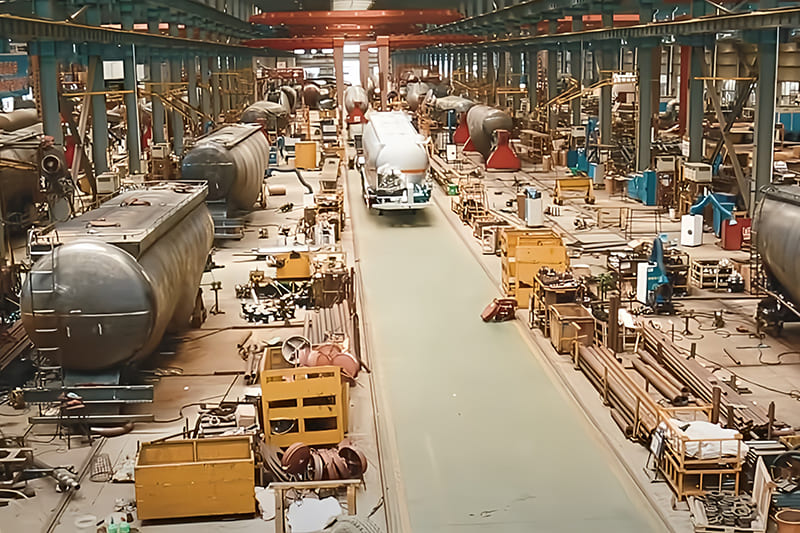
The first photo shows this exact 2-axle 30 ton tanker. The other photos show Panda Mech tanker production and welding. They are factory photos, not extra photos of this exact 30T unit.
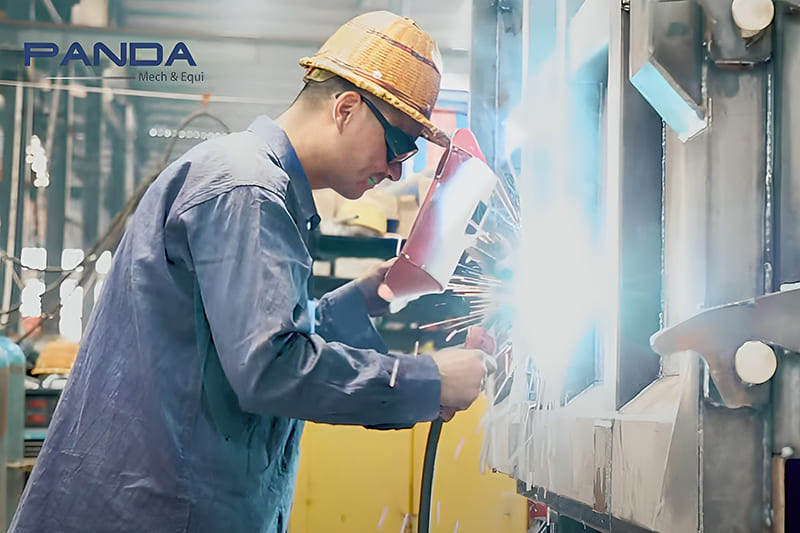
We check more than the tank body. Our QC process also covers the chassis, axles, suspension, brakes, pneumatic unloading system and the trailer condition before shipment.
We price the trailer after we know the final setup. The main price factors are axles, suspension, tires, the pneumatic unloading system, local requirements, order quantity and freight.
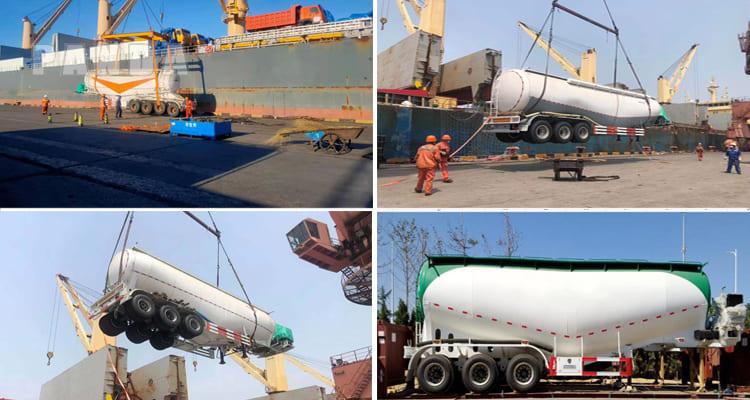
There is no single price for every 30T tanker because the final parts and shipping can change. Axles, suspension, tires, the unloading system, local requirements, quantity and freight all affect the quote. Send us your destination country and quantity for the current factory price.
The final dimensions depend on the selected axles, suspension and tractor connection. We confirm the exact size on the engineering drawing before production and send that drawing to you for approval.
We choose the compressor for the actual unloading job. We look at the cargo, pipe length, silo height, backpressure and your target unloading time. That is why we do not use one compressor setup for every project.
Yes. We can configure this tanker for compatible non-food powders such as cement, fly ash, lime powder and mineral powder. Before we confirm the setup, we check bulk density, moisture and how easily the powder flows.
This model uses two axles, but that does not make it legal on every road. We check the gross vehicle weight, axle limits and route rules for your destination before production.
The current Panda Mech cement unloading rate is above 1.5 t/min when the system is properly matched. Total unloading time also depends on the cement, compressor, pipe length, pipe bends, silo height, backpressure and silo filter. Send us your silo details if unloading time is important to your project.
Production is typically 7–25 days, depending on the final setup and quantity. Sea shipping time is separate and depends on your port and sailing schedule.
You do not need every technical detail before contacting us. Send the five basic items below first. We will ask for the extra engineering details only when they are needed.
Send your country, cargo and quantity first. We will check whether the 25 m³ / 2-axle / 30 ton model fits your job. Then we confirm the remaining options and prepare the project specification and drawing.
Use the form here to send your 30T cement tanker requirements.