55T / 3 Axle / 60-Unit Fleet Project
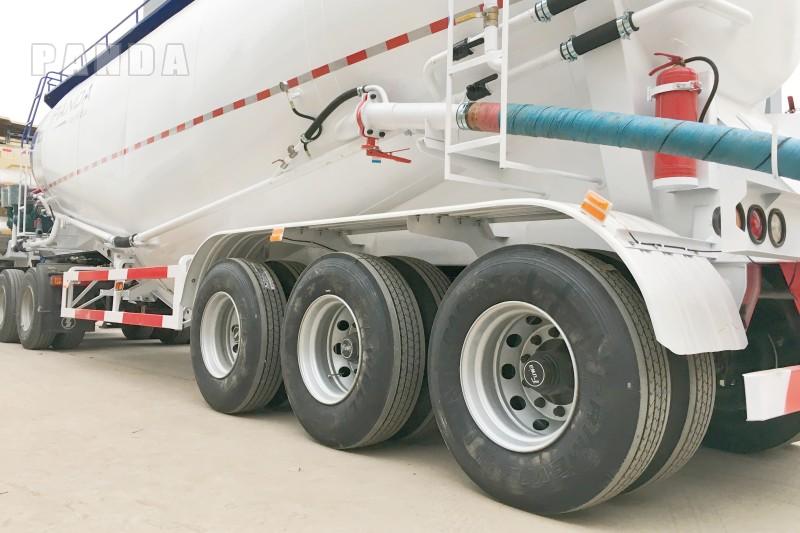
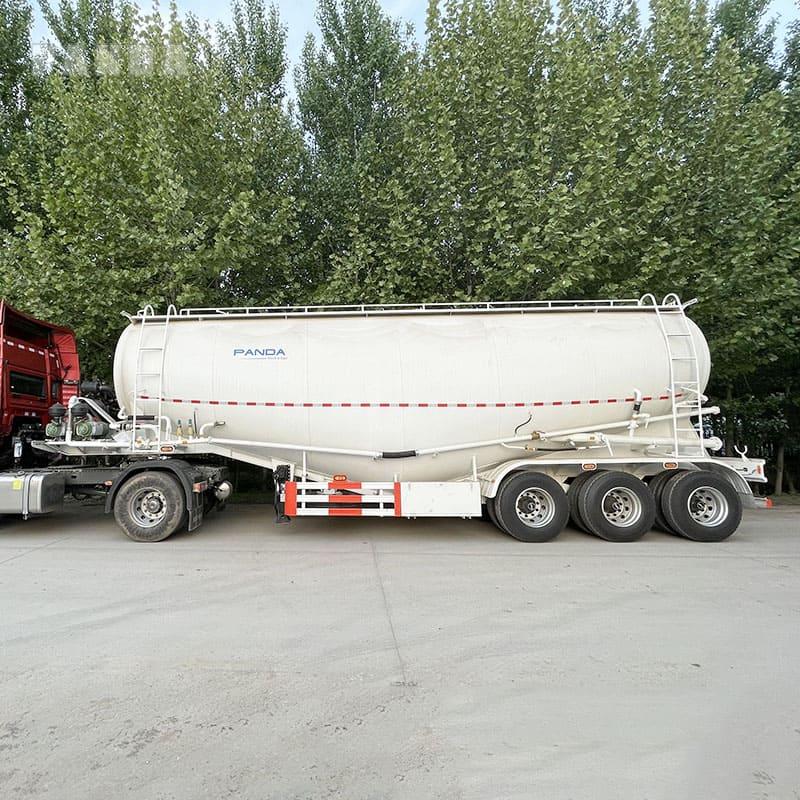
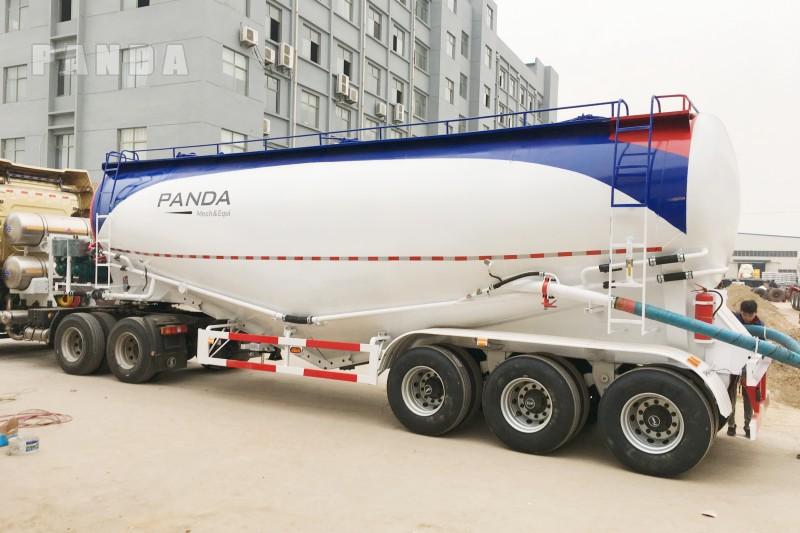
The customer needed the same main running-gear setup across a 60-unit fleet. The confirmed configuration used a 55-ton class, about 6 tons tare and 3 FUWA axles.
A cement bulker should not be chosen by tonnage or tank size alone. We first check the cargo and its bulk density. Then we match payload, tank volume, tare weight, axle layout, tractor and unloading system.

Tell us what powder you carry, the target payload and where the trailer will operate. We then check tank volume, tare weight, gross vehicle weight (GVW), axle limits and tractor fit.
After that, we match the compressor, discharge line and receiving silo. A “40 ton” or “50 ton” name alone is not a complete cement bulker specification.
These figures describe the Panda Mech cement tanker family. They cannot be mixed in any combination. The approved quotation, bill of materials (BOM) and drawing control the final order.
Use this table to narrow your options. We still check destination country, tractor, road conditions and unloading site before confirming the final trailer.
| Reference Configuration | Typical Position | Good Choice If… | Choose Another Option If… | What to Check Before Quotation |
|---|---|---|---|---|
| 25 m³ / 30T Class | Lower-payload, compact option | You need less cargo capacity or your tractor and route favor a lighter trailer. | Your fleet needs higher payload per trip and the road can legally support it. | Bulk density, legal GVW, axle limits and tractor match. |
| 30 m³ / ≈40T | Medium-payload option | You need about a 40-ton cement transport setup and the route can support it. | Your route and tractor can support a higher legal payload and fleet productivity matters more. | Tare weight, local axle limits and unloading conditions. |
| 40 m³ / ≈50T / 3 AxleCommon Start | Core commercial configuration | You need a high-payload cement tanker and local rules support a 3-axle layout. | Local axle or GVW limits do not support the 3-axle 50-ton class. | Country weight rules, tractor fifth wheel, road conditions and silo connection. |
| 45 m³ / 55T | Higher-payload option | Your route, tractor and fleet can support a heavier trailer. | Road law, bridge limits or tractor capacity make the extra payload impractical. | Axle group, tare weight, brakes, suspension and local law. |
| 50 m³ / 60T | Heavy-duty road setup | You need more payload and have already checked route and axle restrictions. | Your tractor, road or local axle rules cannot support the heavier combination. | 3 axles vs 4 axles, GVW and service conditions. |
| 80T / 85T Heavy-Duty | Heavy-duty project configuration | Your project can support the structure and legal road limits needed for very high payloads. | The trailer will run under normal road limits that do not permit this payload class. | Confirm country and route legality first. Do not assume 80T or 85T is road-legal everywhere. |
This is a starting calculation, not the final tanker size.
Final tank size must allow for usable tank space, powder flow and tank shape.
Tare, GVW, kingpin load and axle loads can reduce the payload you can legally carry.
Powder behaviour, aeration, pipe resistance and the receiving silo can change the final setup.
A model name such as “50 ton cement tanker” is only a starting point. The quotation should define the tank, unloading system and running gear you are actually ordering.
| Rated payload | 25 / 30 / 35 / 40 / 45 / 50 / 55 / 60 / 70 / 85 / 120 t published across the family | We check actual cargo after density, tare, GVW, tractor and local axle rules. |
|---|---|---|
| Tank volume | 20 / 25 / 30 / 35 / 40 / 45 / 50 / 55 / 60 / 70 / 100 m³ published | We choose tank size from cargo and payload target. Bigger is not automatically better. |
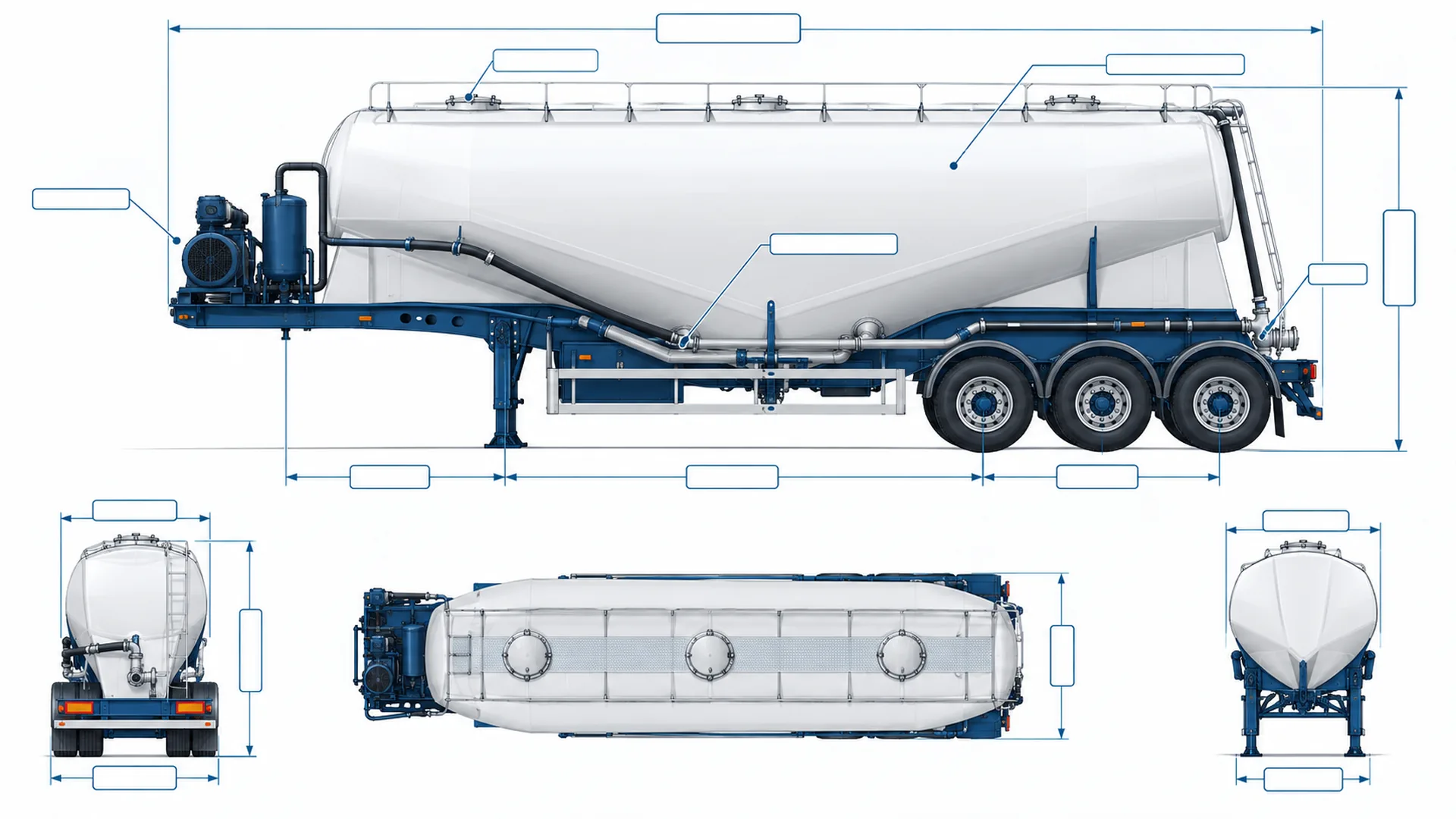
| Overall dimensions | About 7350–14500 × 2550 × 3900–4000 mm across published configurations | Axle layout and tank shape change the final size, so exact dimensions go on the approved drawing. |
| Empty weight / tare | About 6,500–9,000 kg published family reference | A heavier trailer can reduce legal cargo when GVW is limited. |
| Tank shell plate | 5 or 6 mm high-strength steel references on existing models | Thickness is only one part of structure. Material grade, geometry, reinforcement and pressure also matter. |
| Tank material / chassis material | Model-specific and listed as separate fields | These are not the same thing, especially on an aluminum tanker project. |
| Manhole | 2–4 sets, Ø700 mm published reference | Number and position are matched to loading, access and inspection needs. |
| Tank design | V-type / W-type / silo-type references | Shape changes powder flow, residue behaviour and weight distribution. |
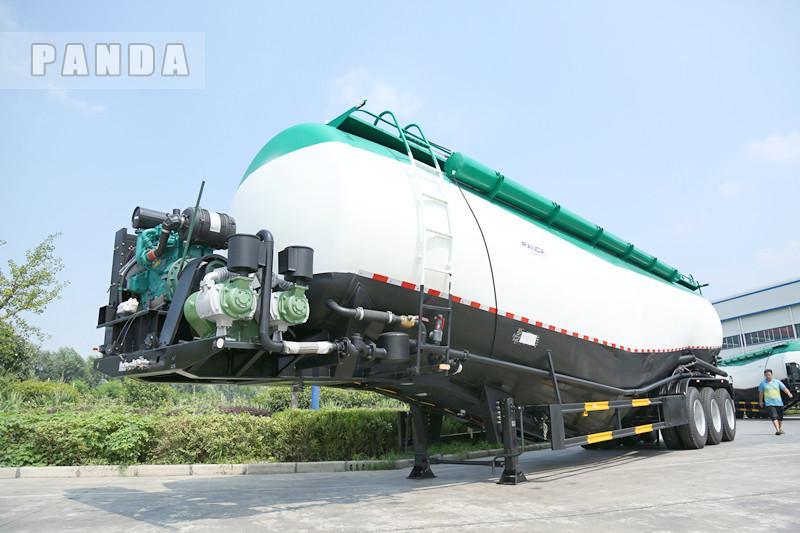
| Air compressor / blower | Model-specific; airflow stated in m³/min for the selected package | Airflow is matched to tank size, pipe resistance, silo height and backpressure. |
|---|---|---|
| Drive source | Independent diesel / power take-off (PTO) / external-air project options | PTO uses tractor power. Drive method depends on tractor setup, maintenance plan and site air supply. |
| Discharge valve | 4 in. disc-valve reference on current family specifications | We check valve size, sealing, service access and pipe connection. |
| Unloading performance | >1.5 t/min current Panda Mech family baseline | This is a rate, not guaranteed total unloading time. Cargo and site conditions still matter. |
| Operating pressure | Around 0.2 MPa appears in Panda technical guidance as a typical discharge-start reference | It is not the same as design pressure, test pressure or relief setting. |
| Aeration / fluidization | Model-specific air-distribution arrangement | Fluidization uses air to help powder move toward the outlet. |
| Discharge line / hose | Project-specific diameter, connection and length | Send horizontal distance, vertical lift, bends and silo connection. |
| Axles | 1–4 sets; 13 / 16 / 20 t axle-rating references; BPW / SAF options | An axle can be built for one load while local law allows less. We check both. |
|---|---|---|
| Suspension | Mechanical or air suspension | Choice depends on road conditions, rules, maintenance and operating cost. |
| Tires | 12R22.5 / 385/65R22.5 / 13R22.5 / 12.00R24 / 315/80R22.5 published references | We match tire load index to axle package and local replacement availability. |
| Landing gear | JOST 28 t published reference | We check height, support capacity and local parts support. |
| Kingpin | JOST 2 in. or 3.5 in. detachable-type reference | The kingpin must match the tractor fifth wheel. |
| Brake system | WABCO emergency-valve references; chamber and ABS/EBS package vary | ABS is anti-lock braking. EBS is electronic braking. Package depends on destination and running gear. |
| Pressure relief | Required in the pneumatic tank system | The relief device protects the system from excess pressure and must match the approved design. |
|---|---|---|
| Pressure indication | Gauge / model-specific package | The operator needs a clear pressure reading during unloading. |
| Surface protection | Shot blasting + primer / paint references | Coating choice depends on expected corrosion exposure and shipping conditions. |
| Axle / suspension upgrades | BPW / SAF / air-suspension options | Upgrade only when road, service support or operating cost justifies it. |
| Aluminum construction | Available as a lightweight / corrosion-resistant project option | Tank-shell material and chassis/structural material remain separate specification fields. |
| Order documents | Approved quotation, BOM and technical drawing | These documents fix the final configuration before production. |
Use this list before you approve an order. Important fields should not stay vague when they affect safety, legal load or unloading performance.
Plate thickness matters, but it is only one part of the structure. Two tanks can both use 6 mm plate and still be different because steel grade, tank shape, reinforcement, weld design and pressure requirement are different.


Axle count must match cargo weight, tare, road law and tractor. A 50-ton label by itself does not tell you whether the trailer is legal or well balanced.
These values are related, but they do different jobs. Treating them as one number creates confusion when comparing quotations or reviewing a tanker drawing.
Pressure normally used while unloading. Panda Mech guidance uses about 0.2 MPa as an operating reference in some pneumatic discharge guidance; final value is model-specific.
Pressure used by engineers when designing the tank and pressure-bearing structure.
Pressure used during a defined inspection or pressure test. It is not normal unloading pressure.
Pressure where the protection device starts to act. It must match the approved tank design.
The same trailer can unload at different speeds at two sites. Cargo, air system, discharge line and the receiving silo all affect the result.

Longer hose creates more resistance.
Pushing powder higher takes more work.
Smaller pipe or more bends can increase pressure loss.
Too much backpressure can slow unloading even when the trailer is working correctly.
The silo must let conveying air escape.
Family baseline is >1.5 t/min; total time still depends on site conditions.
An optional part is not automatically better. We recommend upgrades when they solve a real road, legal, fleet, service or operating-cost problem.
If two quotes both say “50 ton” but one is much cheaper, compare the actual specifications before the price. A blank technical field can mean part of the trailer has not been clearly defined.
| Specification | Why It Matters | Supplier A | Supplier B |
|---|---|---|---|
| Payload + tank volume | Tons and cubic meters are different | ||
| Trailer tare weight | A heavier empty trailer can reduce legal cargo | ||
| Tank material + grade + thickness | Thickness alone does not define structure | ||
| Overall dimensions | Affects road limits and site access | ||
| Axle number / rating / brand | Affects load sharing, legal limits and service support | ||
| Suspension + braking | Affects road use, maintenance and local requirements | ||
| Compressor / airflow / drive | Airflow should use m³/min | ||
| Operating / test / relief pressure | These are different values | ||
| Discharge rate + conditions | A t/min figure needs cargo and site conditions | ||
| Warranty + spare support | Affects downtime and long-term operating cost |
The same model name can hide different materials, axles, suspension and unloading equipment. Compare the build first. Then compare price.
Steel grade, tank shape, reinforcement and weight-saving design can change cost and usable payload.
Axle count, rating, brand and mechanical or air suspension change purchase and maintenance cost.
Compressor, drive, valves, air distribution and pipe layout all affect unloading-system cost.
ABS/EBS, lighting and destination-specific running gear can change the final build.
Common tires, axles, valves and spares can reduce downtime and simplify maintenance.
Material checks, leak checks, final inspection and approved drawings keep build aligned with quote.

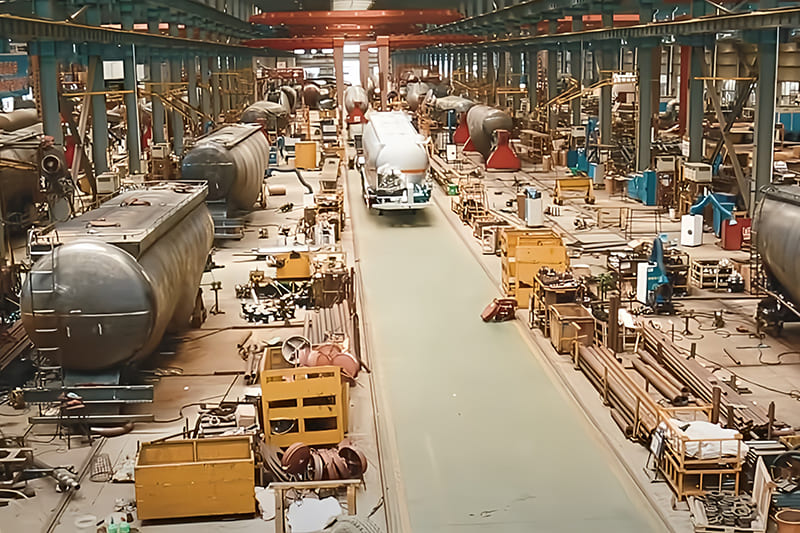
A detailed quotation only matters if the factory builds the same configuration. We carry the approved specification through fabrication, assembly, pneumatic checks and final inspection.
Real projects show why the same tanker setup does not fit every job. Payload, axle layout, fleet standards and local rules can change the final specification.

The customer needed the same main running-gear setup across a 60-unit fleet. The confirmed configuration used a 55-ton class, about 6 tons tare and 3 FUWA axles.

85-ton class with air suspension; 60 units planned and first 20 shipped in the referenced project.
View UAE project
After checking local weight limits and route requirements, Panda Mech recommended a 3-axle setup instead.
View Ethiopia projectMove from the engineering guide to the exact model family that best matches your project.
Send destination, cargo, payload or volume, quantity, tractor and unloading-site details to start. If some values are unknown, we will tell you what still needs confirmation.
Short answers to the specification, capacity, axle and unloading questions we receive most often.
Start with cargo, bulk density, payload and tank volume. Then check tare, GVW, overall dimensions, axle layout and tractor fit. For unloading, also check compressor, discharge line, silo height and receiving conditions.
No. Tank volume is measured in cubic meters, while payload is cargo weight. Panda Mech commonly uses about 40 m³ for a 50-ton configuration and about 30 m³ for a 40-ton configuration. Usable payload still depends on density, tare, GVW and local axle rules.
Use cargo volume = target payload ÷ bulk density as a starting calculation. Then check usable tank space, tare, GVW, axle loading and how the powder flows and unloads before fixing the final size.
Our current cement tanker family baseline is >1.5 t/min. Real total unloading time also depends on cargo moisture and flow, compressor output, air leakage, pipe diameter, distance, vertical lift, bends, silo backpressure and filter performance.
We check target payload, tare, legal axle limits, road conditions and tractor before choosing the axle layout. More axles can spread the load, but they do not automatically make a heavy payload legal.
No. Operating pressure is used during normal unloading. Design pressure is used to engineer the tank, test pressure is used during a defined test, and the relief setting is where the safety device starts to protect the system.
Send cargo, target unloading time, horizontal discharge distance, silo height, line diameter if known, main bends, receiving connection and any known silo filter or backpressure limits.
Production is typically 7–25 days. Exact time depends on configuration, quantity and production schedule. Shipping time depends on destination and sailing schedule.
Send destination country, cargo, target payload, target volume if known and quantity. Also send road conditions, tractor information, silo height, discharge distance, target unloading time, axle or suspension preference and destination port. If you do not know every item, send what you have.

We will match tank volume, payload, structure, axle package and pneumatic system to your route, tractor and receiving silo. You do not need every technical value before contacting us.
Send the project details you already know. We will identify the remaining technical points needed for the quotation.
Get My Specification & Quote