Cement Bulker & Pneumatic Tanker Manufacturer · 20+ Years Manufacturing Experience
Fly ash bulker trailers built for your payload, road conditions and pneumatic unloading job.
Panda Mech manufactures pneumatic fly ash bulker trailers for power plants, cement plants, ready-mix plants and transport fleets. We match the tank size, 2/3/4 axle setup and unloading system to your fly ash, tractor, road conditions and receiving silo.

Tank sizing: We choose the usable tank volume after checking your target payload, fly ash bulk density and local road limits. The wider Panda Mech pneumatic tanker family covers multiple volume classes, but the final Fly Ash Bulker size is selected for your project.
This trailer is a good fit when you need to move dry fly ash through a closed pneumatic system into a silo. We match the tank, axles and air system as one package. This helps the trailer fit the cargo, road and unloading job instead of relying on tank volume alone.
The axle setup depends on how much you want to carry and where the trailer will run. We check the empty trailer weight, legal axle loads, road conditions and tractor before we choose the running gear—the axles, suspension, brakes and tires.
We use 2 axles when the planned gross vehicle weight (GVW), tank size and local axle rules allow it. This setup can reduce the number of axles for lower-load jobs.
We often start with a 3-axle setup for export fly ash projects. We then check the payload, tank size and local axle limits before matching the suspension, tires, brakes and tractor connection.
We use 4 axles when the job needs heavier-duty running gear or a different way to spread the load. We still check the final legal payload against the rules in your destination market.
We will tell you which axle setup to check first.
We start with two numbers: how many tonnes you want to carry and the bulk density of your fly ash. Bulk density tells us how much space one tonne of material takes up. We then check usable tank volume, filling space, empty trailer weight (tare), GVW, axle loads and route limits before we choose the final tank size.
This formula gives us a starting volume. We still need to check usable tank space, filling allowance, empty trailer weight and legal road limits before we choose the final size.
For example, if you want to carry 30 tonnes and the measured bulk density is 0.80 t/m³:
37.5 m³ is only the calculated cargo volume in this example. We would still check usable tank space, filling allowance, empty trailer weight, legal GVW and axle loading before choosing the final tank size. The 0.80 t/m³ figure is only an example; fly ash density can be different on your project.
What this means in practice: a 30-ton payload target does not automatically mean a 30 m³ or 40 m³ tank. The bulk density of your fly ash changes the tank volume you need.
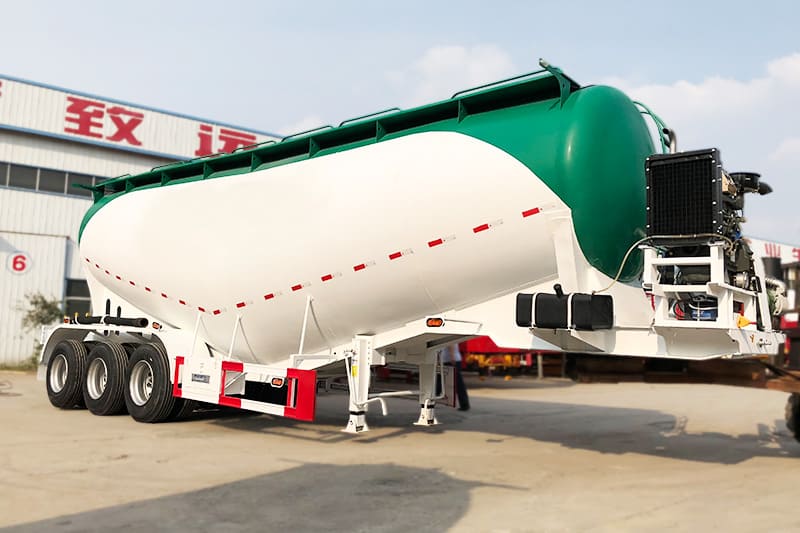
We choose the final payload and usable tank volume after checking your fly ash density and local road limits. The table below shows what we can configure and what we need from you before we quote.
| Item | What Panda Mech can provide | What we need from you |
|---|---|---|
| Tank volume | Matched to your target payload and actual fly ash density. For context, the wider Panda Mech pneumatic tanker family includes 20–100 m³ platform classes. | Your target payload, fly ash bulk density and local road limits. We then confirm the final usable volume. |
| Payload | Matched to cargo density, tank size, empty trailer weight and legal road limits. | Target tonnes per trip, legal GVW and axle-load limits in your market. |
| Axles | 2, 3 or 4 axles, selected to suit payload and load distribution. | Axle rules, road conditions and the running-gear standard used by your fleet. |
| Tank shell | High-strength steel tank platform. Exact material grade and thickness are confirmed with the final configuration. | Payload, road conditions, corrosion exposure and any special structural needs. |
| Air source | Independent diesel engine with compressor or blower. We can also engineer power take-off (PTO), which uses tractor power, or an external-air setup when it fits the project. | Your unloading-time target, tractor setup and how you plan to service the air system. |
| Discharge | Air loosens the powder inside the tank, then moves it through a closed pipe into the receiving silo. This process is called pneumatic fluidization. | Pipe or hose size, horizontal distance, silo height, bends, pressure inside the silo and filter capacity. |
| Operating pressure | About 0.2 MPa is a typical operating reference used in Panda Mech pneumatic discharge guidance. | We set the final operating conditions to match your cargo, compressor, discharge line and silo. |
| Suspension / brakes / tires | Mechanical or air suspension, with axles, brakes and tires matched to your route and fleet needs. | Local rules, your fleet standard and parts you can source locally. |
| Cargo | Dry fly ash for pneumatic conveying and compatible industrial dry powders. | Fly ash density, moisture, how easily it flows, and whether you plan to carry another powder later. |
| Chassis / structure | Designed separately for GVW, road conditions and repeated loading over the trailer service life. | Tractor details, road conditions and how often the trailer will run. |
| Production | Typically 7–25 days, depending on the trailer setup, order quantity and factory schedule. | Sea shipping time is separate and depends on the destination. |
The 20–100 m³ figure is a wider Panda Mech pneumatic tanker family reference, not a fixed Fly Ash Bulker exact-model range. Your final specification and quote are based on your actual cargo and route data.
You do not need to choose every component before you contact us. Start with the payload, destination and tractor. We will help narrow the options that fit the job.
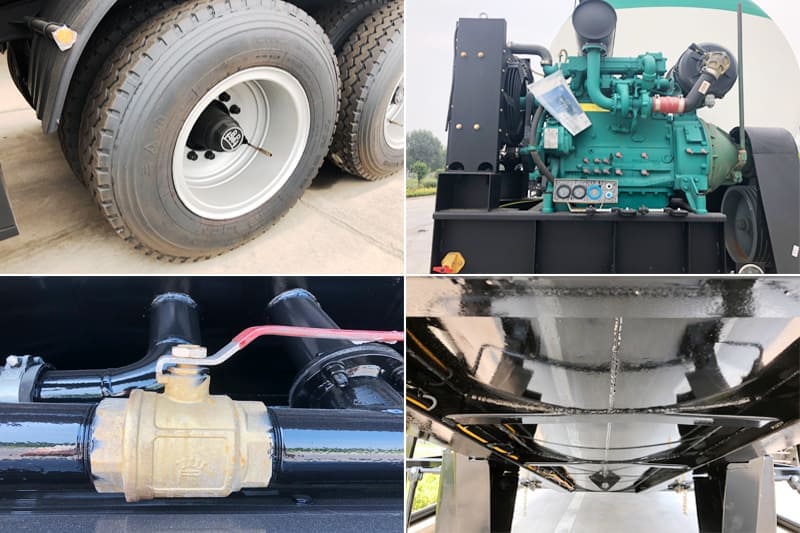
Air must move from the compressor, through the tank and discharge line, and into the receiving silo. If one part of this path is too restrictive, unloading can slow down. We check the full air path before we choose the final unloading setup.
For pneumatic discharge, Panda Mech commonly uses about 0.2 MPa as an operating reference. We set the final air system after checking your fly ash, compressor, discharge line and receiving silo.
Send us these figures if you know them. We use them to choose the air-system and discharge setup.
| What changes | Why it matters | What we do |
|---|---|---|
| Bulk density | The same tank volume can carry a different number of tonnes when the powder density changes. | We calculate the tank volume from your target payload and the measured cargo density. |
| Fluidization | Some powders mix with air and start moving more easily than others. This is called fluidization. | We match the air distribution and discharge setup to your fly ash. |
| Moisture | Moisture can make fly ash cake together and increase the risk of a blocked discharge line. | We ask about the cargo condition before we confirm the unloading setup. |
| Receiving silo | The conveying air enters the silo with the fly ash. The silo filter must release that air, or pressure can build up inside the silo. | We check silo height, discharge-line layout, filter capacity and silo pressure before finalizing the system. |
We use 200+ quality-control checks during production. We check the tank structure, welding, air pipes, sealing, running gear, assembly and final configuration before shipment.
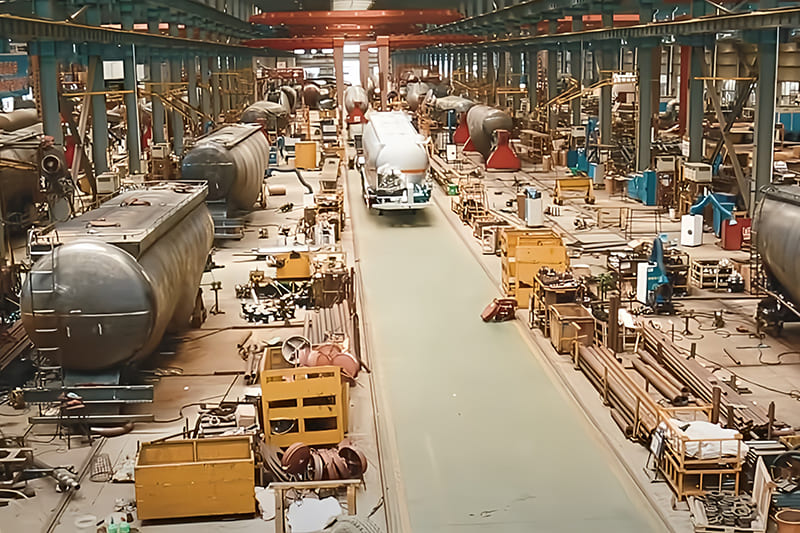
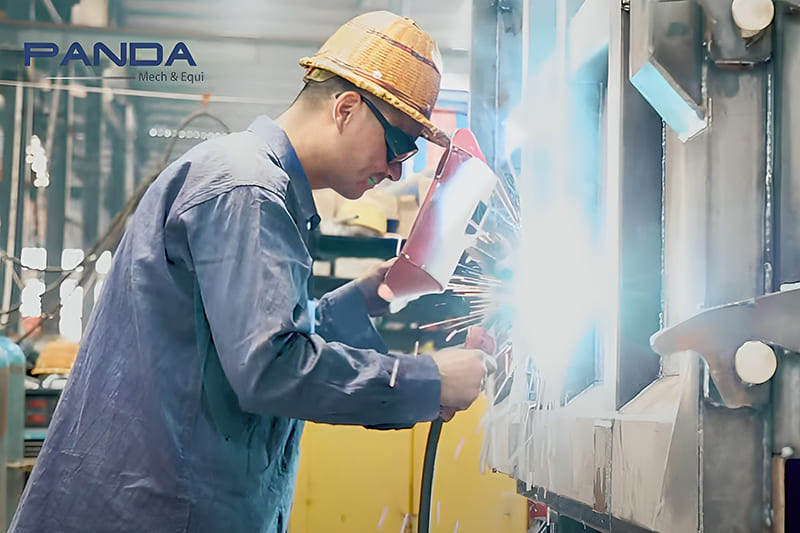
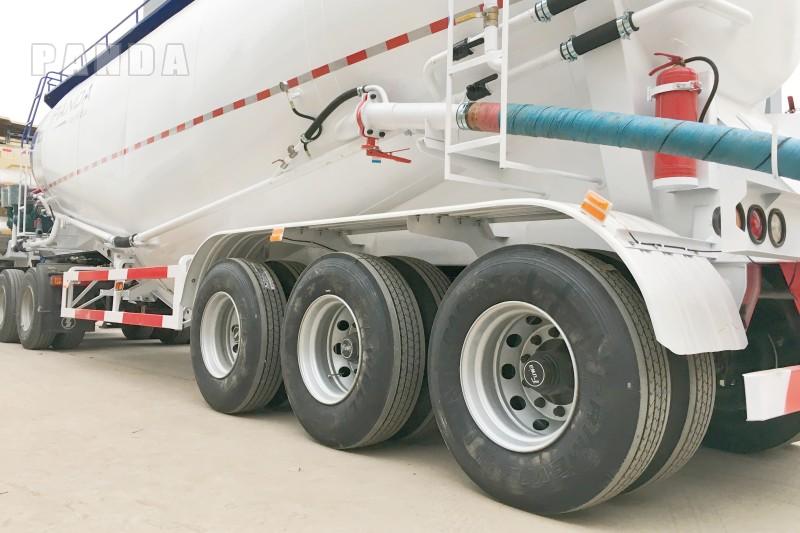
We check the tank structure, selected materials and weld quality before final assembly.
We check the tank, air pipes, valves and connection points for sealing problems.
We check the compressor installation, air path, valves and basic discharge function.
We check the axles, suspension, brakes, tires and final trailer configuration before shipment.
Dry fly ash is loaded into the sealed tanker at the source. The trailer carries it by road, then uses air to move the powder through a closed line into the receiving silo.
We size the trailer around the full job. That includes fly ash density and condition, target payload, legal road limits, tractor details, unloading distance, silo height and filter capacity.
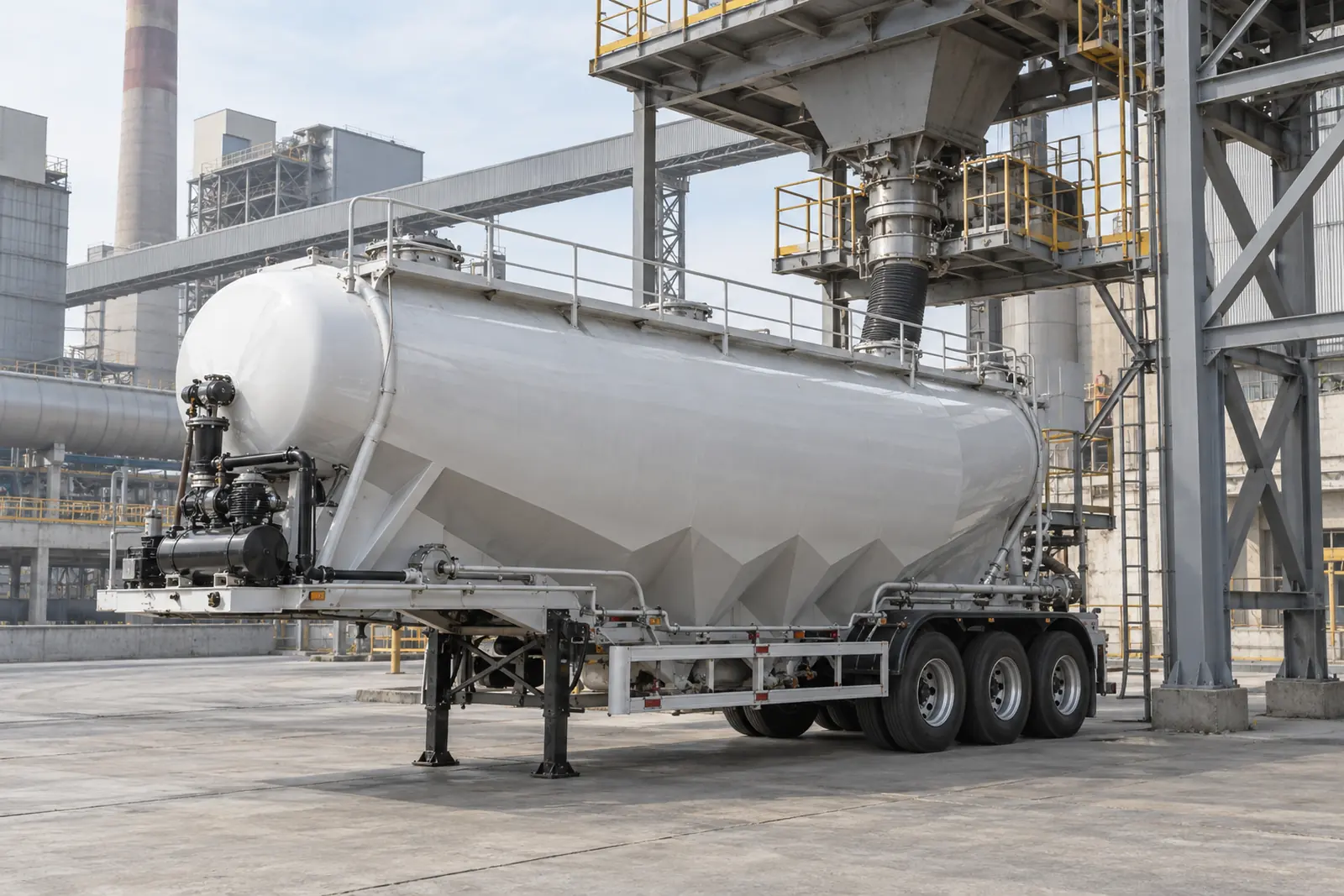
Illustrative fly ash application scene; the final loading and unloading configuration depends on the site.
The main price factors are tank size, axle setup, suspension, compressor system, running gear, destination requirements and order quantity. We give you a firm quotation after we confirm the trailer setup.
Payment: generally 30% deposit + 70% before shipment.
Production: typically 7–25 days, depending on the trailer setup, quantity and factory schedule.
Shipping: sea transit time depends on the destination and sailing schedule.
Response target: within 1 hour for complete quote requests.
For an exact quotation, send us: target payload, destination country, axle preference if you have one, order quantity and unloading requirements. We will match the trailer setup before we price it.
If you do not have every value yet, send what you know. We will tell you what is still needed before we finalize the specification.
With these details, we can move from a general inquiry to a specific trailer setup and quotation.
Get Fly Ash Bulker Price & SpecificationStart with your target payload and the measured bulk density of the fly ash. We calculate the cargo volume first. Then we check usable tank space, empty trailer weight, legal GVW and axle loading before choosing the final tank size.
We choose the axle layout from payload, empty trailer weight, local axle rules, road condition and tractor setup. Three axles are a common starting point for export projects. We use 2 or 4 axles when the load and route make those layouts a better fit.
We confirm expected unloading performance after checking your fly ash and air system. We also check the discharge line, silo height, bends, pressure inside the silo and filter capacity.
Panda Mech technical guidance commonly uses about 0.2 MPa as an operating reference for pneumatic discharge. We set the final operating conditions to match your fly ash, air source, piping and receiving silo.
Yes, one pneumatic tanker family can be configured for both cargoes, but cement and fly ash do not always behave the same way. Density, moisture, how the powder mixes with air, leftover material and silo conditions can change the right tank size and unloading setup.
In many markets, “fly ash bulker,” “fly ash cement bulker,” “fly ash cement tanker” and “pneumatic fly ash trailer” can refer to similar pneumatic dry-bulk trailers. We still choose the trailer setup from your actual fly ash, payload, route and silo conditions.
Send us your destination country, target payload and quantity first. If you know them, also send fly ash density and moisture, road condition, tractor details, silo height, discharge distance, unloading-time target and destination port.
Our normal payment term is generally 30% deposit and 70% before shipment. Production is typically 7–25 days, depending on the trailer setup, quantity and factory schedule. Sea transit time depends on the destination.
Yes. We can configure the axle setup, suspension, brakes, tires, tank volume and pneumatic system around your project requirements. Send us your destination country, target payload and tractor details first. We will tell you what needs to be confirmed before quotation.
Send us your fly ash details, target payload, destination and silo information. We will size the trailer, tell you what information is still missing, and prepare the specification and quotation.
