
40-ton payload requirement
Choose this model if you need about 40 tons of cement or similar powder per load. The 30 m³ tank must also match your cargo density.
Panda Mech builds this 3-axle 40 ton cement tanker for cement, fly ash, lime and mineral powder. It uses a 30 m³ high-strength steel tank. Its air-powered (pneumatic) unloading system can unload cement at more than 1.5 t/min.
We then match the axles, suspension, tires, air system and trailer connections to your tractor, roads and receiving silo.
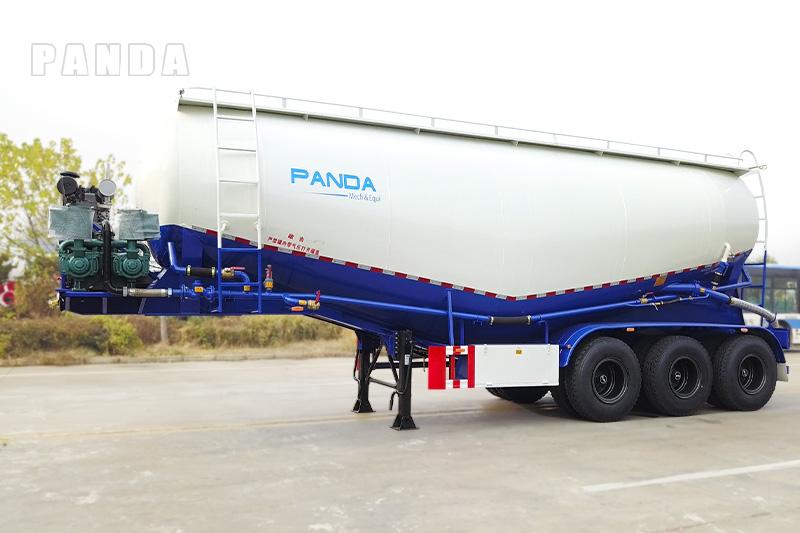
Choose this model if you need about 40 tons of cement or similar powder per load. The 30 m³ tank must also match your cargo density.
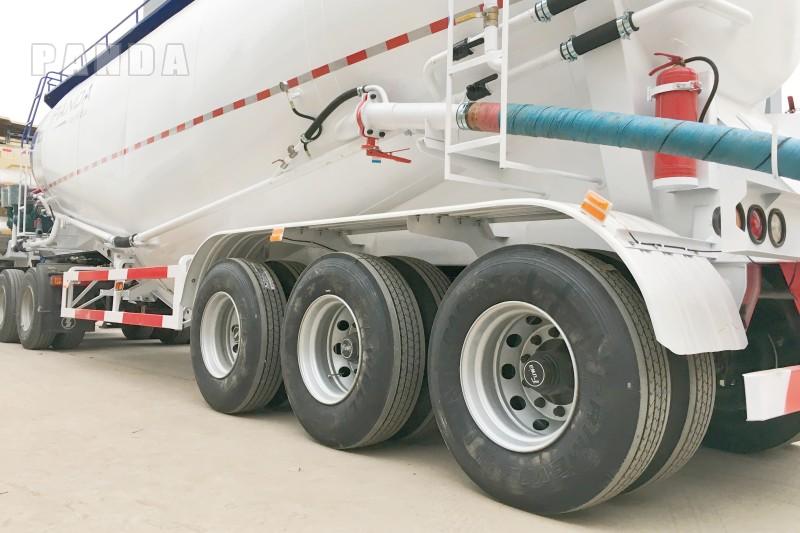
The standard layout uses 3 axles. We match the suspension, tires and trailer connections to your tractor, roads and fleet standard.
The trailer uses compressed air to move powder into the silo. We size the air system around pipe length, vertical lift, bends and silo pressure.
This model uses a 40-ton payload setup, a 30 m³ tank and 3 axles. We confirm final dimensions, tare weight and ordered components on the approved production drawing.
| Specification | 40 Ton Cement Tanker | Status | What it means |
|---|---|---|---|
| Payload | 40 ton | Standard model | This is the model’s load target. Legal road payload still depends on tare, tractor weight, axle limits and local rules. |
| Tank Volume | 30 m³ / 30 CBM | Standard model | 40 tons does not mean 40 m³. This model uses a 30 m³ tank. |
| Axles | 3 axles | Standard model | We confirm axle details for your roads, tractor and fleet before production. |
| Cement Unloading Rate | >1.5 t/min | Confirmed performance | This is cement mass flow, not compressor airflow. Pipe route and silo pressure can change the real site result. |
| Tank Shell | 5 or 6 mm high-strength steel | Configuration choice | We confirm the shell choice on the final order setup. |
| Discharge Valve | 4-inch disc valve | Current 40T setup | The valve is part of the current Panda Mech 40T product setup. |
| Suspension | Mechanical or air suspension | Option | Choose based on roads, maintenance needs and fleet preference. |
| Pneumatic Air Source | Diesel engine + air compressor package | Project setup | We size the air system around discharge distance, vertical lift, bends and silo pressure. |
| Overall Dimensions | Confirmed on production drawing | Confirm before production | We lock the final dimensions after your tractor, route and ordered parts are known. |
| Tare / GVW | Confirmed with final setup | Confirm before production | We calculate final tare and gross vehicle weight before production so axle loads and route limits can be checked. |
| Production Time | Typically 7–25 days | Order dependent | The exact production time depends on the final setup and order quantity. Shipping time is separate. |
These are real Panda Mech 40T product images. You can see the 3-axle layout, tank body and front-mounted air system before the final drawing is approved.
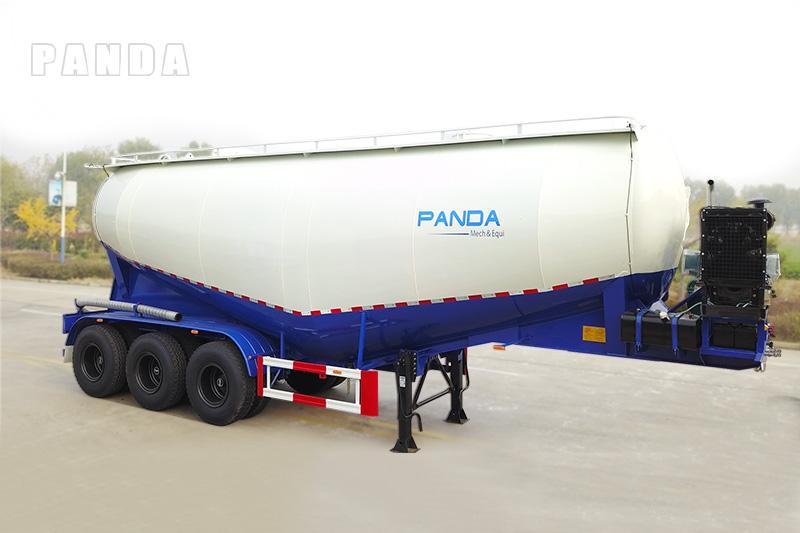
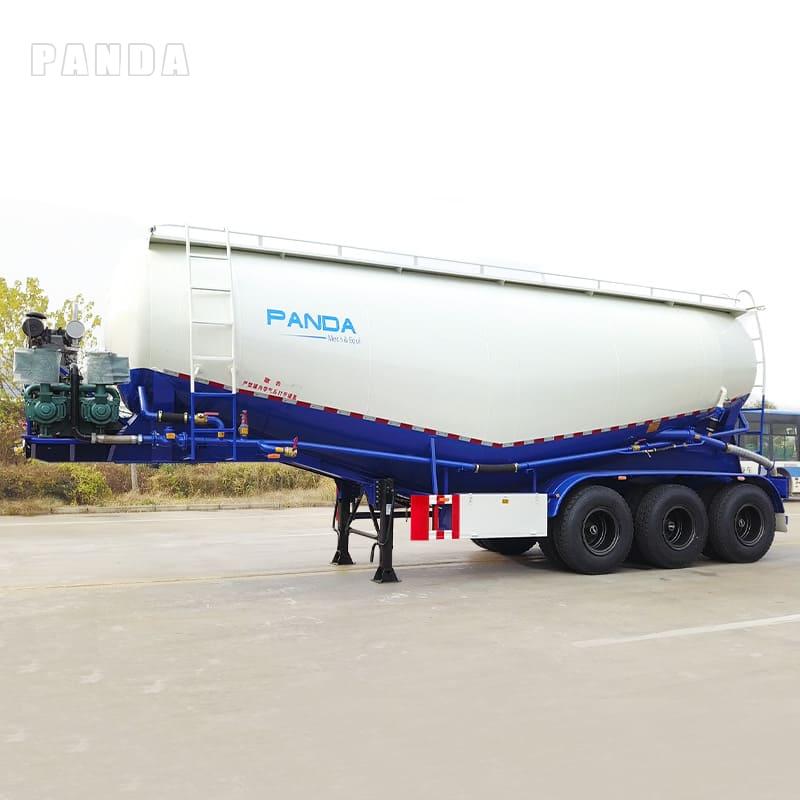
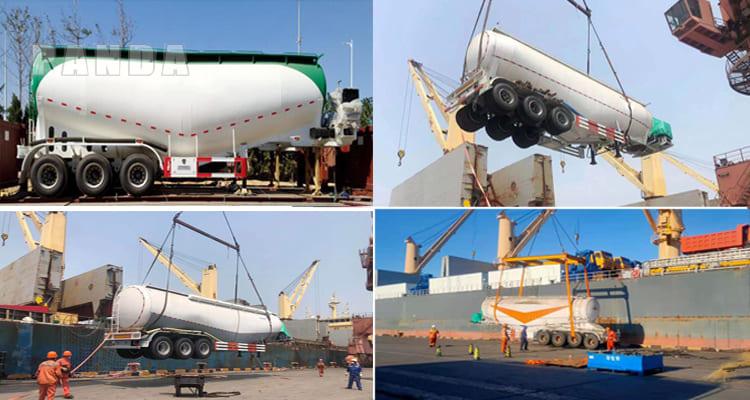
These close-up images are from Panda Mech cement tanker production. They show the type of components we review when we build a 40T order. Your final brands and exact parts are confirmed on the order sheet and production drawing.
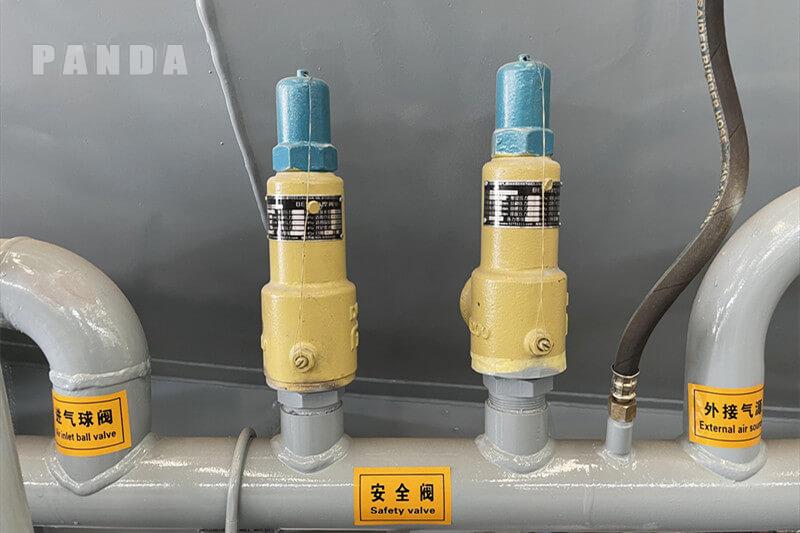
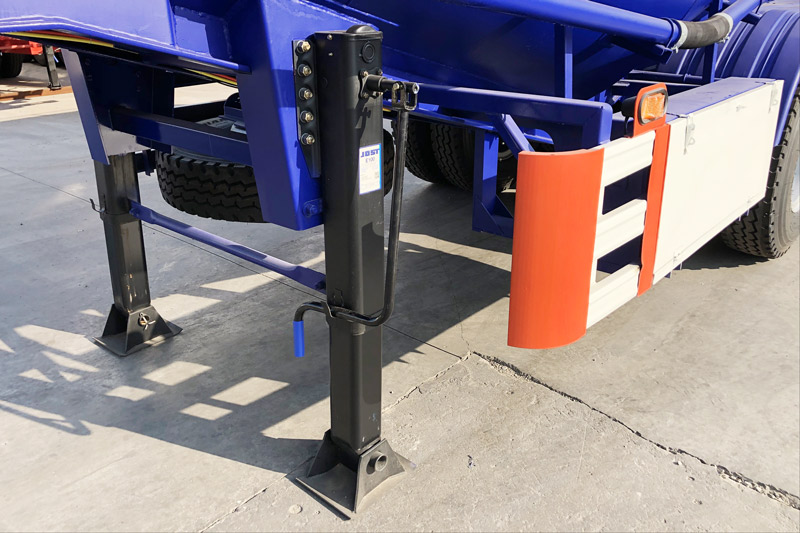
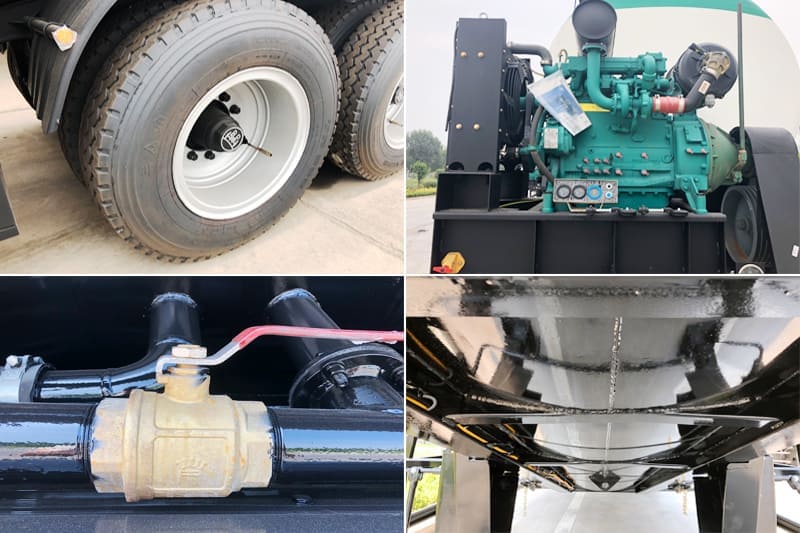
Component images show Panda Mech cement tanker parts and same-family details. They are not used here as proof of a fixed brand or exact component on every 40T order.
Video used on Panda Mech’s current 40 Ton Cement Bulker product page.
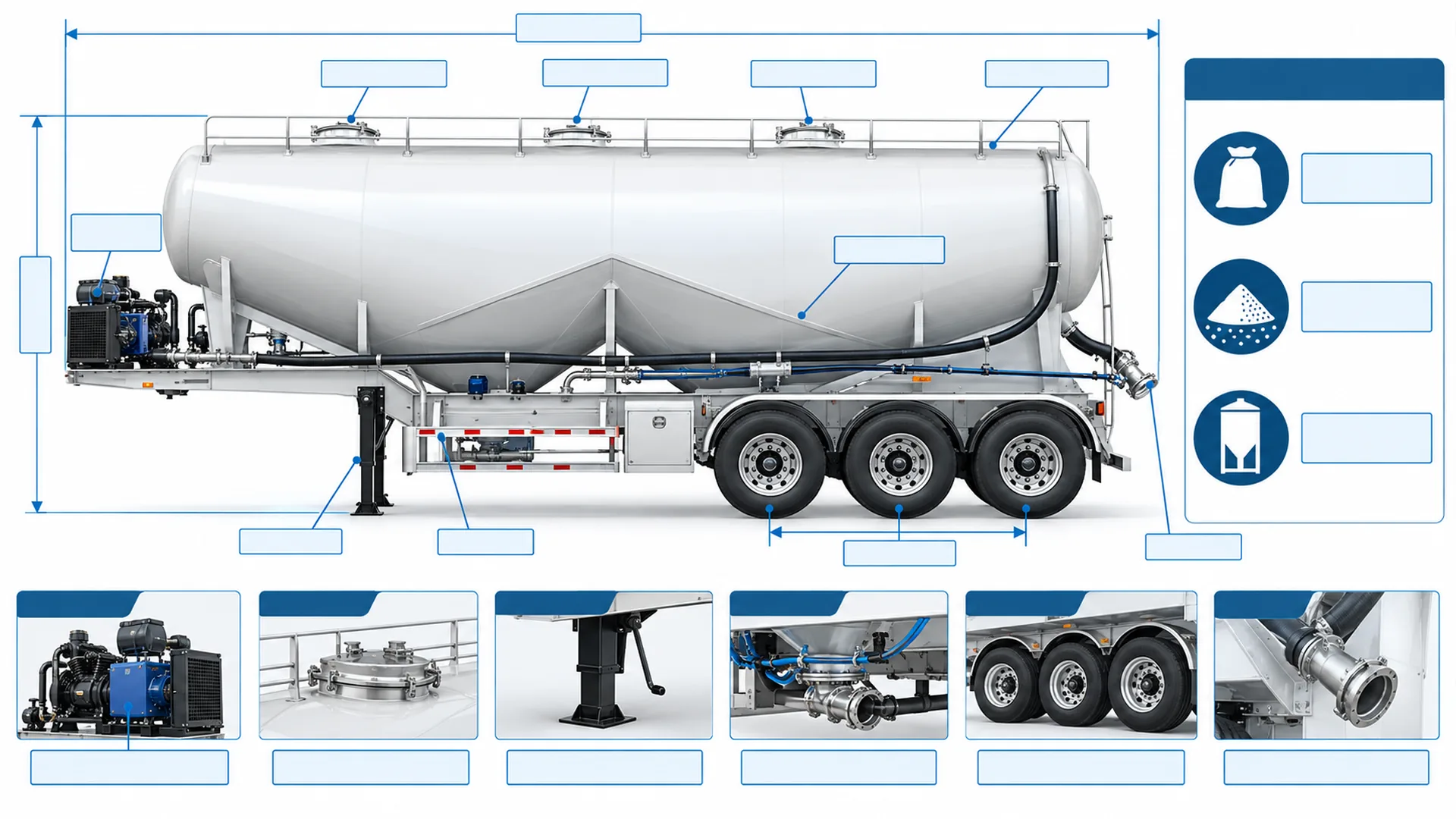
Our cement unloading rate is above 1.5 t/min. This number means how many tons of cement can leave the trailer each minute. It is not the compressor airflow rate. We check the compressor, tank aeration, discharge pipe and silo pressure together.
The compressor supplies air. Tank aeration sends that air through the cement so the powder can flow. We size both parts together.
A longer pipe, more bends or a higher silo makes unloading harder. Send us the horizontal distance, vertical height, pipe size and number of bends.
The silo must let air escape through its filter. If the filter is blocked, pressure builds inside the silo. This backpressure can slow unloading.
This tanker is for cement and similar industrial dry powders. Common cargos include fly ash, lime powder and mineral powder. Cargo density matters because 30 m³ of different powders can weigh very different amounts.
Food powders use a different tanker family. Flour, starch and other food powders need a food-powder tanker. These tankers use different cleaning and contamination-control requirements.
Send the cargo name and bulk density if you know it. Also tell us about moisture, flow problems, loading method and product changes. We use this information to confirm tank volume and the air system.
We first check the cargo and load target. Then we check your tractor, roads, unloading route and silo. We use those details to lock the trailer setup, service parts and final production drawing.
We build pneumatic dry-bulk tankers. We look at the tank, air system, piping and trailer chassis as one working system.
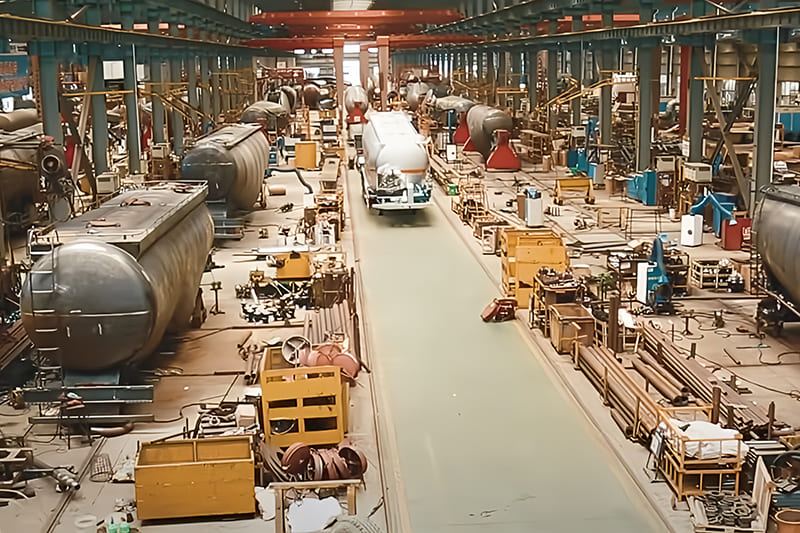
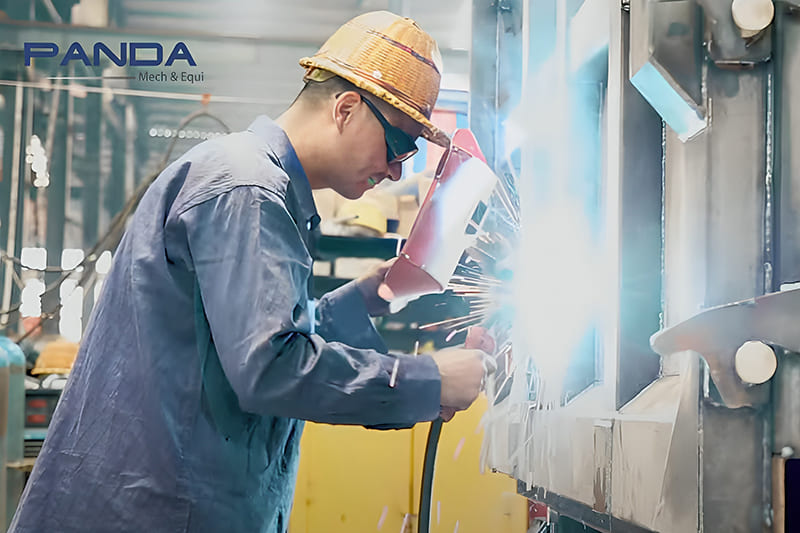
We control tank fabrication, air-system installation, trailer assembly and final inspection through our own production process.
For multi-unit orders, we can keep selected axles, tires, valves, hoses and service parts consistent across the batch. This makes maintenance and spare-parts planning easier.
We match the tanker to your cargo, tractor, roads, discharge pipe and silo before we release the production drawing.
We carry out 200+ quality-control checks during production. For a cement tanker, we check welds, sealing, air leaks, pipes, valves, engine and compressor operation, discharge function, brakes, axles and final dimensions.
For fleet orders, we can keep key parts the same across several trailers. This makes spare-parts stocking, maintenance and technician training easier.
In an Ethiopia project, the customer first asked about a tandem-axle setup. After we checked the local weight requirements, our engineers recommended 3 axles instead. This is why we ask about the operating country and route before we lock the axle setup.
Read the related axle-selection projectThe price depends on what you build into the trailer. The main cost drivers are the tank specification, axles and suspension, air system, selected parts, order quantity and destination.
Tank structure, suspension, axles, tires, valves, piping and special destination requirements can all change the price.
A longer discharge line or higher silo can need a different engine, compressor or pipe setup. That changes the price.
Order quantity, shared fleet parts, spare-parts needs, documents and shipping arrangements can also change the final quote.
Send us your cargo, destination, quantity, tractor and silo details. Our target is to respond to an RFQ within 1 hour.
For fleet orders, plan the spare-parts list together with the trailer specification. Common service items include seals, gaskets, valve wear parts, hoses, gauges, air-system parts, brake parts and lights.
For multi-unit orders, we can keep selected axles, tires, valves, hoses and service parts the same across the batch. This reduces spare-parts variety and makes maintenance easier.
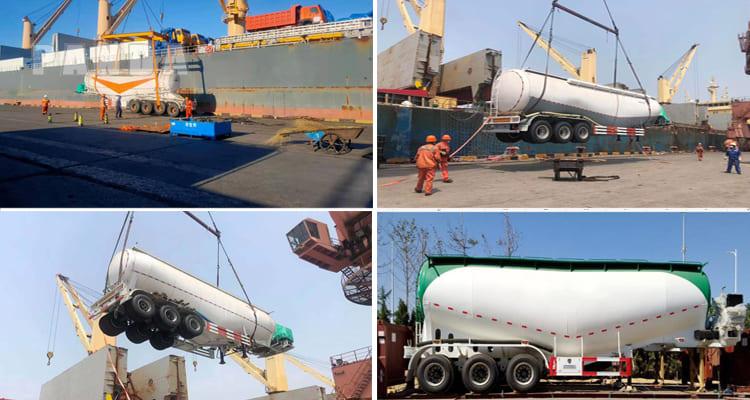
Production is typically 7–25 days after the final setup is confirmed. Shipping time starts after production and depends on the destination, sailing schedule and transport plan.
No. This 40 ton cement tanker uses a 30 m³ tank. If you need about 40 m³ of tank volume, send us your cargo density and we will recommend the right larger tanker.
Our cement unloading rate is above 1.5 t/min. Real unloading speed can change with cement condition, pipe length, vertical lift, bends, air leaks and silo pressure.
It is built for cement and similar industrial dry powders, including fly ash, lime powder and mineral powder. Tell us the cargo density and any moisture or flow problems before we confirm the setup.
Yes. We can adjust the suspension, selected parts, air system and trailer connections for your project. We confirm final dimensions and weights on the approved drawing.
Send your tractor model, fifth-wheel height and any available air or electrical connection details. We use them to check trailer compatibility before production.
No. Legal payload depends on trailer tare, tractor weight, axle limits, dimensions and local road rules. We give you the final trailer figures so you can check the operating route.
Send your destination, cargo, quantity, road condition, tractor details and silo information. Also tell us your discharge distance and unloading target. This lets us quote the right tanker instead of a generic setup.
Production is typically 7–25 days after the final setup is confirmed. Shipping time is separate and depends on the destination and transport plan.
We will match the 40-ton / 30 m³ tanker, axles, suspension and air system to your project. Then we will send the final configuration and quotation.