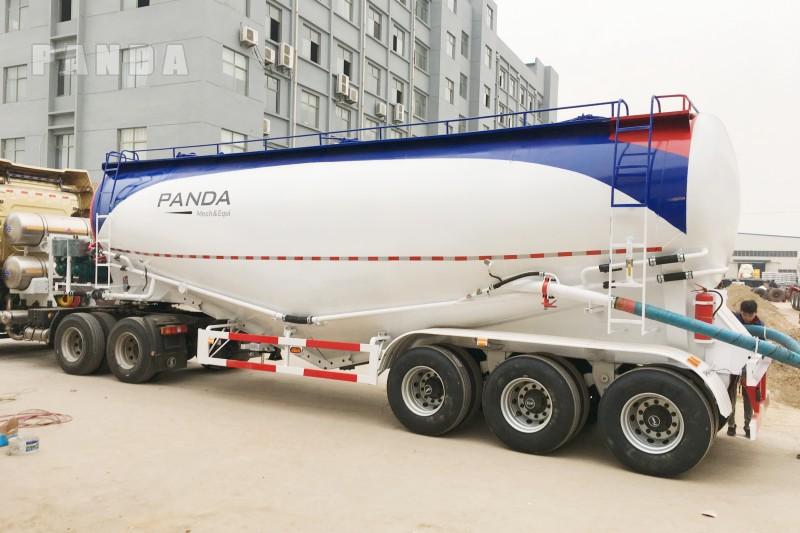
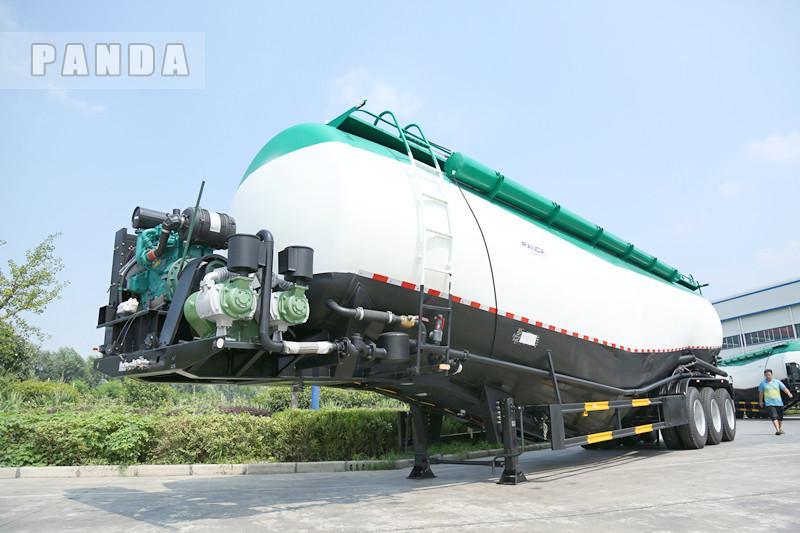
Cement Bulker & Pneumatic Tanker Manufacturer · 20+ Years Manufacturing Experience
GET A QUOTE
Panda Mech Cement Tanker Engineering

Cement Bulker Specifications: Capacity, Dimensions, Weight & Pneumatic System

A cement bulker should not be chosen by tonnage or tank size alone. We first check the cargo and its bulk density. Then we match payload, tank volume, tare weight, axle layout, tractor and unloading system.

25–120 tFamily payload range
20–100 m³Published tank-volume range
>1.5 t/minCement unloading baseline
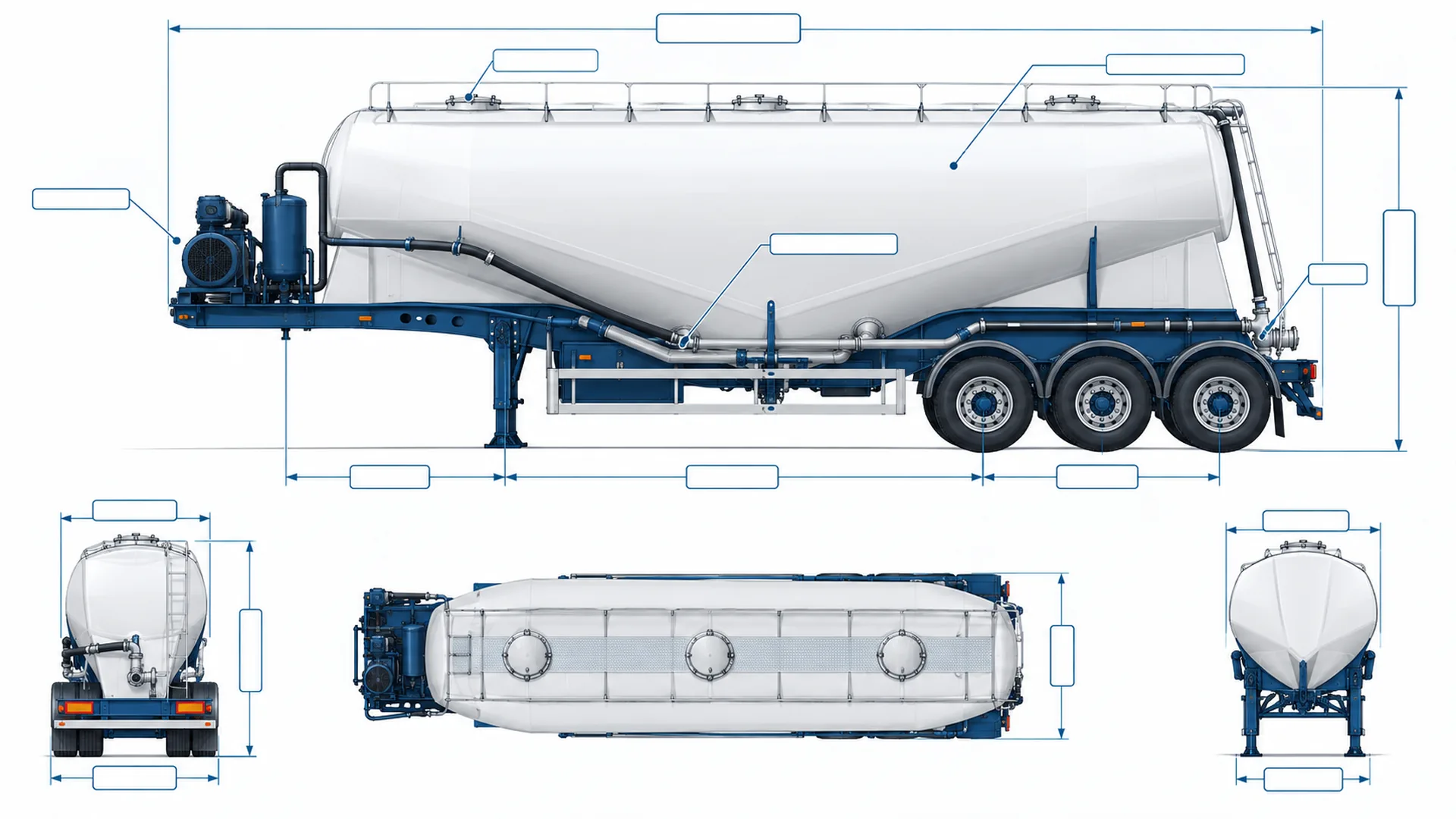
Cement bulker specification layout illustration with blank dimension and equipment callouts
Quick Answer

Start with the cargo, not the trailer name.

Tell us what powder you carry, the target payload and where the trailer will operate. We then check tank volume, tare weight, gross vehicle weight (GVW), axle limits and tractor fit.

After that, we match the compressor, discharge line and receiving silo. A “40 ton” or “50 ton” name alone is not a complete cement bulker specification.

CargoWhat powder?
DensityWeight per m³
PayloadCargo mass
VolumeTank space
Tare + GVWEmpty + total weight
AxlesLoad sharing
TractorFifth-wheel match
UnloadingCompressor + silo

Cement Bulker Specification Snapshot

These figures describe the Panda Mech cement tanker family. They cannot be mixed in any combination. The approved quotation, bill of materials (BOM) and drawing control the final order.

Payload Range25–120 tAcross several cement tanker configurations
Tank Volume20–100 m³Final size depends on cargo density and legal payload
Unloading Baseline>1.5 t/minSite conditions still affect total unloading time
Axle Layouts1–4 axlesFamily configurations
Quality Control200+Production and final checks
Production7–25 daysTypical configuration-dependent range
Response TargetWithin 1 hourProject and quotation enquiries
Do not mix the units: axle rating is not legal axle load. Tank volume in m³ is not payload in tons. Compressor airflow in m³/min is not cement discharge rate in t/min.
Model Selection

Which Panda Mech Cement Bulker Should You Start With?

Use this table to narrow your options. We still check destination country, tractor, road conditions and unloading site before confirming the final trailer.

Reference ConfigurationTypical PositionGood Choice If…Choose Another Option If…What to Check Before Quotation
25 m³ / 30T ClassLower-payload, compact optionYou need less cargo capacity or your tractor and route favor a lighter trailer.Your fleet needs higher payload per trip and the road can legally support it.Bulk density, legal GVW, axle limits and tractor match.
30 m³ / ≈40TMedium-payload optionYou need about a 40-ton cement transport setup and the route can support it.Your route and tractor can support a higher legal payload and fleet productivity matters more.Tare weight, local axle limits and unloading conditions.
45 m³ / 55THigher-payload optionYour route, tractor and fleet can support a heavier trailer.Road law, bridge limits or tractor capacity make the extra payload impractical.Axle group, tare weight, brakes, suspension and local law.
50 m³ / 60THeavy-duty road setupYou need more payload and have already checked route and axle restrictions.Your tractor, road or local axle rules cannot support the heavier combination.3 axles vs 4 axles, GVW and service conditions.
80T / 85T Heavy-DutyHeavy-duty project configurationYour project can support the structure and legal road limits needed for very high payloads.The trailer will run under normal road limits that do not permit this payload class.Confirm country and route legality first. Do not assume 80T or 85T is road-legal everywhere.
Volume and tons are not a universal conversion. Panda Mech commonly maps about 30 m³ to a 40-ton configuration and about 40 m³ to a 50-ton configuration. Real usable payload still depends on cargo density, tare weight, GVW, axle distribution and local law.
Capacity Formula

How Payload, Bulk Density and Tank Volume Are Connected

Required cargo volume (m³) = target payload (t) ÷ bulk density (t/m³)

This is a starting calculation, not the final tanker size.

Do not stop at the formula

Final tank size must allow for usable tank space, powder flow and tank shape.

Check legal weight

Tare, GVW, kingpin load and axle loads can reduce the payload you can legally carry.

Check unloading

Powder behaviour, aeration, pipe resistance and the receiving silo can change the final setup.

Do not use one fixed “cement density” for every project. Send the measured or expected bulk density for the actual cement or powder when you have it.
Technical Specification

Complete Cement Bulker Specification Sheet

A model name such as “50 ton cement tanker” is only a starting point. The quotation should define the tank, unloading system and running gear you are actually ordering.

Rated payload25 / 30 / 35 / 40 / 45 / 50 / 55 / 60 / 70 / 85 / 120 t published across the familyWe check actual cargo after density, tare, GVW, tractor and local axle rules.
Tank volume20 / 25 / 30 / 35 / 40 / 45 / 50 / 55 / 60 / 70 / 100 m³ publishedWe choose tank size from cargo and payload target. Bigger is not automatically better.
Overall dimensionsAbout 7350–14500 × 2550 × 3900–4000 mm across published configurationsAxle layout and tank shape change the final size, so exact dimensions go on the approved drawing.
Empty weight / tareAbout 6,500–9,000 kg published family referenceA heavier trailer can reduce legal cargo when GVW is limited.
Tank shell plate5 or 6 mm high-strength steel references on existing modelsThickness is only one part of structure. Material grade, geometry, reinforcement and pressure also matter.
Tank material / chassis materialModel-specific and listed as separate fieldsThese are not the same thing, especially on an aluminum tanker project.
Manhole2–4 sets, Ø700 mm published referenceNumber and position are matched to loading, access and inspection needs.
Tank designV-type / W-type / silo-type referencesShape changes powder flow, residue behaviour and weight distribution.

Cement Bulker Specification Checklist

Use this list before you approve an order. Important fields should not stay vague when they affect safety, legal load or unloading performance.

01

Cargo & Capacity

  • Exact cargo name
  • Bulk density
  • Target payload
  • Tank / usable volume
  • Tare weight and GVW
02

Tank & Structure

  • Tank-shell material
  • Material grade
  • Shell / head thickness
  • Geometry / reinforcement
  • Chassis material
03

Running Gear

  • Axle number / rating / brand
  • Suspension
  • Tires and load index
  • Kingpin / fifth-wheel height
  • Landing gear / brakes
04

Pneumatic System

  • Compressor / blower model
  • Airflow in m³/min
  • Drive method
  • Operating / design / test pressure
  • Relief setting / aeration
05

Discharge Interface

  • Valve / pipe diameter
  • Coupling standard
  • Horizontal hose distance
  • Vertical silo height
  • Bends / unloading target
06

Site, Documents & Delivery

  • Silo backpressure / filter
  • Road / axle restrictions
  • Final drawing / BOM
  • Inspection requirements
  • Spare parts / shipping prep
If a field affects safety, legal load or unloading performance, do not leave it as “standard.” Ask for the actual value or agreed configuration in writing.

Why “6 mm Steel” Does Not Tell You the Whole Tank Quality

Plate thickness matters, but it is only one part of the structure. Two tanks can both use 6 mm plate and still be different because steel grade, tank shape, reinforcement, weld design and pressure requirement are different.

Tank shellSeveral Panda Mech references use 5 mm or 6 mm high-strength steel.
Material fieldsTank-shell material and chassis/structural material are listed separately.
Tank shapeV-type, W-type and other layouts change load position and powder flow.
FabricationPart fit, weld quality and inspection matter alongside plate thickness.
What we check: steel grade, geometry, reinforcement, weld design and approved pressure specification.
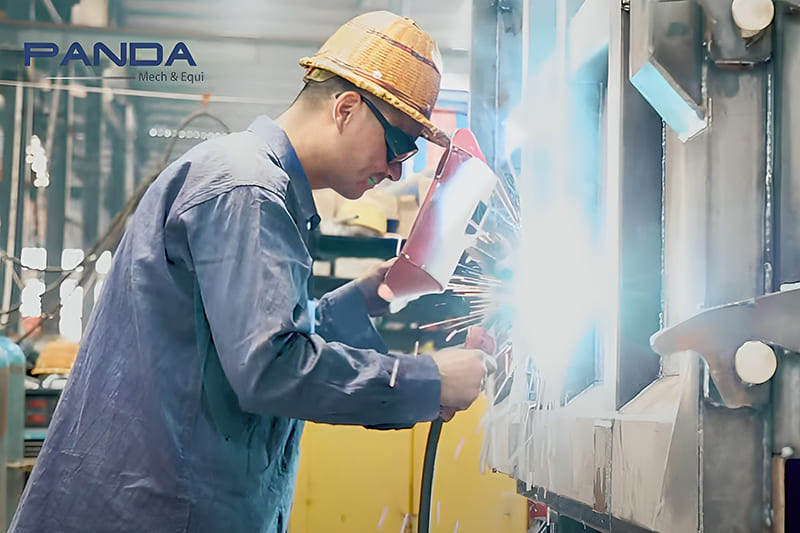
Panda Mech welder checking cement tanker fabrication quality
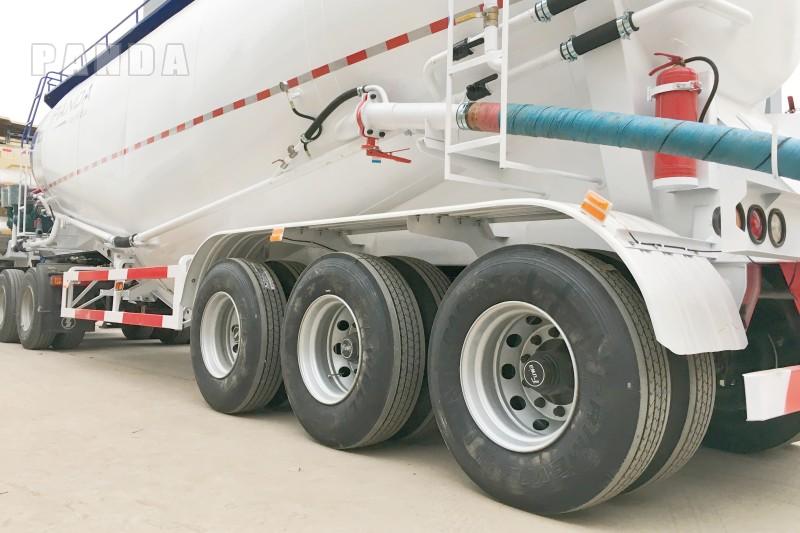
Cement tanker chassis and axle configuration detail

How We Choose 3 Axles or 4 Axles

Axle count must match cargo weight, tare, road law and tractor. A 50-ton label by itself does not tell you whether the trailer is legal or well balanced.

3 axles usually fit when…Payload, tare, road law and tractor support a standard 3-axle setup. This is the usual starting point for our 40 m³ / about 50-ton configuration.
4 axles may fit when…You need a different way to spread the load, such as on some heavy-duty 60-ton projects, and local rules allow it.
Do not choose by looksMore axles can spread weight, but they do not automatically make a heavy payload legal.
Check the tractorWe confirm fifth-wheel and kingpin match before releasing the final drawing.

Do Not Mix Operating, Design, Test and Relief Pressure

These values are related, but they do different jobs. Treating them as one number creates confusion when comparing quotations or reviewing a tanker drawing.

Pressure has four different rolesAsk the supplier to state each value separately and identify the model or test condition.
Operating Pressure

Pressure normally used while unloading. Panda Mech guidance uses about 0.2 MPa as an operating reference in some pneumatic discharge guidance; final value is model-specific.

Design Pressure

Pressure used by engineers when designing the tank and pressure-bearing structure.

Test Pressure

Pressure used during a defined inspection or pressure test. It is not normal unloading pressure.

Relief Setting

Pressure where the protection device starts to act. It must match the approved tank design.

Pneumatic Unloading

What Actually Controls Cement Bulker Unloading Time?

The same trailer can unload at different speeds at two sites. Cargo, air system, discharge line and the receiving silo all affect the result.

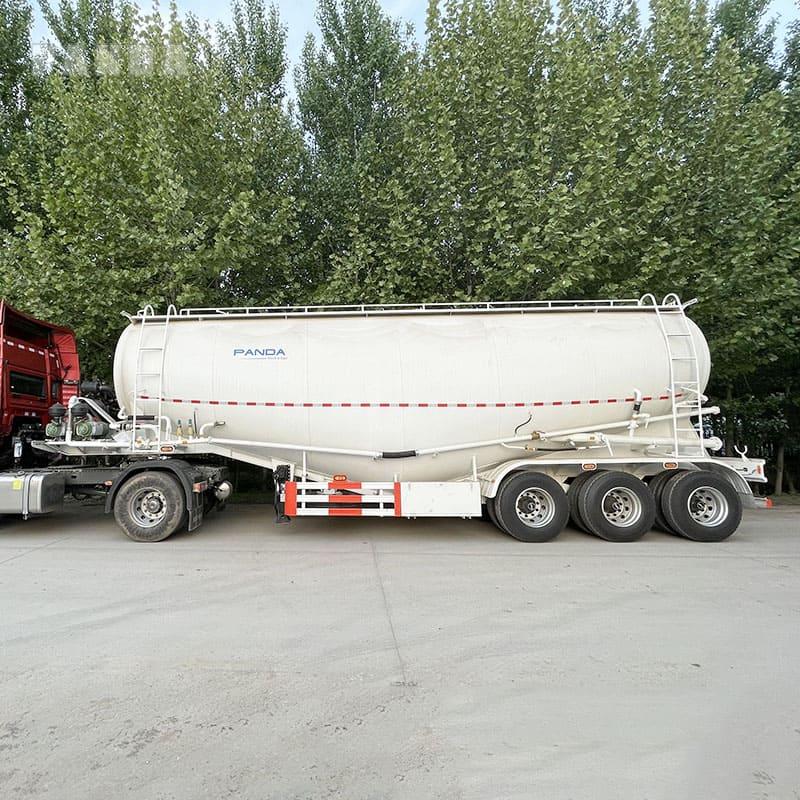
Pneumatic cement bulker configuration used to explain unloading performance
Cargo FlowMoisture and how the powder mixes with air affect movement.
Compressor AirflowMeasured in m³/min and matched to the job.
Air DistributionGood aeration helps powder move toward the outlet.
Tank PressureProvides the driving force for conveying.
Pipe DiameterWrong diameter can add resistance or reduce stable flow.
Hose & BendsLong lines and bends add pressure loss.
Vertical LiftA higher silo inlet makes the system work harder.
Silo + FilterBackpressure and poor venting can slow the transfer.
Horizontal Distance

Longer hose creates more resistance.

Vertical Silo Height

Pushing powder higher takes more work.

Pipe Diameter & Bends

Smaller pipe or more bends can increase pressure loss.

Silo Backpressure

Too much backpressure can slow unloading even when the trailer is working correctly.

Filter / Venting

The silo must let conveying air escape.

Target Unloading Time

Family baseline is >1.5 t/min; total time still depends on site conditions.

Before we size the unloading system: send cargo, target unloading time, horizontal distance, silo height, line diameter if known, main bends, receiving connection and any known filter or backpressure limits.

Standard or Project-Specific Setup?

An optional part is not automatically better. We recommend upgrades when they solve a real road, legal, fleet, service or operating-cost problem.

Common Setup
TankSteel construction matched to the selected design
SuspensionMechanical suspension where road and maintenance suit it
AxleStandard export axle package matched to load
DischargeCommon valve and pipe arrangement
Air sourceStandard compressor / engine package
PaintBlasting, primer and topcoat system
Project-Specific Setup
TankAluminum or another confirmed material when required
SuspensionAir suspension where road, ride or fleet needs justify it
AxleBPW, SAF or another preferred brand when local support makes sense
DischargeModified connection or pipe layout for receiving site
Air sourcePTO or external-air setup when the project supports it
Road equipmentMarket-specific brakes, lighting and running gear
10items to compare before price

How to Compare a Panda Mech Quote With Another Supplier

If two quotes both say “50 ton” but one is much cheaper, compare the actual specifications before the price. A blank technical field can mean part of the trailer has not been clearly defined.

SpecificationWhy It MattersSupplier ASupplier B
Payload + tank volumeTons and cubic meters are different
Trailer tare weightA heavier empty trailer can reduce legal cargo
Tank material + grade + thicknessThickness alone does not define structure
Overall dimensionsAffects road limits and site access
Axle number / rating / brandAffects load sharing, legal limits and service support
Suspension + brakingAffects road use, maintenance and local requirements
Compressor / airflow / driveAirflow should use m³/min
Operating / test / relief pressureThese are different values
Discharge rate + conditionsA t/min figure needs cargo and site conditions
Warranty + spare supportAffects downtime and long-term operating cost
01Only “50 ton”Payload alone does not define volume, tare, axles or legal load distribution.
02No tare weightYou cannot work out realistic legal cargo without empty trailer weight.
03Axle rating = legal loadBuilt capacity and road-law limit are not the same.
04Compressor “12 m³”Airflow is a rate and needs a time unit such as m³/min.
05“1.5 t/min” no conditionsReal result depends on cargo, line length, lift, backpressure and filter.
06“6 mm steel” no gradeThickness alone does not define strength, reinforcement or tank design.
07No silo / discharge dataThe pneumatic system cannot be checked properly without site conditions.

Why Two “50 Ton Cement Tankers” Can Have Different Prices

The same model name can hide different materials, axles, suspension and unloading equipment. Compare the build first. Then compare price.

Tank + Tare Weight

Steel grade, tank shape, reinforcement and weight-saving design can change cost and usable payload.

Axles & Suspension

Axle count, rating, brand and mechanical or air suspension change purchase and maintenance cost.

Pneumatic System

Compressor, drive, valves, air distribution and pipe layout all affect unloading-system cost.

Brakes & Market Setup

ABS/EBS, lighting and destination-specific running gear can change the final build.

Fleet Parts

Common tires, axles, valves and spares can reduce downtime and simplify maintenance.

QC + Drawings

Material checks, leak checks, final inspection and approved drawings keep build aligned with quote.

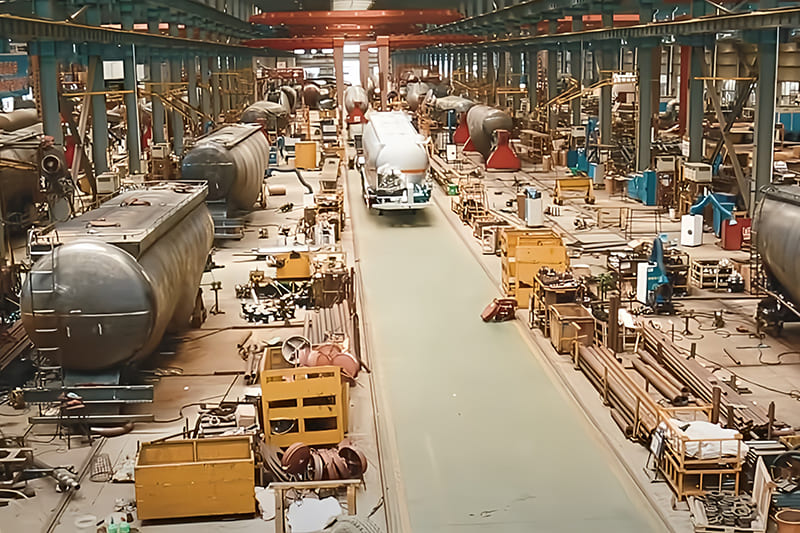
Panda Mech cement tanker production line and fabrication capability
Factory & Quality Control

We Build to the Approved Specification

A detailed quotation only matters if the factory builds the same configuration. We carry the approved specification through fabrication, assembly, pneumatic checks and final inspection.

200+quality-control checks across production and final inspection
MaterialCheck grade and thickness against the order.
Tank & WeldCheck fit, welds and fabrication.
Air SystemCheck sealing, piping and valves.
Running GearVerify axles, suspension and brakes.
Final ReleaseConfirm dimensions, components, finish and shipping protection.

What Actual Cement Tanker Projects Show

Real projects show why the same tanker setup does not fit every job. Payload, axle layout, fleet standards and local rules can change the final specification.

Batch cement tanker fleet supplied for a UAE transport project
UAE · Heavy Duty

85T Batch Project

85-ton class with air suspension; 60 units planned and first 20 shipped in the referenced project.

View UAE project
Heavy-duty cement tanker configuration for a large fleet project
Ethiopia · Route Review

Tandem Request Changed to 3 Axles

After checking local weight limits and route requirements, Panda Mech recommended a 3-axle setup instead.

View Ethiopia project
Important: these projects show configurations Panda Mech has supplied. They do not mean the same payload or axle load is legal in every country.

Continue Your Cement Tanker Selection

Move from the engineering guide to the exact model family that best matches your project.

Ordering & Support

What to Expect When You Order

Send destination, cargo, payload or volume, quantity, tractor and unloading-site details to start. If some values are unknown, we will tell you what still needs confirmation.

PaymentGenerally 30% deposit + 70% before shipment
ProductionTypically 7–25 days
ShippingDestination dependent
Response TargetWithin 1 hour
Custom ConfigurationAvailable
Fleet OrdersSupported
Engineering ReviewBefore production
Final SpecificationQuotation / BOM / drawing set

Cement Bulker Specification Questions

Short answers to the specification, capacity, axle and unloading questions we receive most often.

What are the most important cement bulker specifications?

Start with cargo, bulk density, payload and tank volume. Then check tare, GVW, overall dimensions, axle layout and tractor fit. For unloading, also check compressor, discharge line, silo height and receiving conditions.

Is tank volume the same as payload?

No. Tank volume is measured in cubic meters, while payload is cargo weight. Panda Mech commonly uses about 40 m³ for a 50-ton configuration and about 30 m³ for a 40-ton configuration. Usable payload still depends on density, tare, GVW and local axle rules.

How do I calculate the tank volume needed for a cement bulker?

Use cargo volume = target payload ÷ bulk density as a starting calculation. Then check usable tank space, tare, GVW, axle loading and how the powder flows and unloads before fixing the final size.

How fast can a Panda Mech cement bulker unload?

Our current cement tanker family baseline is >1.5 t/min. Real total unloading time also depends on cargo moisture and flow, compressor output, air leakage, pipe diameter, distance, vertical lift, bends, silo backpressure and filter performance.

How do I choose between 3 axles and 4 axles?

We check target payload, tare, legal axle limits, road conditions and tractor before choosing the axle layout. More axles can spread the load, but they do not automatically make a heavy payload legal.

Are operating pressure and test pressure the same?

No. Operating pressure is used during normal unloading. Design pressure is used to engineer the tank, test pressure is used during a defined test, and the relief setting is where the safety device starts to protect the system.

What pneumatic information should I send for quotation?

Send cargo, target unloading time, horizontal discharge distance, silo height, line diameter if known, main bends, receiving connection and any known silo filter or backpressure limits.

How long does Panda Mech normally need for production?

Production is typically 7–25 days. Exact time depends on configuration, quantity and production schedule. Shipping time depends on destination and sailing schedule.

What should I send Panda Mech before asking for the final price?

Send destination country, cargo, target payload, target volume if known and quantity. Also send road conditions, tractor information, silo height, discharge distance, target unloading time, axle or suspension preference and destination port. If you do not know every item, send what you have.

Request Your Configuration

Send Us Your Transport and Unloading Conditions

We will match tank volume, payload, structure, axle package and pneumatic system to your route, tractor and receiving silo. You do not need every technical value before contacting us.

Destination countryCargo + density if knownTarget payload / volumeQuantityRoad / axle limitsTractor / fifth wheelHose distance + silo heightTarget unloading time
Get My Model-Specific Specification & Quote

Send the project details you already know. We will identify the remaining technical points needed for the quotation.

Get My Specification & Quote

Get An Insant Quotation Now