
What Is a Pneumatic Trailer?
A pneumatic trailer is an enclosed tank trailer that carries dry, loose solids (dry bulk) and uses compressed air to unload them through a hose. Cement and fly ash are common cargoes. Food powders such as flour use food-transport tankers. Dedicated granular systems can also handle materials such as plastic pellets. The key distinction is how the cargo leaves the trailer, not the name on it.
Key Takeaways
- Cement or fly ash into an enclosed silo: start with a pneumatic powder tanker.
- Flour and other food powders: use a food-service tanker, not a washed cement tanker.
- No suitable air supply at delivery sites: favor a trailer-mounted, engine-driven compressor.
- Open gravity-discharge receiving point: start with a cargo-compatible hopper trailer.
Dry bulk means dry solid material carried loose, without individual bags or packages. The trailer carries the tank, and a tractor unit pulls it.
Delivering cement or fly ash into a closed silo? Choose a pneumatic powder tanker. It transfers loose powder through a hose without open dumping. The receiving silo needs a suitable inlet, spare space and a vent or filter for displaced air. Unloading into an open pit or a gravity receiver? Choose a gravity-discharge trailer designed for that material instead. The discharge method decides the starting vehicle type.
What Can a Pneumatic Trailer Carry?
Choose the trailer by the material and the receiving method. Cement, fly ash and lime powders suit dedicated pneumatic powder designs and closed-silo delivery. Flour needs food-use equipment. Plastic pellets require a granular-cargo configuration. Grain or aggregate delivered by bottom gravity flow belongs in a suitable hopper or commodity trailer.
| Your cargo | Recommended starting choice | Why it works | When to choose differently |
|---|---|---|---|
| Industrial powders: cement, fly ash or lime powder | An aerated pneumatic powder tanker delivering to a closed receiving silo | Aeration helps suitable powder reach the outlet; conveying air moves it through the hose. | For damp or caked powder, address material flow and aeration rather than choosing a higher pressure setting. |
| Food powders: flour or another food powder | A food-use pneumatic tanker with appropriate contact materials and cleaning controls | Product-contact surfaces, previous cargo and cleaning affect food contamination risk. | For allergen-sensitive or incompatible cargo changes, use dedicated food transport instead of switching loads. |
| Granules: plastic pellets on suitable designs | A granular-cargo conveying setup designed for the pellets | Pellet handling and outlet design differ from the aeration used for fine powder. | A standard cement-powder air and outlet system is not a substitute for a pellet-compatible design. |
| Grain or aggregate delivered to a gravity-discharge receiver | A cargo-rated gravity hopper or commodity trailer | Free-flowing cargo leaves through bottom outlets without pneumatic transfer into a silo. | For enclosed-silo delivery by hose, use a pneumatic system suited to that specific material. |
Panda Mech lists plastic pellets and powders among its pneumatic tanker applications. For pellet transport, use a granular-cargo configuration; the aeration and outlets of a cement tanker are not automatically interchangeable with a pellet-handling system.
Wet, sticky or reactive cargo calls for a material-specific transport system, not a standard dry-powder tanker. Highly abrasive material can require wear-resistant conveying parts. Corrosive, reactive or potentially combustible powders call for appropriate materials and site safety controls. An enclosed tank alone does not make these materials safe to carry or unload.
For flour transport, check both the equipment and its cargo history. The product-contact path includes the tank, aeration components, valves, seals and discharge hose, so assess those parts together.
If you already operate a food-powder tanker with an accepted history, compare the previous and next flour grades and follow the agreed cleaning and inspection process. If the next load introduces different allergen requirements, settle the changeover and verification requirements with the food operator before booking it.
If the available trailer previously carried cement, or its history cannot be established, start with a suitable food-service unit while its suitability is reviewed. This avoids sending a vehicle to the mill only to discover that its history or inaccessible components prevent acceptance.
After wet washing: Dry the tank, valves and hoses before loading flour. Residual moisture can cake powder. See the food tanker cleaning and drying requirements.
For industrial powders, Panda Mech offers pneumatic dry bulk trailer configurations for cement, fly ash and listed mineral powders. For flour, our food-use tanker range includes aluminum and stainless-steel tanks; the order documents identify the exact material grade and food-contact requirements.
What Are the Main Components of a Pneumatic Tank Trailer?
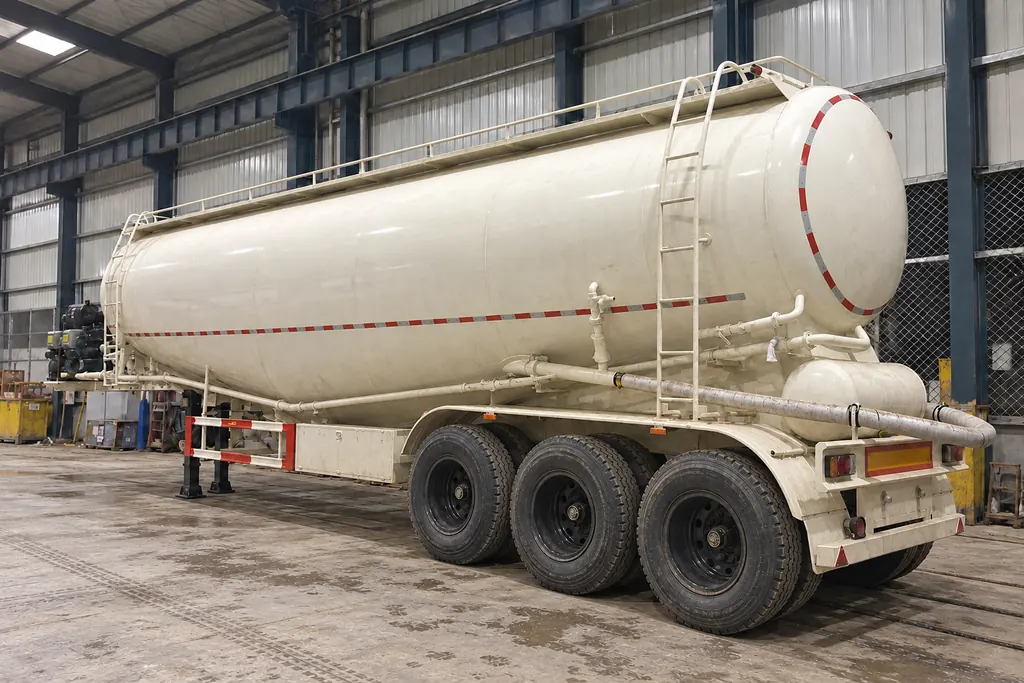
The main parts include the cargo tank, loading openings, air system, valves for cargo flow, discharge line, and the axles, wheels, suspension and brakes (running gear). Air helps suitable powder flow near outlets; this is called aeration. A pressure gauge shows pressure. A vent valve releases air, while a relief valve protects against excess pressure.
The Heil dry bulk trailer manual explains which parts supply air, control cargo flow, show pressure and protect against excess pressure.
| Component | What it does | Main difference |
|---|---|---|
| Tank body and lower outlet sections (discharge hoppers) | The tank holds the cargo. The lower hoppers guide it toward the outlets. | Several hoppers can share one cargo chamber. Counting outlets does not show how many separate chambers the tank has. |
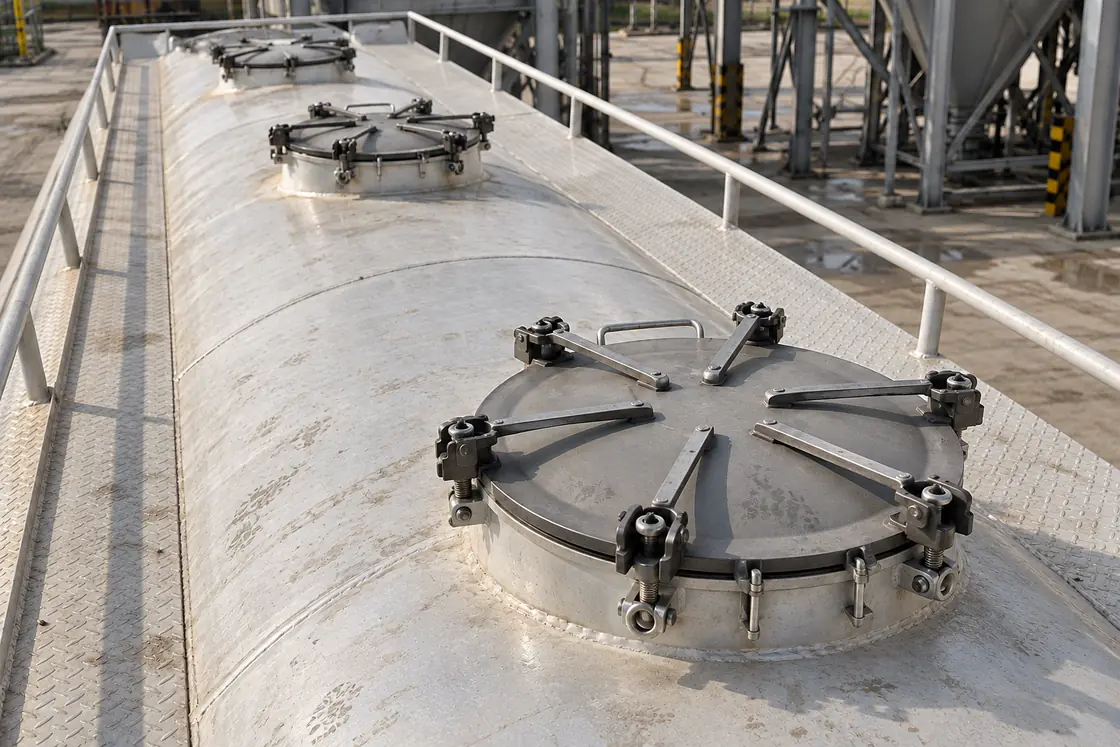
| Access openings (manholes) and loading openings | Receive dry bulk cargo during top filling. | Top openings work with overhead loading equipment; a separate loading line is another configuration. |
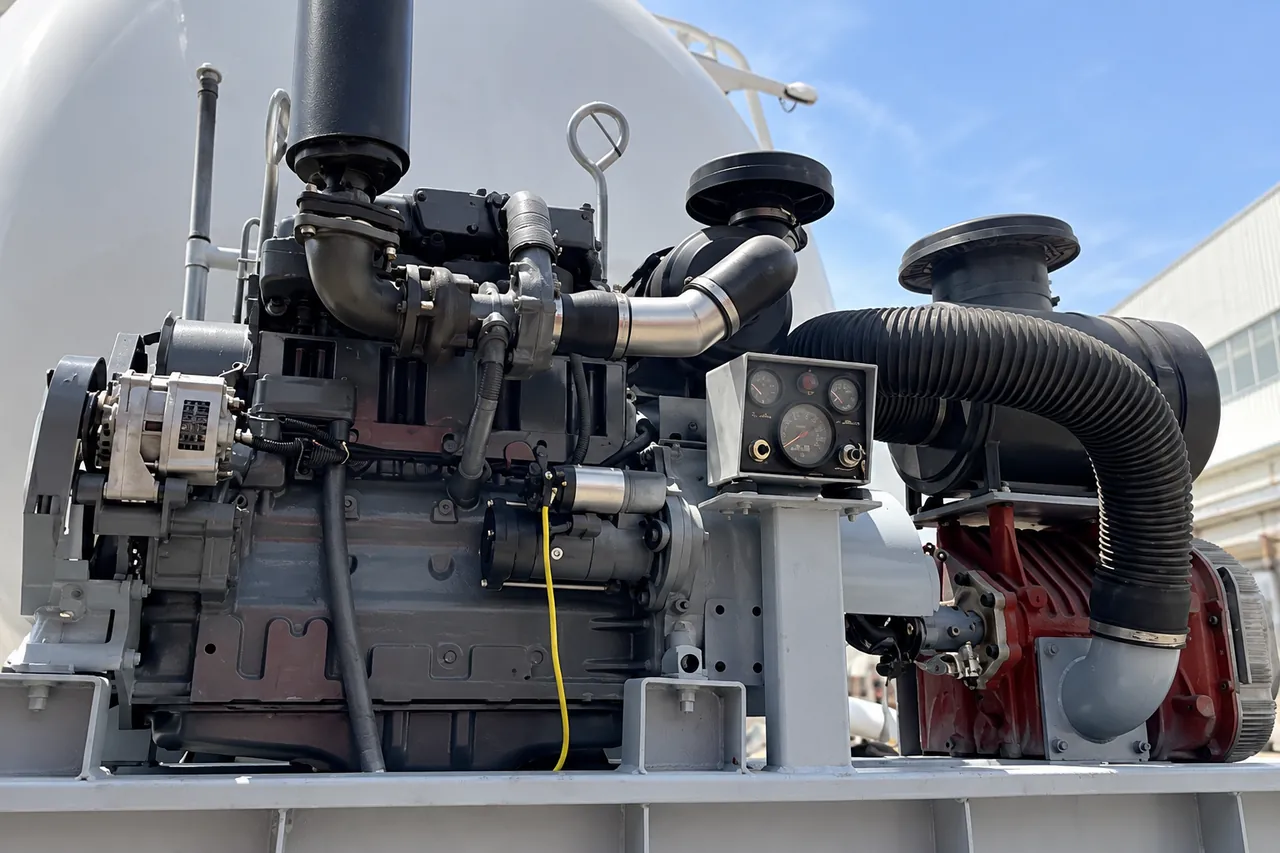
| Air source and air piping | The air source supplies unloading air, and the pipes distribute it. | The machine that supplies air is the compressor or blower. A separate engine or the tractor can supply the power to run it. |
| Aeration equipment | Uses air to help suitable powder reach an outlet | Some granules flow easily (free-flowing cargo) and use a different air setup from powders that need aeration. |
| Cargo flow valves (product valves), discharge pipe and hose | The valves control the cargo’s path; the discharge pipe and hose connect it to the receiving line. | The cargo path carries material. The air supply brings in the air that helps move it. |
| Pressure gauge | Shows the pressure at its measuring point | A gauge gives a pressure reading; a control valve adjusts flow. |
| Valve for releasing tank air (vent or blowdown valve) | Provides controlled release of compressed air during depressurization. | Venting is an operating function; the relief valve provides automatic protection against excess pressure. |
| Pressure relief valve | Protects against excess pressure | This is a safety device, not a valve for routine flow adjustment. |
| Supporting structure (chassis) and running gear | Support the tank and carry it on the road | The chassis and running gear carry the tank. The tank itself holds the cargo. |
Pressure safety: A pneumatic tanker is pressurized during unloading. Never open a manhole, remove a pressure-side fitting or disconnect a discharge hose until the air supply has stopped and the tank is fully depressurized and safe. Never increase the pressure-relief setting to speed up unloading. Follow the operating and depressurization procedure for the actual trailer.
Pressure values are not interchangeable: The gauge displays pressure where it is installed; it is not a target setting. Use the operating pressure range assigned to the tanker. Design pressure, test pressure and the relief-valve setting have different purposes; none should be used as an ordinary unloading target.
How Does Air Move the Cargo?
For powders that need aeration, air helps the material flow toward an outlet before it travels through the discharge line. This behavior is called fluidization: air makes the powder flow more easily while it stays solid. The receiving silo is the site’s fixed storage vessel, separate from the trailer.
Loading and unloading are separate functions: conventional top filling does not give a trailer vacuum suction capability.
- The air source supplies the tank and its air lines.
- Air passing through the aeration system helps suitable powder reach the outlet.
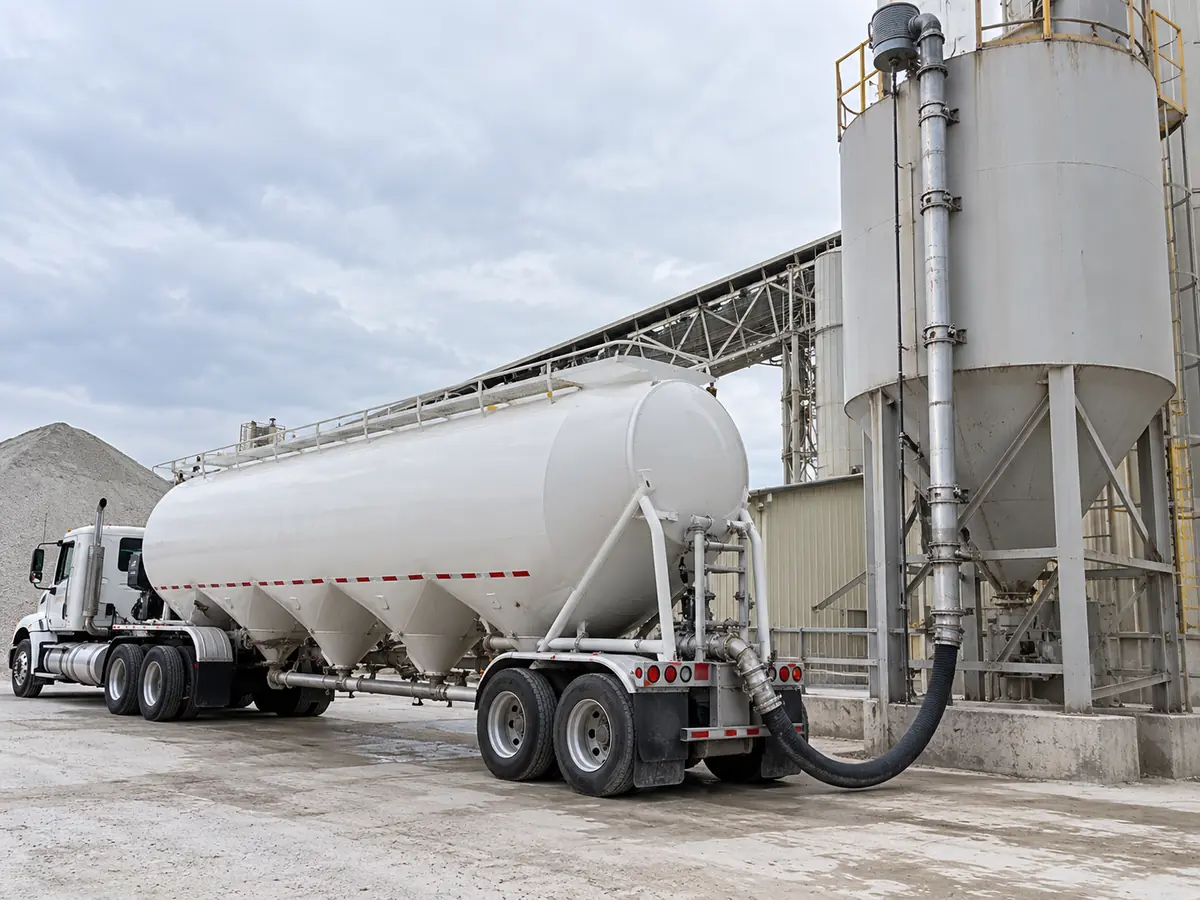
- The pressure difference and the air carrying the material (conveying air) move cargo through the hose to the receiving silo.
When unloading becomes slower, first compare this delivery with the last normal one. Did the cargo change, did the hose route change, or did the same trailer move to a different receiving silo?
If the delay happens at only one plant, start with that plant’s receiving route: hose length, bends, vertical lift and silo-filter condition. If the same trailer unloads slowly at several otherwise comparable sites, investigate its air supply, leaks and aeration system. If the change began with damp or caked powder, have the material condition assessed before choosing equipment repairs.
Record the load mass, unloading time, receiving site and hose route together. Those details help the technician separate a receiving problem from a vehicle problem. Stop for abnormal pressure or alarms; any inspection requiring an opened connection must follow shutdown, isolation and depressurization.
For fixed-silo deliveries, design the unloading line from the silo back to the trailer. Get the inlet size, free storage space and vent or filter capacity from the site operator. Use these to choose the hose connection and air supply. If the site cannot handle the flow, change the unloading method—not the pressure setting.
For a fuller explanation of the tank, air system and receiving side, see how a cement tanker works.
Where Does the Unloading Air Come From?
Unloading air can come from a unit with its own engine, a system powered by the tractor, or a suitable external plant supply. The tractor can supply mechanical power to the air equipment through a power take-off, or PTO. The setup determines where the compressor or blower sits and what drives it.
Use a trailer-mounted, engine-driven compressor when delivery sites lack reliable unloading air. At a fixed plant with enough air flow, pressure and matching connections, the plant air supply is another option. Use a PTO-driven compressor when the tractor has a compatible PTO. No suitable PTO? Use one of the other two sources.
What Other Names Are Used for Pneumatic Trailers?
Common names for pneumatic trailers include pneumatic tank trailer, dry bulk tanker, silo trailer and cement bulker. Pneumatic means the trailer uses air to unload; dry bulk describes the cargo. The name alone does not tell you how the trailer loads or which materials it can carry.
| Name | What it describes | What to know |
|---|---|---|
| Pneumatic trailer / pneumatic tank trailer | Air used to unload dry bulk solids | The equipment category explained here |
| Dry bulk tanker | Loose dry solids carried inside a tank | Can refer to a pneumatic tanker; the name alone does not confirm air unloading |
| Silo trailer / silo semi-trailer | A mobile tank trailer for bulk material | The trailer, separate from the fixed receiving silo |
| Cement tanker / cement bulker | Transport of dry bulk cement | A dry bulk tanker named for the cement it carries |
“Trailer” identifies the towed vehicle. “Truck” may describe a tank mounted on a powered vehicle or refer to the whole vehicle in everyday speech. “Pneumatic trucking” describes the transport activity.
Common mistakes
- Treating every dry bulk trailer as a pneumatic trailer can lead to the wrong unloading equipment. Timpte hopper trailers are an example of gravity-discharge dry bulk equipment. Choose by the discharge path: material falling through bottom gates versus material moving through a pressurized hose.
- Assuming tanker always means liquid tanker. This mixes up cargo forms and leads to the wrong equipment comparison. Specify “liquid tank trailer” when discussing liquids and “dry bulk tanker” when discussing loose solids.
- Calling a cement bulker a concrete mixer. A cement bulker transports dry cement powder; a concrete mixer handles wet concrete. Confusing them means choosing equipment for the wrong material. Start by identifying the cargo’s form.
Use our buyer guide to turn your cargo details into a trailer checklist.
Start with your cargo, destination country, target tonnes per trip and number of trailers. If known, add your tractor, unloading hose distance and receiving silo height. Our guide explains how these details affect the tank volume, running gear and air system before you compare configurations.
Common Questions About Pneumatic Trailers
Do Multiple Hoppers Mean Separate Cargo Compartments?
No. Several discharge hoppers can serve one shared cargo chamber. The Spitzer SF 2763/4 Z specification lists 4 manholes, 4 outlet systems and 1 chamber. Panda Mech also offers a project-built cement-and-fly-ash option with isolated compartments and separate discharge paths. For two cargoes that must stay separate, choose true internal partitions and independent discharge paths. Specify both on the fabrication drawing; outlet count alone tells you nothing about segregation.
Can Every Pneumatic Trailer Load Itself by Vacuum?
No. Vacuum self-loading requires a dedicated suction system to draw powder into the tanker. For powder picked up from a ground-level source, choose a tanker with a vacuum-loading system. If the plant fills the tanker through an overhead spout or top loading line, conventional top loading is enough. Compressed-air unloading alone does not give a tanker vacuum suction.
Do Pneumatic Trailers Always Unload Without Tipping?
No. Dry bulk tanker designs include tipping and non-tipping versions. Spitzer’s series overview distinguishes non-tipping SF and tipping SK designs. For a site with restricted overhead clearance, a non-tipping design avoids raising the tank. A tipping design needs adequate clearance and stable ground, and the manufacturer’s tipping procedure governs unloading. Pneumatic refers to air-driven material flow, not the tipping mechanism.
Does a Larger Tank Carry More Tonnes?
No. A larger tank provides more space, but it does not automatically let you carry more cargo legally. Bulk density means the weight of loose material per unit volume. For the same cargo weight, a lighter powder needs more tank space than a denser powder.
Payload also depends on the trailer’s empty weight and rated capacity, the tractor and fifth-wheel ratings, and local gross-weight and axle-load limits. Heil’s small cube and large cube categories distinguish designs for different cargo densities. If low-density powder fills the tank before reaching the legal payload, choose more tank volume. If road-weight or axle limits are reached first, a larger tank will not increase permitted tonnes. The limit you reach first—volume or weight—decides the next size change.
For related equipment and operating guidance, see previous and next loads, pipe bends.

ZAC
Hello, I’m ZAC, a cement trailer and semi-trailer specialist with over 20 years of industry experience. My technical approach starts with real operating conditions, including how cargo characteristics, road conditions, and loading and unloading methods affect trailer performance. I place particular emphasis on structural reliability, component compatibility, and ease of maintenance. I look at both everyday performance and how reliably a trailer operates over time, as well as how easily it can be inspected and serviced.


