
Switch from bagged flour to bulk tanker delivery when one flour grade moves steadily enough to use each delivery within your storage plan, your bakery can receive it safely, and the full cost works. If your main bread flour meets those conditions but specialty flours do not, use bulk for the main flour and keep the rest in bags.
Compare the same flour at the point where it is ready for production. For bags, include delivery, unloading, storage, movement to the tipping point and bag emptying. For bulk, include delivery and the receiving, storage, transfer and weighing equipment needed to feed production.
Then separate cash savings from time released for other work. If reduced sack handling removes paid overtime, use the avoided payment in the cash calculation. If the same employees remain on the same paid hours, record the time available for other tasks separately.
Finally, compare both options at your expected use by flour grade. A high total flour demand can still contain several small specialty-flour orders that are better kept in bags while the main grade moves to bulk.
What changes when flour arrives by tanker?
Bulk tanker delivery replaces individual flour sacks with a loose load transferred through a hose into a receiving silo. Air carries the flour into the silo, then leaves through its filter or other designed air-separation system. From there, separate equipment moves and weighs the flour for production.
Here, “bulk” means unpackaged tanker delivery. A pallet of sacks is still bagged flour. A large flexible bulk bag, also called an FIBC, needs its own lifting and discharge arrangement. Neither can simply connect to a tanker filling pipe.
| Daily task | Bagged flour | Bulk flour delivery |
|---|---|---|
| Receiving | Unload pallets; inspect sacks and labels. | Identify the correct silo, check space, connect the delivery system and supervise unloading. |
| Storage | Keep lots separate on pallets and rotate stock. | Manage silo inventory, residual flour, cleaning and overlapping lots. |
| Getting flour to the mixer | Move, open and empty sacks, then weigh the batch. | Use a designed silo discharge, transfer and weighing system. |
| Changing flour grades | Choose another labelled sack and control the changeover. | Use separate storage or a suitable changeover procedure. |
| Main cost trade-off | Less fixed equipment; more sack handling. | More fixed equipment; fewer sacks and potentially less handling. |
Packaging alone does not improve flour quality. Keep protein, ash, additives, allergen requirements and baking performance aligned when comparing quotes. Otherwise, a cheaper bulk offer may also be a different flour.
When should you switch, stay with bags, or use both?
Start with bulk for a stable, high-use flour grade. Keep bags where demand is low, recipes change often, or bulk delivery and receiving costs outweigh the handling benefit. You can make this choice grade by grade.
Move your main flour to bulk when the supply pattern fits
Use your recent flour issues and purchase records to find the daily use of that exact grade. Include a quiet period, shutdowns and seasonal changes. Total bakery flour use can hide the problem: four grades using equal amounts will turn each silo over much more slowly than one grade using the same total.
Ask the supplier for the delivery options available to your bakery’s address and flour grade.
If the route is quoted as a full-load delivery, compare that quantity with your safe receiving space and expected consumption during the agreed storage period. If the supplier offers a part-load or split-delivery service, compare its delivered price and delivery days with the larger offer.
If the smallest available economic drop still exceeds what you can receive and use, retain bags for that grade or obtain another supply arrangement before investing in a larger silo.
Request the quantity, freight or part-load charge, lead time and delivery days on the same quotation. Those terms establish the workable order size for your bakery.
Keep bags when flexibility matters more
Stay with bags if you cannot use a bulk drop within the flour’s agreed storage conditions, cannot accommodate the receiving system, or cannot secure reliable tanker service. Bags also make it easier to hold small quantities of several flours without installing several silos.
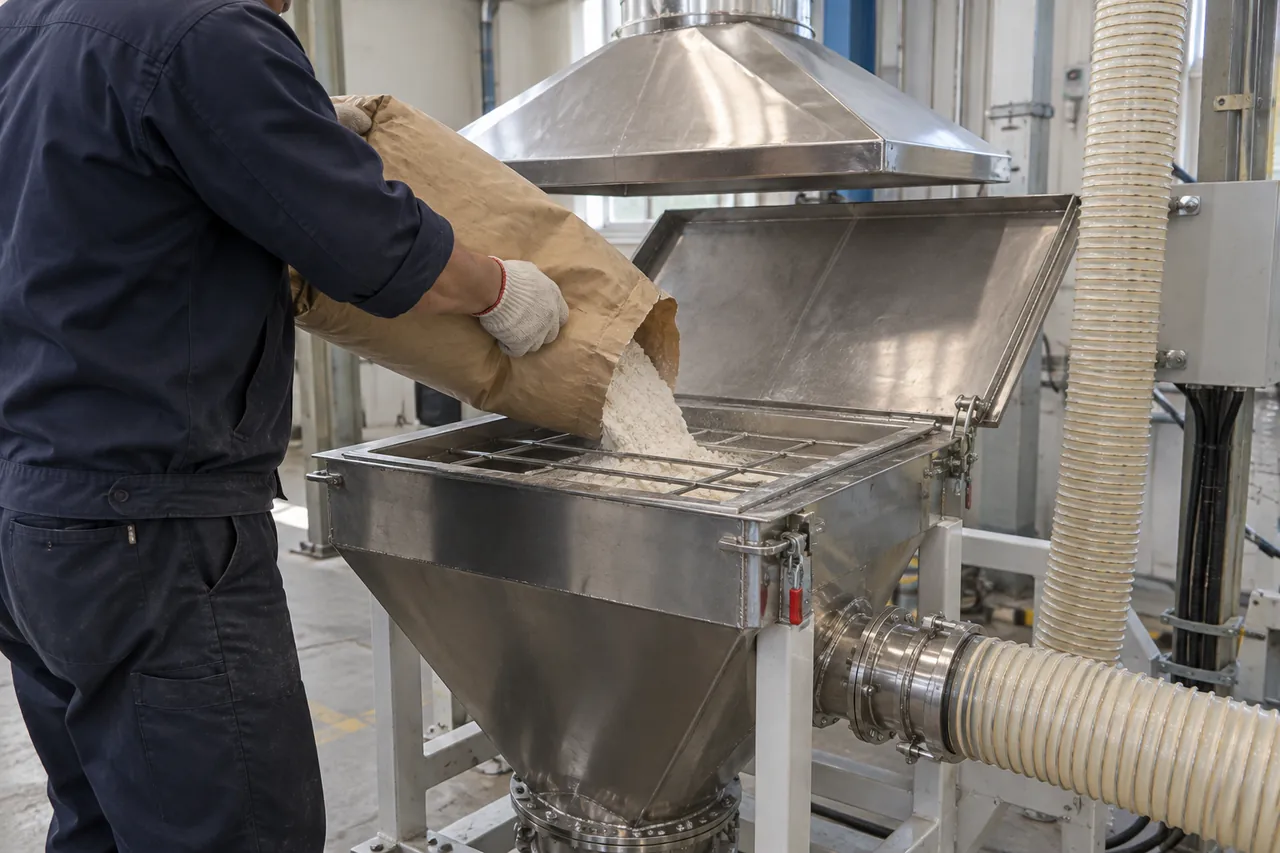
If lifting and dust are the immediate problems, improve the bag route first. A suitable sack-tipping station with extraction, handling aids and transfer equipment can reduce open handling while you keep bagged supply. Include the work of opening and disposing of sacks in that option’s cost.
Use both for a mixed product range
A practical first move is to put your main white bread flour in bulk and retain slower-moving wholemeal, rye or recipe-specific flours in bags. Separate storage and controlled handling still matter for allergen-sensitive products. Share a line only where your food-safety procedures support that use.
Can you use and receive each bulk delivery?
Check both how long the delivery will last and how much the silo can safely receive at arrival. Passing one check does not solve the other.
Match the drop size to one flour grade’s use
Divide the delivery mass by daily use of that grade. For example, suppose a mill offers a 20-tonne drop and your bakery uses 2 tonnes per operating day. That drop supplies 20 ÷ 2 = 10 operating days.
At only 0.5 tonne per operating day, the same drop supplies 40 operating days. Add closed days when reviewing storage age. In that slower-use case, seek a smaller economic drop or retain bags; do not buy a larger silo just to accept excess flour.
Agree the storage period with the flour supplier and your food-safety team for the actual product and conditions. Repeated top-ups can leave older flour in the silo. Delivery coverage is useful for planning, but batch records, stock rotation and cleaning determine how you manage that older material.
Leave room for the full delivery
Get the silo’s usable receiving limit for your flour from its designer. It must account for the flour’s bulk density, filling behaviour and required free space. A nominal volume or a capacity quoted for another powder is not enough.
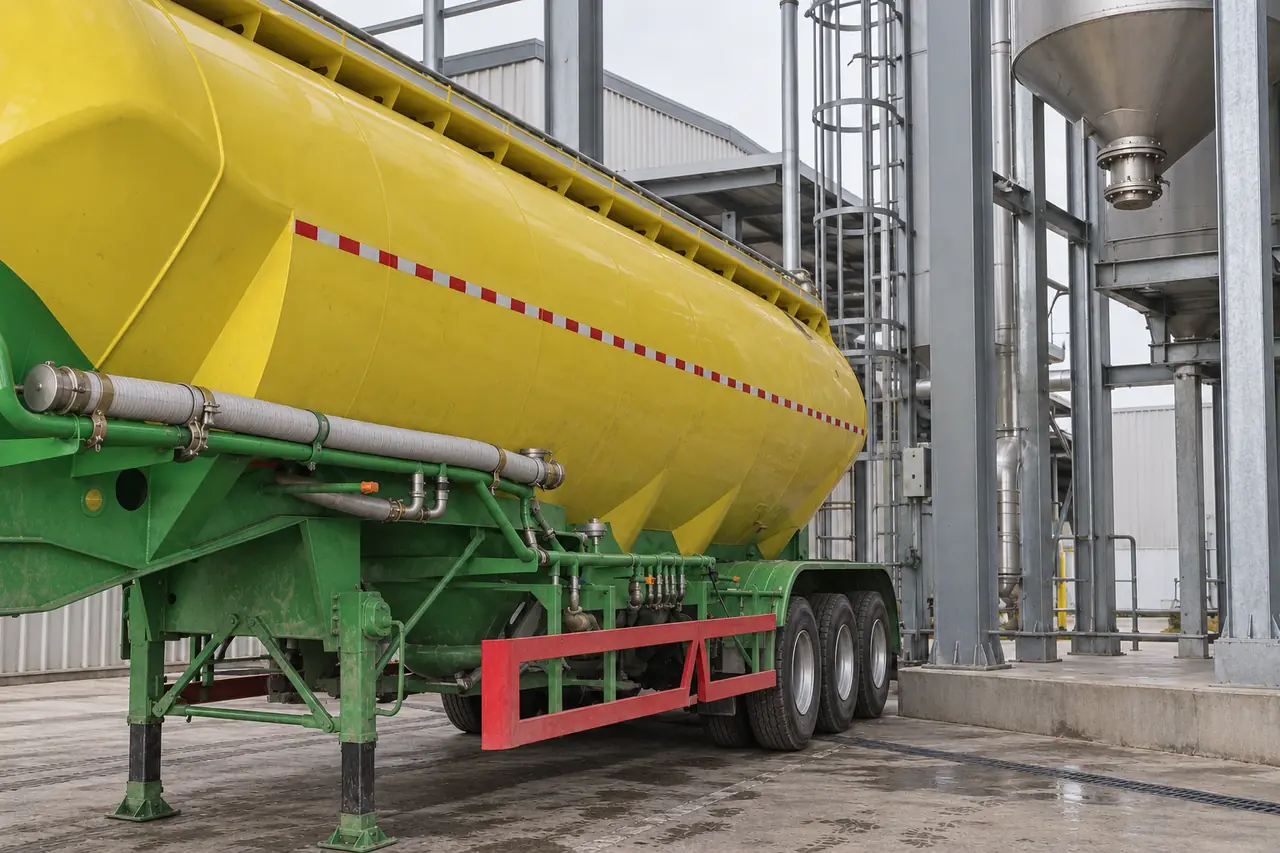
Suppose that usable limit is 30 tonnes and 4 tonnes will remain when a 20-tonne delivery arrives. The resulting stock is 4 + 20 = 24 tonnes, within the example limit. If 14 tonnes remain, the total becomes 34 tonnes. Reschedule, arrange a smaller delivery or use another approved receiving silo before dispatch.
Set the order point from lead time
Order point = expected use during delivery lead time + reserve stock.
Using the same 2-tonne daily use, suppose delivery takes three operating days and you hold a 4-tonne reserve. Order at 2 × 3 + 4 = 10 tonnes. Expected stock at arrival is then 4 tonnes, leaving room for the 20-tonne drop. Choose the reserve from your actual delivery risk and production needs, then recheck it when use or lead time changes.
Does bulk flour lower your total cost?
Choose bulk on cost when the recurring savings cover the added running costs and repay the complete installation within your planned period of use. Compare the same flour specification at the same delivered location, with the same taxes and payment basis.
Work through a complete monthly example
Suppose your main flour use is 60 tonnes per month. A delivered bagged quote is $620 per tonne and an equivalent bulk quote is $580. You use 25 kg sacks, and a complete installed bulk system costs $90,000. Use the following assumed monthly changes:
| Monthly change | Calculation | Cash effect |
|---|---|---|
| Delivered flour price | 60 t × ($620 − $580) | +$2,400 |
| Paid overtime removed | 20 hours × $30/hour | +$600 |
| Flour loss avoided | Assumed reduction in damaged sacks and spillage | +$150 |
| Added bulk operating costs | Electricity, cleaning, filters and maintenance allowance | −$550 |
| Net monthly saving | $2,400 + $600 + $150 − $550 | $2,600 |
Simple payback is $90,000 ÷ $2,600 ≈ 34.6 months. On these assumptions, bulk fits a four-year payback target. For a bakery with only two years left at the premises, keep bags or compare a lower-investment arrangement first.
The labour assumption needs a real task change. Sixty tonnes equals 2,400 sacks of 25 kg. Saving 30 seconds per sack frees 20 hours per month. That becomes $600 in cash only if it removes the assumed paid overtime or another paid cost. If staff use those hours elsewhere at unchanged pay, cash savings are $2,000 per month and simple payback becomes 45 months.
Now reduce flour use to 30 tonnes per month. If the price saving, overtime saving and loss saving all halve while the $550 operating allowance stays fixed, the result is $1,200 + $300 + $75 − $550 = $1,025 per month. Payback stretches to about 87.8 months. At that use, retain bags under the same four-year target unless a revised quote or installation cost changes the result.
Include the equipment and cash the switch actually needs
Get an installed price covering the silo, base or supports, filling line, vent filter, level controls, required safety systems, discharge equipment, transfer to production, weighing, electrics and commissioning. Include building work and access for service. A silo-only quote will miss much of the job.
Add financing, lease costs, insurance changes, extra stock funding and any delivery waiting or part-load charges that differ. Keep sack disposal savings separate from flour loss, and count each saving once. Buying more flour at each delivery may tie up more cash even when its unit price falls.
What must the bakery prepare for tanker delivery?
Prepare the whole path from the parked tanker to the mixer: vehicle access, a suitable filling connection, available silo space, air discharge and a working flour-transfer system. Agree who owns and checks each part before ordering equipment.
Provide a workable delivery point
Have the carrier check the approach, turning room, parking position, surface, overhead clearance and hose route. Keep pedestrians away from vehicle movements and protect hoses from traffic. Record silo inlet height, pipe diameter, route length and bends for the unloading-system designer.
The air entering with the flour needs a designed exit. The receiver needs suitable filtration and overfill protection, together with the pressure and dust-safety measures selected for the installation. UK HSE guidance on pneumatic powder systems explains why air separation, level control, electrical bonding and earthing matter. Have the installation designed for your local requirements.
If the level reading is unreliable, the high-level alarm is active, or unloading pressure behaves abnormally, stop under the agreed delivery procedure and investigate before restarting. Do not force a load into uncertain space or raise pressure to overcome a blocked receiving system. Depressurize and isolate the system before opening a connection for work.
Protect flour identity and hygiene
Before connection, match the order and delivery documents to the flour grade and the labelled silo inlet. Check the carrier’s cargo-history and cleaning information against your requirements, as well as hose condition, protected couplings and any seal requirements. The FDA’s U.S. sanitary transportation rule addresses transport equipment, operations, training and records for covered shipments.
Resolve a wrong grade, moisture, off-odour or unacceptable cleaning record before unloading. Once suspect flour enters a silo, it can affect the stock already inside. If a problem appears after unloading, hold the affected stock and identify which production batches may have used it before release.
Connect storage to the way you make dough
A tanker fills a silo; it does not weigh your recipes. Specify the silo outlet, conveying equipment, any required sieving or foreign-body controls, and the weigh hopper or other batch-weighing arrangement. Check that the system can feed your actual mixer schedule.
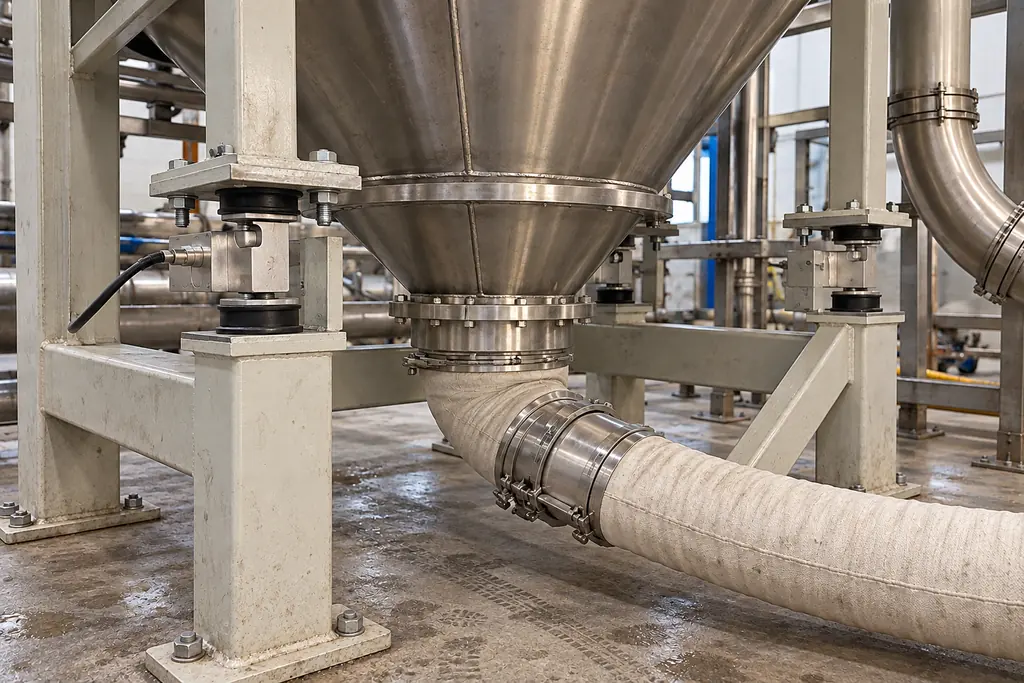
Closed transfer can remove repeated sack tipping, but leaks and open discharge points still need control. HSE’s bakery guidance identifies flour dust as a cause of occupational asthma. Keep extraction and cleaning effective at the remaining dusty tasks.
How to switch without disrupting production
Prove the flour and the receiving system before you remove the bagged route. Start with the flour grade that offers the clearest saving and simplest supply pattern.
- Agree supply and test the flour. Fix the specification, price basis, delivery size and service days with the mill or distributor. If the flour source changes, run a representative baking trial before committing the silo to it.
- Commission the complete system. Have the responsible installers test controls, alarms, transfer equipment and weighing against their procedures. Train receiving and production staff, including how to stop and whom to call when a check fails.
- Supervise the first delivery. Confirm the silo identity and space, record delivered mass, start and finish times, and any stops. Reconcile the delivery weight with inventory records and account for flour used during unloading.
- Follow the flour into production. Compare weighed batches, dough handling, water addition, dough temperature and baked results with your accepted process. Investigate a change before adjusting recipes across all production.
- Keep a usable backup. Agree an emergency bag quantity and replenishment source. Retain a safe way to weigh and feed those bags if the bulk system stops. Stored sacks are little help if you have removed the only way to use them.
Link each delivery lot to its silo, filling time and affected production records. Where a new load mixes with residual stock, record the overlap rather than treating the first batch after delivery as a clean lot change. Track actual handling time, losses and running costs against the savings calculation.
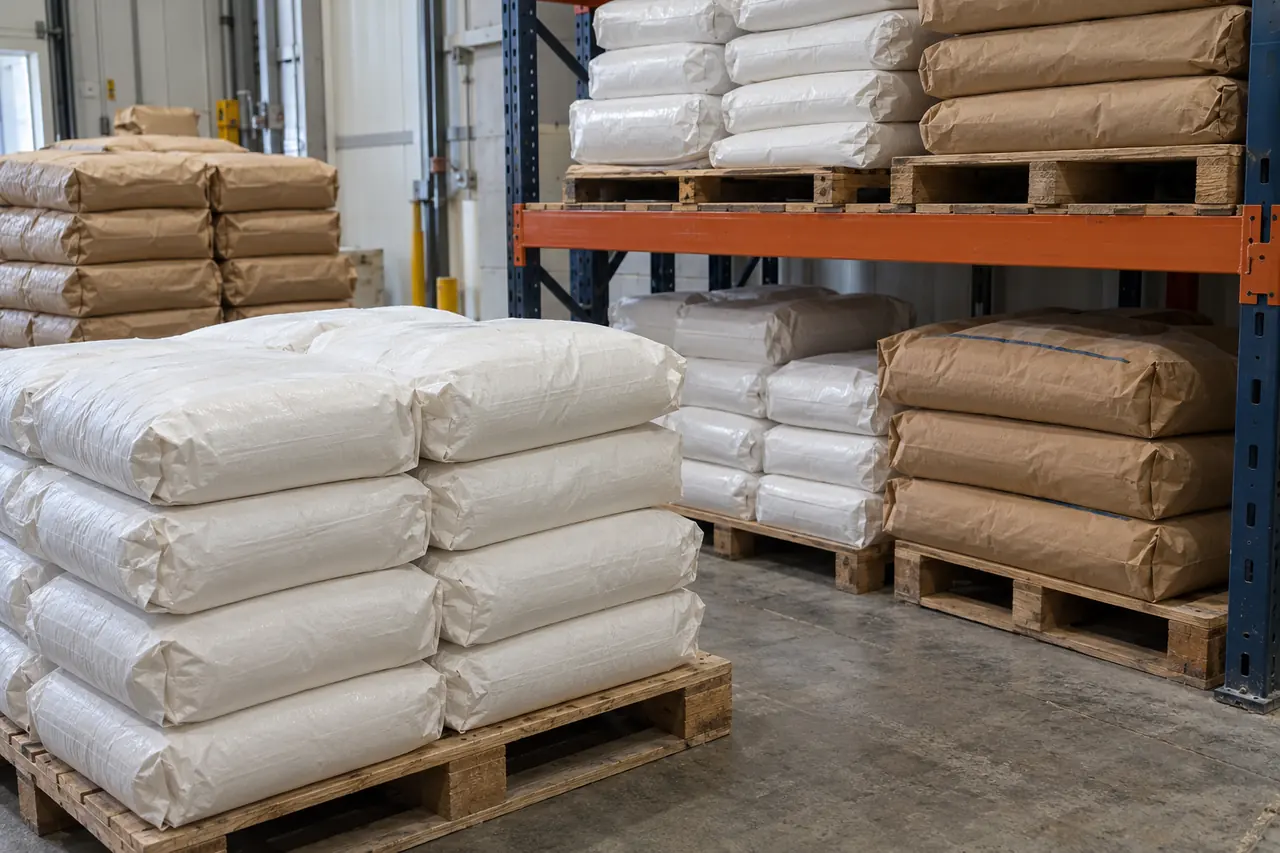
For the transport side, our flour tanker trailers use pneumatic unloading for bulk wheat flour and compatible food powders. We match the tanker configuration to the cargo, route and receiving silo. The bakery’s silo and production-feed equipment need their own agreed supply and installation scope.
If you are specifying a food powder tanker for your mill or transport fleet, send the flour type, bulk density, target load, destination, silo height and discharge distance through our contact form’s Message field. These details let us start matching the trailer and unloading setup.
Make the switch for the right flour first
For bulk flour vs bagged flour, choose the supply method that fits each grade’s use, receiving conditions and full cost. Move a steady main flour to bulk when the delivery fits your stock plan and the installed system meets your operating and financial targets. Keep slow-moving or frequently changing flours in bags.
Start with three things: your use by flour grade, an actual delivered bulk offer, and a complete receiving-system quote. Together, they show whether to switch now, use both methods, or improve bag handling first.
Questions about smaller or mixed bakery operations
We use little flour but want less lifting. Must we move to tanker delivery?
No. Improve sack handling first if your use cannot support the local bulk delivery offer. Compare handling aids and a suitable extracted tipping station. Big bags may be another option where supply, lifting equipment and discharge arrangements fit. Compare their complete handling cost before changing packaging.
Can we receive bulk flour without space for an outdoor silo?
An indoor silo may work if the building, delivery route and safety design suit it. Check floor loading, available height, maintenance access, filling pipework, dust control and the required explosion protection with the system designer. If the premises cannot support a suitable installation, retain bags or investigate another site arrangement before ordering a tanker supply contract.
Does switching to bulk flour mean buying our own tanker?
No. First compare flour delivered by the mill or its carrier. The bakery’s investment is then the receiving and production-feed system. Buying a tanker is a separate transport decision involving a tractor, drivers, cleaning, maintenance, route planning and legal operating requirements. Include those costs only when you plan to run that transport operation yourself.

ZAC
Hello, I’m ZAC, a cement trailer and semi-trailer specialist with over 20 years of industry experience. My technical approach starts with real operating conditions, including how cargo characteristics, road conditions, and loading and unloading methods affect trailer performance. I place particular emphasis on structural reliability, component compatibility, and ease of maintenance. I look at both everyday performance and how reliably a trailer operates over time, as well as how easily it can be inspected and serviced.


