
Keep manual loading when the bay meets your dispatch target with controlled dust and safe access. Choose automated bulk cement truck loading when repeated positioning, feed control or paperwork delays justify the added equipment and support. A semi-automated station can be the better first step when only one part of the job needs improvement.
The useful comparison is the time and cost of releasing a correctly loaded truck. A faster-moving loading spout will not clear a queue caused by slow silo discharge or a busy weighbridge. This guide compares dry cement powder loaded into enclosed tankers; bagged-cement loaders and wet-concrete mixer trucks perform different jobs.
What changes when bulk cement loading is automated?
Automation transfers specified positioning and loading-control tasks from an operator to sensors and a control system. The equipment package determines which tasks it takes over. Opening the tanker lid, weighing the load and issuing a ticket can each require separate equipment or integration.
Manual, semi-automated and automated loading
In a manual station, an operator guides the loading head to the open hatch and commands material flow. The head can still have an electric hoist, dust extraction and a high-level switch. “Manual” describes who controls the work, rather than whether every movement uses muscle power.
A semi-automated station keeps some operator tasks while automating others. For example, the operator seats the spout, then a controller runs the filling sequence and stops the feed at a configured signal. This often suits a bay where positioning is straightforward but repeatable stopping and load records need improvement.
An automated positioning system uses sensors to locate the hatch and move the spout into place. A programmed industrial controller, called a PLC, then manages the specified sequence. Vortex’s published automated-loading sequence, for example, includes identifying the truck, locating the hatch, seating the spout, loading and retracting it.
Ask for a task list with each proposal: who opens and closes the lid, who sets the load target, what stops the feed, and who releases the truck? A touch screen or a camera viewed by the driver does not, by itself, make those actions automatic.
Manual vs automated loading: the practical differences
Compare the same load, tanker types and dust-control requirements. Automation changes how the work is controlled; it does not remove the need for a sound material-feed system or a correctly fitted loading head.
| What you compare | Operator-controlled station | Automated station |
|---|---|---|
| Spout positioning | Operator guides the head and corrects alignment. | Sensors and a positioner locate and approach a hatch within the system’s working range. |
| Stopping the load | Operator stops the feed; fitted level or weight controls can assist. | Configured weight, level and fault signals control the loading sequence. |
| Dust control | A sealed head and suitable extraction can control dust. | The same physical controls are needed, with their status included in the sequence where specified. |
| People | Routine positioning and control need operator attention. | Routine tasks decrease; supervision, exceptions and maintenance remain. |
| Maintenance | Inspect the spout, seals, lifting parts, filter and fitted controls. | Also maintain sensors, positioning drives, control software and system connections. |
| Project cost | Less control equipment if the existing arrangement is adequate. | More equipment and integration, plus the support needed to keep it working. |
A manual station can have effective dust control, and an automated station can still leak if its seal or extraction fails. Cement entering the tanker displaces air. That air needs a designed outlet through the loading head’s extraction arrangement or another suitable filtered route. Changing the control panel does not create that route.
BEUMER’s loading-head description separates material flow from dedusting and offers both hand-operated and motor-driven hoists. It is a useful example of why dust control and automation should be assessed separately. HSE’s dusty-cargo guidance also places emphasis on reducing exposure through task design, enclosure and maintained control equipment.
Will automation load more trucks per shift?
Automation increases loading-bay capacity when it cuts the time that limits truck departures. It will not increase the cement feed rate unless the material-handling equipment also changes. Measure the full bay cycle before choosing an upgrade.
Record when each representative truck enters the bay, is ready to fill, starts and stops receiving cement, and clears the bay. Note lid handling, repositioning, scale checks and interruptions. Use consecutive loads that include your normal vehicle mix, rather than selecting only the fastest cycles. Record gate queues separately so they are not mistaken for loading time.
Compare the full time in the loading bay
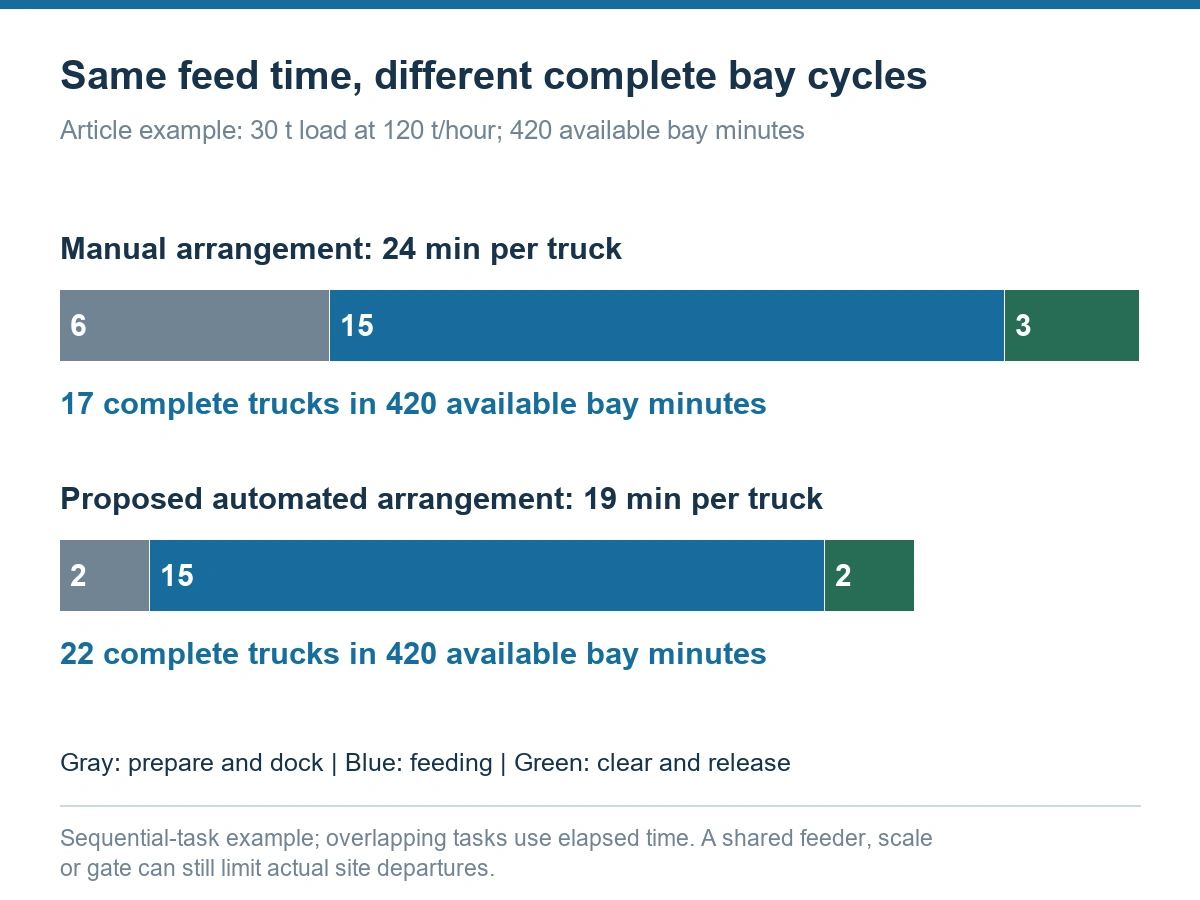
Compare elapsed bay time for equal loads, including preparation and release. If tasks overlap, use their actual elapsed time; adding every task duration would count the overlap twice.
For example, suppose each truck takes 30 tonnes and the station sustains 120 tonnes per hour during feeding. The feed time is 30 ÷ 120 × 60 = 15 minutes. Now suppose the following tasks run one after another:
| Time per truck | Manual arrangement | Proposed automated arrangement |
|---|---|---|
| Positioning, lid preparation and docking | 6 minutes | 2 minutes |
| Feeding the same 30-tonne load | 15 minutes | 15 minutes |
| Spout clearance, closure and release | 3 minutes | 2 minutes |
| Total bay cycle | 24 minutes | 19 minutes |
With 420 available bay minutes after planned downtime, this gives 17 complete trucks for the manual arrangement and 22 complete trucks for the proposed arrangement. These are whole cycles: 420 ÷ 24 and 420 ÷ 19, rounded down.
A target of 20 trucks requires an average cycle of 21 minutes or less. The proposed arrangement fits that time budget in this example; the manual arrangement does not. At 15 trucks, the existing manual bay already has enough scheduled capacity.
Use this result to decide what to test. If feeding takes most of the cycle because silo discharge is slow, first address that restriction. If a shared scale or dispatch gate controls departures, more loading-bay capacity alone will not increase site output. Include unscheduled stops and recovery time when checking the proposed cycle with actual trucks.
How do you compare loading station costs?
Compare the installed cost and annual operating cost of packages that perform the same tasks. Include the equipment that each proposal assumes the plant or fleet will supply. A loading-head price and a complete automated-bay price cover different work.
Align the quotations for the spout and positioner, supporting steelwork, feeder and shutoff valve, dust collector, scale, electrical work and control connections. Add installation, commissioning, training and production downtime. For annual costs, include wear parts, filter service, sensor cleaning, weighing-system checks and any software or support fees.
Count labor savings only where the new work schedule reduces paid hours, overtime or another identifiable expense. If an operator saves time but must stay at the bay for other duties, record the released time as a staffing benefit until it changes a cost. Likewise, count extra truck capacity as revenue only when demand and the rest of the transport system can use it.
A payback example using cash savings
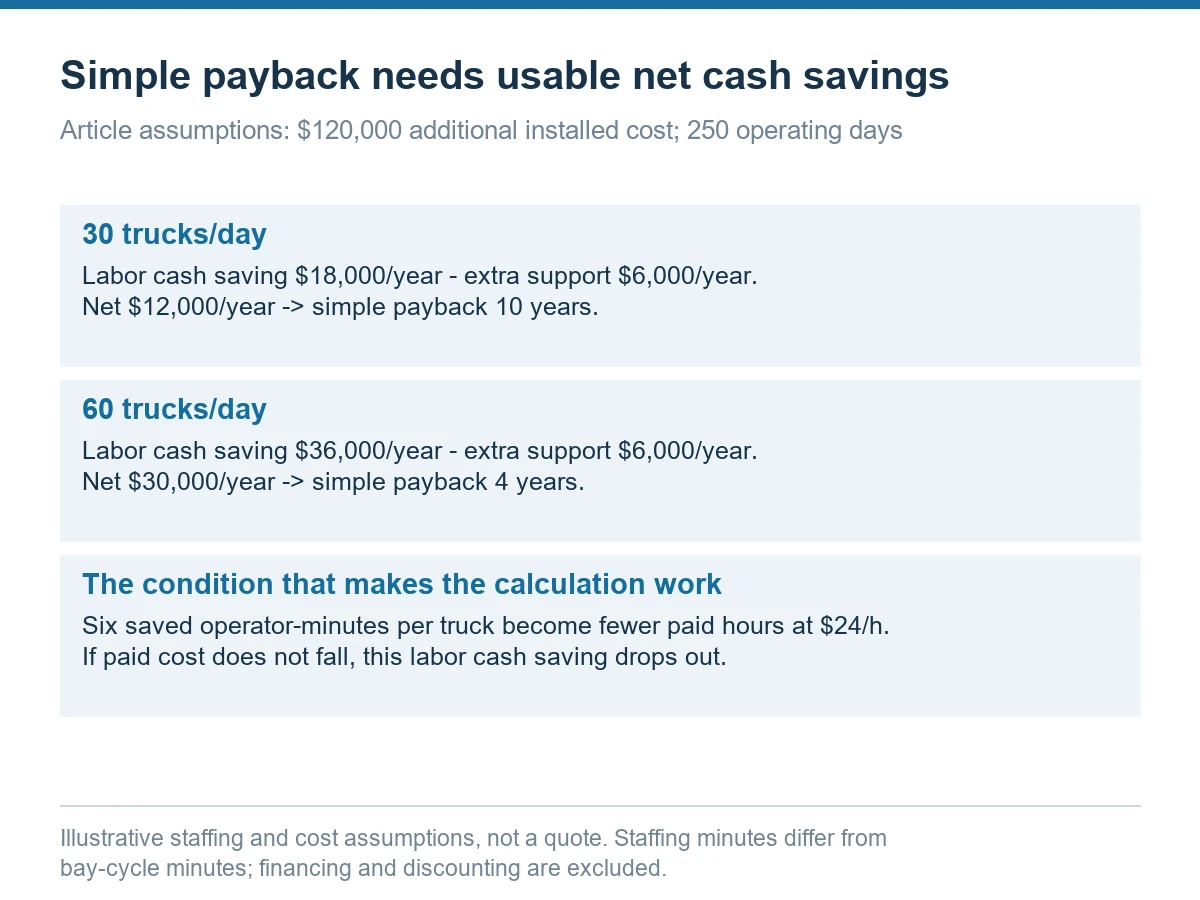
Simple payback is the additional installed cost divided by positive annual net cash savings. First calculate the savings after extra operating and maintenance costs.
Suppose automation costs an additional US$120,000 installed. The site handles 30 trucks per day for 250 days per year. A staffing change converts six saved operator-minutes per truck into fewer paid hours at US$24 per hour. Extra annual maintenance and support cost US$6,000.
- Annual labor saving: 30 × 250 × 6 ÷ 60 × US$24 = US$18,000.
- Annual net saving: US$18,000 − US$6,000 = US$12,000.
- Simple payback: US$120,000 ÷ US$12,000 = 10 years.
At 60 trucks per day, with the other assumptions unchanged, annual net savings become US$30,000, giving four-year simple payback. The six operator-minutes here are a staffing assumption, separate from the five-minute bay-cycle reduction above.
If the six minutes cannot reduce a paid cost, this labor saving drops out of the cash calculation. Include other measured savings, such as avoided overtime or rework, only once. If total annual net savings are zero or negative, the project has no positive simple payback on those inputs. This calculation excludes financing and discounting; use a discounted cash-flow comparison when evaluating long-term investment returns.
Will the station fit your cement tanker fleet?
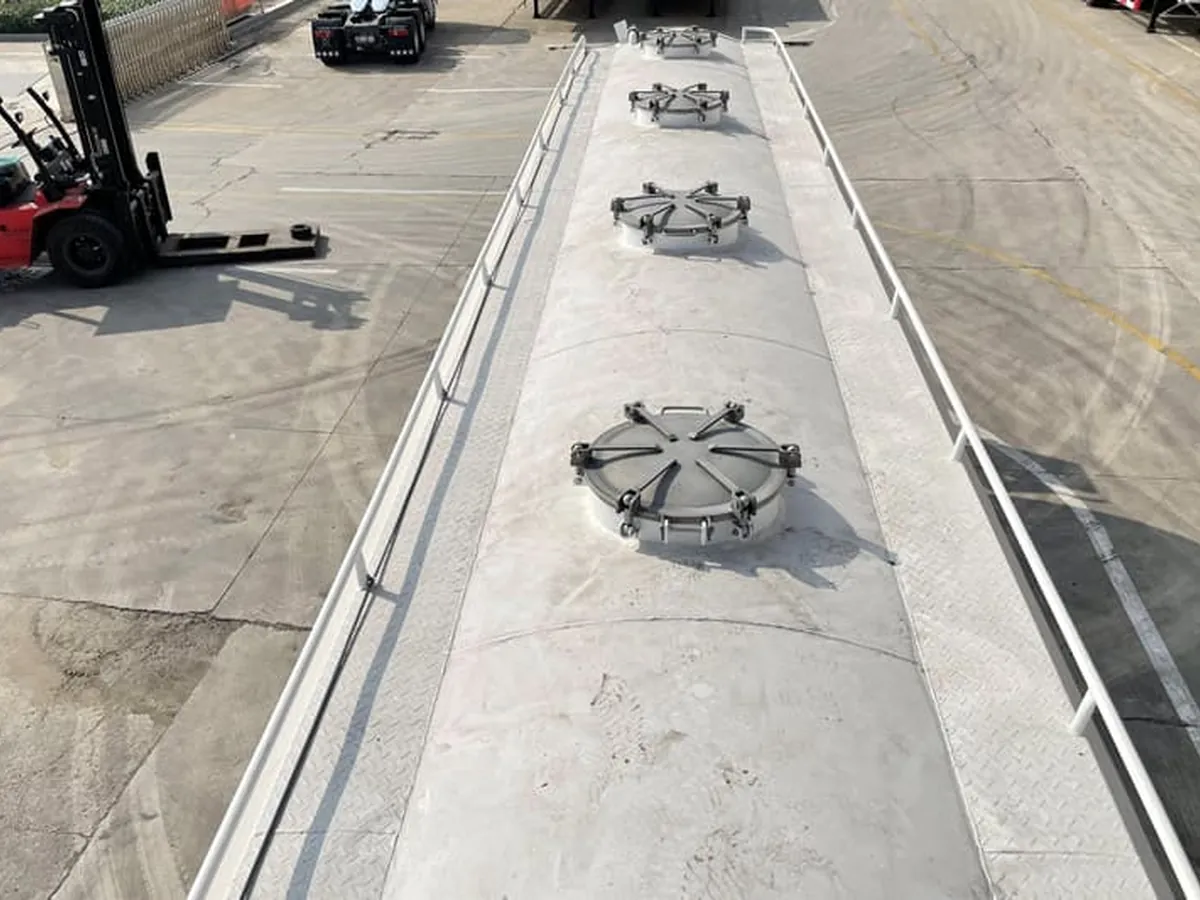
The station fits only when its reach, loading-head connection and operating sequence match the tankers it will serve. Use trailer drawings and bay measurements together. Tank volume or a payload-class name cannot establish that fit.
For each tanker group, record:
- The clear hatch opening, sealing surface and space needed to move the lid.
- Hatch-center positions relative to a repeatable parking reference.
- Minimum and maximum hatch height, including changes with load and suspension position.
- Required vertical travel and sideways or lengthways movement of the loading head.
- The route for displaced air and the load-stop signals the station will use.
Check the smallest and largest dimensions across the fleet against the proposed operating range. A head that reaches one parked truck can still miss another hatch or strike a lid on a different model. Keep a designated procedure for vehicles outside the accepted range.
Our 50-ton cement tanker trailer uses a 40 m³ tank and a three-axle layout. For loading-station matching, use the final trailer drawing to agree hatch locations, opening sizes and clearances. That is more useful than choosing a station from the “50-ton” label alone.
Set the load by weight and available space
Set the target within both the tank’s usable space and the vehicle’s allowed cargo load for the trip. A level switch detects material height; it does not measure road weight.
Suppose a planned load is 40 tonnes, its measured bulk density is 1.20 t/m³, and the agreed usable tank space is 36 m³. The load needs 40 ÷ 1.20 = 33.3 m³, so it fits that space. It can proceed at that mass only if the vehicle’s permitted load and axle distribution also allow it. If the allowed cargo load is 38 tonnes, reduce the target to 38 tonnes even though there is spare space.
Get bulk density for the powder in its loading condition, and use the agreed usable volume rather than assuming all nominal tank volume is available. Use the vehicle’s current empty weight and applicable gross and axle limits to establish the weight target. Confirm the finished load on the weighing arrangement used for dispatch. Our pneumatic trailer loading guide explains the loading methods and preparation checks in more detail.
Which loading setup should you choose?
Keep manual control when it meets your dispatch and safety needs; use partial automation for a specific control problem; consider automatic positioning when repeated docking work is a significant constraint. Choose the smallest change that solves the measured problem and can be maintained at your site.
- Keep the existing manual station when it handles the required truck schedule, the loading head seals properly and operators have safe access. Adjust parking guidance or work scheduling first if these are the causes of avoidable delay.
- Choose semi-automated loading when the operator can dock reliably but stopping, weighing or recording loads needs improvement. Define which signals stop the feed and which actions remain with the driver or operator.
- Choose automated positioning and sequence control when repeated alignment and routine handling consume valuable bay time, the fleet fits the system’s range, and the expected savings justify installation and ongoing support. A mixed fleet may need an automatic route for accepted vehicles and a separate controlled route for exceptions.
If the feeder, extraction system or weighbridge is the limiting step, improve that step first when the goal is more departures. Automatic docking can still help reduce a particular handling task, but evaluate that benefit separately from throughput.
Test the change before switching the bay
Accept the upgrade against agreed truck, load and fault-handling checks before moving normal dispatch onto it. Plan the installation window, operator training, spare parts and an approved way to handle trucks while the bay is unavailable.
Use representative vehicles, including the extremes of hatch position and height. Set targets before the trial for elapsed bay time, loaded weight, operator interventions and dust control. Measure departures and interruptions as well as the filling portion of the cycle.
Have the commissioning team test the specified responses to a missing essential signal, a full indication, loss of extraction, a failed docking attempt and an emergency stop. Use the system’s approved test procedure. A fault should leave feeding stopped as designed; do not bypass a failed protective signal to keep loading. Clear the cause and verify the required ready conditions before restarting. Record how long recovery takes and who can authorize it.
If weight or containment fails, correct the fault and repeat the affected trial. If loading is correct but the full cycle misses the target, use the timestamps to find the remaining delay before expanding automation to other bays.
Choosing between manual and automated loading
The better station is the one that releases correctly loaded trucks at the required rate with manageable cost and safe working conditions. Retain manual loading where it achieves that result. Use semi-automation to fix a focused problem, and choose automated bulk cement truck loading when repeatable tasks, fleet compatibility and usable savings support the change.
Start with bay timestamps, load records and tanker drawings. Those inputs show whether to improve the feeder, add control functions or automate positioning.
For a Panda Mech trailer project, contact us about the loading interface. Share your cargo, intended payload, destination, loading-point height and hatch requirements so we can discuss the trailer configuration with you.
Bulk cement loading station FAQs
Can drivers stay in the cab if tanker lids are manual?
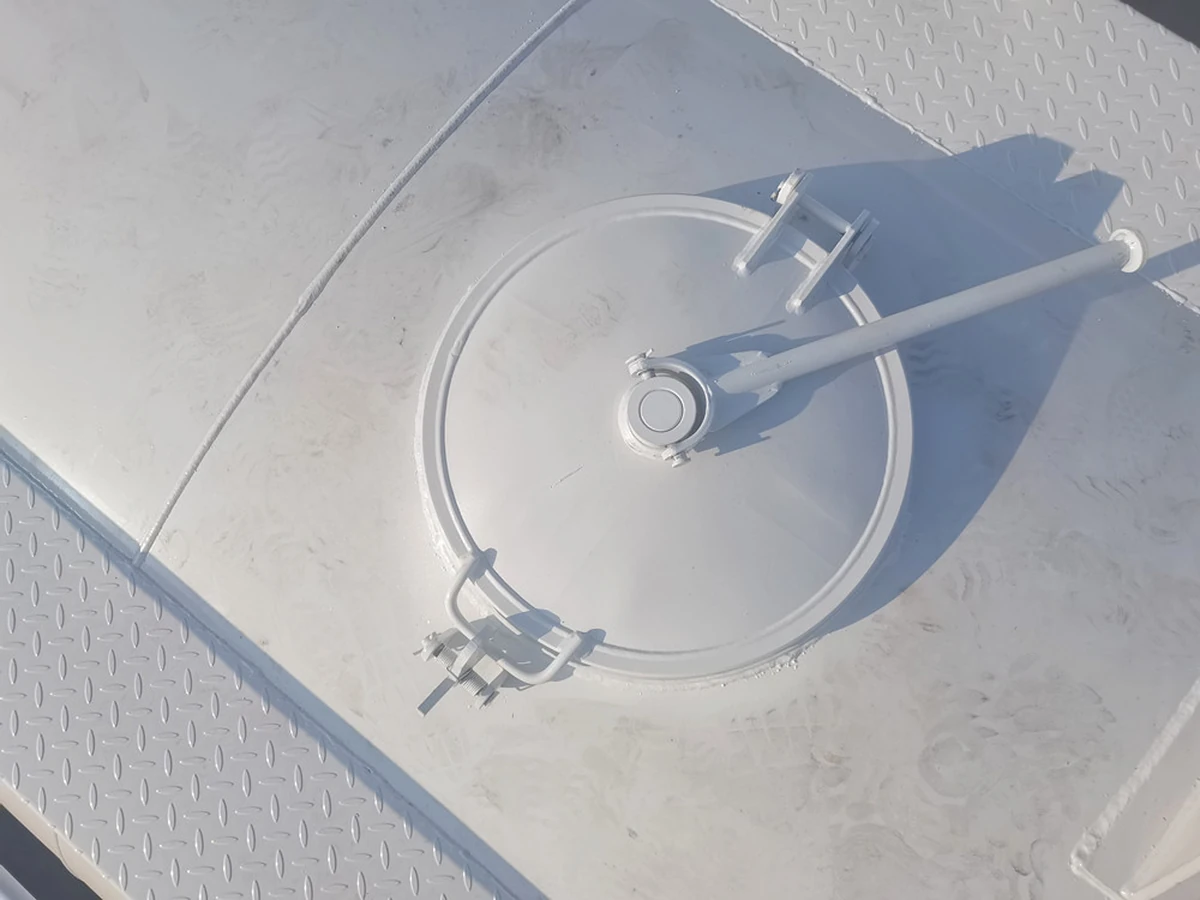
Automatic spout positioning alone does not provide cab-only loading when someone still has to open and close manual lids. Treat lid handling as a separate task. A compatible remote-operated hatch can remove that task from the tanker top. Where manual access remains, provide the site’s approved access platform and fall protection. Include both opening and securing the lid in the full-cycle comparison.
Can one automatic station serve different tanker models?
Yes, when each model’s hatch, lid clearance and height fall within the station’s accepted operating range. Group the fleet by those dimensions, then test representative vehicles from each group. Route a vehicle outside the accepted range to the designated controlled loading arrangement instead of forcing the automatic head to reach it.
What if the weight target is reached before the level sensor trips?
Stop at the allowed weight target; do not keep feeding until the level switch operates. The weight target and the high-level limit protect against different problems. If the high-level limit is reached first, stop there too. Check the selected load, powder bulk density, usable space and filling distribution before resetting the target or resuming.
Can an existing manual station be upgraded in stages?
Yes, where the existing feeder, support structure, dust system and weighing arrangement can support the proposed changes. A practical first stage can add controlled feed stopping and load records while leaving docking with the operator. Add automatic positioning later if docking remains the constraint. Define the connections to old controls and plan the installation shutdown before ordering the next stage.

ZAC
Hello, I’m ZAC, a cement trailer and semi-trailer specialist with over 20 years of industry experience. My technical approach starts with real operating conditions, including how cargo characteristics, road conditions, and loading and unloading methods affect trailer performance. I place particular emphasis on structural reliability, component compatibility, and ease of maintenance. I look at both everyday performance and how reliably a trailer operates over time, as well as how easily it can be inspected and serviced.


