
If a cement tanker breaks down on route, first protect people and traffic, keep the cement sealed, and identify which system has failed. A tractor fault may allow a compatible replacement tractor to finish the delivery. A damaged trailer wheel, brake, axle or tank calls for repair or specialist recovery before travel. An unloading compressor fault needs a separate plan for getting the cement into the receiving silo.
Dry cement powder is different from wet concrete in a mixer truck. A delay does not start the same setting-time clock. The immediate decisions are whether the vehicle can move safely, whether the cargo remains suitable, and when the customer can receive it.
What should the driver do first?
Stop in the safest reachable location, warn other traffic, and call for the level of help the scene needs before inspecting the fault. A parking area or protected refuge gives recovery crews more room than an exposed shoulder.
- Keep control and reach safety if possible. Avoid abrupt steering or braking. Once stopped, secure the vehicle and use hazard lights. If fire, instability or another immediate hazard is present, move away when a safe exit is available.
- Protect people from traffic. Leave by the side away from moving vehicles when safe, and wait away from the traffic path. If the truck is stranded in a live lane and leaving is unsafe, keep the seat belt fastened and call emergency services for traffic protection.
- Escalate the incident. Injury, collision, fire, rollover, an unstable tanker or a load spilling into traffic needs emergency response. Give the road, direction of travel and precise location.
- Report the breakdown to dispatch. Once the immediate scene is controlled, arrange heavy-vehicle assistance and update the receiver.
Warning-triangle rules depend on the road and country. For example, the UK Highway Code says not to place one on a motorway. Use the local road authority’s procedure; walking back into fast traffic to place equipment can create another casualty. The Highway Code breakdown guidance explains this distinction.
Keep away from a smoking wheel or damaged pressure equipment. A roadside stop is a place to secure the incident, not to crawl beneath an unsupported loaded trailer.
What should dispatch record before sending help?
Send one clear incident record covering location, vehicle condition, cargo identity and receiving-site needs. This helps the recovery company bring suitable equipment and keeps the customer from planning around an unconfirmed arrival time.
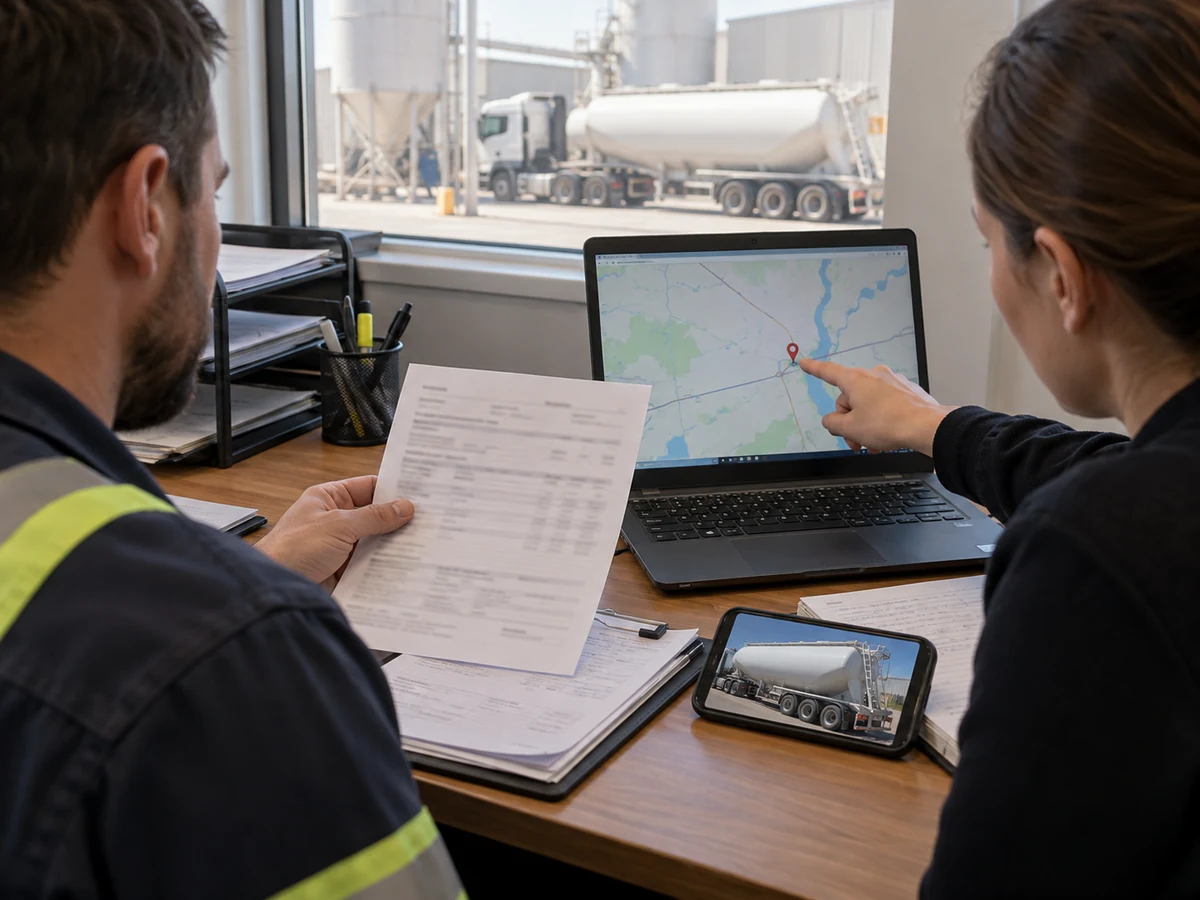
Record these four groups:
| Information | What to send | How it changes the response |
|---|---|---|
| Location and access | GPS pin, road direction, nearest marker, lane or parking position, access restrictions | Determines traffic protection, approach direction and recovery access |
| Vehicle and symptom | Tractor/trailer IDs, gross combination and axle weights from the weigh ticket, affected wheel or system, warning messages, visible damage | Helps distinguish a tractor exchange, mobile repair and loaded-vehicle recovery |
| Cargo condition | Cement grade, batch/load reference, loaded mass, seal numbers, any leak or weather exposure | Preserves product identity and identifies loads needing a quality hold |
| Delivery position | Destination silo, receiving contact, remaining journey, unloading slot, available air source | Shows whether restoring movement will also restore delivery |
Take photographs only from a safe position. Useful views include the whole parked combination, the fault area and the relevant identification plate. Do not climb onto a tanker or enter traffic for a better photo.
Keep brake-system air pressure separate from cargo-tank pressure. They serve different jobs. A brake-air warning is a road-safety issue; a tank gauge reading relates to the powder unloading system. Record which gauge or warning is involved rather than reporting only “low air.”
Assign one dispatcher to coordinate recovery, repair and the receiver. Give the next update time even when a reliable repair estimate is still unavailable.
Should you repair, swap the tractor, or recover the tanker?
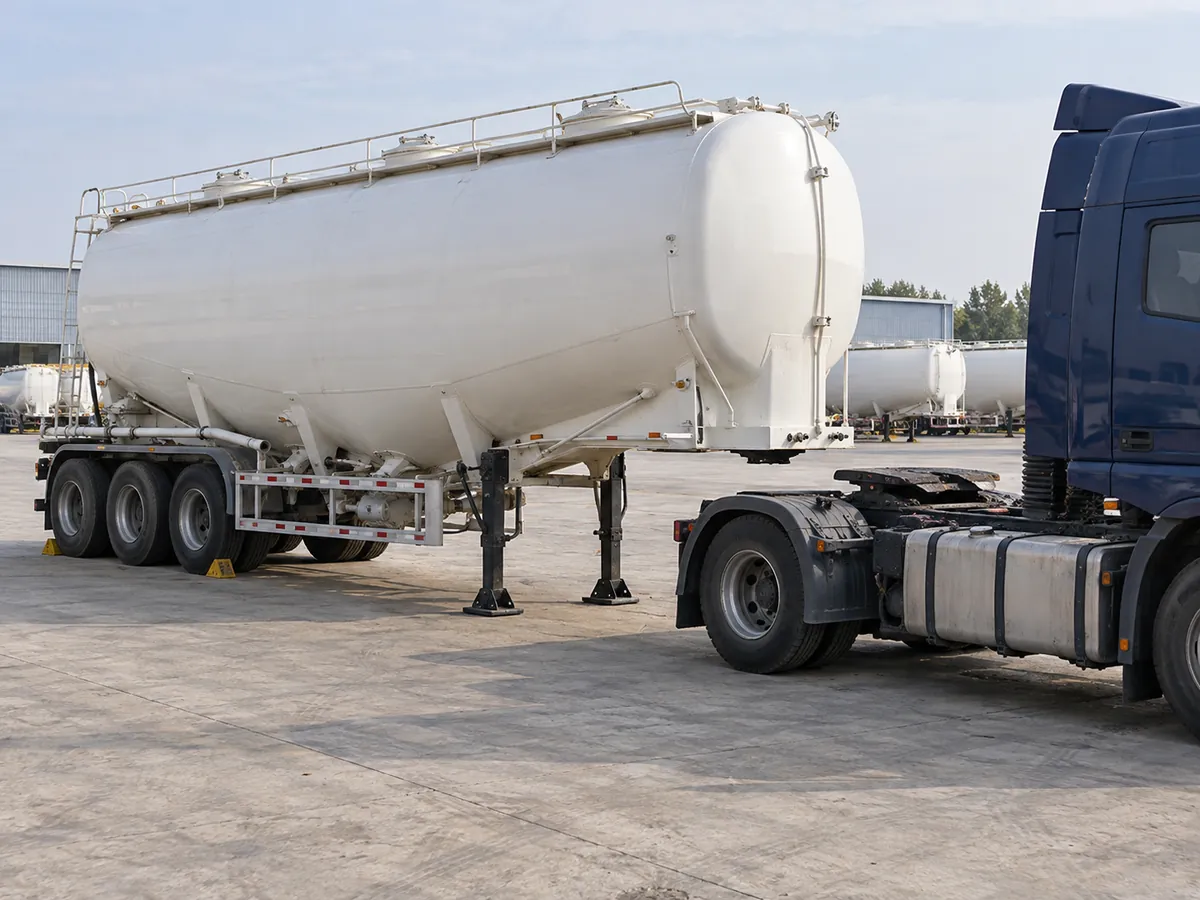
Compare a tractor swap when only the tractor has failed and the loaded trailer is roadworthy. Use repair or specialist recovery when the trailer itself cannot travel safely. The nearest spare vehicle is useful only if it fits the actual job.
| Confirmed condition | Practical recovery choice | What must be resolved first |
|---|---|---|
| Tractor engine or driveline fault; trailer remains intact | Compare mobile repair with a replacement tractor | Safe exchange area, coupling compatibility, loaded combination limits and unloading power |
| Trailer tire or wheel-end defect | Suitable commercial-vehicle repair; recovery if safe repair is unavailable | Wheel, hub, brake and adjacent tire damage; safe working area |
| Brake, axle, suspension, coupling or structural damage | Specialist assessment and heavy recovery as required | Stability, braking and load support; a replacement tractor does not fix these defects |
| Unloading air source fails; vehicle remains roadworthy | Repair the air package or arrange a compatible receiving-site supply | Approved air connection, airflow, pressure protection and cargo suitability |
What makes a replacement tractor suitable?
It must match the loaded trailer’s coupling, braking, electrical and weight requirements, plus its unloading drive if that drive comes from the tractor. Check the kingpin and fifth wheel, coupling height, axle/kingpin loads, brake connections and electrical functions. A compressor driven by the tractor’s power take-off (PTO) needs a compatible drive arrangement. An ordinary spare tractor may pull the trailer but be unable to unload it.
Move the exchange to a controlled, firm, level area when possible. The loaded landing legs need suitable support. Apply the tractor and trailer parking brakes and use the trained coupling procedure. HSE’s coupling and uncoupling guidance covers support conditions, engagement checks and functional checks.
For a tow, send the recovery operator the actual loaded mass and damage information so they can select the method and equipment. Do not release defective brakes or improvise a tow to meet the delivery slot.
What if the compressor fails but the tanker can still travel?
A roadworthy tanker can proceed to a suitable receiving site only after an unloading plan is agreed. First identify where its unloading power comes from:
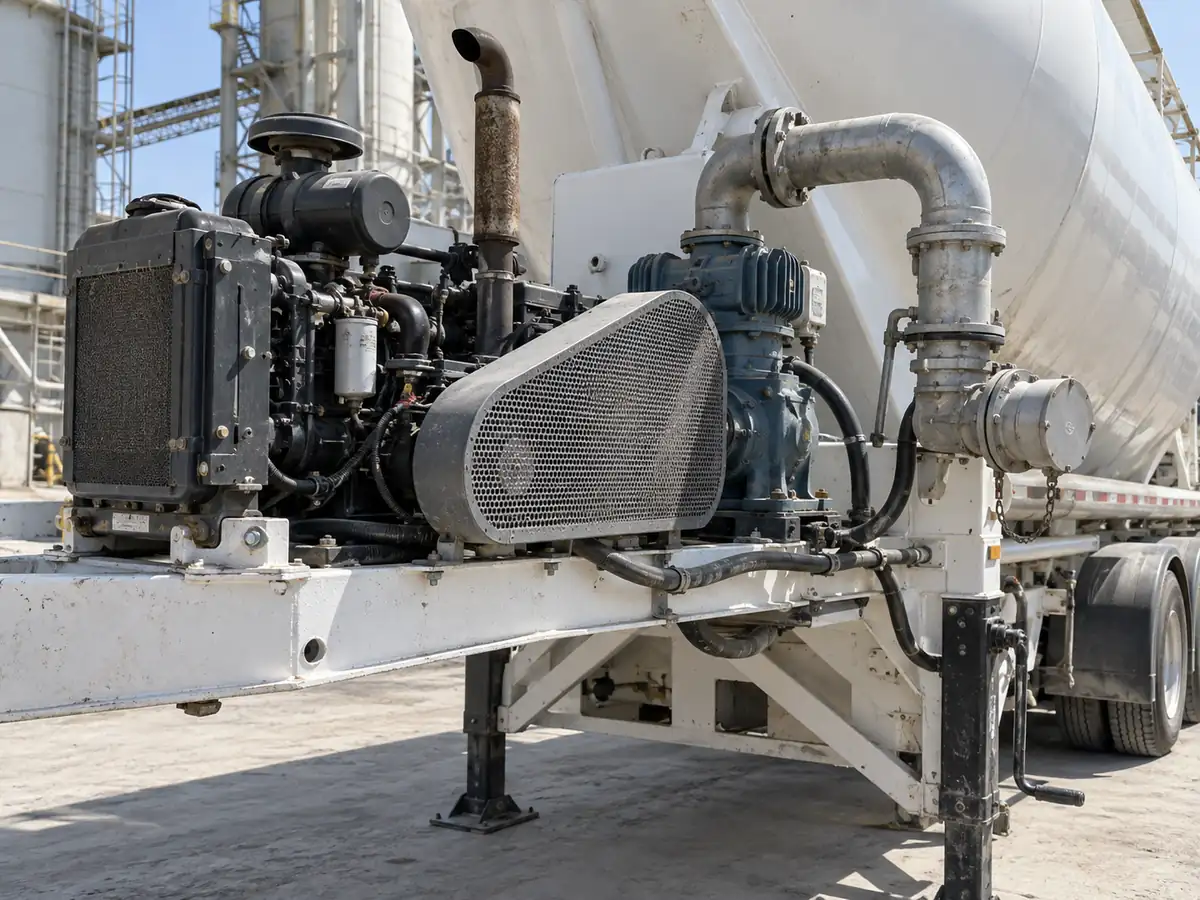
- Tractor PTO: a replacement tractor needs the correct drive arrangement, or the receiving site needs an approved alternative air supply.
- Independent diesel package: changing tractors does not repair the separate engine or compressor. Arrange repair or a compatible alternative supply.
- External supply: use the tanker’s designated connection with equipment matched to the unloading system.
A portable construction compressor is not automatically suitable. The equipment provider needs the required airflow at working pressure, air temperature and quality, connection details, and the tanker’s regulation, non-return and relief arrangements. The silo’s filter, venting and available capacity also remain part of the job. Our cement tanker air compressor guide explains the different drive options.
What if unloading has already started?
Stop an abnormal unloading operation and make the system safe before repair, hose changes or restart. Shut down and isolate it through the equipment’s prescribed sequence. Stored pressure can remain in the tank and hose after the compressor stops. Keep personnel clear of outlets and have a trained operator establish the depressurized state before any connection is opened.
Ontario’s dry bulk cement container alert identifies poor pressure control and cement-blocked relief valves as rupture hazards. Never bypass relief protection or raise pressure to overcome a blockage. The MAC pneumatic trailer manual, page 19, also requires pressure relief before hose disconnection. Its valve sequence belongs to that equipment; use the sequence for the tanker being recovered.
Will the cement harden while the tanker is delayed?
A short delay does not make properly contained dry cement set like wet concrete. Moisture entry, contamination and damaged containment are the conditions that change cargo handling. Cement reacts with water; keeping water out matters more than inventing a universal roadside time limit.
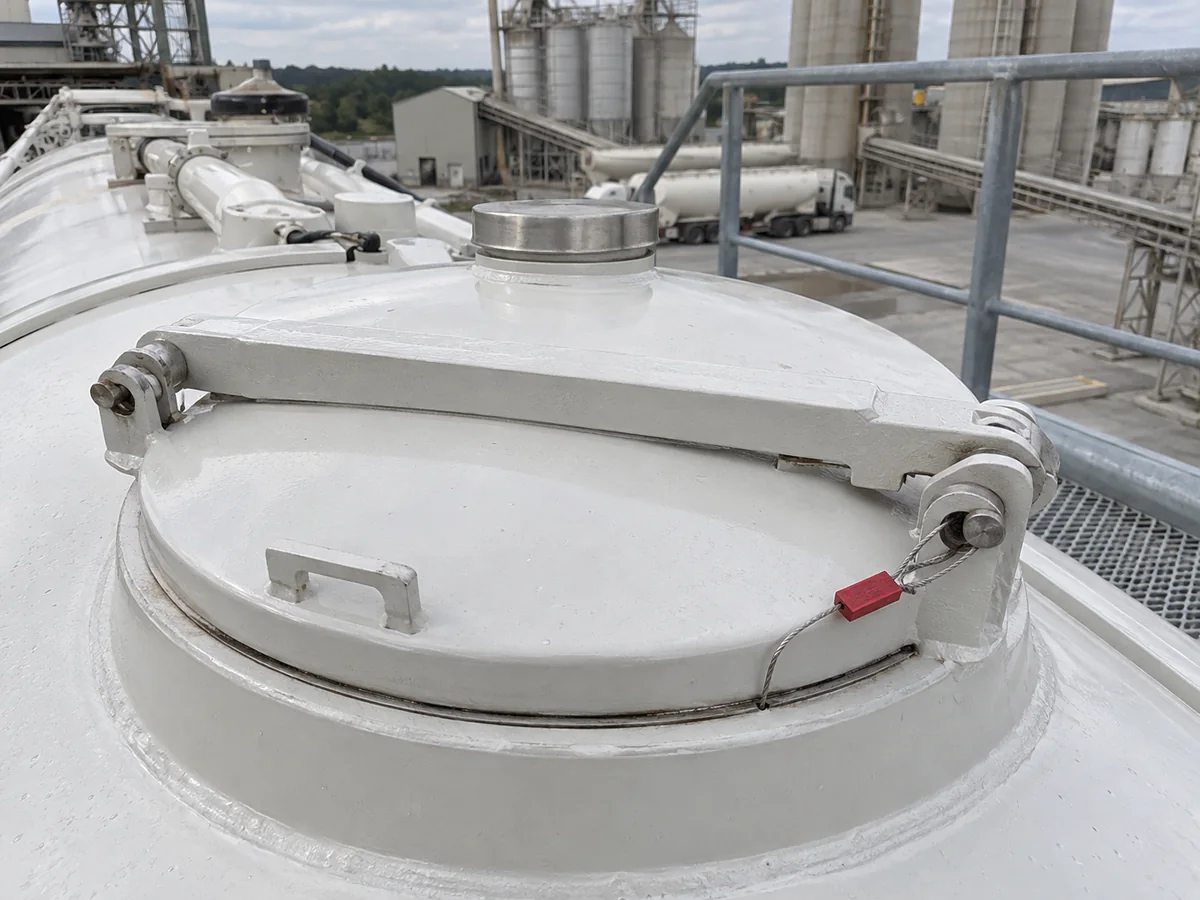
Keep hatches, valves and connections secured in their intended travel condition. Preserve the batch reference, weigh ticket and seal record. Do not open a hatch simply to “let the cement breathe,” and do not add water to make powder easier to move.
If seals remain intact and there is no evidence of a leak or water entry, keep the cargo contained while dispatch arranges recovery. Repeated inspections that open the product space add exposure without repairing the vehicle.
If a hatch was damaged, a seal broke, rain entered or foreign material may have reached the cement, hold the load for the shipper’s quality decision before unloading it into the customer’s silo. Record the opening, time, weather and recovery work. Any sampling must use a safe approved method; do not enter the tank or climb onto damaged equipment. Acceptance depends on the product specification and exposure evidence.
For a spill, keep people away and prevent dust and runoff from spreading. Trained cleanup crews should use suitable dust collection rather than dry sweeping or blowing powder with compressed air. Heidelberg Materials’ Portland Cement SDS, sections 6, 7 and 10, explains spill controls, handling hazards and reaction with water.
How do you protect the delivery schedule?
Compare the time until usable cement reaches the correct silo, not just the time until a mechanic or spare tractor arrives. Give the receiver a provisional range, the current recovery choice and the next update time.
For each workable option, add the remaining sequential stages:
Time to completed delivery = support arrival + repair or exchange and release checks + onward travel + receiving wait/setup + unloading.
Use dispatch travel estimates, the service provider’s current estimate and a comparable unloading record. Count parallel work once: if a part and a technician travel at the same time, readiness depends on the later arrival, followed by the work that cannot start until both are present.
Suppose a sealed, undamaged trailer is already in a safe exchange area, the fault is limited to the tractor, and both options are feasible:
| Remaining stage | Repair original tractor | Bring a compatible tractor |
|---|---|---|
| Support arrival | 90 min | 45 min |
| Repair/exchange and release checks | 75 min | 60 min |
| Onward travel | 30 min | 30 min |
| Receiving wait/setup | 15 min | 15 min |
| Unloading | 30 min | 30 min |
| Total | 240 min | 180 min |
The swap finishes 60 minutes earlier with these inputs. If repair arrival and work together fall from 165 to 90 minutes, repair totals 165 minutes and becomes faster. Update the choice when the estimate changes.
Also account for the driver’s remaining legal working time, the receiver’s opening hours and silo capacity. If the driver cannot complete the revised trip legally, arrange a qualified relief driver at a safe handover point or reschedule. If the original slot is lost, book a new one before departure. Where the plant risks running short, dispatch can compare a separate same-grade supply while the delayed load remains assigned to its own batch and destination.
What must pass before the delivery restarts?
Release the vehicle for travel and the unloading system for use as two separate decisions. Starting the engine or clearing a warning message alone does not complete either check.
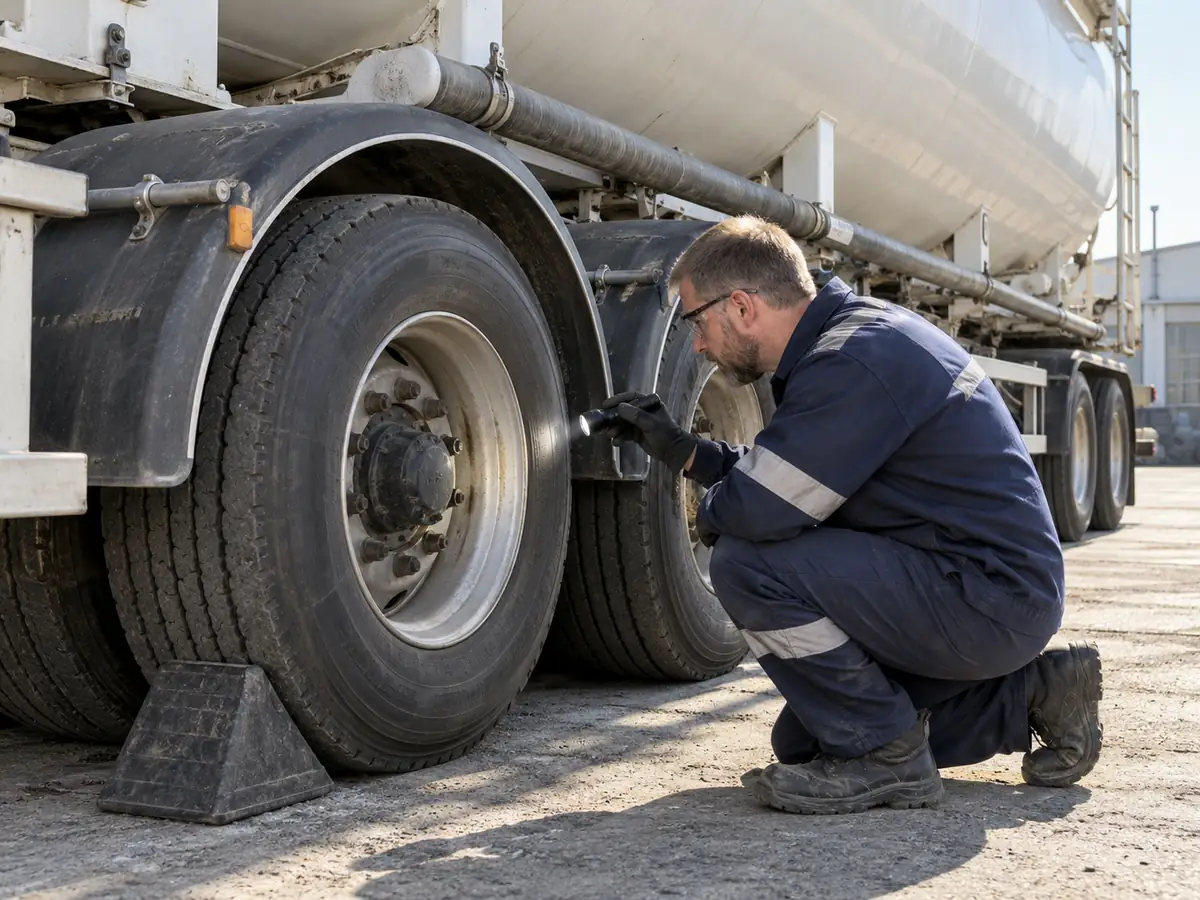
Before travel, the responsible technician and driver should close the fault record and complete the checks affected by the work:
- Repaired tires, wheel ends, brakes or running gear are fit for the loaded journey; tools and temporary supports are removed.
- A changed tractor is correctly coupled, with landing legs stowed, services connected and required brake/light functions working.
- The combination’s actual weights and axle distribution suit the replacement tractor and the planned route.
- Hatches, valves and hoses are secured for travel; product identity and any quality hold are resolved.
Before unloading, the site and operator need the correct silo identity, grade acceptance, usable capacity, working vent/filter system and a suitable air supply. Check the repaired pressure-side parts and protective devices through the equipment’s return-to-service procedure.
At restart, monitor pressure and product flow together. A rising pressure with little cement flow calls for stopping and investigating the conveying path and receiving system. Trying to recover lost time by increasing pressure can turn a delivery delay into a pressure incident.
Record the repair, parts used, release time, recovery movements and any changed seals. At delivery, keep weighbridge and received-quantity records with the load reference. Review the confirmed cause afterward: a repeat wheel-end defect needs a different preventive action from an unavailable compressor service part.
Keep the cargo sealed and choose a workable recovery plan
A cement tanker breakdown on route is best handled by securing the scene, protecting the load and choosing a recovery method that restores both travel and unloading. Use a compatible tractor when that solves the confirmed fault. Use qualified repair or heavy recovery when the trailer cannot travel. Keep suspect cargo on hold until its disposition is clear.
For fleet planning, build the backup arrangements around the actual tractor, running gear and air package. If you are considering our 50 ton cement tanker trailer, send us your country, tractor details, cargo, route, silo height and discharge distance. Include local spare-part preferences and the proposed backup air source so we can discuss the configuration around your delivery work.
Cement tanker breakdown FAQs
Can a loaded cement tanker stay overnight in a recovery yard?
Yes, when the vehicle can be parked securely, the cargo stays contained and the yard can safely support the loaded trailer. Use a designated area with firm ground, controlled access and a documented handover. Record seals and any damage. If the trailer needs support or isolation after an accident, the recovery team must establish the parking arrangement before leaving it.
Can another tanker take over the cement load?
Only through a planned, compatible bulk-transfer arrangement at a controlled location. It needs a suitable receiver, enclosed transfer equipment, dust control, pressure protection and product-identity records. Trailer-to-trailer transfer is not a routine roadside shortcut. If the loaded trailer is intact, moving it with a compatible tractor usually avoids the extra product handling.
Should the receiving plant stop production while waiting?
Base that decision on usable same-grade stock and the revised replenishment time. The plant can estimate stock cover as usable tonnes divided by current consumption in tonnes per hour. If stock cover is shorter than the recovery timeline, arrange another approved same-grade delivery or adjust production before the silo runs short.
What if a seal is missing but the hatch appears closed?
Treat the load as a traceability exception and obtain the shipper’s release before discharge. Compare the original seal record with recovery photos and the handover log. A closed hatch does not explain when a seal was removed or whether the product space was opened. Record the decision and replacement seal rather than silently applying a new one.
Does a stopped compressor mean the tank is depressurized?
No. Stopping the air source does not remove stored pressure from the tank, hose or isolated pipe sections. A trained operator must complete the tanker’s isolation and depressurization procedure before opening pressure-side connections. If the gauge or pressure condition is uncertain, keep the equipment isolated for competent investigation.

ZAC
Hello, I’m ZAC, a cement trailer and semi-trailer specialist with over 20 years of industry experience. My technical approach starts with real operating conditions, including how cargo characteristics, road conditions, and loading and unloading methods affect trailer performance. I place particular emphasis on structural reliability, component compatibility, and ease of maintenance. I look at both everyday performance and how reliably a trailer operates over time, as well as how easily it can be inspected and serviced.


