
Reduce cement dust exposure during tanker loading and unloading by containing the powder, controlling the air leaving the tank or silo, and keeping people away from release points. A closed hose helps, but loading-head leaks, silo-filter emissions, trapped pressure and cleanup can still expose the driver and nearby workers.
Start with the stage that releases dust. Fix the seal, extraction or receiving-air problem there, then use personal air sampling to assess the worker’s exposure. Respirators support these controls when needed; they do not repair a leaking transfer system.
What creates cement dust exposure around a tanker?
Dust escapes when powder or dusty air leaves its intended path. During loading, incoming cement displaces air from the tanker. During unloading, the receiving silo must release both conveying air and displaced air through its filter system.
Dry cement can irritate the eyes, skin and airways. Dust trapped against sweaty skin can also cause alkaline burns. The NIOSH Portland cement guide identifies the eyes, skin and respiratory system as target organs.
Bulk cement dust and dust from cutting hardened concrete are different mixtures. Concrete cutting can release crystalline silica from aggregate. For the powder in your tanker, use the actual cargo’s safety data sheet (SDS), especially Sections 2, 3 and 8. Cement silicates are not automatically the same substance as free crystalline silica. Respirable particles are small enough to reach deep into the lungs. Where respirable crystalline silica is present, assess it separately from total cement dust.
| Stage | Where exposure can occur | First control to examine |
|---|---|---|
| Loading | Around the loading head or when it retracts | Head alignment, seal and dust extraction |
| Unloading | Hose joints, silo inlet or silo roof | Connections, filter condition and receiving-air capacity |
| Disconnecting | Residue and pressure released at a coupling | Line clearing, isolation and depressurization |
| Cleanup | Powder lifted from ground, clothing or equipment | Dust collection and contained disposal |
A clean-looking bay is useful evidence of containment, but it is not an exposure measurement. Fine airborne particles may remain after a visible plume has dispersed.
How should dust be controlled during tanker loading?
Use an enclosed loading head with an effective route for displaced air and captured dust. Sealing the powder inlet while restricting the air outlet can push dusty air through another opening.
A telescopic loading spout can carry powder through an inner passage while a separate outer passage draws dusty air to a collector. NIOSH describes this arrangement in its bulk-loading dust-control guidance. The spout must fit the actual inlet and loading height.
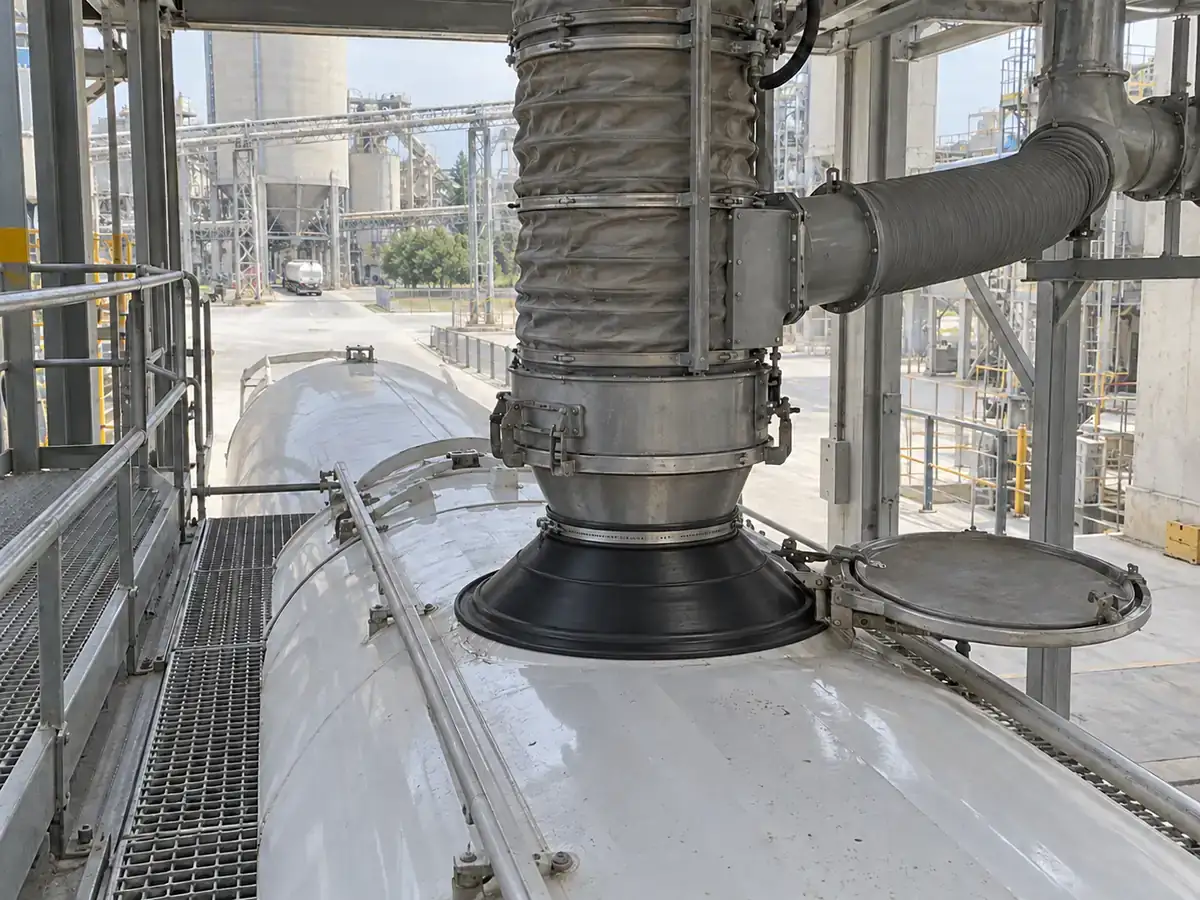
- Position the tanker before feeding. Align the loading head so its seal sits evenly. Use the loading platform and fall-prevention system for any necessary top access.
- Establish dust extraction first. The station operator checks the extraction indication and intended air path before starting the feeder. A running fan alone does not show that the head has useful suction.
- Feed within the station’s working capacity. If dust starts escaping, stop feeding and investigate alignment, seals, extraction and fill level. Do not continue by opening another hatch as a makeshift vent.
- Control the end of loading. Stop the upstream feed, allow the designed residual-material and extraction sequence to finish, then retract the head and close the tanker opening.
Dust that appears only near the end calls for a different investigation from dust present throughout loading. Examine full-level detection, feeder stopping delay and powder still falling after shutoff. Extraction controls airborne dust; it does not replace overfill protection.
How do you prevent dust during pneumatic unloading?
Treat the tanker, hose and receiving silo as one system. The silo needs enough available space, effective filtration and working protection before cement starts moving. The driver and site operator also need one clear stop signal.
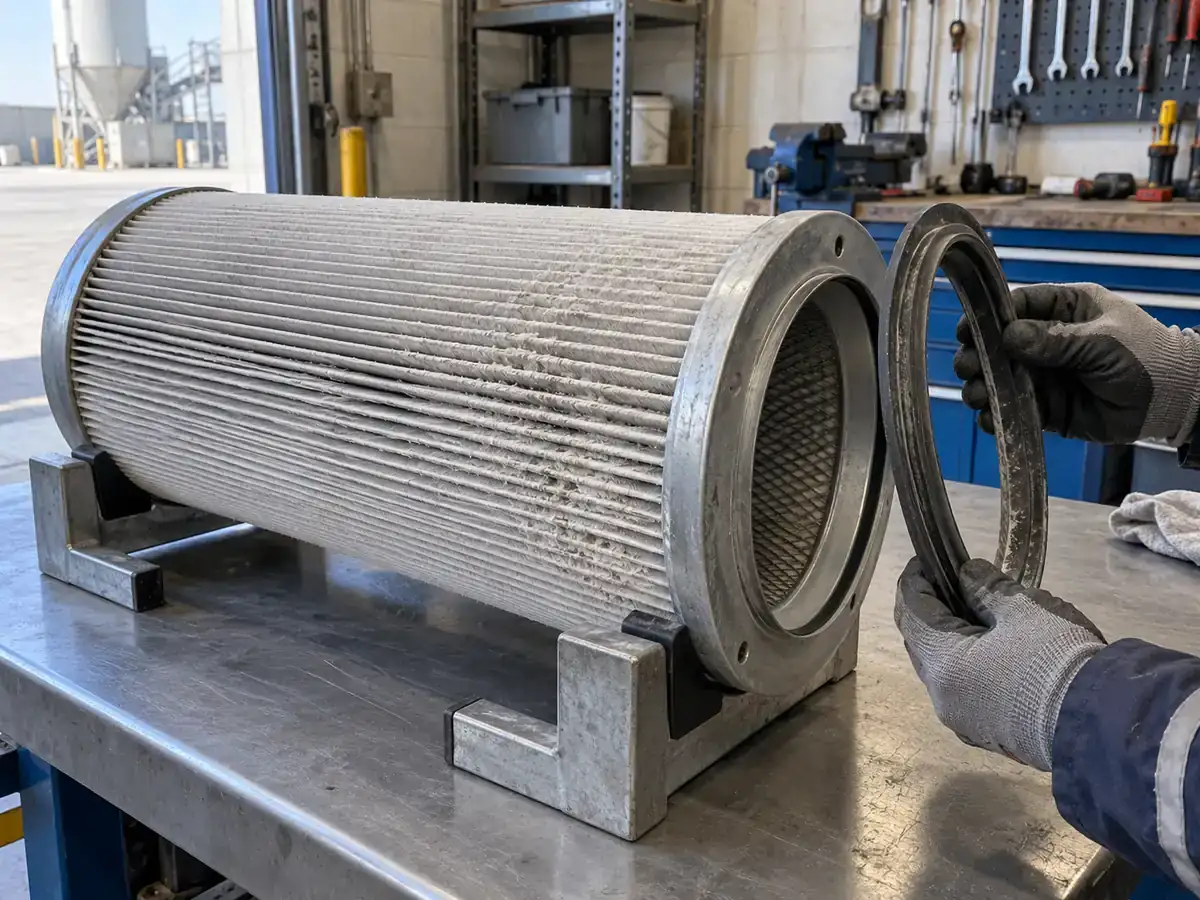
The tanker supplies air to move the cement. The silo filter separates powder from the air leaving the receiving vessel. A restricted filter can increase backpressure; damaged media or a failed seal can release dust even without a blockage. A pressure-relief device is emergency protection, not the normal air outlet.
Before transfer, the site operator identifies the correct silo and available capacity, puts its filter system into service and establishes that high-level and pressure protection are ready. The driver inspects the hose and couplings, secures the connection and stays where controls and alarms can be monitored, outside the hose and dust-release zones.
| What happens | Investigation after a safe stop |
|---|---|
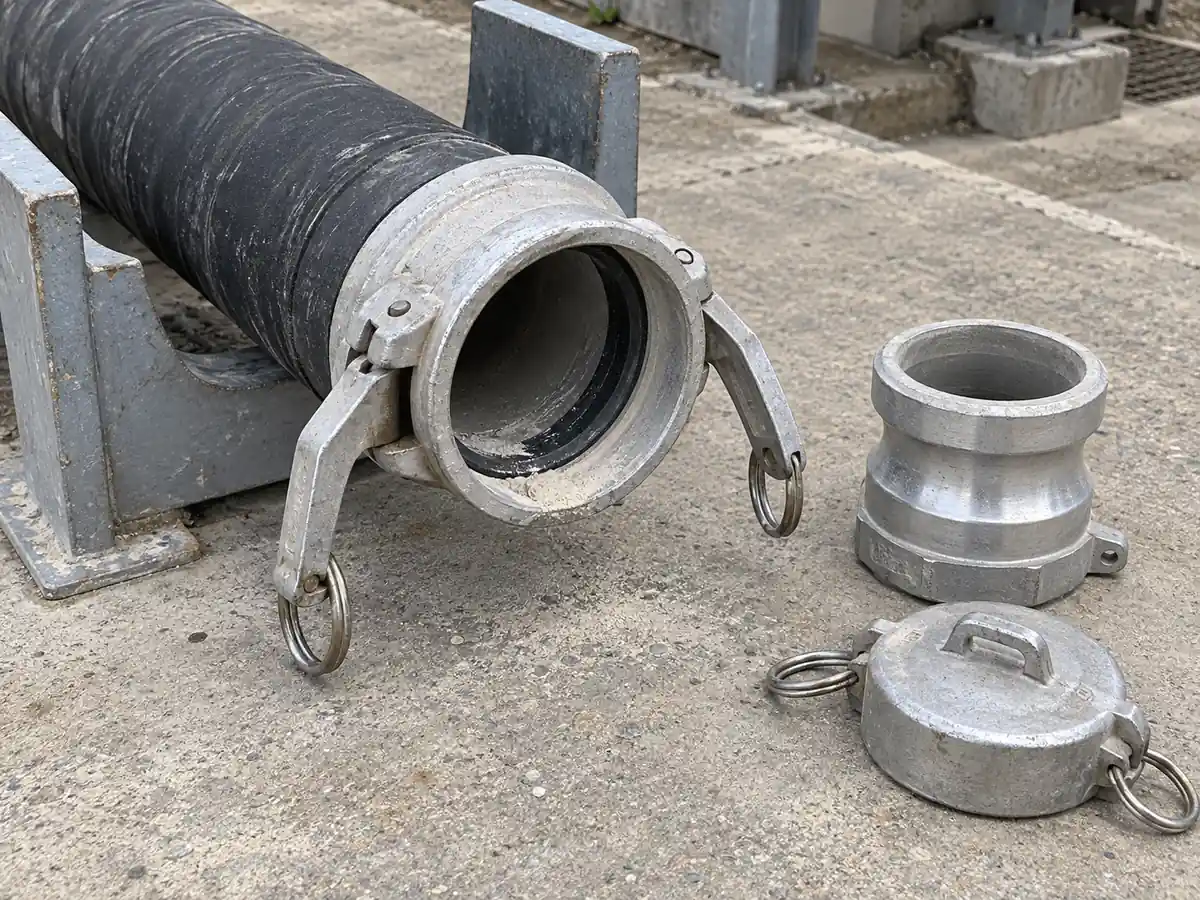
| Dust escapes from one coupling | Examine the gasket, mating faces, locking parts and hose support. Replace damaged parts before reuse. |
| Dust leaves the silo filter outlet | Examine filter media, seals and installation. Also check cleaning operation and the filter’s air-handling duty. |
| Dust appears with rising silo pressure or a high-level alarm | Investigate receiving space, filter restriction and protection operation. Do not increase tanker pressure to finish the load. |
| Dust appears mainly during final line clearing | Review the clearing-air sequence and whether the silo/filter can accept that air flow. |
Stop the transfer for unexpected dust, abnormal pressure or an alarm. Keep people clear and use the agreed shutdown procedure. Maintenance begins after isolation and removal of stored pressure. Restart only after the cause is corrected and receiving conditions are restored.
Our cement tanker pneumatic unloading system guide explains how airflow, aeration, hose resistance and silo backpressure interact. Use that system view when deciding whether the fault belongs to the trailer, the receiving site or their connection.
How do you disconnect and clean up without another dust cloud?
Clear and depressurize the equipment through its designed paths before opening a connection, then collect residue without putting it back into the air. The end of material flow does not establish that the tank and hose are safe to open.
How should a discharge hose be disconnected?
Bring the tank and every isolated line section to a verified safe pressure state. A closed valve or blockage can trap pressure in the hose while the tanker gauge reads zero.
Stop product transfer and use the equipment’s specified clearing, isolation and venting sequence. The clearing path must remain connected to a receiving system able to accept it. If an automatic silo shutoff has closed, do not blow against it or open a coupling to release pressure.
Use the designated pressure indications and effective vent paths to establish depressurization. Never loosen a coupling as a pressure test, tighten a leaking live joint or stand in front of an opening. Once released for disconnection, contain residue and cap the hose ends and site connection.
What is the best way to collect spilled cement?
For accessible dry spills, use an industrial vacuum suitable for fine cement dust, with effective HEPA filtration and contained waste handling. Check its hose, seals, filter condition and collection capacity. Emptying the machine can create a second exposure if dust is tipped into an open bin.
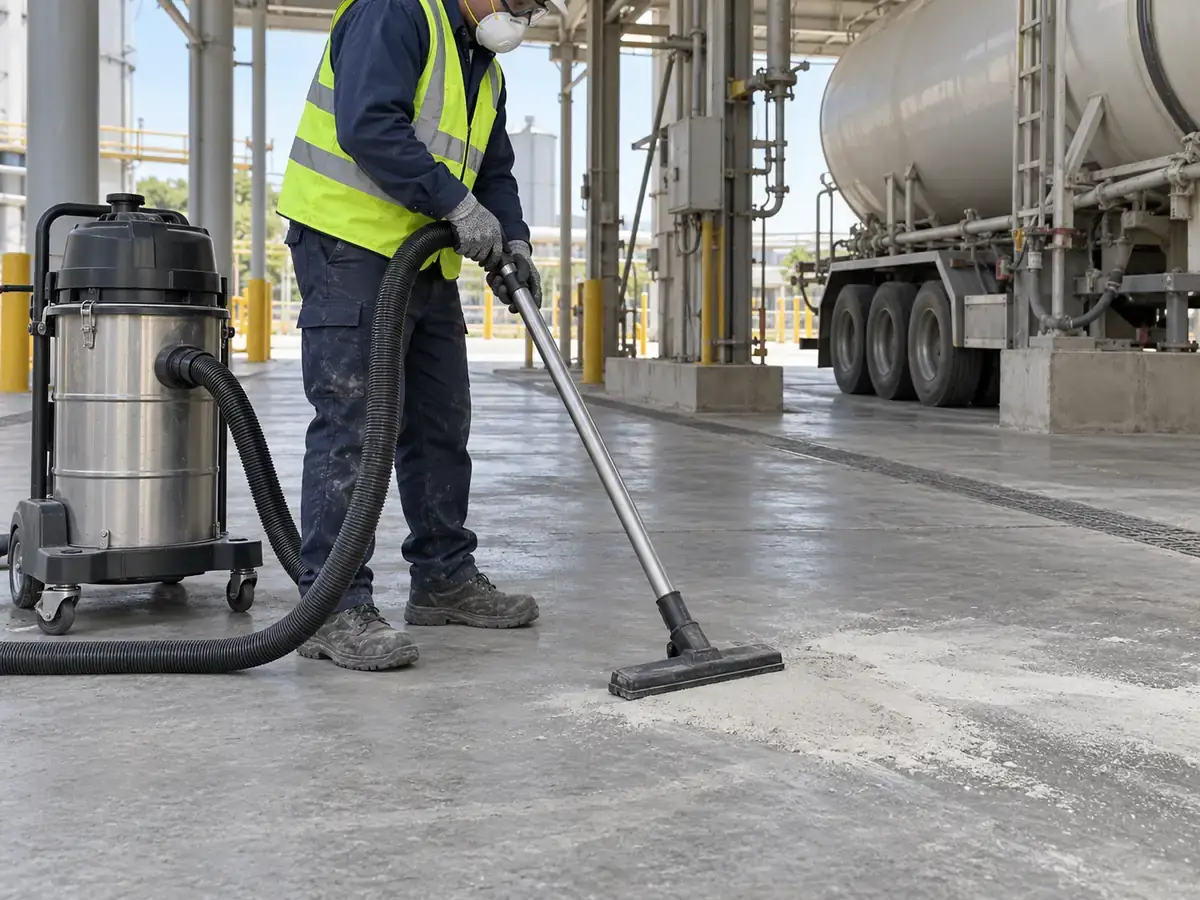
Keep unnecessary people away, collect the powder and close the waste container. Do not use dry sweeping or an air gun as the routine cleanup method. OSHA’s silica housekeeping provisions explain the restrictions and specific exceptions for silica-exposing work.
Water can harden cement and damage cargo or equipment. Keep wash water out of the product and air system; manage any planned wet cleanup and runoff separately. This cargo rule must never delay washing contaminated skin or irrigating an exposed eye.
What PPE and first-aid arrangements are needed?
Choose respiratory protection from the contaminant, exposure assessment and required protection level. A disposable mask label alone does not establish that it suits every loading bay, maintenance task or spill.
For required respirator use, the employer needs a respiratory-protection program. Under OSHA’s respiratory-protection requirements, this includes medical evaluation, appropriate selection, training and maintenance. Tight-fitting respirators need fit testing, and the wearer must perform a seal check each time they put one on. Facial hair must not cross the sealing surface.
Also provide dust-appropriate eye protection, suitable gloves, covered skin and access to washing and eyewash facilities. Keep cement out of boots, cuffs and gloves. Remove contaminated clothing before it carries dust into the cab or break area, and wash before eating or drinking.
For inhalation, move the exposed person to fresh air without exposing a rescuer. Get urgent medical help for breathing difficulty or a large inhalation exposure. Irrigate an exposed eye immediately and obtain medical attention; remove contaminated clothing and wash affected skin promptly. The cargo’s manufacturer SDS provides product-specific first-aid instructions.
Do not enter a tanker or silo to investigate dust or residue. Entry introduces confined-space and engulfment hazards that a particulate respirator cannot control.
How do you measure cement dust exposure and verify controls?
Measure the air the worker breathes during representative work, including connection, unloading, disconnection and cleanup. A fixed monitor beside the silo or a clear photograph cannot replace personal exposure assessment.
Which samples and records are useful?
Match the sampling method to the dust fraction and substance being assessed. Total dust, respirable dust and respirable crystalline silica are different measurements.
An occupational hygienist can use a calibrated personal pump with the appropriate filter or size-selective sampler near the breathing zone. For respirable sampling, the sampler’s specified flow matters; one pump setting does not suit every cyclone. The laboratory needs enough sampled air and collected material to report useful results.
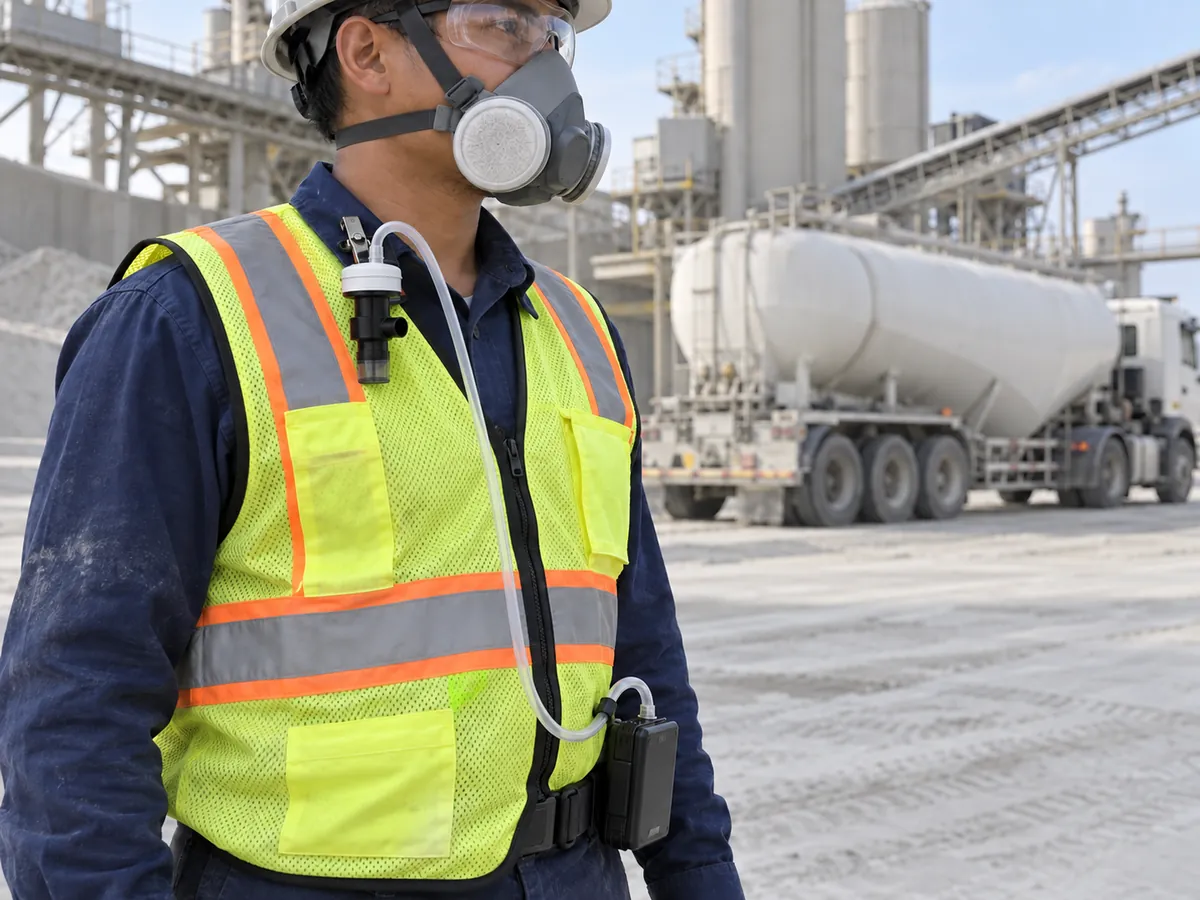
Record cargo and SDS, site, task start/finish times, worker position, wind, throughput and control status. Add filter maintenance, alarms and any unusual release. Include the rest of the shift when calculating shift exposure. Unknown periods are not zero-exposure periods.
Use laboratory analysis for the relevant contaminant. NIOSH’s exposure-assessment guidance identifies methods for crystalline-silica analysis. A real-time dust meter can help locate peaks, but an ordinary PM reading does not identify how much crystalline silica the worker inhaled.
Which exposure limits should the results be compared with?
Use the applicable jurisdiction, substance, dust fraction and averaging period together. The following U.S. references show why the units and sample type matter:
| Measurement | U.S. reference | Averaging period |
|---|---|---|
| Portland cement, total dust | 15 mg/m³, listed by OSHA’s chemical database | 8-hour TWA |
| Portland cement, respirable fraction | 5 mg/m³, listed by OSHA’s chemical database | 8-hour TWA |
| Respirable crystalline silica | 50 µg/m³ PEL under 29 CFR 1910.1053 | 8-hour TWA |
The OSHA Portland cement entry and general-industry silica standard concern different measurements. The silica standard also sets an action level of 25 µg/m³ as an 8-hour TWA. These are U.S. references; the site’s jurisdiction and work activity determine the rules it must apply.
Can a short dusty task affect the shift average?
Yes. A high-concentration task can make a material contribution even when it lasts only part of the shift. TWA means time-weighted average:
8-hour TWA = sum of each concentration × its duration ÷ 8 hours.
For example, suppose respirable crystalline silica is 0.20 mg/m³ for 0.5 hour and 0.02 mg/m³ for the other 7.5 hours. Then:
[(0.20 × 0.5) + (0.02 × 7.5)] ÷ 8 = 0.03125 mg/m³ = 31.25 µg/m³.
That example falls above the U.S. silica action level and below its PEL. The useful response is to control the high-exposure task and assess the required follow-up. A shift average below the PEL is not a reason to accept a leaking hose or silo-filter plume.
After repairs, repeat assessment under comparable cargo, loading rate and work practices, including the task that produced the release. Keep the laboratory results with the operating and maintenance record. This links any improvement to both the equipment change and the worker’s actual exposure.
Reduce exposure across the whole transfer
Cement dust exposure around a tanker is best reduced at the release point: the loading head, receiving-air system, connection or cleanup task. Keep the powder contained, maintain the air outlet and verify the result with representative personal sampling.
For a tanker configuration review, send us the cargo, loading interface, hose diameter and distance, silo inlet height, filter details and the stage where dust appears. We use these operating conditions to discuss the trailer’s pneumatic setup. Send photos or drawings to [email protected], or use our contact form to start the discussion.
Cement tanker dust exposure FAQs
Can the driver stay inside the cab during unloading?
Only where the site’s operating arrangement allows safe supervision from there. A closed cab may reduce contact with outdoor dust, but the driver must still detect alarms and stop transfer promptly. Agree the monitoring position before starting; do not use the cab to avoid a release while leaving unloading unattended.
What if the same tanker produces dust at only one delivery site?
Start with that site’s receiving system and connection. Compare silo space, filter operation, inlet condition and final clearing sequence with a delivery that ran normally. The pattern helps narrow the investigation; also inspect any hose or seal used only at that location.
Why can dust continue after silo filter bags are replaced?
New bags do not correct a poor seal, failed cleaning system or unsuitable air-handling capacity. Inspect installation and bypass paths, then review the airflow conditions during transfer. Keep unloading stopped if the filter continues to emit dust.
Will a portable fan solve dust around the tanker?
A fan that blows the plume away can expose another worker. Capture dust at its source and send extracted air through suitable filtration. Worker positioning and wind direction help reduce contact while the source is corrected.
Is a cement dust cloud an explosion hazard?
NIOSH lists Portland cement as a noncombustible solid. A pressurized tanker or silo can still rupture from overpressure. That stored-pressure hazard is different from combustion of coal or another combustible powder; assess mixed or changed cargo from its own SDS.
Does a successful repair mean air sampling is no longer needed?
Repair and exposure assessment answer different questions. Restored seals and filtration show the source has been addressed. Representative personal measurements establish exposure under the repaired conditions and guide further controls or monitoring.

ZAC
Hello, I’m ZAC, a cement trailer and semi-trailer specialist with over 20 years of industry experience. My technical approach starts with real operating conditions, including how cargo characteristics, road conditions, and loading and unloading methods affect trailer performance. I place particular emphasis on structural reliability, component compatibility, and ease of maintenance. I look at both everyday performance and how reliably a trailer operates over time, as well as how easily it can be inspected and serviced.


