
Cement tanker dispatch planning should start with the receiving silo, cement grade and refill deadline. Then assign a suitable tanker, reserve its loading and unloading slots, and work backward to a departure time. Across several sites, the shortest route only helps if the correct silo has space and the unloading point is available.
Plan dry cement deliveries around silo consumption and pneumatic unloading. A batching plant receives dry cement into storage before making concrete; the transport plan therefore follows different constraints from ready-mix truck deliveries.
What information should you collect before routing tankers?
Build one delivery record for each site, silo and exact cement product. Add current stock, expected consumption, confirmed incoming loads and the resources needed to receive the next tanker. A site address alone is not enough when several silos or customers share an entrance.
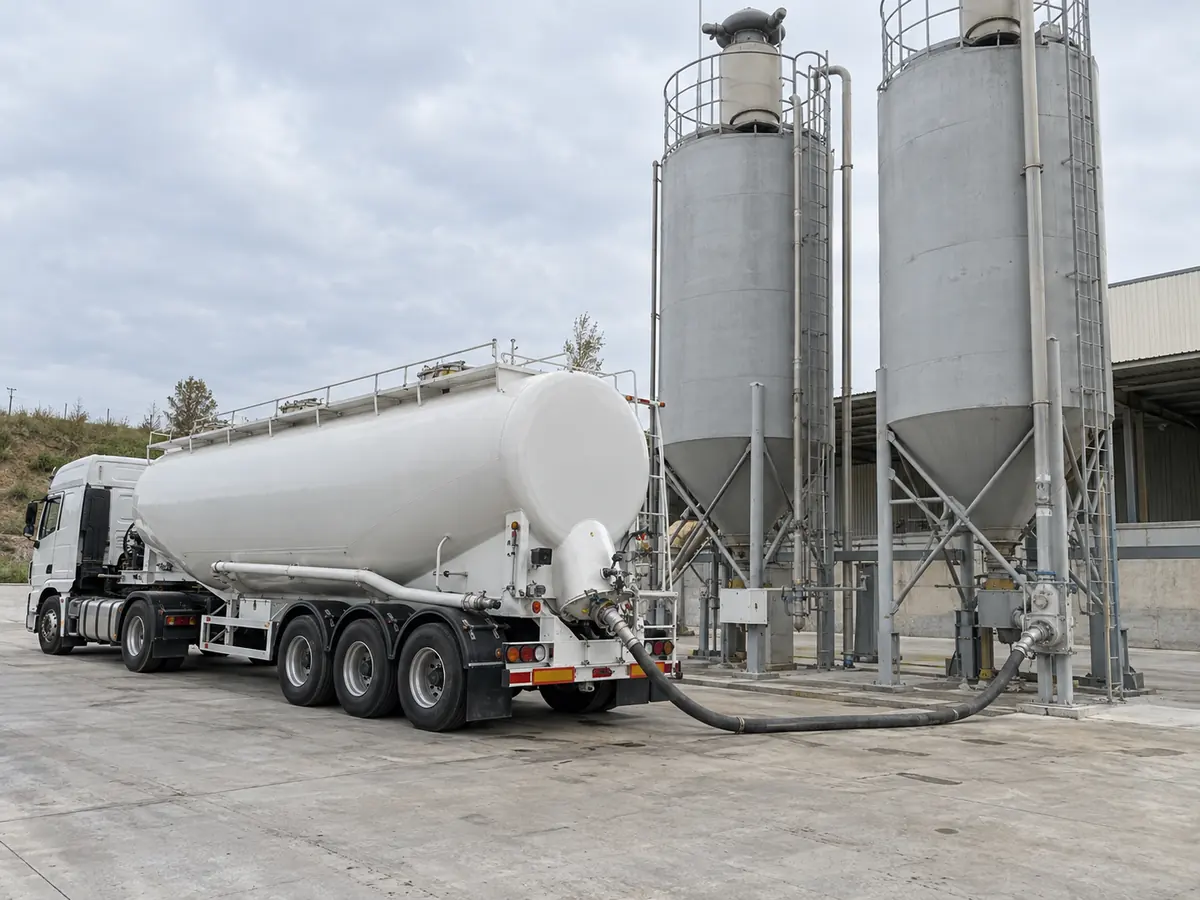
Use these fields to turn a customer request into a trip you can schedule:
| Record | Obtain it from | How dispatch uses it |
|---|---|---|
| Site, silo number, inlet and product code | Receiving plant and order | Match the load to the correct storage location |
| Usable stock and reading time | Calibrated inventory system or reconciled stock record | Calculate when replenishment is needed |
| Planned consumption by time period | Batching plan and recent material use | Identify the next shortage risk |
| Safe receiving capacity and booked inbound loads | Site operator and shared delivery register | Avoid promising the same silo space twice |
| Receiving hours, bay, operator and air-source availability | Site contact and resource calendar | Reserve a workable unloading slot |
| Loading source, permitted payload, previous cargo and driver availability | Loading plant and fleet records | Select a suitable truck and departure time |
Record who supplied the stock figure and when. A reading from yesterday afternoon needs updating before it drives this morning’s schedule. Also keep the loading plant’s queue and opening hours: a nearby truck cannot collect cement from a closed loading point.
For a cement producer serving several batching plants, prioritize each silo separately. For a haulage fleet carrying orders for different customers, add the customer’s order reference and the person authorized to accept changes. Both operations need one shared record of loads already booked or on the road.
When should each batching plant receive its next load?
Schedule the load before usable stock reaches the plant’s agreed reserve, while leaving enough receiving capacity for the full delivery. Compare the time left after travel and site preparation, rather than sorting sites only by distance or tonnes remaining.
Use stock that the plant can actually draw into production. Material below its usable operating level does not belong in that figure. Set the reserve with the plant around its demand uncertainty and replenishment time; there is no single reserve percentage for every site.
Calculate the refill deadline and available space
With steady consumption and no intervening delivery, time to reserve equals (usable stock − reserve) ÷ consumption per hour. When batching demand changes during the day, subtract each period’s planned use in sequence instead of applying one daily average.
If production cannot draw cement while the silo is being filled, book completion and any required release before the supply deadline. If filling and draw-off can run together, delivery must establish usable inflow in time and replenish faster than consumption. Include connection or plant-release delays in that timing.
For example, suppose filling and production draw-off can run together, with incoming cement available fast enough to exceed consumption. The silo has 38 t of usable cement at 07:00, an agreed 10 t reserve, and consumption of 8 t/h. Assume no other deliveries:
- Time to reserve = (38 − 10) ÷ 8 = 3.5 hours.
- Stock reaches the reserve at 10:30. Plan unloading to start earlier, with time for disruption.
- If unloading starts at 09:30, projected stock is 38 − (2.5 × 8) = 18 t.
- A 28 t delivery raises that stock to 46 t, conservatively ignoring consumption during unloading.
If this silo’s site-confirmed safe receiving limit is 80 t, the delivery fits the example. That 80 t is an assumed operating limit, not a conversion from the silo’s nameplate volume. Use a receiving limit that accounts for the site’s powder-level behavior and measurement uncertainty.
The general stock balance is opening stock + confirmed receipts − consumption. At each delivery, compare projected stock plus the proposed load against the safe receiving limit. Include other deliveries due beforehand, then reserve the remaining space against this specific order. If an earlier load is delayed, recalculate both inventory and space.
The MPA Driver’s Handbook calls for confirmation of sufficient silo space and the correct inlet before discharge. A dispatch forecast helps arrange the trip; the receiving operator still releases the actual delivery on arrival.
Work backward to the loading slot
Subtract travel, entry and connection time, plus a separate disruption allowance, from the refill deadline to find the latest planned departure. Then subtract loading and exit-weighing time to reserve the loading slot.
In the same example, allow 75 minutes of travel, 15 minutes for entry and connection, and 20 minutes of contingency. The latest planned departure is 10:30 − 110 minutes = 08:40. If loading and exit weighing take 40 minutes, loading must begin by 08:00. These times are illustrative planning inputs.
Do not consume the reserve and the time allowance twice in different calculations. State what each covers. If production pauses, update consumption; if the first incoming load is no longer confirmed, remove it from the forecast and rebuild the schedule.
How should you assign tankers across several sites?
First select trucks that can carry the required product and legal trip load, reach the site and unload there. Then compare routes against refill deadlines and resource bookings. A slightly longer route can be the better assignment when it protects a plant from running out.
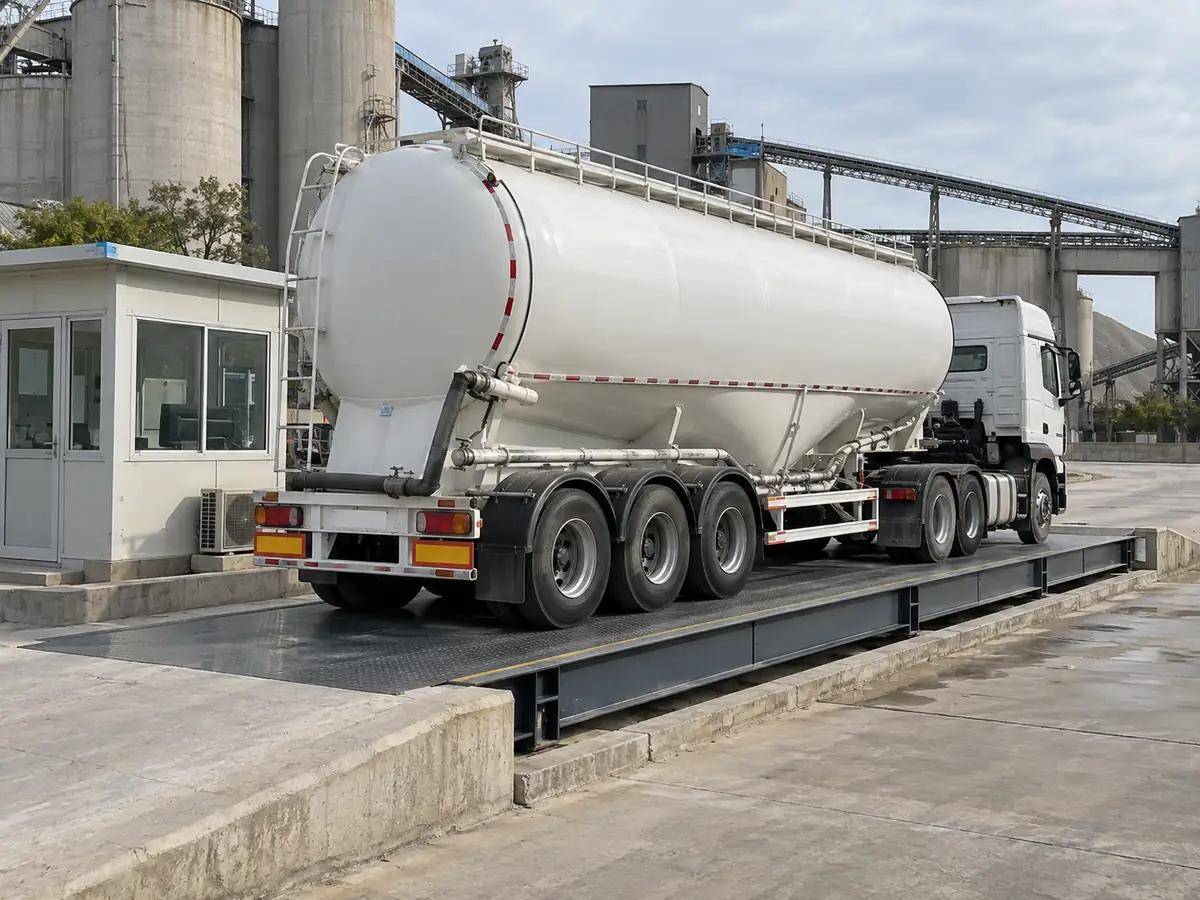
For each candidate trip:
- Match the exact cement product to an available loading source and released tanker.
- Set the load from the order, permitted gross and axle weights, usable tank space and the receiving silo’s capacity. Use the shipper’s bulk density for the volume check.
- Reserve loading, weighing and unloading resources. Include driver duty and rest availability under the route’s applicable rules.
- Compare the expected usable-receipt time with the silo’s deadline. Allocate tight-margin deliveries first, then reduce avoidable empty travel among feasible choices.
If two loading plants supply the same approved product, compare the complete next trip from each source. A shorter outward journey can lose its advantage in a loading queue. Cross-site truck assignment is also described in AMCS’s cement-planning overview; use your own loading and receiving times to evaluate the result.
Estimate fleet demand, then test the timetable
Total truck-work time gives a fleet-size starting point; individual loading and receiving windows determine whether that fleet can perform the work. Calculate each route separately when cycle times differ.
For illustration, three plants need 84 t, 56 t and 28 t. With a trip-approved 28 t load that each destination can receive, they need 3 + 2 + 1 = 6 loads. Suppose every complete trip takes 190 minutes, including loading, travel, receiving and return, and each truck has 420 available working minutes after planned exclusions:
6 × 190 ÷ 420 = 2.71, rounded up to at least 3 trucks.
Now place all six trips on the loading and receiving calendars. Three trucks are insufficient if overlapping deadlines, product restrictions or driver availability prevent those trips from fitting. Do not deduct delays again if they are already included in the 190-minute cycle.
Decide whether a multi-stop load is worthwhile
Use separate full-load trips as the starting plan. Consider splitting one load between sites only when the product matches and each delivered quantity can be reliably measured. Both sites must accept the arrangement, and the remaining load must remain suitable for the onward journey.
Each stop repeats receiving checks, connection, unloading shutdown and departure work. Compare that added time with the travel saved. Use an approved weighing or metering method for each drop, record the remaining cargo, and assess its axle-load distribution for onward travel. Never estimate a partial delivery from blower running time or reload a different grade onto the residue.
How do you dispatch multiple cement grades?
Assign the exact product code, previous-cargo status and receiving silo together. Group repeat work by compatible product, but allow a grade change only through the agreed cleaning and release process. Cement strength class alone does not establish that two products can share a tank or silo.
For frequent deliveries of one product, a dedicated tanker and identified hose can reduce changeovers and simplify traceability. A shared fleet may suit less frequent orders, provided the schedule includes the required cleaning, drying where relevant, inspection and loading release. Use recorded completion times for that changeover; do not invent a fixed half-hour allowance.
Keep these items linked on the dispatch order:
- Loading source and exact cement designation, including any customer specification.
- Trailer and hose identification, previous cargo, and required release record.
- Receiving plant, silo number and inlet identification.
- Loaded quantity, delivery ticket and any approved routing change.
At the receiving point, match the ticket to the product and physical inlet before connection. If the code, silo label or instruction differs, hold the delivery while the site resolves it. A color mark can help identification, but the written product and silo references must agree.
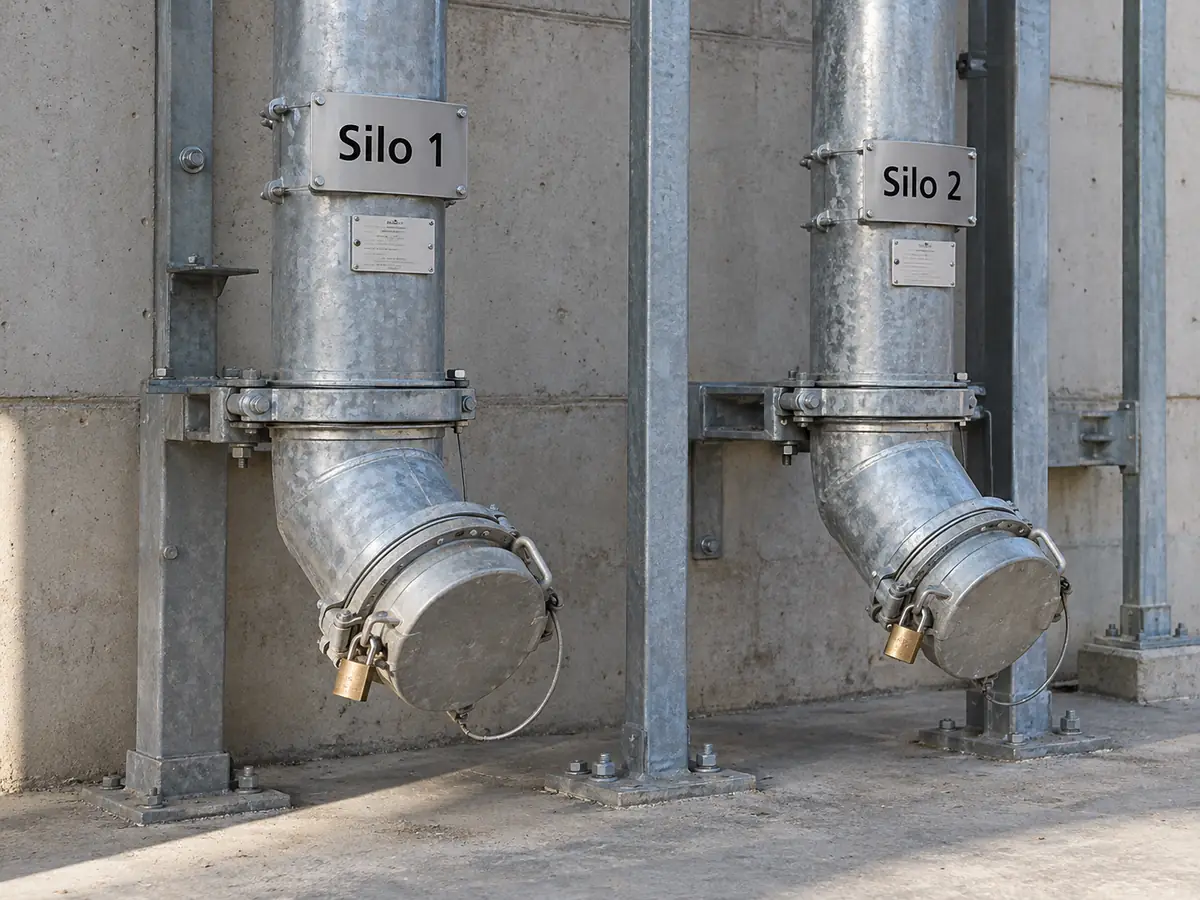
Do not treat several discharge outlets as proof of isolated compartments. Carrying separate grades together requires a configuration with verified segregation and separate suitable transfer paths. For an ordinary common-tank arrangement, schedule one approved product per load.
White cement, gray cement and specialty products may have different carryover requirements. Obtain the receiving customer’s acceptance requirement before assigning a changeover. A sequence such as “lower strength first” is not a substitute for product compatibility and release.
What should dispatch change when a tanker is delayed?
Recalculate the affected silo’s stock deadline and resource availability before sending another truck or changing the destination. Lateness becomes urgent when it threatens usable stock or blocks the next delivery.
Use this sequence when traffic, loading delays or a receiving fault changes the plan:
- Update the event. Record the truck’s revised arrival, expected bay entry and usable-receipt time. Ask the receiver whether consumption or the unloading slot has changed.
- Compare workable alternatives. Check another loading source or a truck already carrying the same approved product. A diversion also needs enough silo space, a suitable unloading system and receiver acceptance.
- Issue one revised instruction. Update the destination, silo, product, quantity and appointment on the same order. Notify the loading plant, driver and both receivers as relevant; release the unused booking.
Do not redirect a load simply because another customer is closer. Cancel its original space reservation when the diversion is accepted, and reserve capacity at the new silo. Otherwise both sites may count the same incoming cement in their stock forecasts.

Record loading start and finish, departure, site arrival, bay entry, transfer start and finish, bay release and delivered mass. These timestamps distinguish loading delay, road delay, queueing and slow unloading. After a disruption, compare the forecast with the actual stock and delivery records, then change the affected route or site allowance.
Start with one busy day and replay its real tickets and timestamps. If the revised plan still double-books a bay or lets a silo reach its reserve before usable receipt, correct that conflict before applying the plan to the next shift.
Plan the route around the receiving silo
Effective cement tanker dispatch planning protects the right silo’s stock, reserves the full receiving cycle and keeps each load’s product identity intact. Once those conditions fit, reduce empty running and adjust departures as conditions change.
Match the trailer to those routes as well. Our 50 ton cement tanker trailer is an option to review for bulk cement work. Set the actual trip load from your vehicle and road limits, and match the air source, connections and discharge arrangement to the receiving sites.
Send us your destination country, required tonnes per trip, tractor details, site access, hose distance and silo inlet height. Include sites with different air supplies or restrictive connections so we can review the tanker configuration against the complete route.
Cement tanker dispatch questions
Can we book deliveries outside the batching plant’s staffed hours?
Only when the site has an approved unattended-delivery arrangement and the driver can complete the required receiving checks. The booking must identify the authorized silo, available capacity, access and emergency contact. Otherwise use a staffed window or arrange an authorized receiver; an open gate alone is insufficient.
What if two silos have separate inlets but share one compressor?
Treat the compressor as a shared resource unless its system is designed and approved for the proposed simultaneous duty. Reserve its complete use period, including any required handover. Separate inlets alone do not establish independent airflow capacity or safe parallel unloading.
What should we do when a silo-level reading is stale or unreliable?
Rebuild stock from the last reliable quantity, actual receipts and recorded batching consumption, then reconcile it with the site’s inventory measurement. Mark unresolved stock as unknown rather than zero. Until the receiver establishes a reliable quantity and receiving allowance, hold the load or agree a verified smaller quantity.
Where can the remaining cement go after a customer accepts only part of a load?
It can go to another approved receiver for the same product after quantity, condition, legal onward load and available silo space are established. Record the first delivery and remaining mass using the agreed measurement method. Keep the original product identity and arrange acceptance before changing the route.
Is GPS tracking enough for multi-site cement dispatch?
GPS supplies position and travel estimates; dispatch also needs product, silo inventory, inbound reservations and loading and unloading calendars. A spreadsheet can support a small operation if one current record controls changes. As overlapping orders increase, use a system that checks these constraints and preserves revised instructions and delivery records.

ZAC
Hello, I’m ZAC, a cement trailer and semi-trailer specialist with over 20 years of industry experience. My technical approach starts with real operating conditions, including how cargo characteristics, road conditions, and loading and unloading methods affect trailer performance. I place particular emphasis on structural reliability, component compatibility, and ease of maintenance. I look at both everyday performance and how reliably a trailer operates over time, as well as how easily it can be inspected and serviced.


