
Start a cement tanker trailer HS code review under heading 8716, then compare 8716.31 with 8716.39 using the actual trailer design and the destination country’s rules. The word “tanker” alone does not settle the choice. In U.S. ruling N247432, CBP classified a specified dry-cement pneumatic trailer under 8716.39.0090.
Before shipment, agree on the goods being imported, obtain the full national code, and review the charges for the country of origin and entry date. A complete semi-trailer, a truck-mounted tank, and a shipment of loose components need different starting points.
What HS codes should a cement tanker buyer compare?
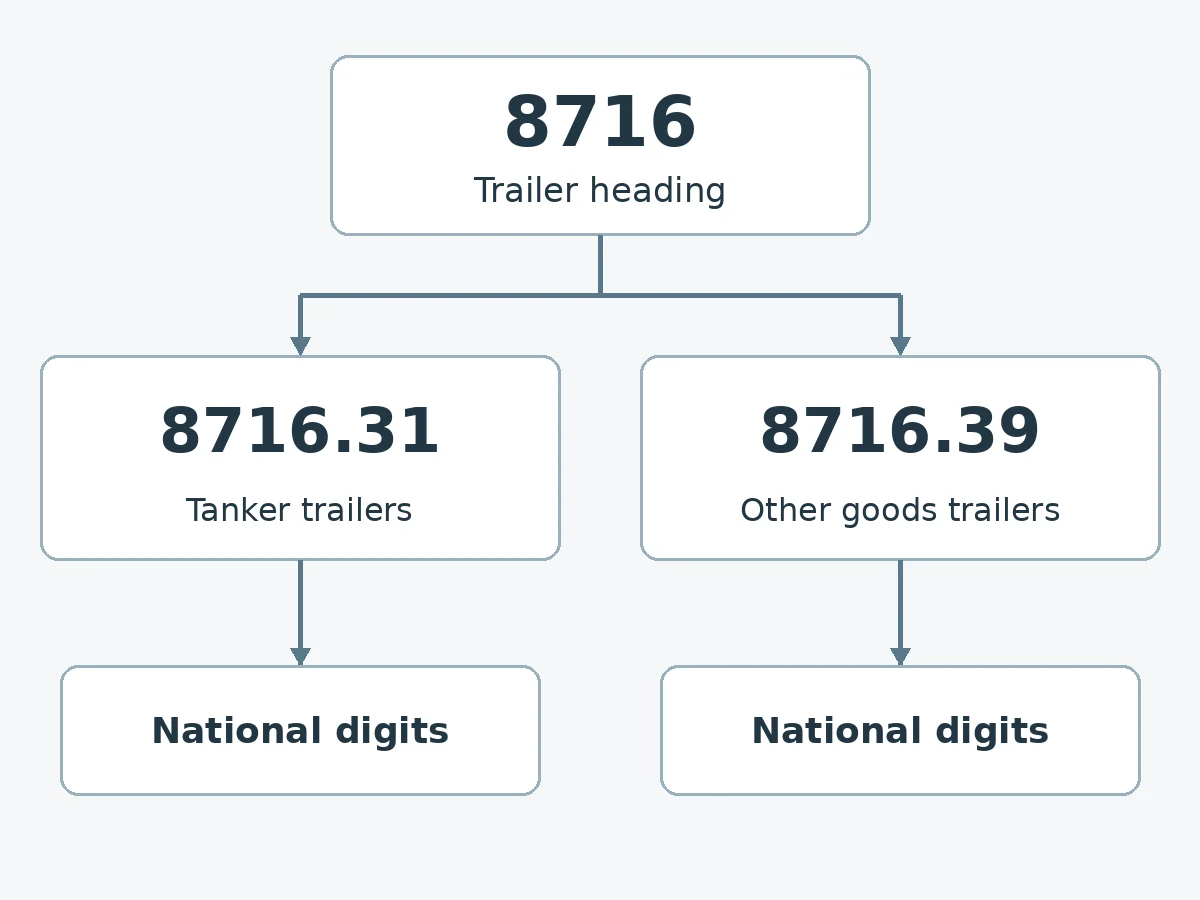
For a complete semi-trailer that carries dry cement and has no road propulsion, start with 8716 and examine both the tanker and other goods-trailer branches. Choose the branch from its legal wording and applicable customs decisions.
| Code | What it covers | How to use it |
|---|---|---|
| 8716 | Trailers, semi-trailers, other non-mechanically propelled vehicles, and parts | Starting heading for a complete, non-self-propelled cement semi-trailer. |
| 8716.31 | Tanker trailers and tanker semi-trailers | Compare this wording with the destination’s treatment of the actual dry-bulk design. |
| 8716.39 | Other trailers and semi-trailers for transporting goods | Review this branch for dry-bulk transport trailers; it was used in the U.S. cement-trailer ruling below. |
| 8716.90 | Parts | Consider only after identifying the components and applying the relevant parts rules. |
The six-digit HS subheading is the international level. Codes such as 87163100 or 8716310000 include further national digits. Adding zeros does not turn a six-digit search result into an approved import classification. The importing country assigns those extra digits and its own duty treatment.
The official U.S. Chapter 87 tariff text shows the 8716 branches. For another destination, use that country’s official schedule rather than copying the U.S. number.
Why does the U.S. cement trailer ruling matter?
Ruling N247432 shows that a vehicle sold as a cement tanker can be classified in the “other goods trailers” branch. On November 15, 2013, U.S. Customs and Border Protection assigned 8716.39.0090 to the cement trailer described in that request.
The goods were trailers from Canada for oilfield work. The cement unit carried dry cement in a closed body. It was pressurized for unloading, did not tip to discharge, and needed a tractor-mounted or external blower. The tractor was excluded from the import shipment.
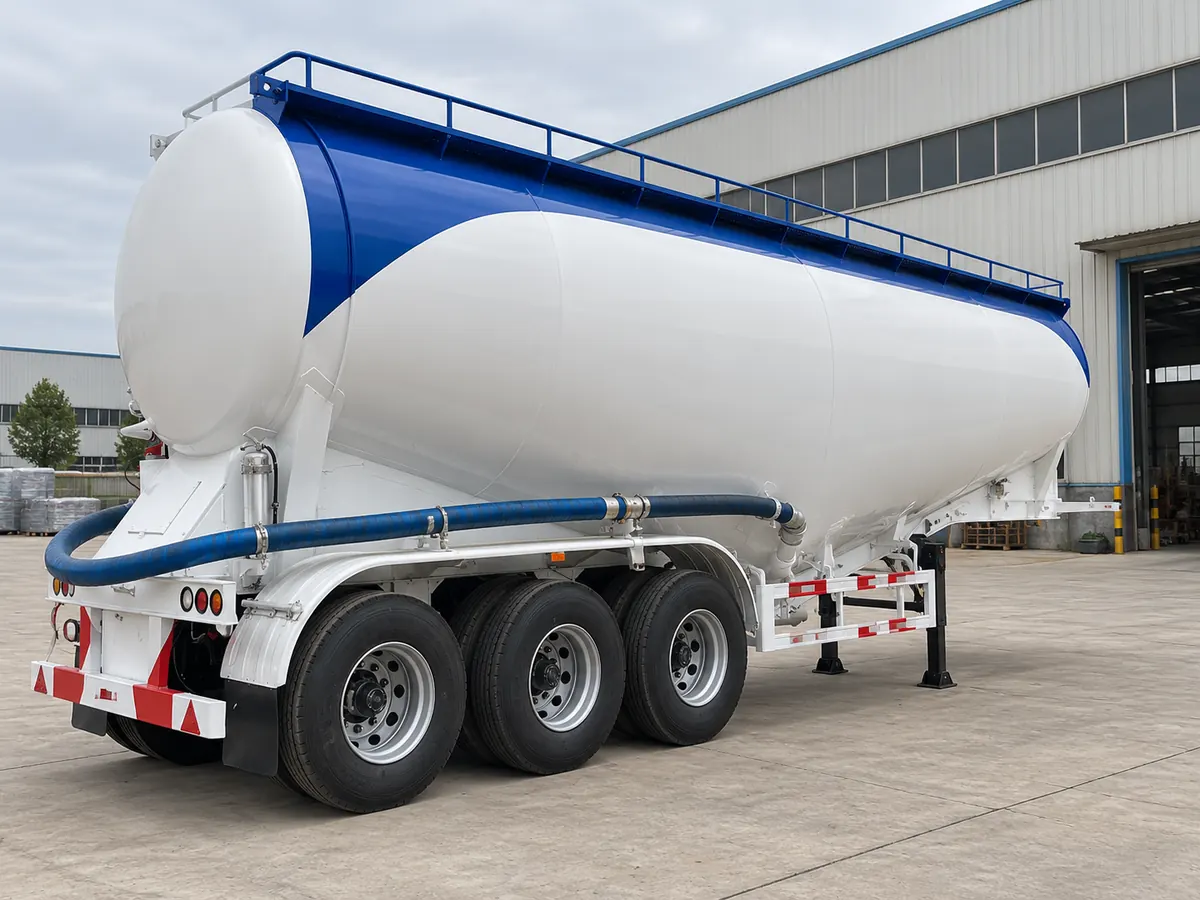
Those facts make the ruling useful when reviewing a similar pneumatic cement trailer. Compare the cargo, body, unloading equipment and imported configuration with your own order. The ruling records the outcome but gives little detailed reasoning for choosing that subheading; inventing a liquid-versus-powder rule from it would go beyond its text.
Read CBP ruling N247432 alongside the current tariff. Use it to raise a specific classification question with your broker. The letter’s 2013 duty statement is historical; current import charges require a separate review.
Which shipment details can change the classification?
Identify what crosses the border: the complete semi-trailer, a self-propelled truck, a working machine, a tank body, or individual components. Then describe how it moves and what its equipment does.
- Complete semi-trailer: Record its chassis, coupling, landing gear, axles, tank and unloading system. This establishes the transport vehicle being reviewed.
- Truck-mounted tank: A complete powered goods vehicle starts with the motor-vehicle headings, rather than assuming 8716. Send the engine and chassis details with the tank information.
- Trailer carrying working machinery: A cementing or pumping unit needs review of the whole machine’s function. A cargo transport trailer and a trailer-mounted processing unit are different objects.
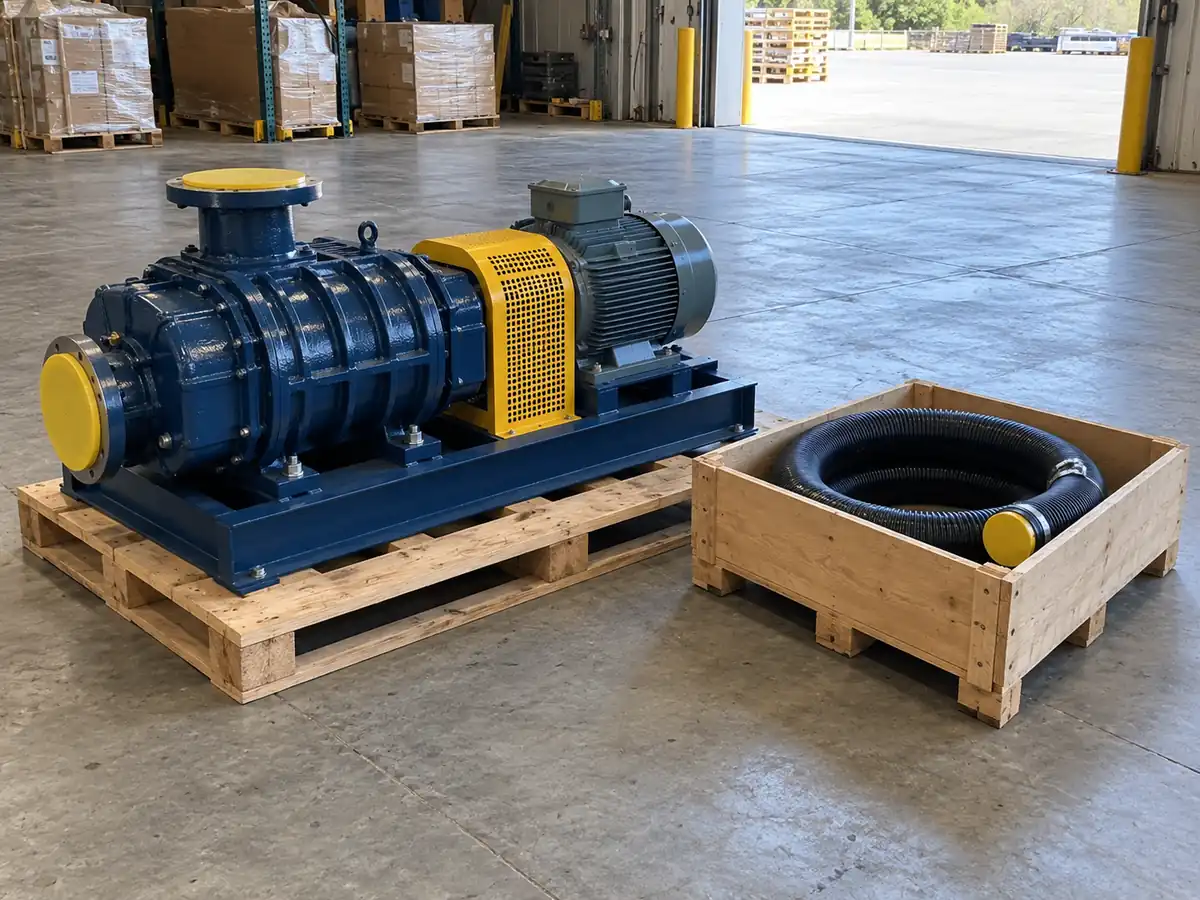
- Tank body or loose equipment: Give a separate description of what is supplied. A tank body without its running gear, a spare compressor and a replacement axle should not be described simply as a complete tanker.
Does a compressor engine make the trailer self-propelled?
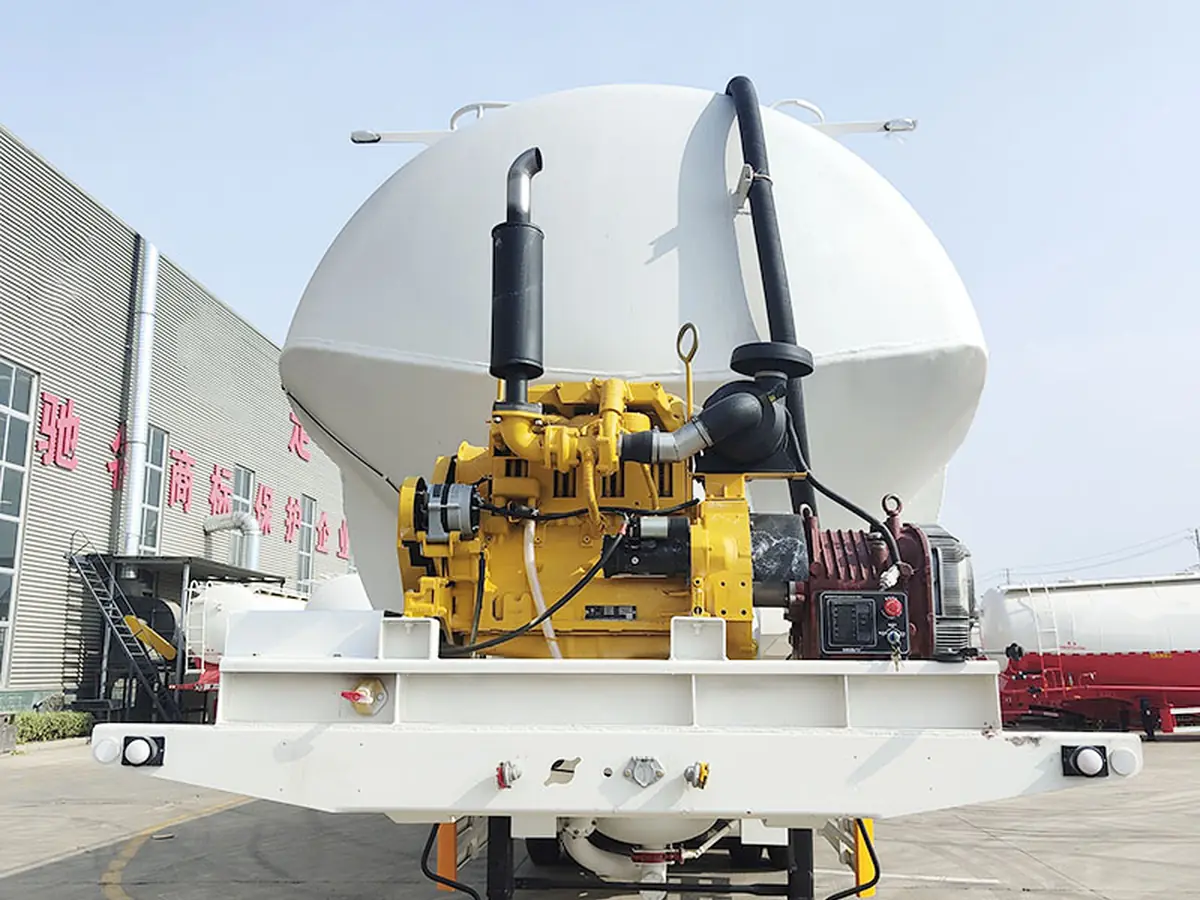
No. An engine that only drives the unloading compressor does not propel the trailer along the road. State that function clearly. Show whether the compressor is installed, supplied loose, or excluded from the shipment. Its presence still forms part of the actual configuration for review.
Are dismantled trailers automatically classified as parts?
No. A complete article presented unassembled or disassembled can still be classified as the complete article under General Rule of Interpretation 2(a). An incomplete article may also fall within that rule if, as presented, it has the essential character of the complete article.
Give the broker the full component list, assembly drawing and shipping arrangement. If goods arrive in separate consignments, explain each consignment rather than assuming the same treatment as one complete kit. The official General Rules of Interpretation provide the basis for this review.
What should you send for a classification review?
Send a short technical description with the order drawing, equipment list and planned shipping condition. The broker needs to identify the goods without guessing from a sales name or one exterior photograph.
- Vehicle identity: Model, new or used condition, manufacturer, and available chassis or serial identification. Include side, front, rear and equipment-area photographs.
- Transport function: Dry cement cargo, loading openings, tank construction and discharge method. Explain any mixing, pumping or other working function.
- Propulsion and air supply: Whether there is road propulsion; how unloading air is produced; and whether a tractor, diesel compressor package or external blower is included.
- Dimensions and weights: Overall size, tank volume, unladen weight and stated gross or payload ratings, each clearly labeled. Keep the sales capacity name separate from the actual weight figures.
- Shipment scope: Complete unit, dismantled kit or separate parts; quantities, package numbers, and installed versus loose equipment. Identify any tractor as a separate item.
- Transaction details: Country of manufacture, destination, planned entry date, invoice values and agreed delivery terms.
For example, suppose the order is one complete new steel semi-trailer with a fitted compressor package and no tractor. A useful description is: “New non-self-propelled semi-trailer for transporting dry bulk cement, with an enclosed tank and pneumatic discharge. Fitted diesel engine drives the unloading compressor only. Tractor not included.”
Change that wording when the supply changes. If the compressor is packed separately, identify it separately in the shipping list. Use the same model, equipment scope and quantities across the drawing, invoice and packing list. This makes a customs query easier to answer with one consistent set of records.
How do you verify the full code and import charges?
Verify the full national code against the destination, origin and planned entry date, then obtain a written breakdown of applicable charges. A directory’s base duty entry is only one part of the cost review.
- Set the destination and date. Open the importing country’s official tariff version that applies to the planned entry.
- Read the whole classification path. Start at the heading, compare subheadings at the same level, and read the relevant notes. Keep the goods description beside the code.
- Resolve the national digits. Ask the broker to provide the complete filing code and explain how the final digits match the imported configuration.
- Review origin and other measures. Ask which ordinary duty, preferential treatment, additional duties, taxes and fees apply. Where trade-remedy measures are relevant, have their scope checked against the goods and producer.
- Keep the result with the order. Retain the tariff reference, review date, classification reasoning and cost assumptions. Reopen the review if the supplied goods or entry conditions change.
For U.S. entries, the USITC tariff classification FAQ explains national extensions and additional duty checks. It also distinguishes a tariff lookup from a binding customs decision.
A practical cost sheet separates the trailer price, freight and insurance under the agreed terms, customs charges, port handling, and local delivery. Ask what is included in each quoted total. Road registration or inspection costs should have their own line rather than disappearing inside “customs clearance.”
What if your supplier and broker propose different codes?
First compare the six-digit subheading, then compare the descriptions of the goods each party used. Different national suffixes and a disagreement between 8716.31 and 8716.39 require different responses.
If the first six digits match but the ending differs, establish which country’s tariff each number belongs to. An export-country code can have a different ending from the destination’s import code.
If the first six digits differ, send both parties the same drawing, cargo description, unloading-system details and packing list. Ask each to identify the tariff wording or ruling behind the proposal. A previous shipment’s code is a useful lead, but you also need to know whether its goods, destination and configuration match.
If a material disagreement remains, seek an advance classification ruling through the destination customs authority before relying on the code in a firm landed-cost commitment. For U.S. prospective imports, the CBP electronic ruling system provides the submission route. Include the complete transaction facts and product information requested by the authority.
Keep the resulting decision with the configuration it describes. If the order changes from a complete semi-trailer to a tank body and loose equipment, return that change for review before documents are finalized.
Prepare the trailer details before you book shipment
The right cement tanker trailer HS code follows the goods being imported and the destination’s classification rules. Start with 8716 for a complete non-self-propelled semi-trailer, compare 8716.31 and 8716.39, and resolve the full national code before booking against a fixed import-cost budget.
For a planned 50 ton cement tanker trailer, use the agreed order drawing and compressor arrangement as the technical basis. The capacity name helps identify the product, while the supplied vehicle and equipment determine what your broker reviews.
Send us your destination country, cargo, required capacity and planned shipping condition through our contact page. We can discuss the tanker configuration and the details to carry into your broker’s review.
Frequently asked questions
Do the cement cargo and its trailer use the same HS code?
No. Describe the cement and the transport vehicle as separate goods when both are imported. Give the broker the cement specification, cargo quantity and value as well as the trailer details. An empty trailer shipment contains no cement cargo to classify.
What if I import the tractor with the semi-trailer?
List both vehicles and their specifications. In the United States, Chapter 87 Additional U.S. Note 1 keeps road tractors and semi-trailers separately classified under headings 8701 and 8716 even when entered together. For another destination, have the broker apply its relevant rules to both items.
Can I reuse a new trailer’s code for a used cement tanker?
Use the previous classification as a starting point only after matching the vehicle’s design and function. State the used condition, manufacture year and any modifications in the review. Ask the destination broker to identify any separate used-vehicle restrictions or document requirements that affect the purchase.
Does an accepted HS code also approve the trailer for road use?
No. Customs classification and road-use approval address different requirements. Before purchase, obtain the destination requirements for registration, dimensions, brakes and axle loads, then compare them with the proposed tractor and trailer configuration. Keep that approval work separate from the customs code review.

ZAC
Hello, I’m ZAC, a cement trailer and semi-trailer specialist with over 20 years of industry experience. My technical approach starts with real operating conditions, including how cargo characteristics, road conditions, and loading and unloading methods affect trailer performance. I place particular emphasis on structural reliability, component compatibility, and ease of maintenance. I look at both everyday performance and how reliably a trailer operates over time, as well as how easily it can be inspected and serviced.


