
Use a dedicated food-grade pneumatic tanker for flour and an industrial pneumatic tanker for cement. Both use compressed air to unload powder, but flour needs a food-suitable path all the way from the loading opening to the receiving silo. That includes the tank, seals, aeration parts, valves, hose and conveying air.
Start with the service you need and the equipment already available.
For a new flour route, specify the complete food-contact path and cleaning requirements, including the tank, aeration parts, valves, seals, hose and conveying air. For cement service, select the industrial configuration around the powder, permitted load and receiving site.
If an existing food-powder tanker will carry a different food, review its previous load and the new product’s acceptance requirements before deciding the cleaning route. If the available unit has carried cement or has an unknown history, arrange suitable food-service equipment while its suitability is assessed.
This separates three different purchases: a new food tanker, a new industrial tanker, and changes to equipment whose existing service history must first be understood.
Food-grade vs industrial pneumatic tankers: the key differences
The unloading principle is similar; the product-contact requirements and operating controls are different. “Pneumatic” describes how air moves the powder. “Food-grade” describes suitability for food service. A tanker can be both pneumatic and food-grade.
| What you compare | Flour / food-grade service | Cement / industrial service |
|---|---|---|
| Main purpose | Protect an ingredient during bulk delivery | Move dry cement into the receiving silo |
| Contact surfaces | Materials and joints suited to the food and cleaning method | Materials suited to cement, wear and operating conditions |
| Seals and hoses | Food-contact suitability, cleanability and cargo history | Pressure rating, abrasion, sealing and cargo compatibility |
| Previous cargo | Food-safety and allergen restrictions affect acceptance | Residues must be compatible with the next industrial powder |
| Conveying air | Control contamination from oil, moisture and particles | Match airflow and cleanliness to the industrial process |
| Cleaning | A defined procedure with inspection and release | Remove incompatible residue and keep the powder system serviceable |
| Receiving site | Protect the food inlet and meet the plant’s hygiene rules | Match the cement inlet, pipework and silo venting |
For regular flour deliveries, keeping the tanker in an approved food service reduces changeovers and makes its history easier to control. For cement, choose the industrial configuration around the actual powder, payload and discharge site. Food equipment does not offer an automatic unloading-speed advantage.
What makes the flour contact path food-grade?
Every surface and part that can contact the flour must suit that food service and remain cleanable. Start inside the tank, then follow the flour through the outlet and hose. Also follow the air entering the cargo.
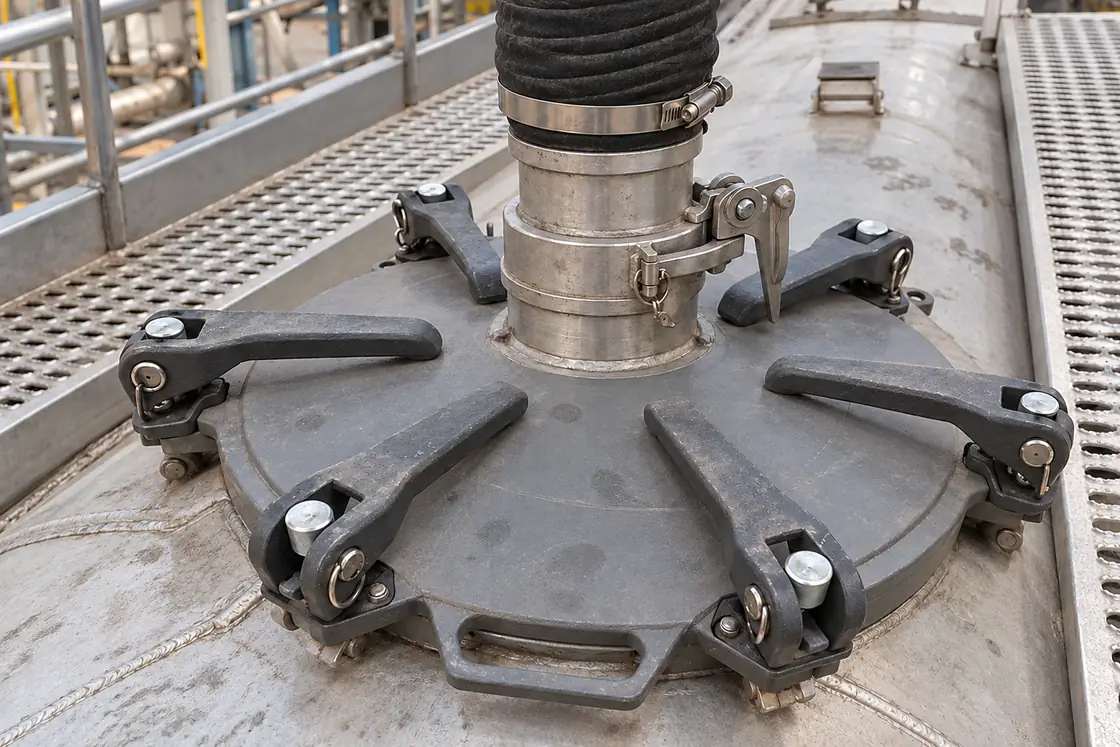
Check the manhole gasket, internal seams, aeration pads or fabric, outlet valve, pipe joints, coupling seals and hose liner. A clean tank wall does little good if old powder remains behind a valve seat or in a shared hose.
Ask for the exact contact-material list, component identification and cleaning instructions. Match the documents to the supplied parts. A statement covering the tank metal leaves the rubber, fabric and hose liner to be checked separately.
Sanitary finish means cleanable surfaces
A sanitary finish should help remove residue and avoid places where it can collect. Look for sound internal seams, accessible joints and a discharge layout that can be inspected and cleaned. Check weld transitions and valve pockets, not just the broad, easy-to-see tank wall.
Inspect the areas that contact flour and the places that can retain it. Ask for views of internal seams, outlet transitions, valve cavities and gasket recesses, together with an explanation of how those areas are cleaned and inspected.
If the receiving plant specifies a surface-finish limit, include the required locations, limit and inspection method in the purchase specification. If no numerical limit has been specified, obtain the plant’s hygienic-design and cleaning requirements before comparing proposed finishes.
Where the existing cleaning problem comes from an inaccessible pocket or retained wash water, examine access, layout and drainage as well as surface finish. The useful outcome is a product path that the chosen cleaning process can reach, clean and release for the next load.
Aluminum or stainless steel?
Start with aluminum when reducing trailer weight matters and the food and cleaning method are compatible. Choose stainless steel when its specified grade better suits the required cleaning process. Compare the finished trailer’s empty weight, called tare, and contact parts before deciding.
Stainless steel still needs sound welds and suitable seals. Aluminum still needs an approved cleaning method. Neither material solves an inaccessible residue pocket. We offer aluminum and stainless-steel tank options through our flour tanker range; the exact material and documents belong in the agreed order.
Can a cement tanker be used for flour?
For routine flour transport, choose a dedicated food-service tanker rather than a tanker that has carried cement. Cement residue can remain in aeration parts, valves and hoses even when the main tank looks empty. Replacing the discharge hose addresses only one part of that path.
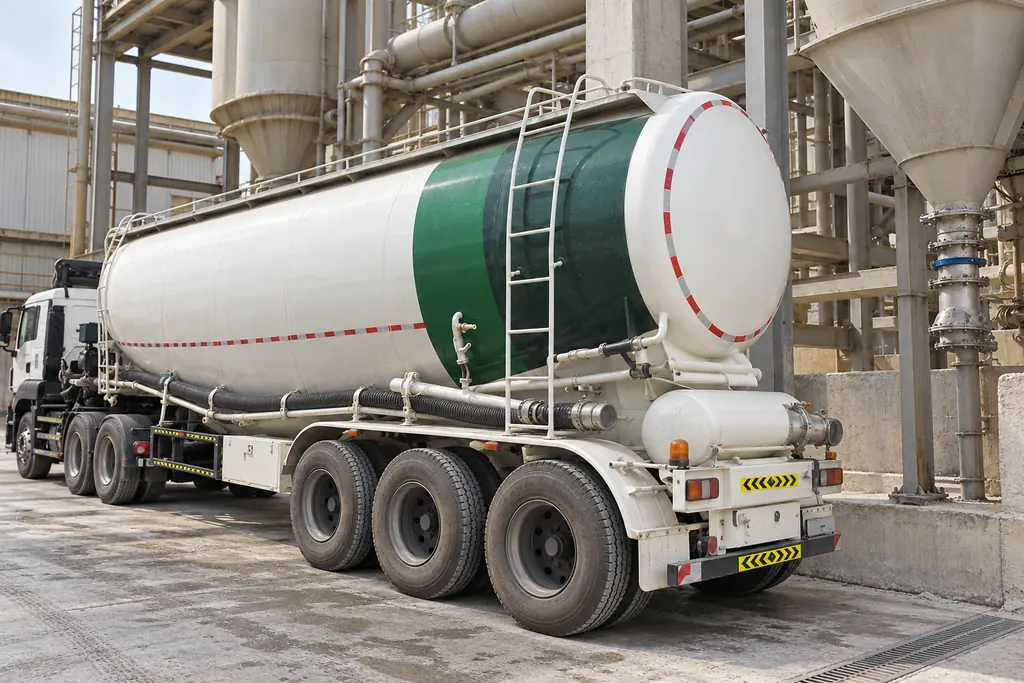
Do not plan alternating cement and flour loads as an ordinary wash-and-go operation. Before buying a used tanker for flour, obtain its identifiable cargo history and the food shipper’s acceptance requirements. If the previous cargo is unknown or prohibited by that shipper, keep it out of the flour loading schedule.
For a proposed conversion, work through these points before spending money:
- Establish the history. Match previous cargo and cleaning records to the actual tanker. Include separately used hoses and discharge equipment.
- Check the design. Confirm the food-contact materials, cleaning access and condition of the whole path. A new vehicle built to an industrial specification also needs this check.
- Define the work. Identify incompatible or uncleanable parts for replacement. Agree on the cleaning method and the inspection or testing needed for the identified hazards.
- Obtain acceptance before dispatch. Complete the work and the required checks, then have the responsible food-safety person release the tanker for the intended cargo.
A wash record shows what cleaning was performed; it must be read alongside the cargo history and required release checks. For covered U.S. operations, 21 CFR 1.908 addresses written controls for previous cargo and the provision of previous-cargo and recent-cleaning information under the relevant carrier arrangements. Other markets and food customers can set different acceptance rules.
How do the air supply and receiving silo differ?
Both systems need air and a receiving silo matched to the powder. Flour service also needs control of contamination in the air and at the food inlet. The air enters the product stream, so include it in the hygiene review.
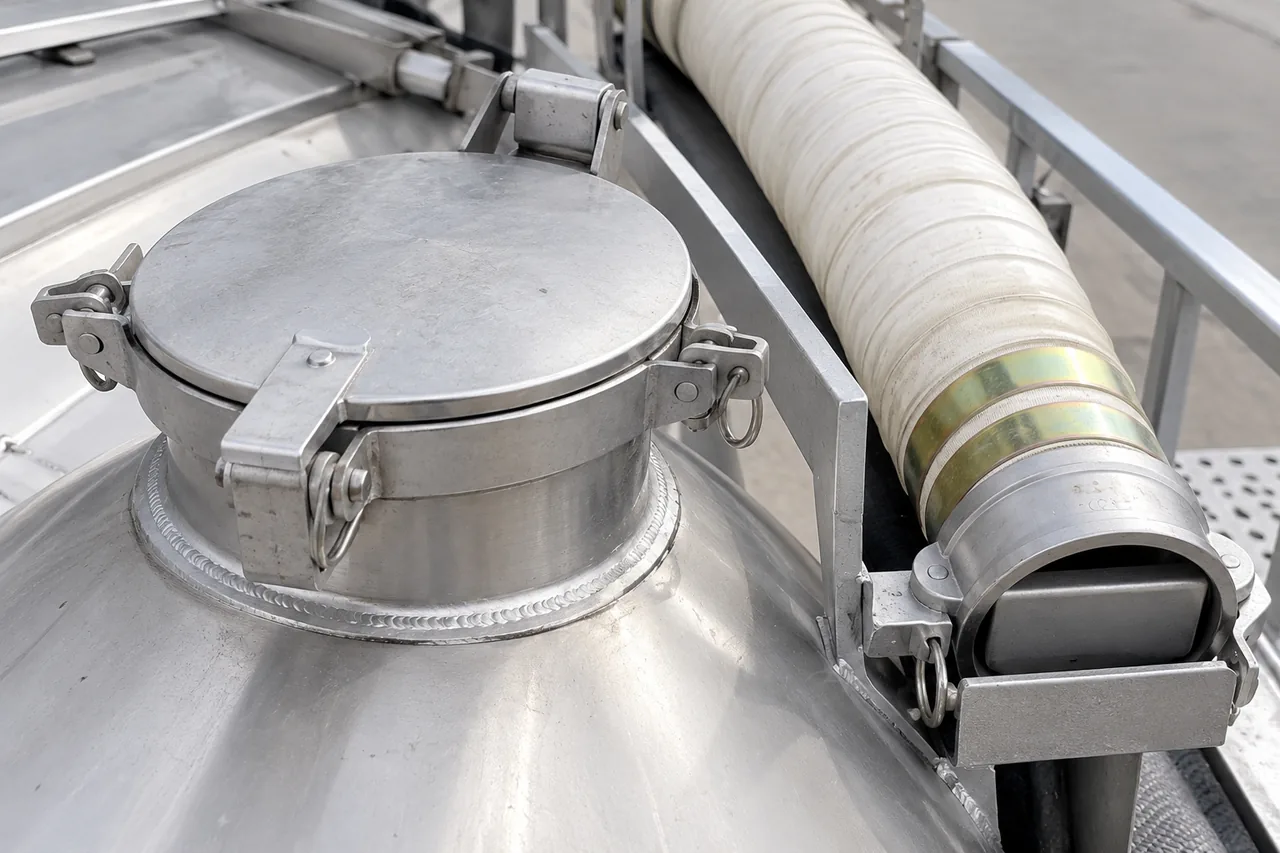
Check the air at the point of use
List the air source, intake position, treatment equipment and downstream pipework. Check where particles, lubricating oil or condensed water could enter. An oil-free air source still needs a suitable intake and clean downstream equipment.
Ask the receiving food plant for its air-quality specification and sampling point. Then match filtration, moisture control and maintenance to that requirement. A shared plant air line needs the same review as a trailer-mounted blower.
At U.S. food plants, 21 CFR 117.40(g) addresses treatment of compressed air or gases introduced into food or used on food-contact equipment. That plant requirement is a useful reason to agree on the complete air path before delivery.
Check the receiving connection before unloading
Identify the correct silo and inlet, confirm the coupling and hose arrangement, and check that the receiving filter can vent the conveying air. Too much resistance at the receiver can slow delivery. More tanker pressure is not a substitute for a blocked filter or an unsuitable pipe route.
For flour, protect the inlet and hose ends from dirt and rain. Keep food hoses separate from industrial hoses. Use the food site’s controls for bonding, grounding and dust collection: airborne flour dust can create a fire or explosion hazard when an ignition source is present. OSHA identifies flour among materials that can be explosible as dust. Avoid cleaning methods that create a dust cloud.
How should a flour tanker be cleaned and released?
Use the cleaning procedure agreed for the previous cargo, next cargo and tanker construction, then inspect and release the equipment before loading. The right method depends on what must be removed. Do not copy a liquid-food tanker’s wash routine onto a dry-flour system.
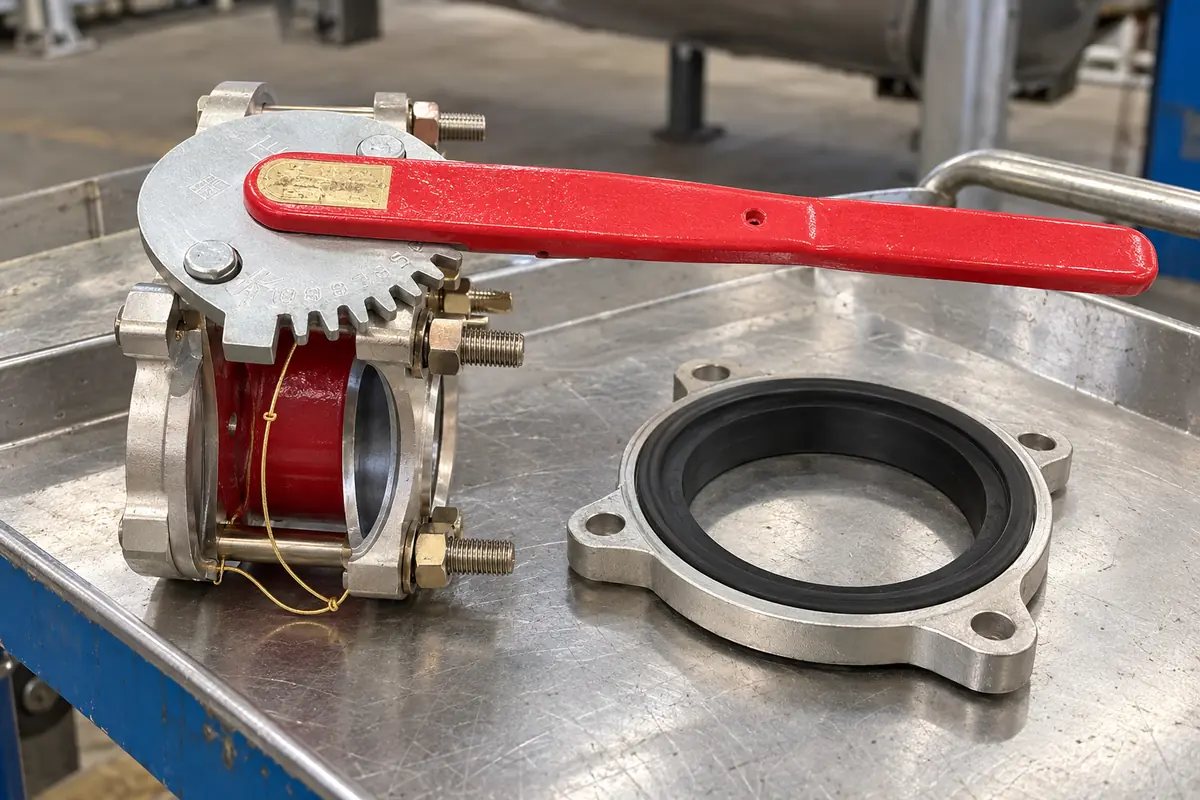
For repeated loads of the same approved flour, follow the established cleaning and inspection schedule. A different powder, allergen change, water ingress, pest evidence or maintenance opening can trigger extra cleaning and checks. Dedicated service makes control simpler, but does not remove the need to clean.
Choose dry or wet cleaning for the actual residue
Use the approved dry-cleaning method where it removes the identified residue and hazards. Use dust-collection equipment selected for combustible flour dust. Do not use an ordinary shop vacuum or open air blasting that disperses powder.
When wet cleaning is required, first check compatibility with the tank, hose liner, seals and aeration parts. Include draining, any required sanitation and thorough drying in the job. Water left in a valve pocket or hose can wet the next flour load.
Food-contact suitability does not mean that a hose tolerates every cleaning agent. Gates’ Food Master Dry Goods D guidance, for example, specifies flour service but also lists incompatible substances. Obtain the cleaning limits for the exact hose fitted to your tanker.
For low-moisture food-contact equipment at U.S. food plants, 21 CFR 117.35(d)(1) requires a clean, dry, sanitary condition before use and addresses drying after wet cleaning. Apply a similarly explicit drying check in the tanker’s agreed procedure.
A practical release sequence
- Before cleaning: record the tanker ID, previous cargo, next cargo and required method. Isolate the equipment and safely release pressure before opening or servicing it.
- During cleaning: address the specified contact parts, including valve cavities, seals and hoses. Inspect from outside using suitable lighting or a camera. Do not enter the tank for this check; any entry needs the site’s confined-space procedure.
- Before release: check for the residue, moisture, damage or odors covered by the procedure, and complete the required tests. Visual cleanliness alone cannot settle every allergen or microbial question.
- After release: cap the outlets and hose ends, close the tanker and record who released it. Link the release record to the next load.
If residue remains, return to the affected part, clean it and repeat the relevant check. If moisture remains, complete the required drying and recheck it. If a gasket sheds material or a hose liner is damaged, replace it with a suitable part and clean the affected path before release.
Does the same tank volume carry the same weight?
No. The cargo’s bulk density connects tank volume to weight, while road and axle limits can impose a lower payload. Food-grade suitability is a separate question from both.
Use the batch’s bulk density from the shipper and the tanker’s usable loading volume. Calculate the volume-based load, then compare it with the permitted cargo weight for the actual vehicle and route:
Load limit = the smaller of usable volume × bulk density, or permitted cargo weight.
For example, suppose usable volume is 36 m³ and permitted cargo weight is 24 tonnes. With flour at an assumed 0.60 t/m³, the volume holds 21.6 tonnes. With cement at an assumed 1.20 t/m³, it holds 43.2 tonnes by volume, but the 24-tonne weight limit controls. The flour load is volume-limited; the cement load is weight-limited.
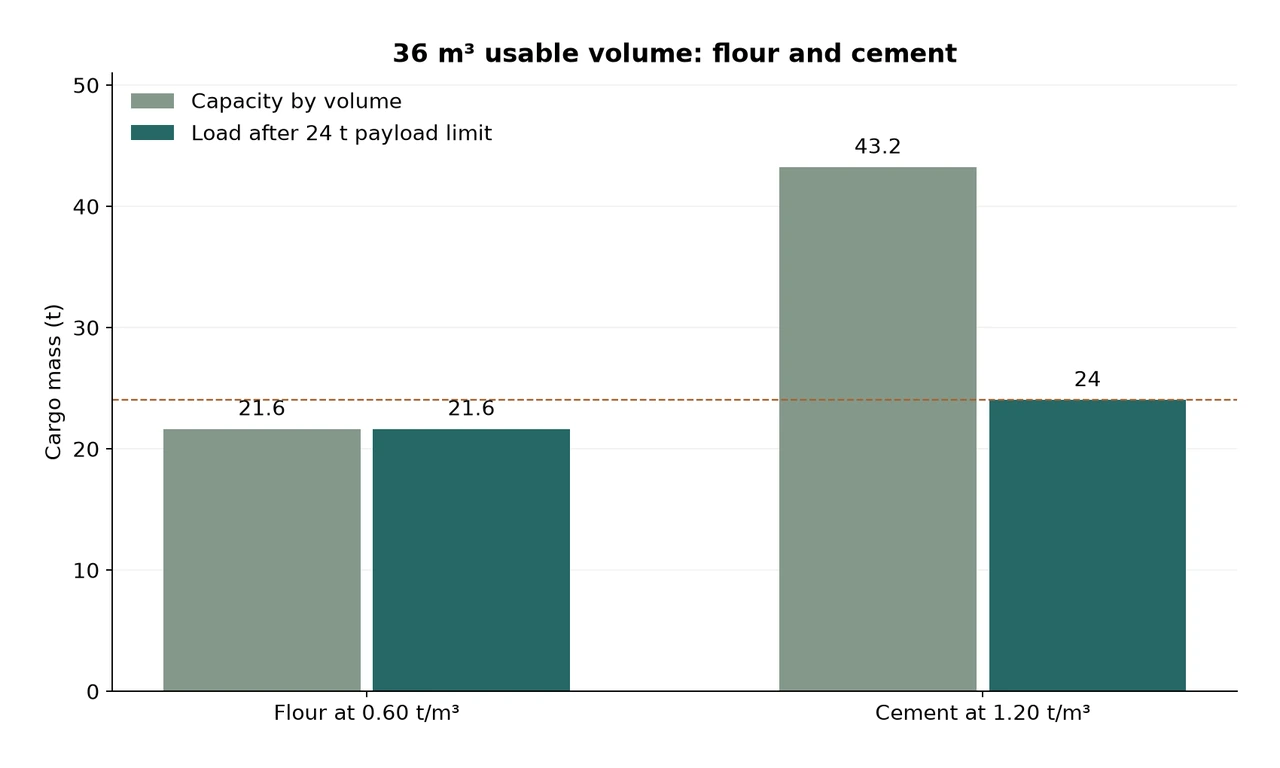
That is why copying a cement tanker’s nominal tonnage into a flour specification can lead to the wrong tank size. Use your batch density and actual allowable load to size the vehicle.
For cost comparison, include the contact parts, cleaning access, air treatment, dedicated hoses and cleaning downtime in the food-service offer. A lower purchase price can lose its advantage if the tanker cannot be accepted for the intended flour deliveries.
Which tanker should you choose?
Choose a dedicated food-grade pneumatic tanker for regular flour deliveries. Choose an industrial pneumatic tanker for cement and compatible mineral powders. If several food powders will share a tanker, first agree on the cargo list, allergen controls and changeover procedure.
Our flour tanker range is the starting point for wheat flour and supported food powders. Our pneumatic dry bulk trailer range is the starting point for cement and compatible industrial powders. We check the cargo and receiving conditions before confirming the configuration.
To discuss your job, send the exact cargo, target tonnes per trip, destination and quantity through our contact page. Add bulk density, the proposed cargo history or changeover pattern, cleaning requirements and silo details when available. These inputs help us compare tank volume, contact materials and the unloading arrangement.
For the food grade vs industrial pneumatic tanker decision, keep two checks separate: can the equipment carry and unload this powder, and is the entire system acceptable for this cargo? Flour needs both answers. Industrial cement service needs its own cargo-compatible setup.
Questions about mixed cargo and food-grade tanker use
Is a new, unused cement tanker suitable for flour?
An unused tank avoids previous-cargo residue, but it still needs a food-suitable design and parts. Check the internal finish, contact materials, aeration components, seals, hose and cleaning access. Factory debris and first-use cleaning also need to be addressed before the food shipper accepts it.
Can a wheat-flour tanker carry gluten-free rice flour next?
Use equipment dedicated to the gluten-free service unless the food operator has accepted a validated changeover process for wheat residue. Both cargos being food does not resolve gluten cross-contact. The process must cover the tank, valves, aeration parts, hoses and relevant receiving equipment, with the required verification before loading.
Will fitting a food-grade hose upgrade an industrial tanker?
No. A suitable hose upgrades the hose portion of the path. It leaves the tank, seals, valves, aeration components, air supply and cargo history to be assessed. Specify the whole food-contact system together so one suitable component does not hide an unsuitable one.
Can a food tanker carry cement and return to flour service later?
Keep a tanker needed for flour out of cement service. Moving it into industrial work changes its cargo history and can contaminate hard-to-clean parts. If it has already carried cement, apply the full design, cleaning and acceptance review described above before considering any return to food transport.
ZAC
Hello, I’m ZAC, a cement trailer and semi-trailer specialist with over 20 years of industry experience. My technical approach starts with real operating conditions, including how cargo characteristics, road conditions, and loading and unloading methods affect trailer performance. I place particular emphasis on structural reliability, component compatibility, and ease of maintenance. I look at both everyday performance and how reliably a trailer operates over time, as well as how easily it can be inspected and serviced.


