
For fleet buyers, a new vs used cement tanker choice should come down to job fit and total working cost. New is the stronger starting point for a defined, long-term fleet build. Used can deliver better value when its condition, repair needs and unloading performance are established before you buy.
When is a new cement tanker better than a used one?
Choose new for regular, high-use cement work when a known build, shared fleet parts and a clear support agreement justify the extra investment. Choose used when the exact trailer fits the job, its condition is documented and the savings remain after repairs and commissioning.
These are pneumatic trailers for dry cement powder. A rotating concrete mixer carries wet concrete and belongs in a different comparison.
A new trailer gives you more control over the tank, axles, air supply and discharge layout before delivery. That helps when you are adding several units to an established fleet. It still needs inspection, tractor matching and a proper handover.
| Your job | Better starting choice | Reason to change that choice |
|---|---|---|
| Daily deliveries under a long-term contract | New, with an agreed fleet specification | A documented used unit passes inspection and the loaded trial, with lower total cost. |
| Short project or uncertain future volume | Inspected used equipment; compare rental too | Repairs, adaptation or uncertain resale remove the purchase saving. |
| Remote routes with limited repair support | The option with locally available critical parts | A newer but unfamiliar axle or air package takes longer to repair locally. |
| Immediate capacity shortage | The trailer that can be ready for work first | A used unit needs repairs or approvals that take longer than the new delivery. |
Condition and job fit come before age. A maintained used tanker can be a sound purchase. A low-priced unit with unresolved tank damage or an unsuitable unloading system can become an expensive project.
How do you compare the real cost over three years?
Compare the total cost over the same period and for the same transport job. Include getting the trailer ready, maintenance, downtime and resale, then compare usable tonnes delivered if the two options have different output.
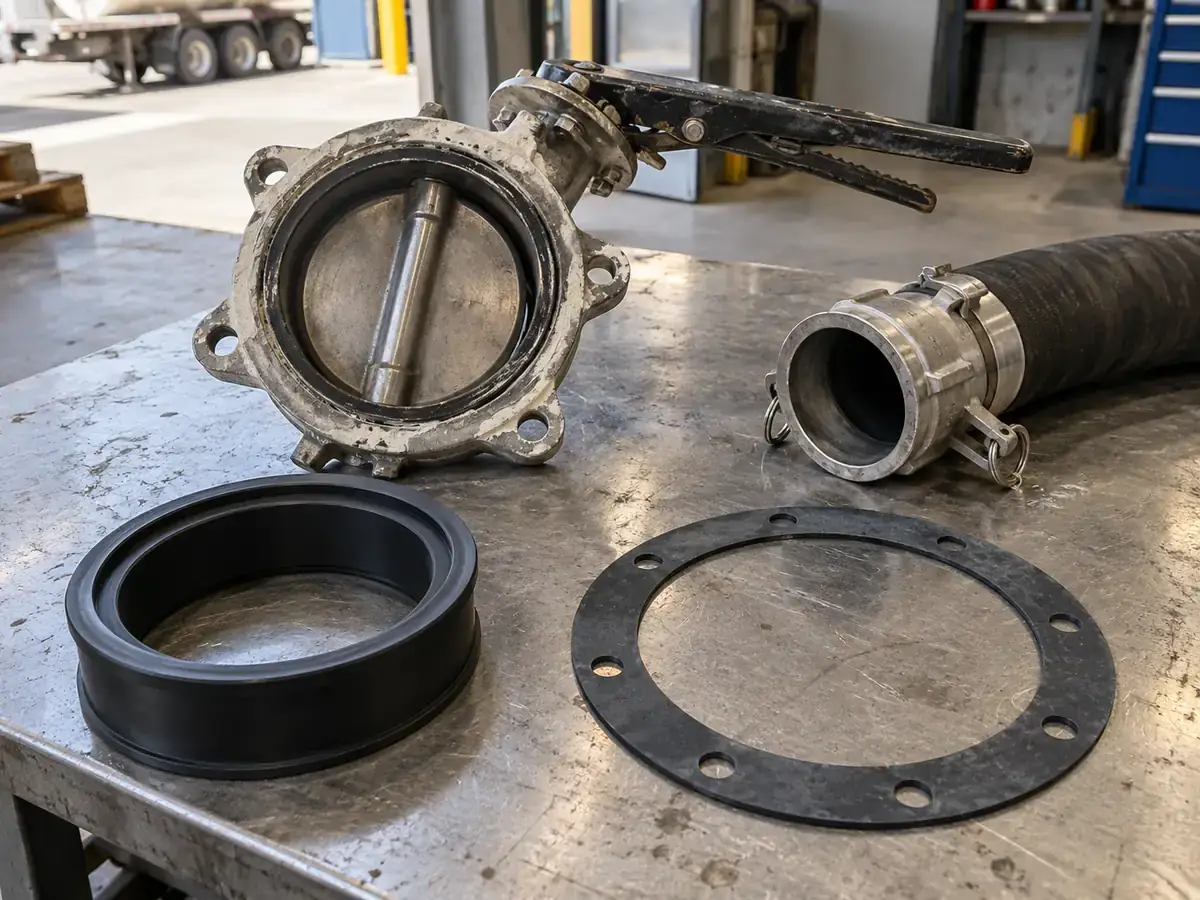
Start with written quotes in one currency. Give both quotes the same delivery point, tax treatment and equipment scope. A local used price with a blower fitted is different from an export new price that excludes freight, import charges and the air package.
Ownership cost = purchase + getting ready for work + maintenance and repairs + downtime cost − resale proceeds.
For example, suppose you are comparing two trailers over three years. Both meet the same load and unloading requirement. The following USD amounts are assumed planning inputs, rather than advertised prices.
| Three-year item, USD | New | Used |
|---|---|---|
| Purchase, on the same delivered basis | 40,000 | 24,000 |
| Initial repairs, adaptation and commissioning | 1,000 | 5,000 |
| Maintenance and repairs during ownership | 9,000 | 15,000 |
| Lost contribution during uncovered downtime | 1,800 | 6,300 |
| Less resale proceeds at the end | −18,000 | −10,000 |
| Calculated ownership cost | 33,800 | 40,300 |
The used trailer costs $16,000 less to buy, but costs $6,500 more over this assumed period. Its initial repairs, higher running repairs and downtime outweigh the lower purchase price.
Now change the condition estimate. If the used trailer needs only $9,000 in maintenance and $1,800 in downtime, leaving all other inputs unchanged, its total falls to $29,800. Used then saves $4,000. Inspection and service records can therefore change the answer.
What is the most you should pay for the used trailer?
Subtract its other net ownership costs from the competing new option’s total. In the first example, those used costs are $5,000 + $15,000 + $6,300 − $10,000 = $16,300. The used purchase price would need to be below $33,800 − $16,300 = $17,500 to beat the new option on this cost measure.
Use a local repair quotation for catch-up work, your workshop records for maintenance and actual sale comparisons for resale. Run a lower-resale and higher-repair case before deciding. A saving that disappears with one likely repair is a weak basis for the purchase.
How should downtime and finance be counted?
Count the margin you lose, or the extra cost of covering deliveries, without counting the same loss twice. Lost contribution is the delivery revenue less costs you avoid when that delivery does not run. Gross revenue alone overstates this loss.
If another trailer covers the work, use the extra rental, subcontract or operating cost instead. Add interest and finance fees when they differ; do not add loan principal repayments on top of the purchase price. Include fuel, driver and other operating differences when the two setups change them. For a full transport comparison, divide total fleet operating cost by accepted tonnes delivered.
What should you inspect before buying a used tanker?
Inspect the tank and load-carrying structure, pressure equipment, unloading system and running gear as separate jobs. Make the offer conditional on resolving important defects and obtaining written repair costs.
Start with the original records: vehicle identity, tank plate, previous cargo, repair invoices, inspection history and the fitted air-source model. Compare the identity on the documents with the actual trailer. Blower hours, where recorded, help describe unloading duty; road mileage alone does not.
| Area | What to establish | Buying action |
|---|---|---|
| Tank shell, welds and supports | Cracks, distortion, corrosion, wear and earlier repairs | Have a qualified tank specialist assess suspect areas and specify any further examination. |
| Manlids, gauges and protective devices | Sound closures, readable identification and serviceable pressure protection | Resolve defects and missing device records before a pressure trial. |
| Air supply and discharge parts | Leaks, valve condition, aeration condition, hose damage and maintenance history | Price the parts and labor, then test the completed system under load. |
| Coupling, axles, brakes and suspension | Wear, damage, alignment, tire condition and tractor compatibility | Obtain a roadworthiness assessment and a separate running-gear repair quote. |
Ask the inspector to record hardened cement, moisture damage and deposits around accessible aeration or discharge areas. Price their removal and any damaged parts before relying on the tank’s usable volume. Recheck flow after the work. Tank entry needs a controlled specialist procedure.
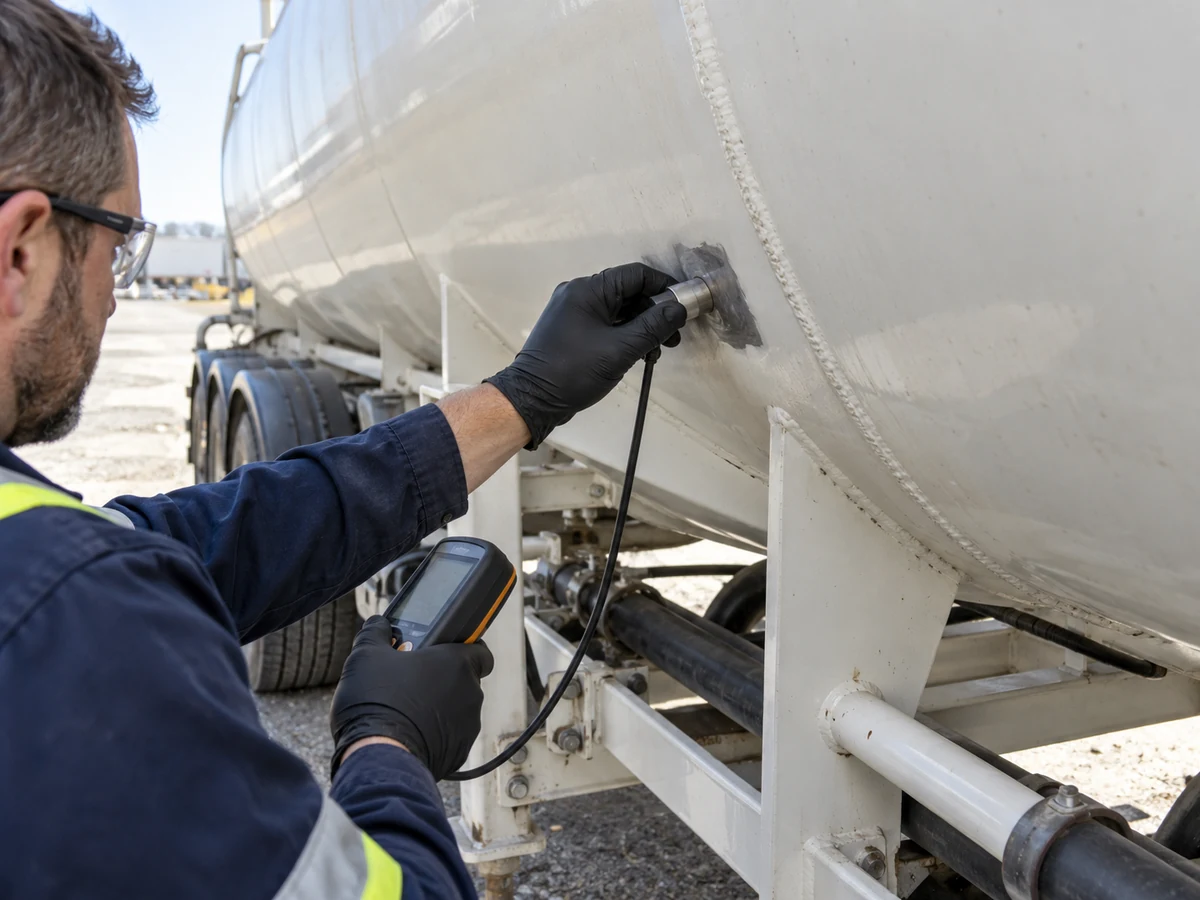
For suspect shell wear, ultrasonic thickness measurements can help the specialist map the condition. Compare readings with the original design and applicable repair criteria. There is no single minimum shell thickness that suits every cement tanker. A fresh coat of paint, a leak check or a road inspection does not replace this assessment.
Keep pressure checks under a qualified person’s controlled procedure. Isolate the air supply and fully depressurize before opening a manlid or disconnecting a product line. Feldbinder’s silo trailer operating instructions, sections 6.7.2 and 9, explain why closures and protective devices need this attention.
Missing routine-service records can sometimes be addressed by a defined inspection and catch-up service. Unknown major shell repairs, an unreadable tank identity or refusal to allow independent inspection need resolution before purchase. Do not turn an unknown structural liability into an assumed repair allowance.
Will both trailers carry and unload the same load?
Only compare trailers that can carry the required legal load and connect to your tractor and silo. Similar tank volume does not establish equal payload or equal unloading capability.
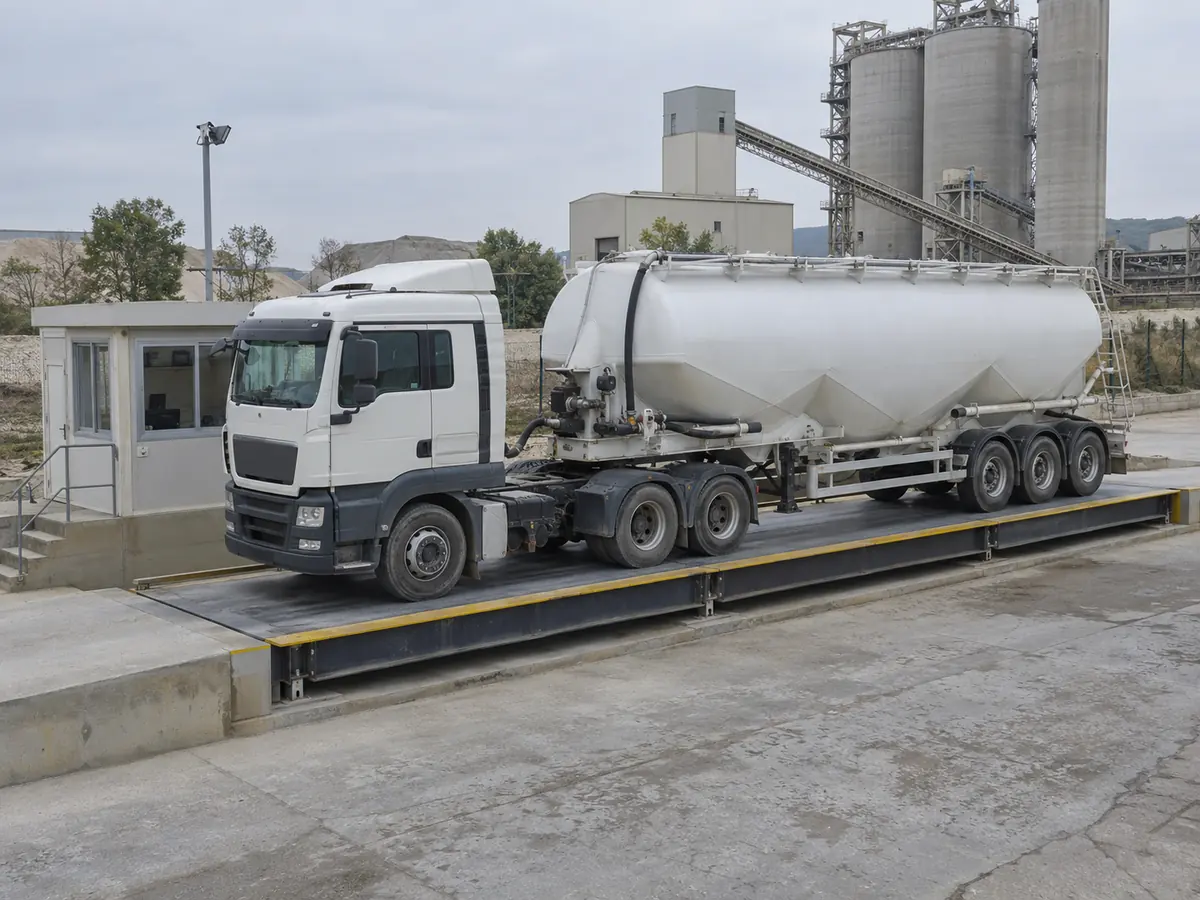
Weigh each working setup on the same basis: tractor, trailer, fuel and the equipment needed for unloading. The empty operating weight is its tare weight. A quotation that leaves the blower on the tractor out of its weight comparison can make the trailer look lighter without improving the combination’s cargo allowance.
The load must fit both the usable tank space and the permitted cargo weight for that trip. Gross combination limits, individual axle loads and component ratings all matter.
Space-based cargo mass = usable loading volume × the cement’s bulk density.
Planned cargo must stay within both that space-based amount and the trip’s permitted cargo weight.
Suppose either candidate has 32 m³ of usable loading space and the cement’s measured bulk density is 1.20 t/m³. Space allows 38.4 t. If the permitted cargo is 28 t for one setup and 30 t for the other, plan around those respective weight limits. Buying a larger tank would not solve that weight constraint.
Is the air package included and compatible?
List the blower or compressor, power source, connections and discharge equipment for each offer. A used trailer may rely on the seller’s tractor-mounted unit, which stays with the seller. Add the cost and time needed for a compatible installation.
A tractor power take-off, or PTO, drives auxiliary equipment from the truck. Its fit, speed and power arrangement must match the chosen air source. An independent engine package has different fuel, maintenance and installation needs.
Pressure, airflow, hose route, vertical rise and the receiving silo affect unloading together. Gardner Denver’s dry-bulk unloading performance guidance explains these relationships. Raising pressure is not a substitute for finding a restriction.
For the new option, use our 50 ton cement tanker trailer as a configuration starting point. Build the comparison around your required legal payload and unloading conditions; the model name does not set the road load for your country.
What should a loaded unloading trial prove?
The trial should show that the proposed trailer and air package can deliver your cement into a representative silo, within the agreed time and residue target, without leaks or abnormal operation.
- Describe the test job. Record cement type and condition, loaded mass, silo, hose bore and length, bends, vertical rise and the air-source model.
- Set acceptance targets before the run. Agree the delivered mass, acceptable residue, unloading time and any receiving-site limits.
- Separate conveying from the complete stop. Record the powder-transfer time and the total time from starting connection work to being ready to leave. Include waiting separately.
- Record the result. Use weighing records where available, observations of residue through safe inspection, existing instrument readings and a list of faults. Keep readings tied to their gauge location and units.
- Close defects and repeat the affected test. A repair invoice describes work done; the repeat result shows whether it solved the problem.
If unloading is slow at only one receiving point, investigate that site’s pipe route, inlet and venting first. If similar delays occur at several suitable silos, look at air delivery, leaks, valves and aeration on the tanker. Compare similar loads and conditions before blaming age or replacing the blower.
An empty-tank leak check does not establish loaded unloading performance. It will not show how cement flows over the aeration surfaces or through the receiving line. A short video can help document the test, but keep the measured load, layout and complete timing record with it.
How do you put the chosen trailer into service?
Compare the date each option can start safe, legal, productive work. Include repair, transport, registration, tractor matching and commissioning time, rather than comparing stock availability with factory production alone.
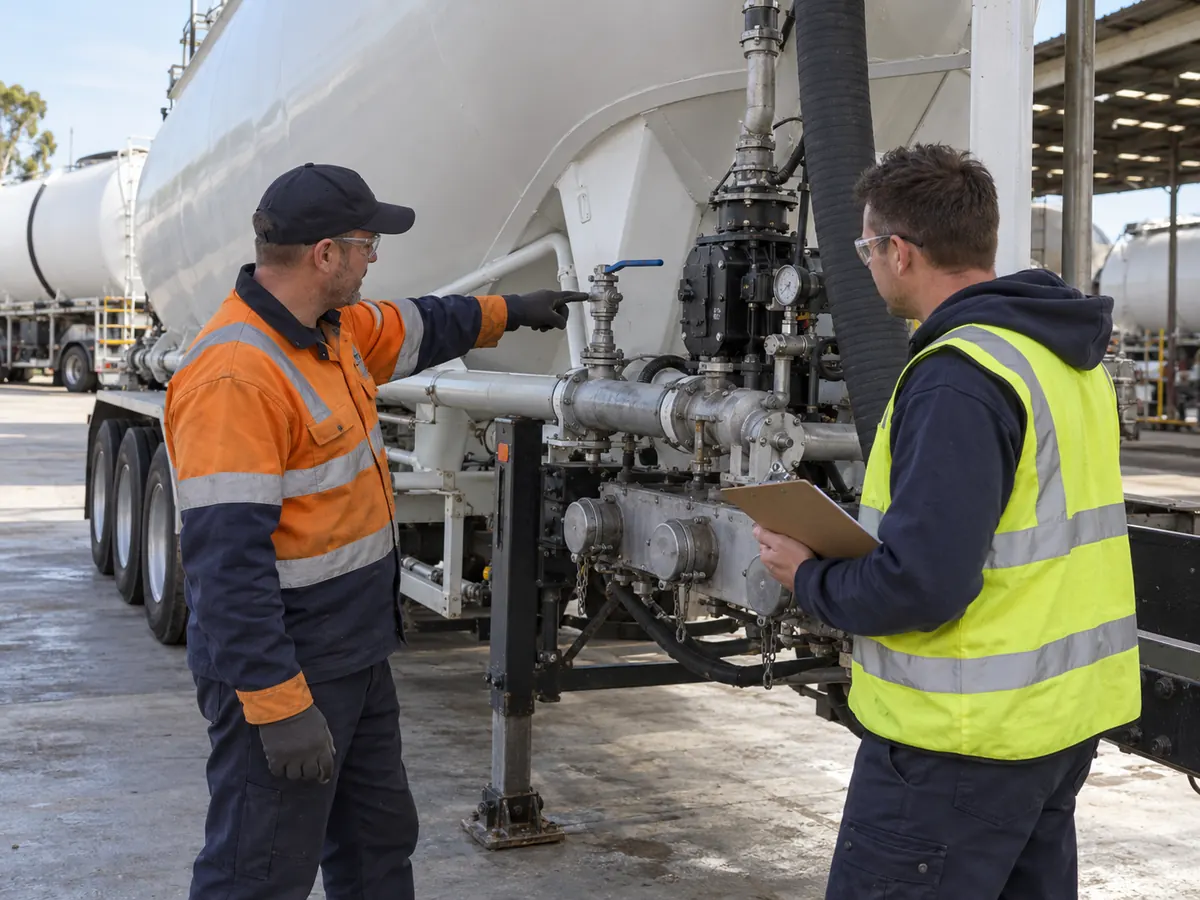
For a used purchase, put the identified repairs, responsible party, completion date and repeat-test requirements into the sale agreement. Obtain written warranty terms if any are offered. The word “refurbished” needs an itemized work list, parts identities and inspection results.
For a new purchase, define tank and chassis materials separately, running gear, air package, controls, hoses, documents and delivery scope. Put warranty coverage, exclusions, claim handling and the parts-delivery arrangement in writing. A warranty helps with covered defects; it does not keep the truck delivering while a part is in transit.
Before dispatching either option:
- Close inspection and test defects, and retain the release records.
- Record the actual axle, valve, air-source and other service-part identities.
- Prepare locally available critical spares and the component service schedule.
- Train the operator on this trailer’s controls, pressure protection and shutdown sequence.
- Complete the first planned delivery and review its load, timing and fault record.
If a contract starts before the preferred trailer can be ready, compare a short rental or subcontract bridge. For a larger replacement order, introducing units in batches can keep existing capacity working while the first new setup is proven. Include the bridge cost once in the purchase comparison.
Which option should your fleet choose?
In a new vs used cement tanker comparison, choose new when the job needs a defined fleet build and its operating savings justify the extra cash. Choose used when documented condition, compatible equipment and a realistic repair plan leave a clear cost advantage.
For either choice, the deciding evidence is practical: inspection results, ready-to-work cost, legal payload and a representative unloading result. If a used trailer’s major condition remains unknown, resolve that uncertainty before treating it as the cheaper option.
Send us your destination country, cement type, required payload, quantity and tractor details. Add hose distance, silo height and target delivery date if available. We can prepare the new tanker configuration for your comparison.
New and used cement tanker questions
How old is too old for a used cement tanker?
There is no reliable age cut-off for every tanker. Start with shell condition, repair history, pressure equipment and running gear. An older documented unit can be a stronger candidate than a newer trailer with unknown damage. Use the specialist’s condition assessment and repair scope to judge the individual unit.
Does repainting or refurbishing make a used tanker a safer buy?
Only when the work addresses identified defects. Ask what was replaced, who assessed tank repairs and what tests followed. Repainting improves the finish but does not establish shell condition. Price refurbishment from its work list and results.
Should I buy the used trailer if the seller cannot run a loaded trial?
Keep the performance question open. If the tank and vehicle inspection are satisfactory, consider an agreed trial after transfer with clear acceptance and remedy terms. Budget for that arrangement. Without a workable test or remedy, choose another candidate when unloading performance is essential to the contract.
Is buying used better for a standby cement tanker?
It can be, because low annual use gives a smaller opportunity to recover a new trailer’s price premium through operating savings. The standby unit still needs sound pressure equipment, brakes, tires and a maintenance plan. Include deterioration during storage and the cost of keeping it ready.
Can financing make the cheaper used trailer more expensive?
Yes. Compare the deposit, interest, fees, payment dates and any final balloon payment for both offers. Keep cash-flow affordability separate from ownership cost. A lower monthly payment can result from a longer loan rather than a lower total expense.
What changes when the used tanker is in another country?
Establish whether the exact vehicle can be imported and registered at the destination before committing to shipment. Obtain its identity and ownership documents, the required technical records, and written freight and destination-cost estimates. Add those costs and the time for repairs and clearance to its ready-to-work comparison.

ZAC
Hello, I’m ZAC, a cement trailer and semi-trailer specialist with over 20 years of industry experience. My technical approach starts with real operating conditions, including how cargo characteristics, road conditions, and loading and unloading methods affect trailer performance. I place particular emphasis on structural reliability, component compatibility, and ease of maintenance. I look at both everyday performance and how reliably a trailer operates over time, as well as how easily it can be inspected and serviced.


