
Common pneumatic trailer spare parts include manhole gaskets, valve seats, discharge hoses, couplings, aeration components, pressure gauges and air-source service parts.
Start with the fitted component’s maker, model and part number. Then confirm the dimensions, connections, material and operating duty before ordering. For a Panda Mech trailer we supplied, the trailer or order reference and clear part photos help us identify the replacement.
Key takeaways
- Identify the current fitted part by its maker, model and number.
- Match connections, dimensions, material and operating duty.
- Choose a single wear part, repair kit or complete assembly according to the damage.
- Start an enquiry with the trailer reference, part number or photos, quantity and destination.
Which pneumatic trailer spare parts do you need?
Locate the affected system before choosing a replacement. Aeration components feed air into the powder; discharge components control its path out of the tank; the air-source package supplies unloading air.
| System | Common parts | Identification starting point |
|---|---|---|
| Air supply | Compressor or blower service parts, air-line fittings and separate engine parts | Maker, model and service-parts reference for the air machine or engine |
| Aeration | Fitted pads, fabric, fluidizer disks, stems or seals | Installed aeration design, assembly number and mounting details |
| Discharge | Valves, seats, tees, hose assemblies and couplings | Valve model, connection pattern and powder-service duty |
| Sealing | Manhole gaskets and other seals | Seal profile, dimensions, material and mating assembly |
| Monitoring and protection | Pressure gauges and tank or blower protection devices | Instrument record and the equipment protected |
| Running gear | Brakes, suspension and other vehicle-service parts | Fitted chassis or brake-system component details |
Use the symptom to choose the first check
| What you notice | Check first |
|---|---|
| Air leaking at a joint | Seal and coupling condition, connection type and fitted position |
| Valve leaking powder or sticking | Valve model, seat and body condition |
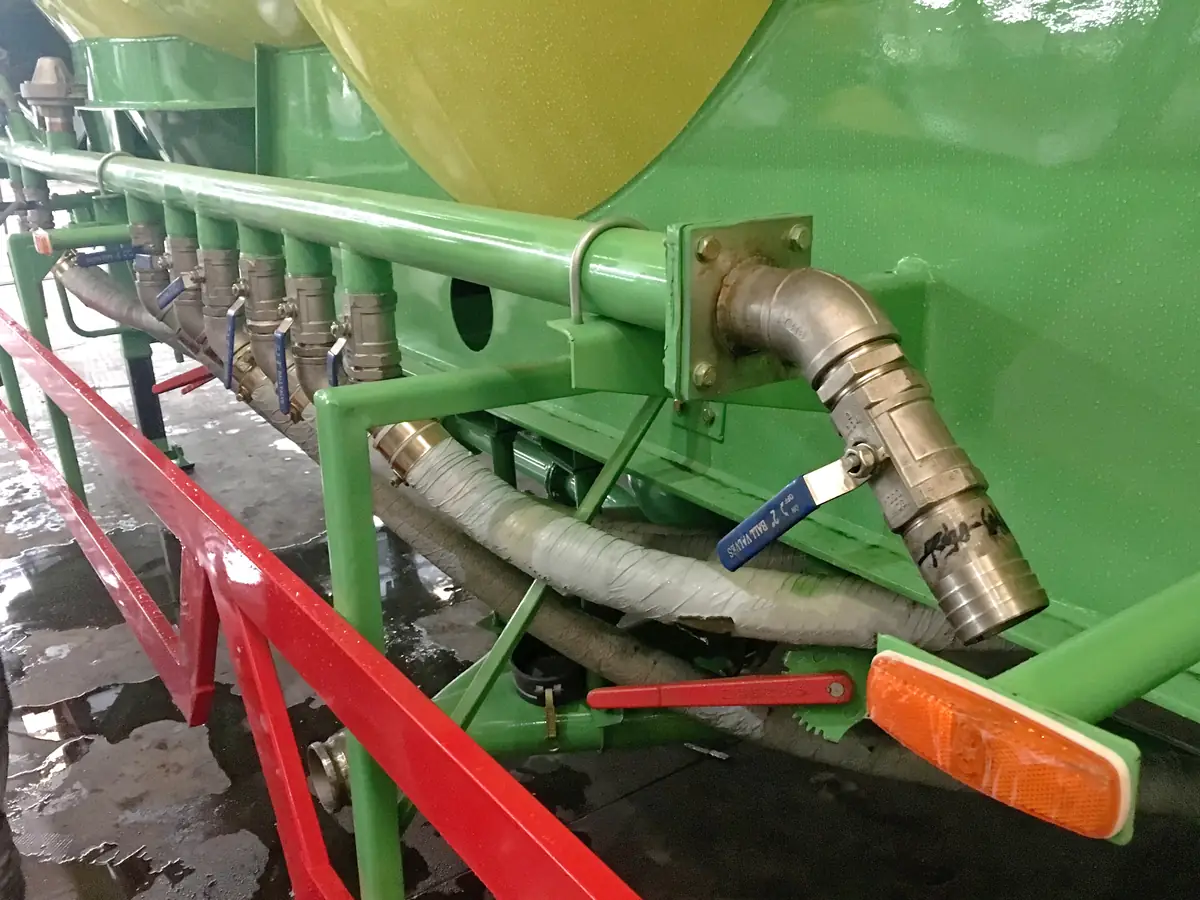
| Damaged discharge hose | Complete hose assembly, both end connections and service conditions |
| Unloading slowed after a hose-route or silo change | Route length, bends and receiving-silo venting |
| Abnormal pressure or protection-device operation | Stop unloading and arrange checks under the equipment fault procedure |
Before ordering a part for slow unloading, compare what changed when the problem began.
If unloading slowed after moving to a longer hose route or another receiving silo, record those changes and have the receiving route checked first. If a damaged hose, leaking joint or worn valve component has already been identified, use its markings and connection details to identify the replacement.
If the same trailer has become slower across several comparable deliveries, give the service technician the cargo, load mass, unloading time and air-system observations. That information helps narrow the air-source, sealing or aeration checks.
Once the failed component is identified, the parts request can specify a seal, repair kit or complete assembly instead of starting with a broad request for “something to improve unloading.”
Before inspection or removal: Stop, isolate and fully depressurize the affected system under the equipment procedure. Keep pressurized joints closed. Pressure-protection and brake faults require qualified checks and clearance before return to service. Never raise a relief setting to speed unloading. The OSHA hazardous-energy control standard addresses stored-energy control for covered U.S. workplace servicing.
How do you identify the part and confirm its fit?
Use the available identification route
- Part number available: Send the maker’s number exactly as marked, including suffixes. Keep a seller’s stock code separate from the maker’s part number.
- Part number missing: Send the parent assembly model, installed location, photos and mating dimensions.
- Part discontinued or previously replaced: Use the current installed assembly and its documented replacement reference.
Original delivery records identify the supplied configuration; maintenance records show subsequent changes. The cement bulker specification checklist helps locate the original vehicle details.
Match the specifications for the actual component
| Part | Specifications to match | Useful photo or measurement |
|---|---|---|
| Manhole gasket | Inside and outside diameter, thickness, cross-section and material | Full gasket, edge profile and measurements |
| Hose assembly | Inside diameter, length, both end connections, cargo or air duty, temperature and complete-assembly pressure rating | Whole hose, end couplings and markings |
| Valve or seat | Valve model, seat reference, connection type and size, body dimensions, material and service | Nameplate, valve body and installed position |
| Aeration component | Fitted design, assembly/part number, material and mounting | Installed component and fixing details |
| Pressure gauge | Unit and range, required accuracy, case size, thread, mounting direction and clearance | Dial, connection and mounting space |
| Relief or protection valve | Protected equipment, original reference, connection, specified opening setting, tolerance and relieving capacity | Device markings and protected-system record |
| Blower or engine part | Each machine’s maker/model, drive setup and original service-part reference | Machine nameplate and fitted component |

For flanges, compare bolt-hole count, bolt-circle diameter, hole size and sealing face. For grooved connections, compare pipe outside diameter, groove geometry and coupling model. For cam-and-groove connections, match the mating type, size and gasket.
Some butterfly valves have separately replaceable seats. Use the fitted valve model and its parts diagram to identify the correct seat or repair kit. Dixon’s valve-seat parts listing shows how a seat is tied to a particular valve model.
Specify a complete hose assembly
For a ready-to-fit replacement, specify the hose, both couplings, attachment hardware and any required restraints. State the length, material handled, temperature and pressure duty, including surges. The assembly rating is limited by its lowest-rated component. A qualified hose-assembly service can assess suitable replacement tubing and end fittings under documented assembly requirements.
Hot-air hoses and powder-discharge hoses serve different conditions. Powder service also involves abrasion and bends. Use the complete-assembly requirements in Dixon’s hose safety guide.

Match pressure-protection parts to the equipment protected
A tank relief valve and blower protection valve serve different systems. Use the specified replacement, including its connection, opening setting, tolerance and relieving capacity, and obtain the required technical approval and acceptance checks. Normal operating pressure describes unloading duty; design pressure and test pressure have separate purposes. Dixon’s dry-bulk tank-valve application notes provide a component-specific example.
For food powders, match cargo-contact parts, cleaning arrangements and previous-cargo controls to the product. For covered U.S. shipments, FDA sanitary transportation requirements include cleaning and allergen cross-contact controls.
Should you buy a single part, repair kit or assembly?
Choose the supply unit that covers the actual damage and the permitted repair scope.
| Condition | Order | Check before buying |
|---|---|---|
| Only a serviceable gasket, seat or wear element has failed | The identified single part | The parent unit and sealing surfaces remain serviceable |
| Several replaceable wear parts need renewal | The exact repair kit | The listed kit contents cover the work required |
| Body or other components are damaged beyond permitted repair | The specified complete assembly | Included actuator, fittings and other supplied items |

A gasket, a repair kit and a complete actuated valve are different supply units. Compare quotations on the same basis. Solimar’s trailer parts catalogue lists complete fluidizers separately from disks, stems and gaskets.
If a new seat does not resolve a valve leak, have the disc, shaft and body assessed before ordering another seat. Repeated gasket or hose failures also call for a check of the sealing face, profile, routing or end connection.
Which spare parts should you keep on hand?
Plan stock from service history, shared component references, downtime consequences and replenishment time. Separate routine service items from rare specialist assemblies.
| Group | Stocking approach |
|---|---|
| Recurring service items | Plan filters, specified oils and wear seals against the fitted components’ service requirements |
| Downtime-critical wear parts | Consider a spare where a failure stops work and local replenishment is slow |
| Parts shared across trailers | Share stock where records confirm the same part or an approved interchangeable replacement |
| Rare specialist assemblies | Establish the ordering source and lead time; buy stock when downtime risk justifies it |
Label each item with its part number, parent assembly and quantity. Keep the last purchase, supplier and lead time in a simple parts log. Our 50 Ton Cement Tanker page includes seals, gaskets, valve wear parts, hoses and gauges among the items to discuss for an initial package. The fleet supplier checklist covers spare-parts planning alongside supplier support.
What should you send for a spare-parts quotation?
Start your parts request with four details:
- Trailer or order reference.
- Part number or clear photos.
- Quantity required.
- Delivery destination and required date.
If the part number is missing, include the fitted location, parent assembly model and connection dimensions. For a stopped trailer, describe the symptom and when it began.
Which photos help identify the part?
Provide an installed-location view, a complete-part view, readable maker markings and close-ups of important connections or measured features. Use accessible markings first; any intrusive inspection belongs under the isolation and depressurization procedure.

What additional details may be needed?
| For this item | Useful follow-up information |
|---|---|
| Seal or gasket | Dimensions, edge profile, material and the cover or valve it fits |
| Hose assembly | Length, bore, both connections, cargo or air service and operating duty |
| Valve or service kit | Fitted valve model and whether a seat, kit or complete assembly is required |
| Gauge or protection device | Instrument reference, protected equipment and approved technical requirements |
| Blower or engine part | Machine maker/model and original service-part reference |
What should the quotation confirm?
Ask the quotation to confirm the manufacturer and part number, supply unit, included items, quantity, price, availability, dispatch estimate and delivery terms. For a proposed substitute, obtain the comparison and technical approval required for its function.
Compare delivered cost, including agreed packaging, freight, insurance, import charges and clearance responsibilities. Keep warranty and return conditions with the order.
On receipt, compare the part number, revision, quantity and condition with the order. After fitting and the required checks, update the trailer’s maintenance record so the next purchase starts from the current component reference.
Need a replacement for a Panda Mech trailer?
Our service support handles parts requests for trailers we supplied. Send your trailer or order reference, part number or photos, quantity and destination. If the number is unreadable, start with a photo of the installed part and a short description of the problem.
Frequently asked questions
Can I use third-party parts on a Panda Mech trailer?
The information needed for a substitute depends on what the part does.
For a serviceable gasket or valve seat, start with the fitted assembly number, dimensions, profile, material and operating duty. Ask the supplier to identify the assembly that its proposed replacement fits.
For a hose assembly, compare the complete hose and both end connections, including their temperature and pressure duty. For a relief valve or brake component, have qualified service personnel check the replacement against the protected system or vehicle requirements and obtain the required technical approval.
Send the original markings and installed-position photo with the enquiry. If the supplier proposes a different number, ask for the replacement reference and included items in writing, so the order and subsequent maintenance record identify what was actually fitted.
How much do pneumatic trailer spare parts cost?
Request an itemized quotation for the exact part, kit or assembly and quantity. Compare the same included items and delivered-cost terms across offers.
How long does it take to receive replacement parts?
Ask for current availability, expected dispatch and delivery to your destination. Include your required date so the supplier can assess the ordering and shipping schedule.
What warranty and return terms apply to spare parts?
Use the terms agreed for the parts order, including claim evidence, return eligibility and freight responsibility. Keep them with the quotation and purchase record.
For related equipment and operating guidance, see compressor and blower guide, aeration-system guide, unloading-time guide.

ZAC
Hello, I’m ZAC, a cement trailer and semi-trailer specialist with over 20 years of industry experience. My technical approach starts with real operating conditions, including how cargo characteristics, road conditions, and loading and unloading methods affect trailer performance. I place particular emphasis on structural reliability, component compatibility, and ease of maintenance. I look at both everyday performance and how reliably a trailer operates over time, as well as how easily it can be inspected and serviced.


