
Choose steel when its lower purchase cost and local repair support fit the work. Choose aluminum when the lighter finished trailer lets you deliver enough extra cement—or avoid enough trips—to recover the higher cost. The useful steel vs aluminum cement tanker comparison starts with delivered tonnes and annual cost, rather than the metal name alone.
An aluminum tank does not automatically increase legal payload. Tank volume, axle loading, order size and the receiving silo can each remove the benefit. Here is how to compare both choices using weights, transport records and two clear cost calculations. All tonnes below are metric tonnes.
Quick Summary
- Weight-limited, busy routes: price an aluminum option if you regularly reach the permitted combination weight and can sell or use the extra payload.
- Small deliveries, limited annual use or distant repair support: a properly specified steel tanker can be the better purchase.
- Compare the finished, equipped trailer, keeping tank capacity, running gear and the unloading package comparable. Then calculate the payload that can actually leave the yard and be received at the silo.
What changes when you choose an aluminum tank?
Aluminum can lower empty trailer weight; steel usually offers a lower initial cost and more widely available repair skills. The size of either advantage depends on the two builds and the service network where they will run.
| Decision | Steel tank | Aluminum tank |
|---|---|---|
| Initial investment | Usually the lower starting point | Usually carries a material and fabrication premium |
| Payload opportunity | Higher tare can use part of the weight allowance | Lower tare can release weight allowance for cargo |
| Exterior care | Protect exposed steel and repair coating damage | Protect joints, fittings and contact with other metals |
| Repairs | Steel skills may be easier to find locally | Needs suitable aluminum welding and inspection support |
| Economic reason to choose | Lower capital cost where extra payload has little value | Extra delivered tonnes or fewer trips justify the premium |
Tank shell and chassis are separate choices
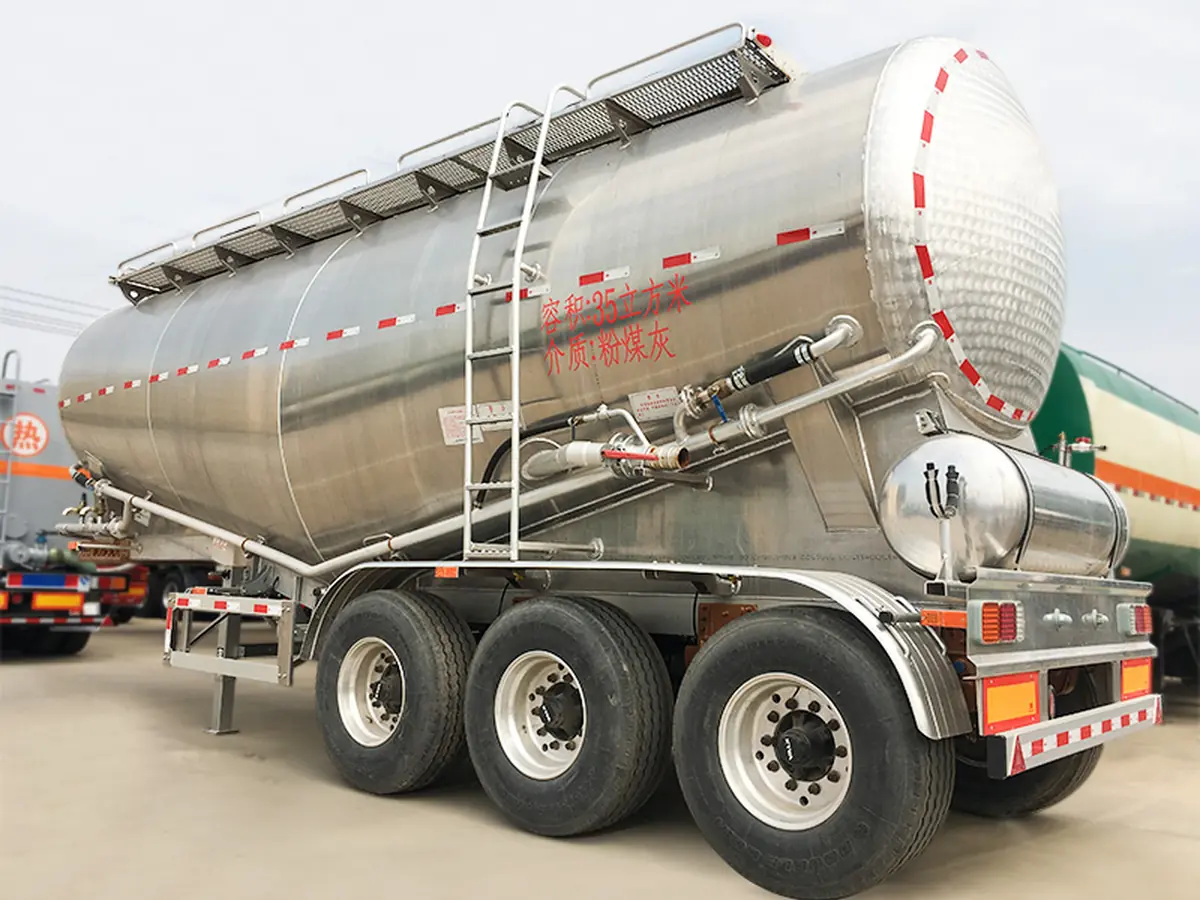
The tank shell contains the powder and withstands the approved unloading duty. The chassis and supports carry the tank through road loads. These parts can use different materials. Our aluminum cement trailer range describes an aluminum tank with a carbon-steel structural/chassis setup; the project specification defines the final build.
Ask for separate lines for the shell, heads, supports and chassis. A broad “aluminum trailer” label leaves too much unclear. Also, the density difference between the metals does not translate directly into the same percentage saving for the whole trailer. Plate thickness, supports, axles, wheels and the compressor package all contribute to tare.
How much extra payload can aluminum carry?
The extra payload is the difference between the two loads you can actually carry and deliver. Start with the route’s permitted combination weight, subtract the ready-to-work empty combination weight, then apply the other limits.
Use these two steps:
- Gross-weight cargo allowance = permitted loaded combination weight − ready-to-work tractor and trailer weight. Include the driver, operating fluids, normal fuel and carried equipment in the empty combination figure.
- Delivered load = the smallest of: that gross-weight allowance, the cargo allowance supported by the vehicle and axle-load plan, usable tank volume × bulk density, dispatch quantity, and receiving capacity.
Bulk density means the mass of loose powder per unit of space, in t/m³ here. Use the shipper’s loading-condition figure, not the density of solid cement particles. Use the tank’s usable loading space for this cargo rather than assuming every cubic metre of nominal volume can be filled.
Gross weight is only one constraint. For example, the FHWA Bridge Formula guidance treats gross, individual axle and axle-group limits separately and accounts for axle spacing on US Interstate routes. Use the limits that apply to your destination and route. A lighter trailer can still overload one axle group if the load distribution is wrong.
Work through a route example
Suppose a route permits a 44 t loaded combination. The ready-to-work tractor weighs 8 t. Two equally equipped trailers weigh 7 t in steel and 5 t in aluminum. Both have 30 m³ of usable loading space, and the powder bulk density is 1.20 t/m³. Assume the vehicle ratings, axle-load plan, order and silo can all support at least 31 t of cargo.
| Calculation | Steel | Aluminum |
|---|---|---|
| Empty combination | 8 + 7 = 15 t | 8 + 5 = 13 t |
| Gross-weight cargo allowance | 44 − 15 = 29 t | 44 − 13 = 31 t |
| Volume-based capacity | 30 × 1.20 = 36 t | 30 × 1.20 = 36 t |
| Delivered load after all stated limits | 29 t | 31 t |
The aluminum option adds 2 t per fully used trip in this example. Obtain the tare difference from comparable completed-build weight records. A bare tank weight and an equipped trailer weight cannot be used as the pair.
When lighter tare adds no delivered tonnes
Change the powder density to 0.80 t/m³ while keeping the other inputs. Both tanks now hold only 30 × 0.80 = 24 t, so the 2 t tare saving adds no cargo. If the order is limited to 28 t, both original configurations deliver 28 t. The same happens when the receiving silo has room for only that quantity.
Solve the active limit first. More usable volume can help a space-limited load. A larger order or different delivery schedule can improve utilization. Lower tare helps when weight is the limit and the other conditions leave room for more cargo.
When does the higher price pay back?
Aluminum earns back its premium when the annual net benefit is positive and large enough within your planned ownership period. Use either extra output at a fixed number of trips or avoided trips at a fixed annual tonnage as your main calculation.
More tonnes on the same number of trips
Use this model when extra tonnes have demand and earn additional income:
Annual net benefit = extra delivered tonnes per trip × qualifying trips per year × contribution per extra tonne − other annual incremental costs.
Contribution means the additional revenue remaining after the variable costs of moving those extra tonnes. Include costs once. If extra loaded-leg fuel is already deducted in the contribution, do not deduct it again under incremental costs.
Suppose aluminum costs USD 10,000 more. Apply the 2 t payload gain above on 250 qualifying trips a year, with USD 10 contribution per extra tonne. Allow a further USD 2,000 a year for incremental ownership and service costs that have not already been deducted.
- Additional contribution: 2 × 250 × USD 10 = USD 5,000/year.
- Net benefit: USD 5,000 − USD 2,000 = USD 3,000/year.
- Simple payback: USD 10,000 ÷ USD 3,000 ≈ 3.3 years.
At 125 qualifying trips, net benefit falls to USD 500/year and payback becomes 20 years. At 100 trips, the assumed annual benefit is zero. Trips that cannot use the extra payload do not belong in the qualifying-trip count. These changes can reverse the purchase choice even when the tare difference stays the same.
Fewer trips for a fixed annual tonnage
For a cement producer moving a fixed quantity, calculate annual trips = annual tonnes ÷ delivered tonnes per trip, rounded up. Use this where deliveries can be combined and the final trip can carry a part load.
With 10,000 t per year, the 29 t steel option needs 345 trips. The 31 t aluminum option needs 323 trips. That avoids 22 trips. At an assumed USD 250 of genuinely avoidable cost per trip, the saving is USD 5,500/year, before other ownership-cost differences.
Scheduled small drops or silo time windows may prevent that consolidation. Recalculate from the actual delivery schedule when they do. Avoided trips and extra revenue from a fixed trip count are different operating plans; adding both full benefits would count the same capacity twice.
For a full ownership comparison, include purchase and finance costs, maintenance, downtime, operating costs and expected resale over the same years. Compare total cost per delivered tonne: total cost over the chosen period ÷ tonnes delivered in that period. Keep unverified fuel and resale benefits out of the base case, then test them separately if you have records.
How do repairs and corrosion change lifetime cost?
Steel can be the lower-cost choice where aluminum repair support is scarce; aluminum’s corrosion advantage is most useful when the whole build is protected correctly. Compare local repair capability and expected time out of service alongside the quote.
Steel coating damage exposes metal to moisture, so include coating repairs around stone-impact areas, supports and pipe brackets. On an aluminum tank with steel structure, pay close attention to the designed isolation and drainage at contact points.
TWI explains galvanic corrosion as attack that can occur when different metals are electrically connected in a conductive liquid. That is why damaged isolation, trapped moisture and road salt matter at steel–aluminum joints. Preserve the specified isolators and coatings during maintenance; fitting an unapproved metal spacer can change the protection.
Match repair support to the route
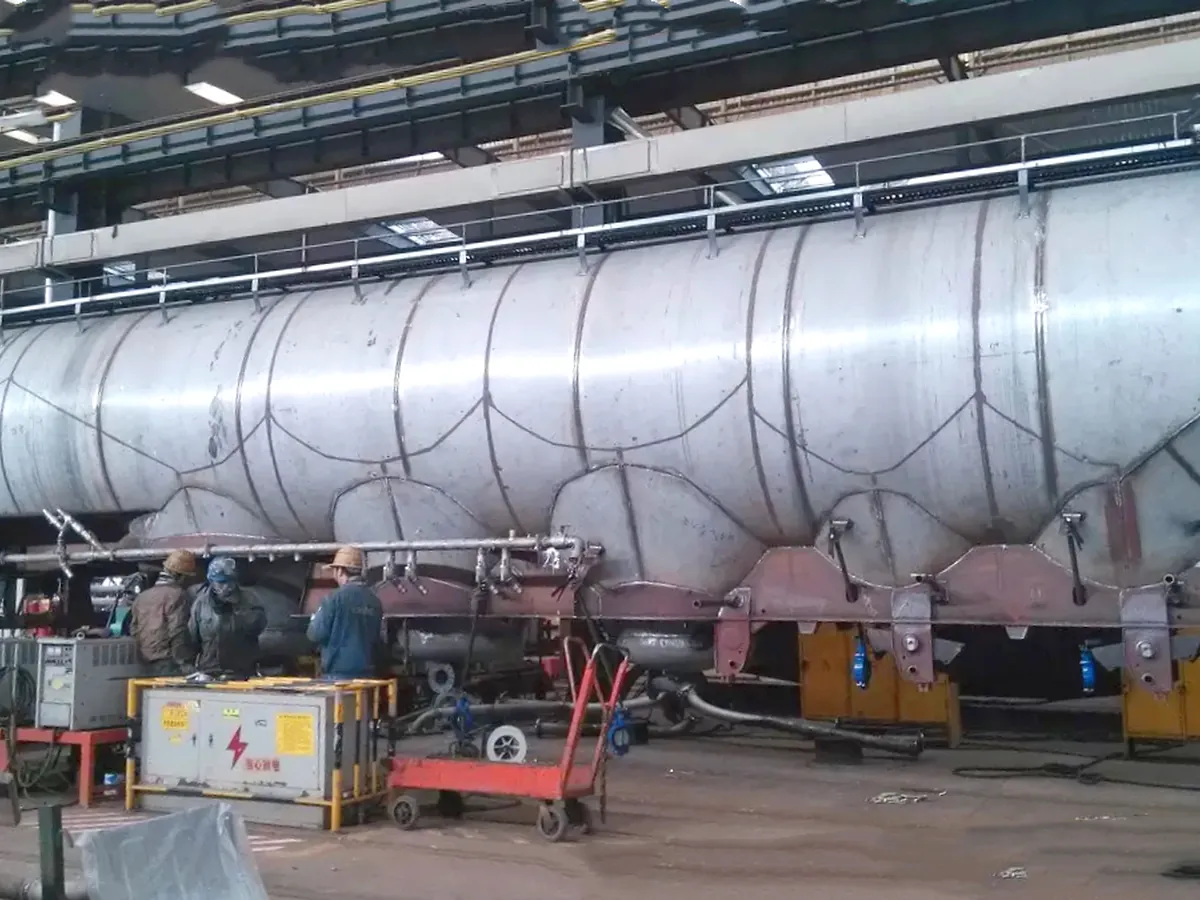
Before paying the premium, identify a workshop that can repair the specified alloy and tank design. Ask about its approved repair procedure, inspection capability and realistic turnaround. TWI’s aluminum welding guidance highlights shielding, cleanliness, filler selection and controlled welding parameters. Familiarity with steel welding alone does not cover those needs.
A crack around a tank support needs its cause investigated as well as its repair. Repeated road loads, support movement or impact damage can defeat a patch that only seals the visible crack. Remove a damaged pressure-containing tank from service for assessment and an approved repair and test plan.
Price downtime using lost contribution or replacement-vehicle cost, rather than total sales revenue. Use fleet repair records where available. Material names alone do not establish a service life, repair frequency or rough-road winner.
Does aluminum unload cement faster?
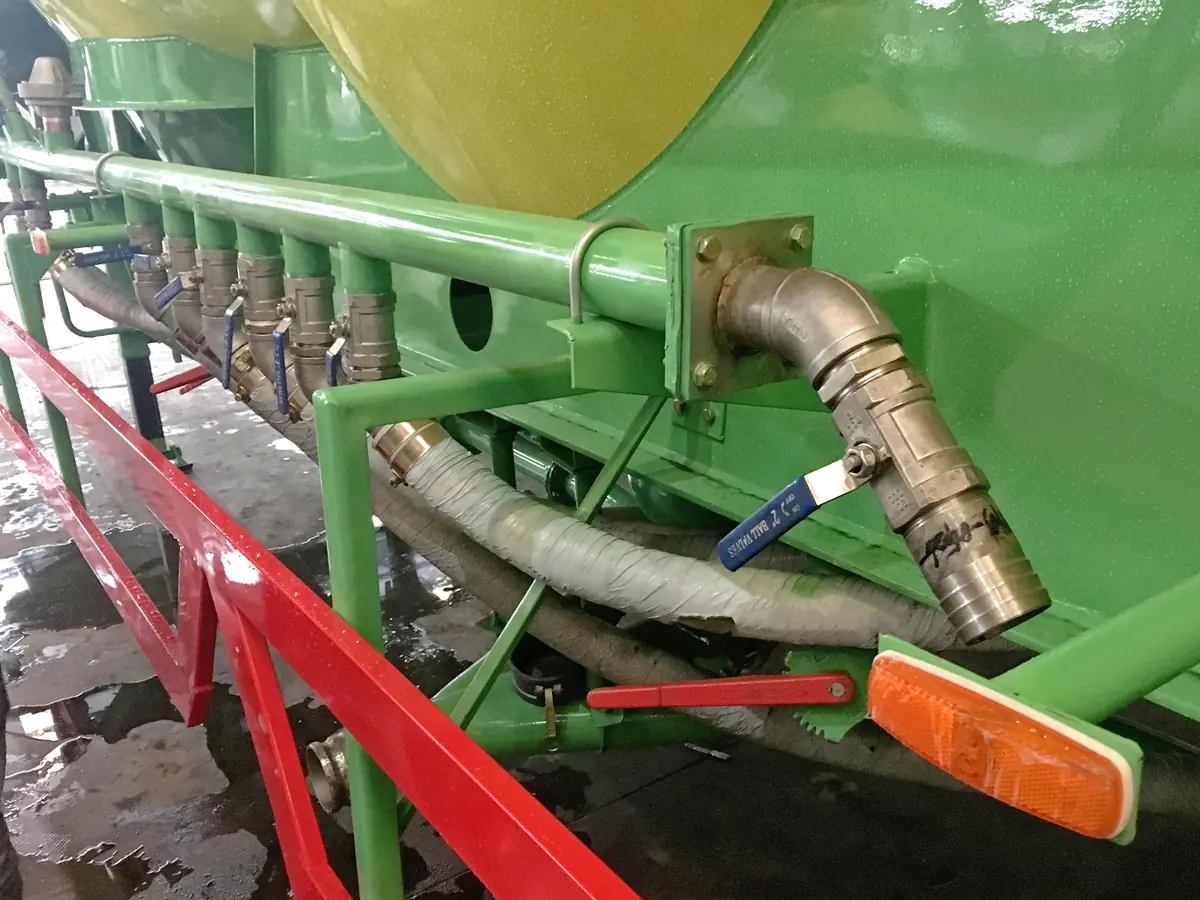
Tank material alone does not determine discharge rate. Air supply, aeration, outlet layout, powder condition, discharge-line resistance and the receiving silo’s filter and venting determine how the unloading system performs together.
If aluminum lets you load more tonnes, the silo must accept them within the delivery window. At the same effective discharge rate, a larger load takes longer to unload. Slow receiving conditions can therefore reduce the number of trips you complete and weaken the payload benefit.
Compare both options with the same powder and receiving conditions. Record delivered mass, start and finish times, hose layout and remaining material. Include connection and disconnection time when comparing complete delivery cycles. Use our cement tanker unloading-time guide for the system factors behind discharge time.
How should you compare steel and aluminum quotations?
Put both suppliers on the same transport and unloading job, then compare equipped tare, usable payload and landed cost. A cheaper quote may omit equipment that the other includes.
| Obtain from the original document | What to compare |
|---|---|
| Material schedule and drawing | Shell alloy/grade, heads, chassis and supports listed separately |
| Completed-build weight record | Same ready-to-work scope: engine/compressor, hoses, spare wheel, tools and operating fluids |
| Tank and load plan | Usable cargo volume, permitted weight, axle distribution and tractor compatibility |
| Pneumatic-system specification | Power source, airflow duty, pipes, valves and receiving-silo requirements |
| Commercial quotation | Same currency, delivery term, included freight, import costs and selected options |
| Service and warranty terms | Local repair route, exclusions, parts supply and inspection requirements |
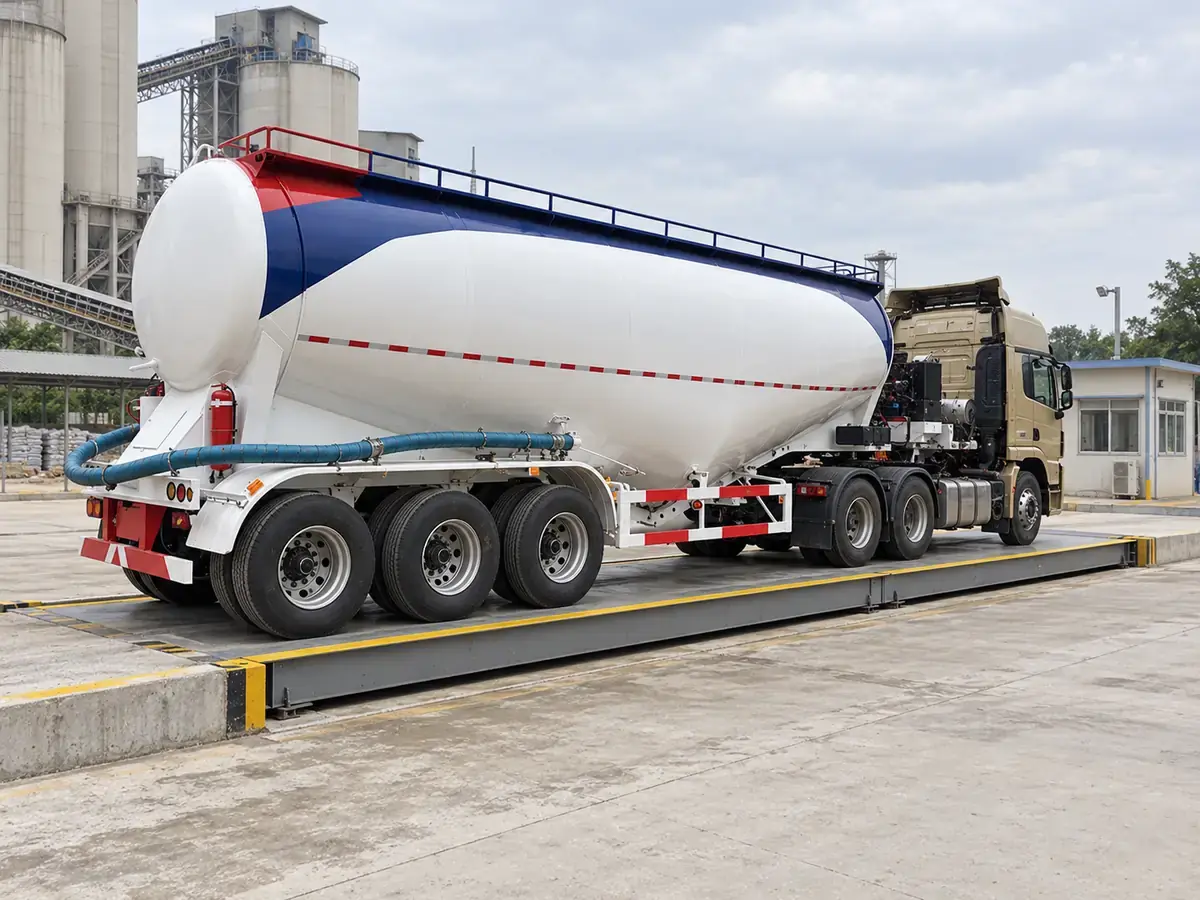
Use a weighbridge record tied to the build specification, then check the loaded axle distribution for the intended cargo. Record what was on the vehicle when it was weighed. Residual cement, different fuel levels and omitted accessories can distort a close tare comparison.
Our 50 ton cement tanker trailer is a useful product starting point for bulk cement work. Treat “50 ton” as the product class; use the route and combination calculation above to establish the load for your operation. Compare the steel and aluminum proposals against that same job.
Which material should you choose?
Choose aluminum for a demonstrated, regularly used payload gain or a delivery plan that avoids enough trips. Choose steel when its lower investment and available repair support deliver the better cost per tonne. Keep a suitable existing tanker if replacement has no clear operating benefit.
The steel vs aluminum cement tanker decision becomes much clearer with two comparable tare records, your delivery schedule and a realistic cost sheet. Send us your cargo, destination, tractor details and target load through our configuration enquiry page. Include the two specifications or weight records when available so we can compare the tank, running gear and unloading package for the same work.
Frequently Asked Questions
Will aluminum save money if every delivery is fixed at 25 tonnes?
It will not add payload revenue when both trailers already carry the full 25 t order. Compare measured fuel use at that same load, maintenance, finance and resale instead. Do not use the extra-payload payback model for those trips.
Can a lighter tanker legally carry the full 50-ton product rating?
Only when the complete vehicle, route limits and axle-load plan allow that cargo weight. Calculate from the permitted combination weight and ready-to-work tare. A catalogue load class does not replace that calculation.
Is an aluminum cement tanker made entirely of aluminum?
No. The shell and structural chassis can use different materials. Read the material schedule for each main part. Include the specified supports and running gear when comparing total empty weight.
Why is one aluminum quotation cheaper than a steel quotation?
The supply packages may differ. Align usable volume, axles, brakes, compressor/power source, accessories and delivery terms first. Only then does the price difference describe a useful comparison.
Should we replace the steel shell on an existing trailer with aluminum?
Compare a new engineered build before planning a shell conversion. Different tank materials change the supports, connections and load path. A conversion needs a reviewed design, revised weights and the applicable inspection and approval work; it is not a simple shell swap.
How does leftover cement affect the weight comparison?
Residue adds empty weight and reduces the next load’s available payload. Compare tare in the same empty condition. Use loading and delivery weighbridge tickets to track how much cement actually reaches the customer, then investigate persistent residue through the aeration, outlet and discharge system.

ZAC
Hello, I’m ZAC, a cement trailer and semi-trailer specialist with over 20 years of industry experience. My technical approach starts with real operating conditions, including how cargo characteristics, road conditions, and loading and unloading methods affect trailer performance. I place particular emphasis on structural reliability, component compatibility, and ease of maintenance. I look at both everyday performance and how reliably a trailer operates over time, as well as how easily it can be inspected and serviced.


